The Three-Body Problem: Grappling with Cosmic Dread and Human Futures
Exploring the Netflix series 3 Body Problem, its ambitious scope, divisive reception, and profound questions about humanity's place in a vast, indifferent universe when faced with an existential threat.
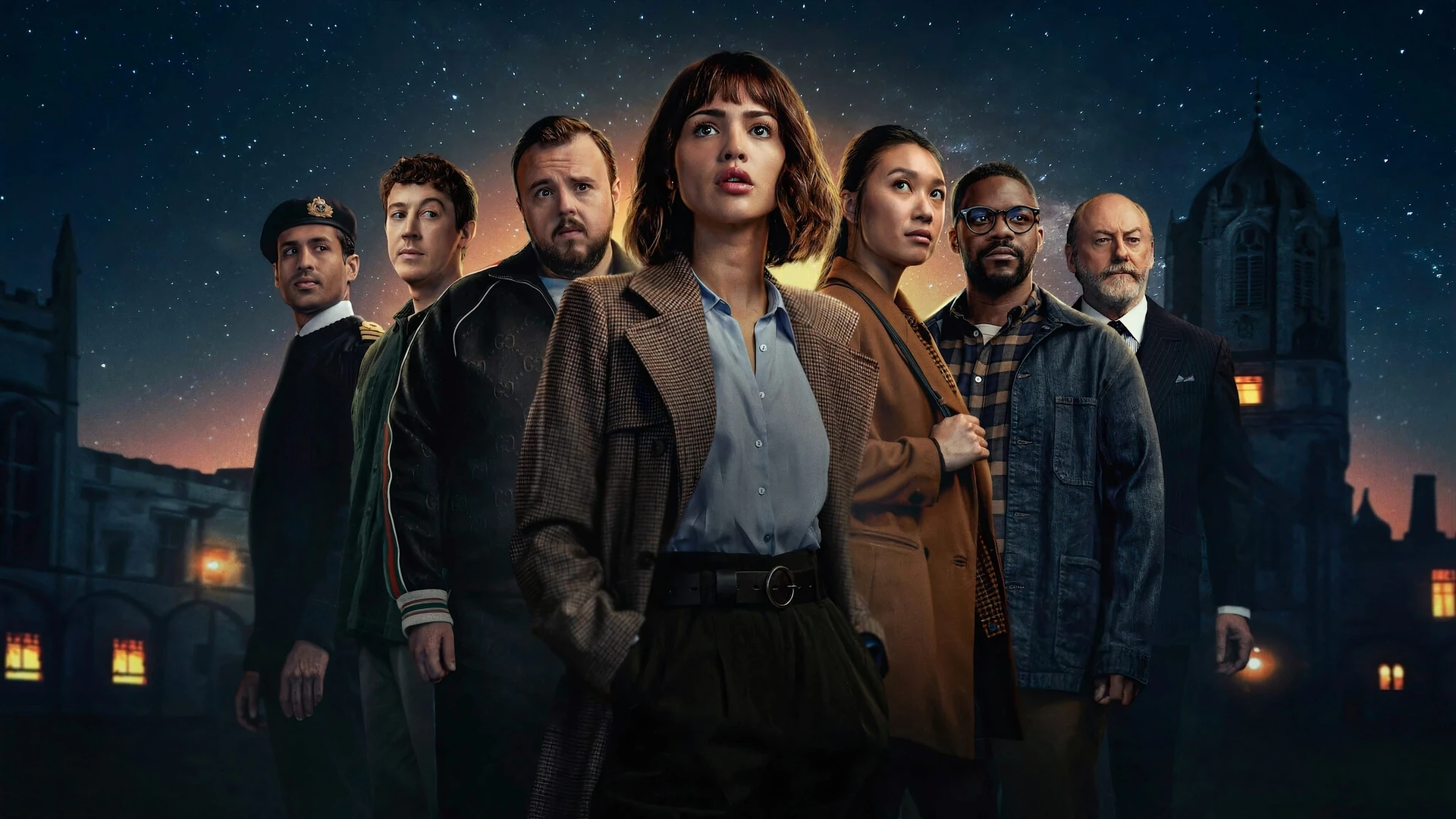
“The universe is a dark forest. Every civilization is an armed hunter stalking through the trees like a ghost, gently pushing aside branches that block the way and trying to step without sound. The hunter has to be careful, because there are other hunters in the forest that are just like him.” — Liu Cixin, The Dark Forest
Netflix’s 3 Body Problem, adapted from Liu Cixin’s monumental sci-fi trilogy, arrived on our screens with the weight of astronomical expectations – and perhaps, just as many divergent opinions. It’s a series that dares to tackle nothing less than humanity’s first contact with an existential threat, pushing the boundaries of scientific understanding and our collective will to survive. Yet, for all its cosmic ambition, the show has proved to be a divisive enigma, lauded by some critics for its spectacle and intriguing premise, while simultaneously drawing significant ire from segments of its audience, particularly ardent fans of the original novels.
This isn’t just another sci-fi show; it’s a sprawling canvas for painting humanity’s most profound fears and hopes onto the backdrop of an indifferent, unfathomable universe. But does it truly succeed in translating that philosophical gravitas from page to screen, or does its attempt at broad accessibility sometimes dilute its most potent ideas? Let’s dive in.
The Unraveling Reality: A Crisis of Epistemology
At its core, 3 Body Problem presents us with a terrifying epistemological crisis. What happens when the very laws of physics, the bedrock of our understanding of reality, begin to unravel? The premise is chillingly simple yet utterly mind-bending: a distant alien civilization, grappling with the chaotic physics of a three-sun system, discovers Earth and sets a course for our destruction. Their advance guard, the San-Ti, begin to manipulate our reality from afar, causing scientific instruments to lie, particle accelerators to yield nonsensical results, and stars to flicker ominously.
This isn’t merely a threat to our planet; it’s an assault on our intellect, our scientific method, and our collective sanity. The series grapples with the profound implications of this cosmic deception, forcing its characters, and us, to question everything we thought we knew. How do you fight an enemy that can whisper lies into the very fabric of existence? This concept, pulled directly from Cixin’s work, is where the show truly shines philosophically, inviting us to contemplate the fragility of knowledge and the limits of human perception.
However, the path to exploring these profound ideas isn’t always smooth. Critics, and many viewers, noted the uneven pacing, particularly in the initial episodes. The ensemble cast, a departure from the books, occasionally struggles to fully embody the sheer weight of the impending doom, leading to moments where the personal drama feels disconnected from the grander, more terrifying narrative unfolding. While the ambition is clear, the execution of grounding such vast concepts in human stories can feel a touch forced at times, making some of the more expository dialogue feel like a hurdle rather than a revelation.
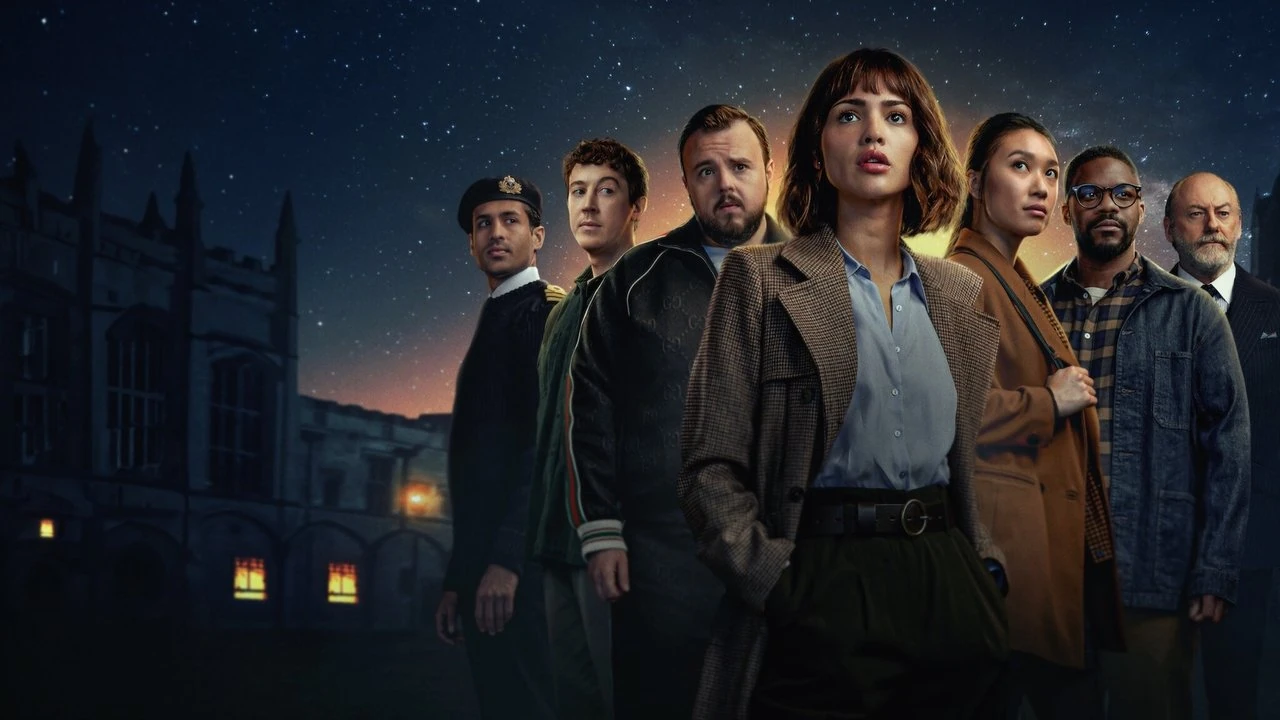 A scientist grapples with incomprehensible data, symbolizing the unraveling of natural laws.
Navigating the Adaptation’s Treacherous Waters
The journey of adapting The Three-Body Problem was always going to be fraught with peril. The source material is dense, intricately plotted, and deeply rooted in Chinese history and philosophy. Showrunners David Benioff, D.B. Weiss, and Alexander Woo made significant changes, including consolidating characters, shifting timelines, and largely Westernizing the core cast. This creative choice has been perhaps the most controversial aspect of the series, polarizing audiences and critics alike.
The act of adaptation is a philosophical negotiation: how much of the original’s essence can be preserved when its form is fundamentally altered? It’s a tightrope walk between fidelity and accessibility, often sacrificing one for the other.
On the one hand, many appreciate the attempt to streamline a notoriously complex narrative for a global audience, making the intricate scientific concepts more digestible. The visual spectacle, especially within the immersive VR game sequences, is often breathtaking and offers a compelling vision of the San-Ti’s chaotic homeworld. The performances, particularly from actors like Benedict Wong as Da Shi and Rosalind Chao as Ye Wenjie, are frequently singled out as strong anchors in the sprawling narrative.
Yet, for many devoted readers, the changes felt like a betrayal of the original’s unique spirit. A common complaint revolved around a perceived dilution of the original’s philosophical gravitas, replaced by more conventional dramatic beats and character motivations. Some argue that the show’s focus on a diverse group of “Oxford Five” friends, while offering relatable entry points, inadvertently diffused the intense, singular focus on scientific inquiry and the more nuanced, often morally ambiguous, character arcs that defined Cixin’s vision. The series tries to balance its immense intellectual scope with character-driven drama, and sometimes, the scales tip precariously, leaving both aspects feeling slightly underdeveloped.
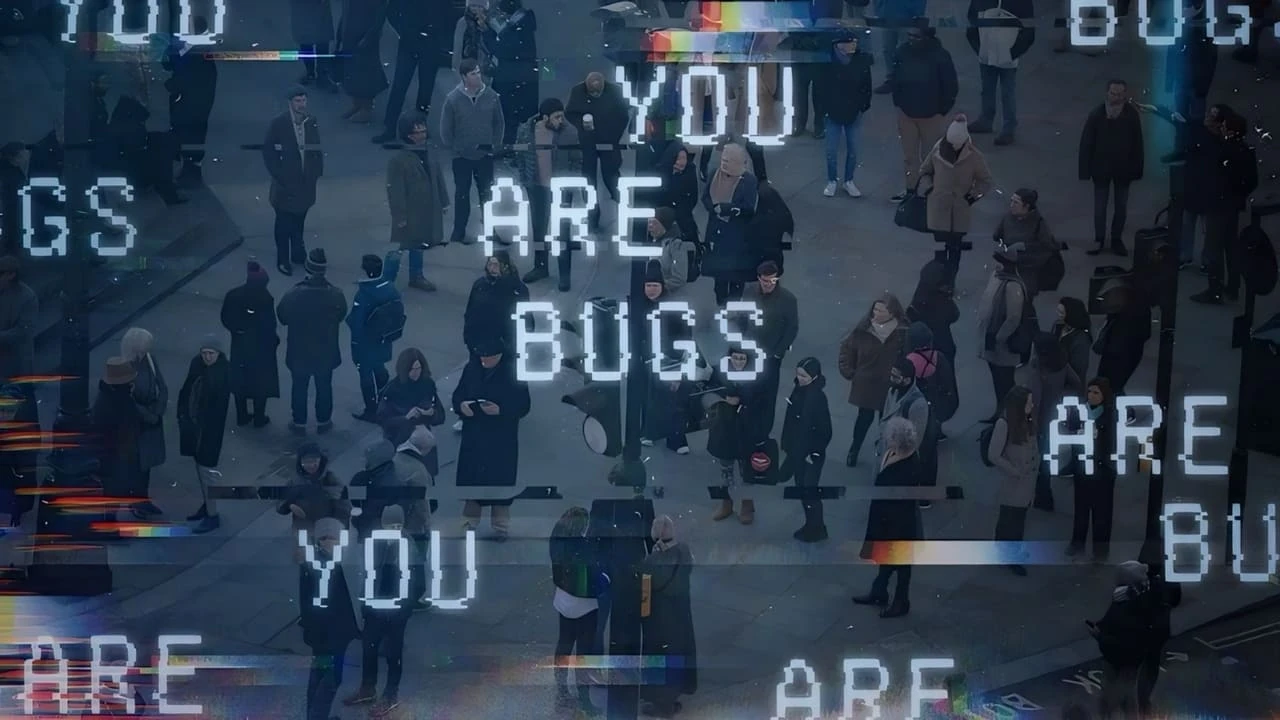 Characters in the virtual reality game confront the bewildering chaos of a three-body system, a visual metaphor for impending doom.
Beyond the Horizon: The Echoes of Our Future
Despite its narrative stumbles and the criticisms leveled against its adaptation choices, 3 Body Problem undeniably forces us to confront some of humanity’s most profound existential questions. What would we do if confronted with an alien intelligence, not just different, but fundamentally hostile? The series explores various human responses to this ultimate threat:
- The nihilism of those who embrace oblivion.
- The resilience of those who fight for a future, however distant.
- The ethics of survival, where betrayals and impossible choices become necessary.
- The power of collective action versus the allure of individual heroism.
It’s a meditation on humanity’s fragility in the face of cosmic indifference. The show subtly touches upon the “Dark Forest” hypothesis – the idea that any contact between civilizations is inherently dangerous, leading to a universe where silence is the only guarantee of survival. This concept casts a long, chilling shadow over every decision made, every secret kept, and every hope cherished.
The series, even in its most frustrating moments, provokes essential philosophical thought experiments. It asks us to consider our species not as the apex of creation, but as a tiny, vulnerable blip on the cosmic radar. It challenges our hubris and forces us to imagine a future where our scientific prowess, our political systems, and even our basic understanding of reality might be utterly irrelevant in the face of an truly alien intelligence.
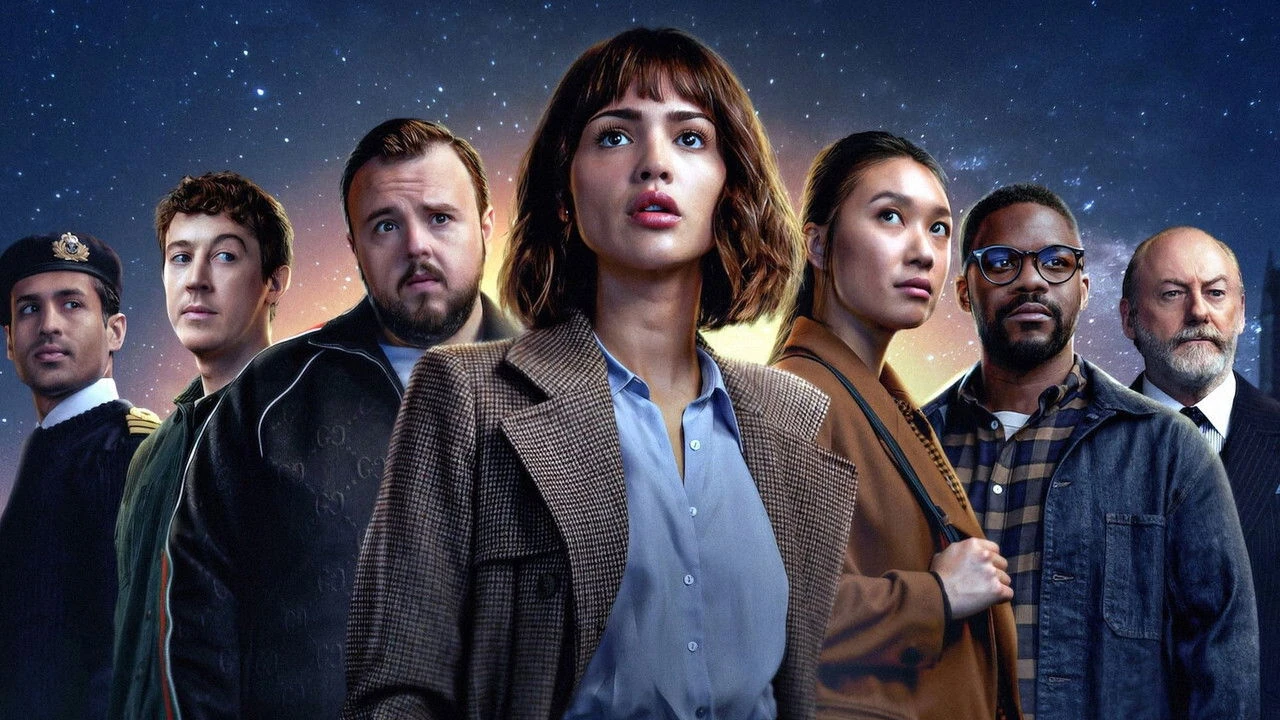 A lone figure stands on a vast, desolate landscape, symbolizing humanity’s isolation and vulnerability in the cosmos.
“When faced with an existential threat, humanity doesn’t just reveal its worst fears; it reveals the profound, often terrifying, spectrum of its capacity for despair and its enduring, if sometimes fragile, hope.”
Ultimately, 3 Body Problem is a bold, albeit imperfect, attempt to bring a truly epochal story to the screen. It might not satisfy every book purist, and its narrative choices might sometimes feel like a simplification of deeper philosophical currents. However, its very existence compels us to look beyond our immediate concerns and ponder our place in the universe. It’s a conversation starter, a gateway to bigger ideas, and a stark reminder that sometimes, the greatest threats aren’t just external, but lie in our own capacity for division and despair. What would you do if the stars themselves began to lie?
Where to Watch
- Netflix
- Netflix Standard with Ads
What’s Up? explores the philosophical depths of cinema.