7aum Arivu: Genetic Memory, National Identity, and a Flawed Epic
Exploring the ambitious but often muddled philosophical questions of 7aum Arivu, from genetic memory to cultural legacy, and its mixed critical reception.
“We are not just individuals; we are echoes of our ancestors, carrying their wisdom and their wounds in our very cells.” — Unknown
A.R. Murugadoss’s 2011 Tamil epic, 7aum Arivu (originally 7aum Arivu), arrived with a thundering promise: a sprawling narrative blending ancient history, cutting-edge genetics, and high-stakes geo-politics. It was ambitious, to say the least, attempting to resurrect the legend of Bodhidharma, a historical figure credited with taking martial arts and Chan Buddhism to China, and weave him into a modern tale of bio-warfare and cultural pride. And while it undeniably captured the imagination of many audiences, earning significant box office success, the critical reception was, shall we say, divided. Many critics, myself included, couldn’t quite shake the feeling that for all its grand ideas, the film often stumbled in its execution, leaving a fascinating philosophical core somewhat buried under a convoluted plot and uneven pacing.
The Echoes of a Forgotten Past: Genetic Memory and Cultural Ownership
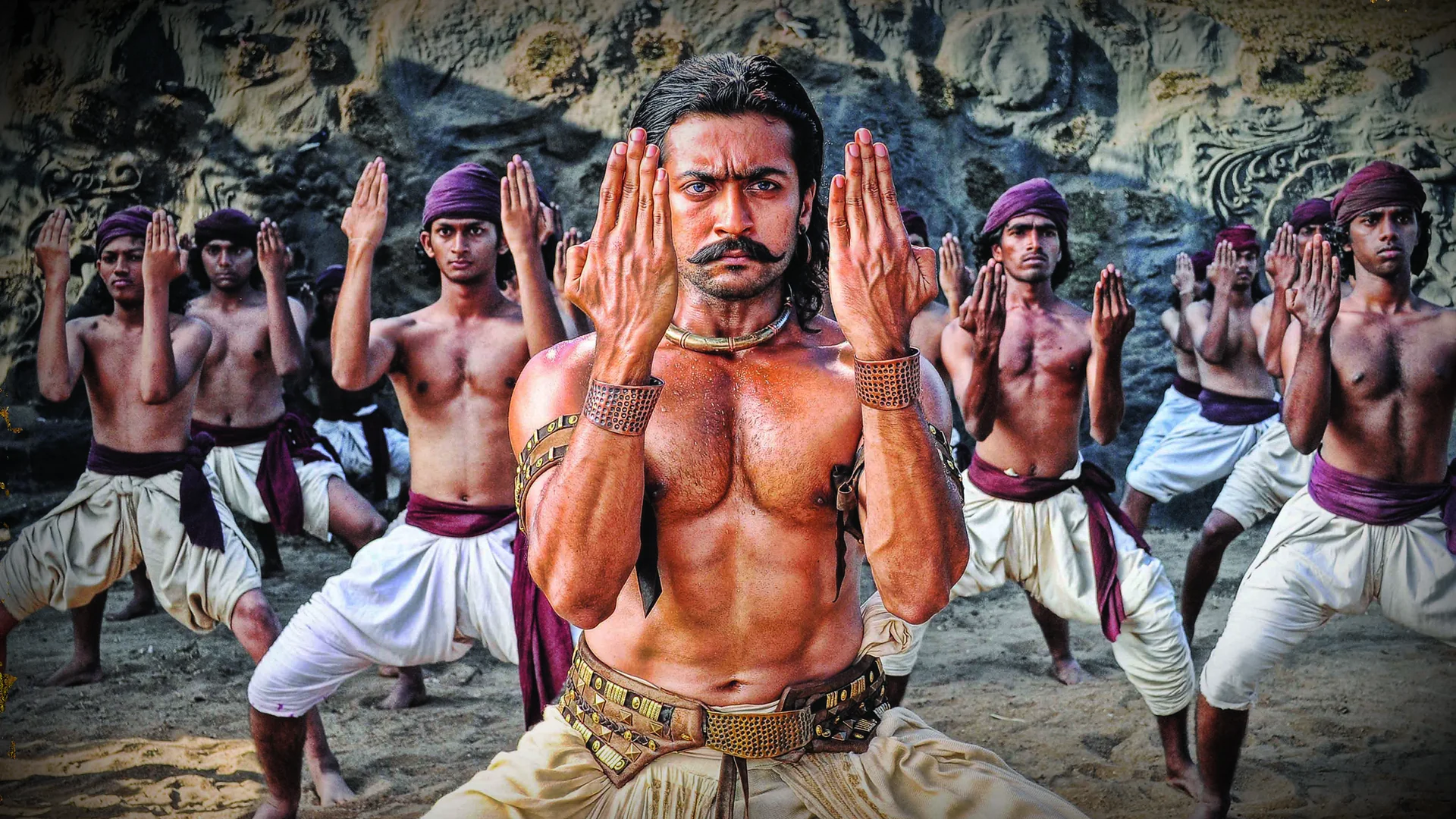
At its heart, 7aum Arivu is a film about legacy. It posits a fascinating, if scientifically shaky, concept: that the skills and memories of our ancestors might be dormant within our DNA, waiting to be reawakened. Suriya plays both the legendary Bodhidharma in stunning flashback sequences and Aravind, a modern-day circus artist who happens to be his descendant. Shruti Haasan’s Subha, a genetic engineering student, aims to unlock these ancestral memories to combat a looming threat.
This premise immediately thrusts us into a deep philosophical thicket. What does it mean to inherit a past? Are we merely vessels for the genetic imprints of those who came before us, or do we forge our own destiny? The film argues for a powerful, almost fated, connection to our heritage. Bodhidharma isn’t just a historical figure; he’s a blueprint for greatness, a forgotten hero whose skills—martial arts, medical knowledge, meditation—are seen as a national birthright. This taps into a potent sense of cultural identity and the pain of a history perhaps undervalued or forgotten.
However, this very aspect drew significant criticism. The film’s portrayal of Bodhidharma, while visually striking, was seen by some as a nationalistic re-appropriation, presenting a historical figure claimed by multiple cultures primarily as an Indian hero. This re-framing, while cinematic, raised questions about historical accuracy and the potential for a simplified, almost propagandistic, narrative of cultural superiority. It’s a delicate balance, portraying national pride without veering into historical revisionism, and 7aum Arivu often struggled to maintain that equilibrium.
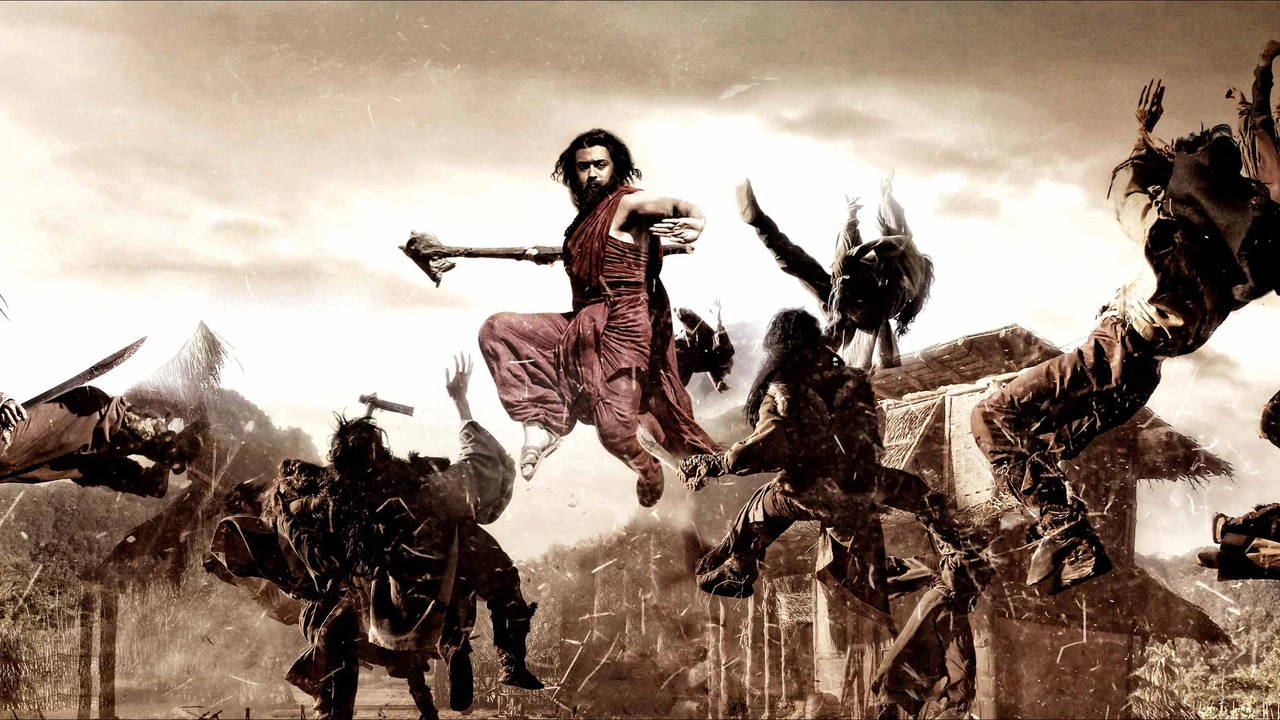 Suriya as Bodhidharma, embodying the ancient wisdom and martial prowess central to the film’s premise.
Ambition vs. Execution: The Narrative Chasm
The film’s ambition is its greatest strength and, simultaneously, its most glaring weakness. Director A.R. Murugadoss clearly had a vision for an epic, but translating that vision into a cohesive, consistently engaging narrative proved challenging. Critics universally noted the uneven pacing throughout its hefty 168-minute runtime. The flashback sequences depicting Bodhidharma’s journey, while visually grand, often felt disconnected from the modern plot, disrupting the flow.
The greatest ideas often falter not in their conception, but in the arduous journey of their realization. 7aum Arivu is a testament to the chasm between a compelling premise and its complex execution.
The modern-day plot, involving a bioweapon attack orchestrated by the formidable Chinese villain Dong Lee (Johnny Tri Nguyen, whose menacing performance was a definite highlight), often felt convoluted. Reviewers frequently pointed out the plot holes and the lack of scientific rigor in Subha’s genetic engineering experiments. While we allow for cinematic license in sci-fi, the leaps of logic sometimes strained credulity, making it difficult to fully invest in the urgency of the threat.
Performances were also a point of contention. While Suriya garnered praise for his intense portrayal of Bodhidharma, his modern avatar, Aravind, was sometimes perceived as underdeveloped. Shruti Haasan, in her Tamil debut, received mixed reviews, with some critics finding her performance wooden, particularly in the emotional scenes. The film seemed to prioritize its grand ideas over nuanced character development, which, for a story demanding emotional investment, was a significant drawback. Yet, the action sequences, especially the martial arts choreographed by Peter Hein, were lauded for their intensity and visual flair, providing moments of genuine excitement amidst the narrative struggles.
 Subha (Shruti Haasan) and Aravind (Suriya) in a moment of shared purpose, grappling with the weight of inherited destiny.
Beyond the DNA: Identity, Ethics, and the Weight of Choice
Despite its undeniable flaws and the criticism it garnered for its narrative inconsistencies and historical liberties, 7aum Arivu does manage to provoke some fascinating philosophical questions. It forces us to confront the idea of collective memory and how it shapes our present and future. If we could indeed access the skills of our ancestors, what would be our responsibility? Would it be a gift or a burden? The film, in its own way, explores the ethical quandaries of manipulating genetic heritage, even for a noble cause like national defense.
The core conflict isn’t just a physical battle; it’s a battle for cultural identity and historical narrative. Dong Lee’s mission isn’t merely to unleash a virus; it’s to erase India’s claim to Bodhidharma, to metaphorically and literally suppress a legacy. This speaks to a deeper anxiety about the erosion of cultural heritage in a globalized world, and the fight to preserve what makes a nation unique. It asks: what defines us, if not the stories we tell ourselves about where we come from?
Moreover, the film touches upon the nature of heroism. Is a hero born, or made? Is Aravind a hero because he genetically inherits Bodhidharma’s abilities, or because he chooses to embrace that legacy and fight for his people, despite his initial reluctance? This nuanced exploration of choice versus predetermined destiny is, perhaps, the film’s most enduring philosophical contribution, even if it’s often overshadowed by the spectacle.
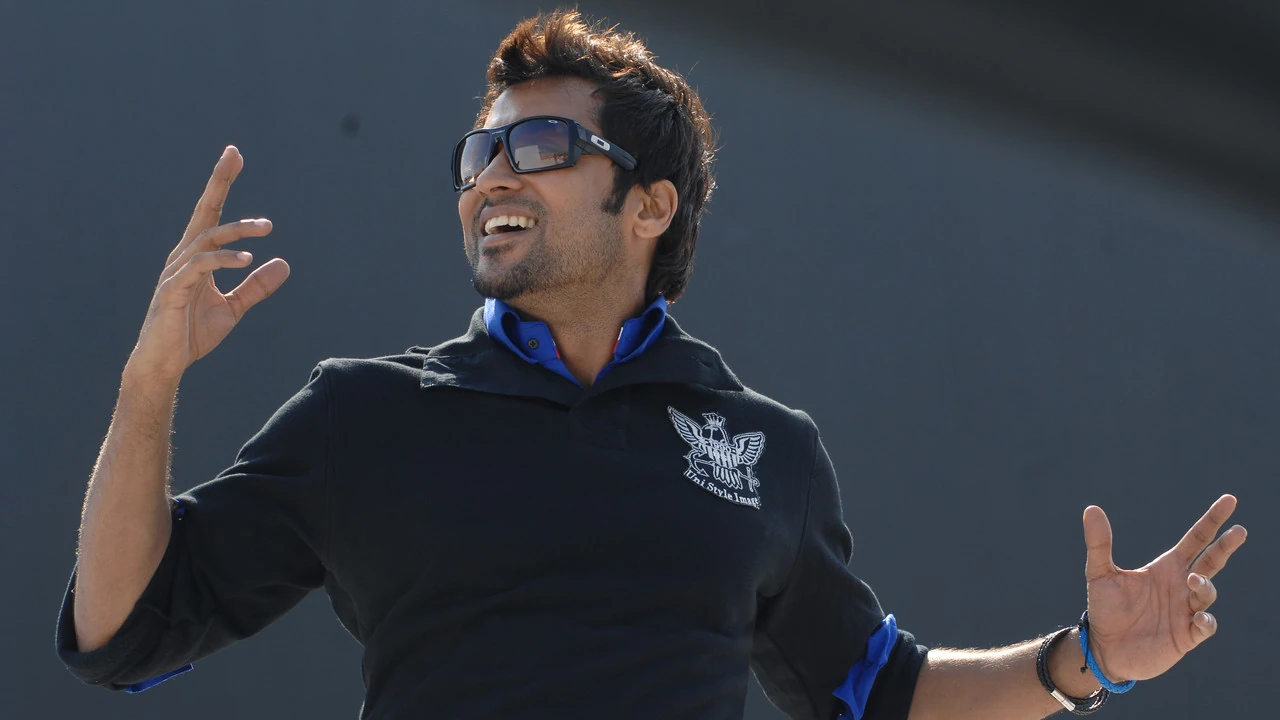 The menacing figure of Dong Lee (Johnny Tri Nguyen), a formidable antagonist embodying the threat to cultural heritage and national security.
While 7aum Arivu’s legacy is undeniably mixed, marked by both bold ambition and significant narrative shortcomings, it stands as a fascinating, if imperfect, cinematic artifact. It compels us to wrestle with grand ideas of ancestry, identity, and the very blueprints of our being, even if its answers are sometimes as muddled as its plot.
Ultimately, 7aum Arivu is a film that you either forgive for its flaws in exchange for its sheer audacity, or you find yourself frustrated by its missed potential. It’s a reminder that even when a film doesn’t quite stick the landing, its attempt to grapple with profound questions about where we come from, who we are, and what we might become, can still resonate. It asks us to consider: how much of our past are we truly willing to remember, and at what cost?
Where to Watch
- Sun Nxt
What’s Up? explores the philosophical depths of cinema.