The Fading Echo of Wonder: Amazing Stories and Our Search for the Extraordinary
Exploring the philosophical weight of the 2020 Amazing Stories reboot, its struggle to capture magic, and what its reception reveals about our need for wonder.
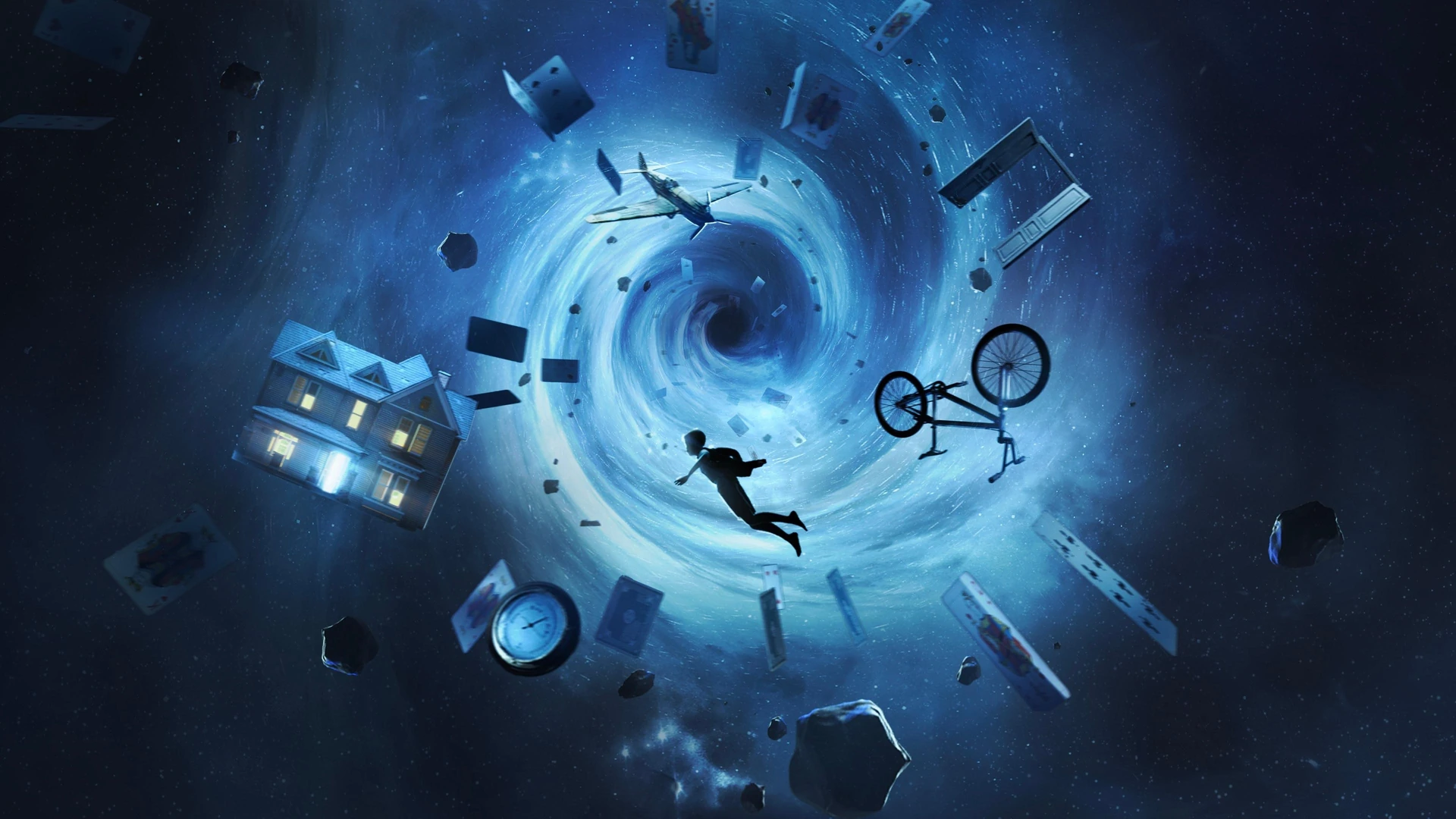
“Perhaps all the wonder in the world, if it is to last, needs to be rooted in something profoundly, universally human.”
There’s a curious weight that comes with reviving a legend, especially one imbued with the very essence of wonder and imagination. The 2020 Apple TV+ reimagining of Amazing Stories, a series that promised to transport everyday characters into “worlds of wonder, possibility, and imagination,” certainly carried that weight. But, as critics and audiences widely attested, it often buckled under it. With a disappointing 44% on Rotten Tomatoes and a Metascore of 46, this reboot arrived not with a bang of awe, but with a whimper of mixed reviews and general disappointment. Yet, even in its acknowledged flaws and shortcomings, Amazing Stories (2020) offers a fascinating lens through which to examine our collective craving for the extraordinary, and what happens when that craving goes largely unfulfilled by the very stories designed to feed it.
The Weight of Wonder: A Faltering Legacy
The original Amazing Stories, helmed by Steven Spielberg, was a touchstone for many, a vibrant anthology that explored the strange and the sublime with a distinct blend of humor, heart, and genuine spectacle. Its 2020 successor aimed for that same nostalgic beat, seeking to reintroduce a new generation to the idea that the miraculous can emerge from the mundane. The premise itself is a philosophical goldmine: what if the fabric of reality is thinner than we perceive? What if magic, advanced technology, or inexplicable phenomena are just a breath away from our everyday lives?
However, the execution, as many critics pointed out, struggled significantly. The anthology format, while offering variety, also meant an inherent unevenness in quality across its five episodes. Reviewers frequently noted a pervasive sense of generic storytelling, with plots often feeling predictable or failing to fully commit to the “amazing” part of its title. The ambition was palpable, but the delivery often fell flat, leaving viewers with a sense of unmet expectation. This isn’t just a critique of narrative structure; it’s a commentary on the fragility of wonder itself. For wonder to truly resonate, it needs not just a concept, but a meticulous, consistent, and deeply felt execution. When that consistency falters, the magic dissipates, leaving behind only the mechanics of a story trying to be profound.
 A glimmer of something beyond the ordinary, hinting at the elusive wonder the series sought to capture.
Echoes of the Extraordinary: Hits, Misses, and the Human Element
The criticisms leveled against Amazing Stories (2020) were varied but consistent. Many found the pacing to be an issue, with some episodes dragging or rushing through crucial developments. The special effects, while present, often lacked the polished, seamless quality one might expect from a high-budget Apple TV+ production, sometimes feeling more like a distraction than an enhancement. Critics like Judy Berman of Time noted that “the individual stories…tend to be too long, too slight, or both.” This sentiment was echoed across numerous reviews, highlighting a fundamental disconnect between the show’s intent and its impact.
Where the series occasionally found its footing was in its quieter moments, those brief glimpses into the human yearning for connection or meaning that transcend the fantastical elements. Episodes like “The Rift,” which touched on themes of grief and impossible choices, or “Dynoman and the Volt,” exploring the power of imagination in childhood, offered glimmers of the original’s heart. Yet, even these moments were often overshadowed by what many perceived as a lack of originality or a diluted sense of profound mystery. The show seemed caught between wanting to be a family-friendly, heartwarming anthology and something genuinely mind-bending, ultimately satisfying neither fully.
The true magic of storytelling isn’t just in the spectacle, but in its ability to reveal something fundamental about ourselves, even when the narrative stumbles.
This struggle isn’t unique to Amazing Stories. It speaks to the broader challenge of creating speculative fiction that truly resonates. It’s not enough to present a fantastical scenario; the best sci-fi and fantasy connect those scenarios to universal human experiences—love, loss, fear, hope, the search for identity. When Amazing Stories strayed into generic, predictable territory, it lost that essential connection, transforming what should have been moments of profound revelation into mere plot devices. The series became a cautionary tale about the difficulty of manufacturing wonder on demand, especially when burdened by the weight of a beloved predecessor.
 A character gazes into the unknown, reflecting the series’ attempt to explore the boundaries of imagination.
Beyond the Surface: The Persistent Lure of the ‘What If’
Despite its widely acknowledged flaws, and the general consensus that it failed to live up to its name, Amazing Stories (2020) still prompts a philosophical discussion. Why do we keep returning to these types of stories? Why does the idea of the “amazing” breaking into our reality hold such a perennial appeal? The series, even in its weaknesses, taps into a fundamental human desire: the yearning for meaning beyond the mundane. In a world that often feels increasingly rationalized, cynical, and predictable, stories that offer a glimpse of the impossible provide a vital escape, a psychological reprieve, and a renewed sense of possibility.
It asks, implicitly, if we still have the capacity for true wonder. Are we so inundated with spectacle that genuine astonishment is harder to come by? The very act of attempting to revive Amazing Stories reflects a cultural need to believe in something more, to seek out moments of transcendence. Perhaps the show’s failure to consistently deliver wasn’t just a creative misstep, but a reflection of the difficulty in truly capturing that elusive magic in an era saturated with CGI and instant gratification. It forces us to consider the ephemeral nature of awe and how easily it can be lost if not carefully nurtured.
The show, in its unevenness, inadvertently highlights the philosophical concept of disappointment as a catalyst for reflection. When something promises wonder and delivers less, we are left to ponder why. Was it the premise? The execution? Or have we, as an audience, become harder to impress, our internal landscapes so jaded that only the truly groundbreaking can break through? Amazing Stories (2020) serves as a mirror, reflecting not just its own narrative shortcomings, but our own expectations of what it means for a story to be truly “amazing” in the 21st century.
 An ordinary setting transformed by an unexpected element, embodying the series’ core idea of extraordinary incursions into daily life.
The greatest stories aren’t just entertaining; they’re an invitation to rethink our reality, to acknowledge the fragile boundary between the known and the unknowable, and to dare to dream beyond it. Even a flawed attempt reminds us of that essential human need.
Ultimately, the 2020 iteration of Amazing Stories stands as a curious testament to the enduring power of its title, if not its content. It reminds us of a time when anthology television was a canvas for bold, singular visions, and of our perpetual hunger for tales that defy explanation. While it largely failed to recapture the magic of its predecessor, its very existence, and its reception, provoke a deeper contemplation: what does it mean to be “amazed” in our modern world, and what responsibilities do storytellers bear in trying to evoke that elusive, yet profoundly human, sensation?
Where to Watch
- Apple TV
- Apple TV Amazon Channel
What’s Up? explores the philosophical depths of cinema.