Berlin's Silent Interrogation: Unpacking Truth in the Unspoken
Exploring the philosophical potential of Berlin (2023), an upcoming thriller that promises a deep dive into communication, truth, and moral ambiguity, despite lacking current reviews.
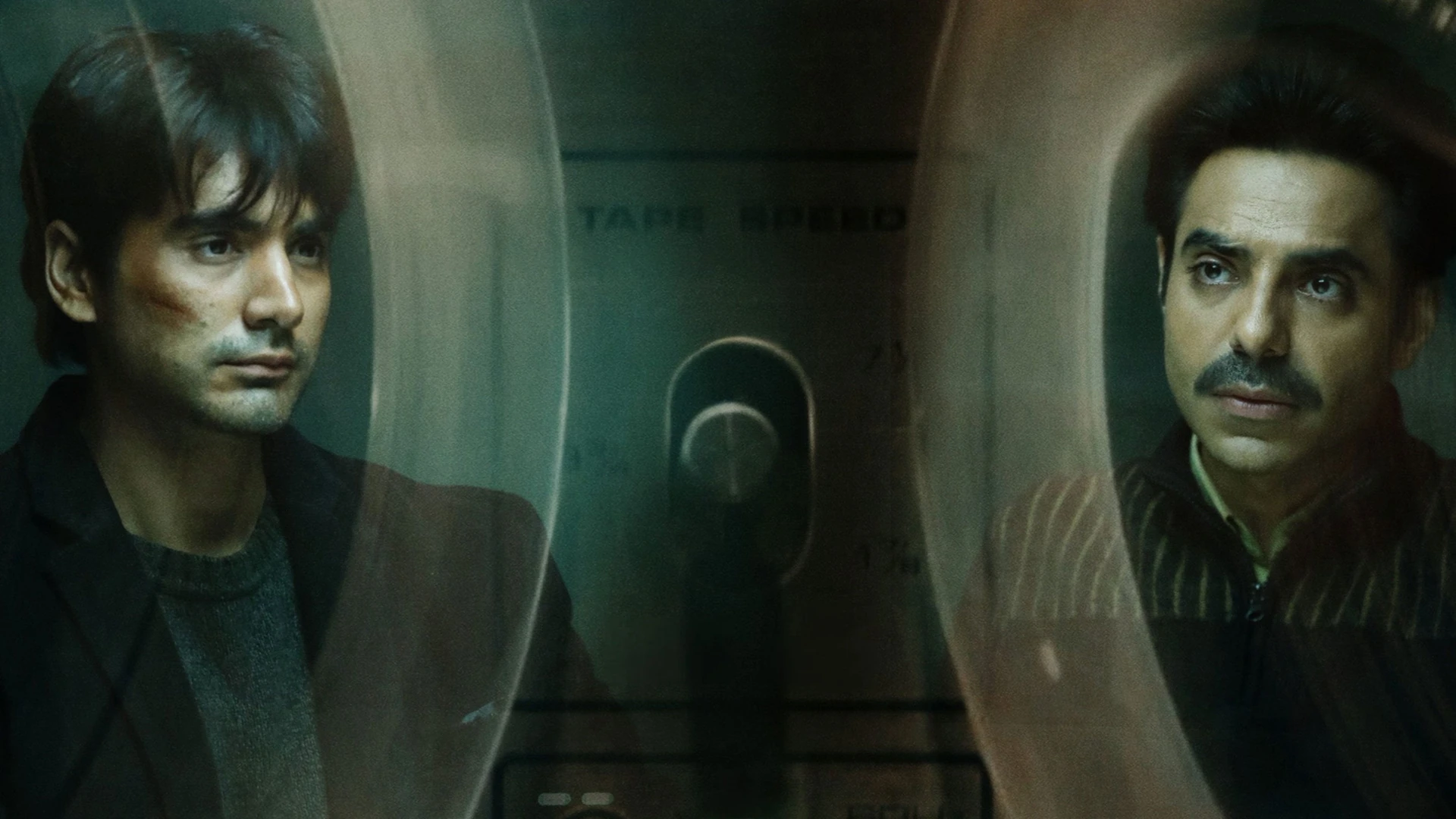
“The most important things are the hardest to say. They are the things you get ashamed of, because words diminish them.” — Stephen King
At “What’s Up?”, we often find ourselves sifting through the cinematic landscape, searching for those films that don’t just entertain, but genuinely provoke. And sometimes, the most intriguing provocations come not from what has been universally celebrated or critically panned, but from what’s still on the horizon. Such is the case with Berlin (2023), Director Atul Sabharwal’s upcoming thriller, slated for release in September 2024. With a premise as sharp and unsettling as a cold winter’s blade, Berlin promises to plunge us into a murky world where language itself becomes a weapon, and silence a formidable shield.
Given its future release date, there’s no existing critical consensus to dissect, no Rotten Tomatoes score to ponder, no Metacritic aggregate to debate. This absence, however, isn’t a void; it’s an opportunity. It allows us to approach Berlin not through the lens of performance or pacing (though those will undoubtedly be crucial), but through the sheer, unadulterated philosophical weight of its core concept. The film’s synopsis paints a chilling picture: New Delhi, 1993, a deaf-mute young man arrested as a spy, and a sign language expert caught in the crossfire of intelligence agencies. It’s a setup that immediately begs for a deeper interrogation of truth, communication, and the very nature of identity in a world built on deceit.
The Labyrinth of Unspoken Truths
The very premise of Berlin thrusts us into an existential dilemma: what happens when the accused cannot speak, and their innocence or guilt hinges entirely on interpretation? This isn’t just a plot device; it’s a profound commentary on the inherent fragility of justice, particularly when it relies on mediated communication. Our protagonist, a sign language expert, becomes the bridge between worlds – between silence and sound, between accusation and defense, between the visible and the hidden. But bridges can also be points of fracture.
Consider the philosophical implications:
- The Epistemology of Silence: How do we know anything when direct verbal communication is absent? The deaf-mute character’s truth exists in a realm beyond spoken language, forcing us to consider the limitations of our own linguistic frameworks.
- The Power of the Interpreter: The sign language expert isn’t just translating words; they are translating intent, nuance, emotion. Their role elevates them beyond a mere conduit to a co-creator of meaning, wielding immense, almost terrifying, power. Their biases, their understanding, their very presence, can irrevocably alter the fate of another.
- Identity Under Duress: To be branded a “spy” is to have your identity stripped and replaced with a label of suspicion. For a deaf-mute individual, already marginalized by societal norms, this accusation, amplified by the inability to verbally defend oneself, must be an utterly crushing burden. It forces us to question how much of our identity is constructed through our ability to speak and be heard.
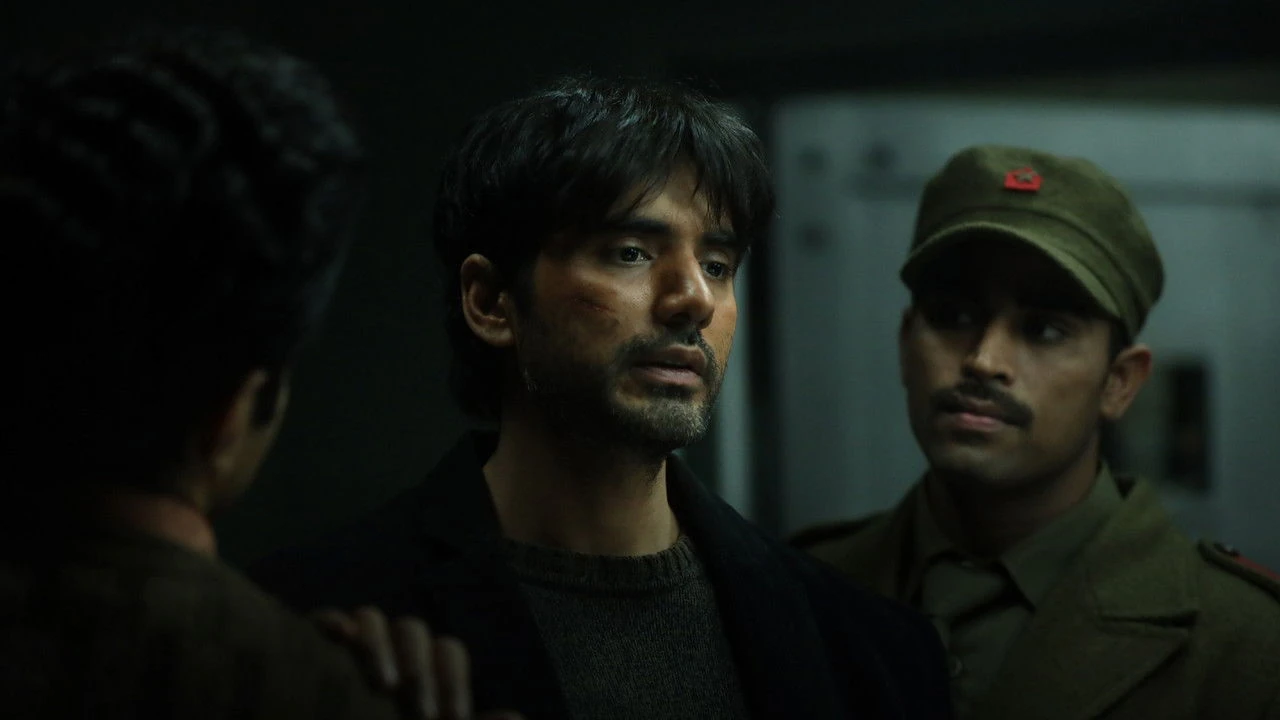 A lone figure stands in stark contrast, embodying the isolation of being unheard.
Whispers and Silences: The Unseen Conflict
Without the benefit of actual reviews, we can only speculate on how Berlin might navigate its ambitious premise. Yet, the very idea of it offers fertile ground for philosophical consideration, both in what it could achieve and the inherent challenges it faces.
On one hand, the film’s potential strengths lie in its unique approach to the espionage thriller genre. By placing a deaf-mute character at its center, it forces an exploration of communication beyond the verbal. This could lead to genuinely innovative storytelling, relying on visual cues, physical performances (especially from Aparshakti Khurana and Ishwak Singh, whose nuanced acting would be crucial), and the sheer tension of misinterpretation. The cast, including seasoned actors like Rahul Bose, suggests a commitment to strong performances that could anchor such a delicate narrative. The 1993 setting in New Delhi also adds a distinct socio-political backdrop, potentially layering the personal drama with broader national anxieties.
The real tension in Berlin won’t just be about who is a spy, but about the very act of knowing, the inherent subjectivity of understanding another human being, especially one whose world is inherently different from our own.
However, the very elements that make Berlin so intriguing also present significant hurdles. Will the narrative manage to avoid sensationalizing or tokenizing the deaf character’s experience? Will the pacing, at 124 minutes, sustain the complex interplay of silence, suspicion, and translation without becoming ponderous or, conversely, overly reliant on exposition? A central criticism often leveled at thrillers that delve into complex communication is their tendency to simplify or rush key moments for plot momentum. Berlin must resist this, allowing the nuances of sign language and unspoken communication to breathe. The “dark vortex of rivalry between intelligence agencies, deceit, and corruption” is familiar territory; the challenge will be to make it feel fresh through the specific lens of its unique protagonist. Will the promised “hazy horizon line between innocence and guilt” be genuinely complex, or merely confusing? These are the questions that linger in the absence of an actual viewing experience.
 A close-up shot of hands in motion, highlighting the silent language that carries immense weight.
Echoes in the Void: Existential Interrogation
Beyond the immediate thrills of a spy drama, Berlin holds the promise of a deeper, more existential interrogation. The film, if it succeeds, will make us confront our own assumptions about truth, memory, and the stories we construct. When the only witness is an interpreter, and the accused cannot articulate their own defense, the very concept of objective reality begins to fray.
This leads us to several profound questions:
- The Nature of Testimony: If all testimony is filtered through an interpreter, whose story is truly being told? Is it the accused’s, the interpreter’s, or the interrogator’s preconceived narrative?
- The Burden of Interpretation: The sign language expert carries an immense ethical burden. Their fidelity to truth, their ability to remain impartial, their very human fallibility, become central to the film’s moral universe. What does it cost them to mediate such high stakes?
- The Fragility of Justice: Berlin implicitly asks what happens when the mechanisms of justice are weaponized against those least equipped to fight back. It forces us to consider the immense power structures at play, and how easily they can crush the individual, especially when that individual is rendered voiceless.
- The Philosophical Spy: Espionage is, at its heart, an existential profession. It’s about constructing identities, living in shadows, and constantly questioning reality. A deaf-mute spy, or one accused of being so, pushes this to an extreme, exploring the ultimate alienation and the desperate search for authentic selfhood amidst a landscape of constructed lies.
 A shadowy figure observes from a distance, symbolizing the constant surveillance and judgment in a world of spies.
“Sometimes, the truth isn’t just stranger than fiction; it’s unspeakable, residing in the crevices between what is said and what is profoundly felt, but never uttered.”
Berlin (2023), even before its release, stands as a testament to the power of a compelling premise. It asks us to consider how much of our reality is built on the words we speak, and how much is lost in translation, or, more terrifyingly, in silence. While its success in execution remains to be seen, the philosophical questions it raises about communication, justice, and the precariousness of truth are undeniable. It challenges us to listen not just with our ears, but with our entire being, in a world that often refuses to hear. What does it truly mean to give voice to the voiceless, and what are the profound, often dangerous, consequences when that voice is misinterpreted, or deliberately silenced?
What’s Up? explores the philosophical depths of cinema.