Blue Beetle's Embrace of Identity: More Than Just Another Origin Story
Exploring Blue Beetle's philosophical heart, its nuanced take on family, identity, and the burden of legacy amidst superhero tropes.
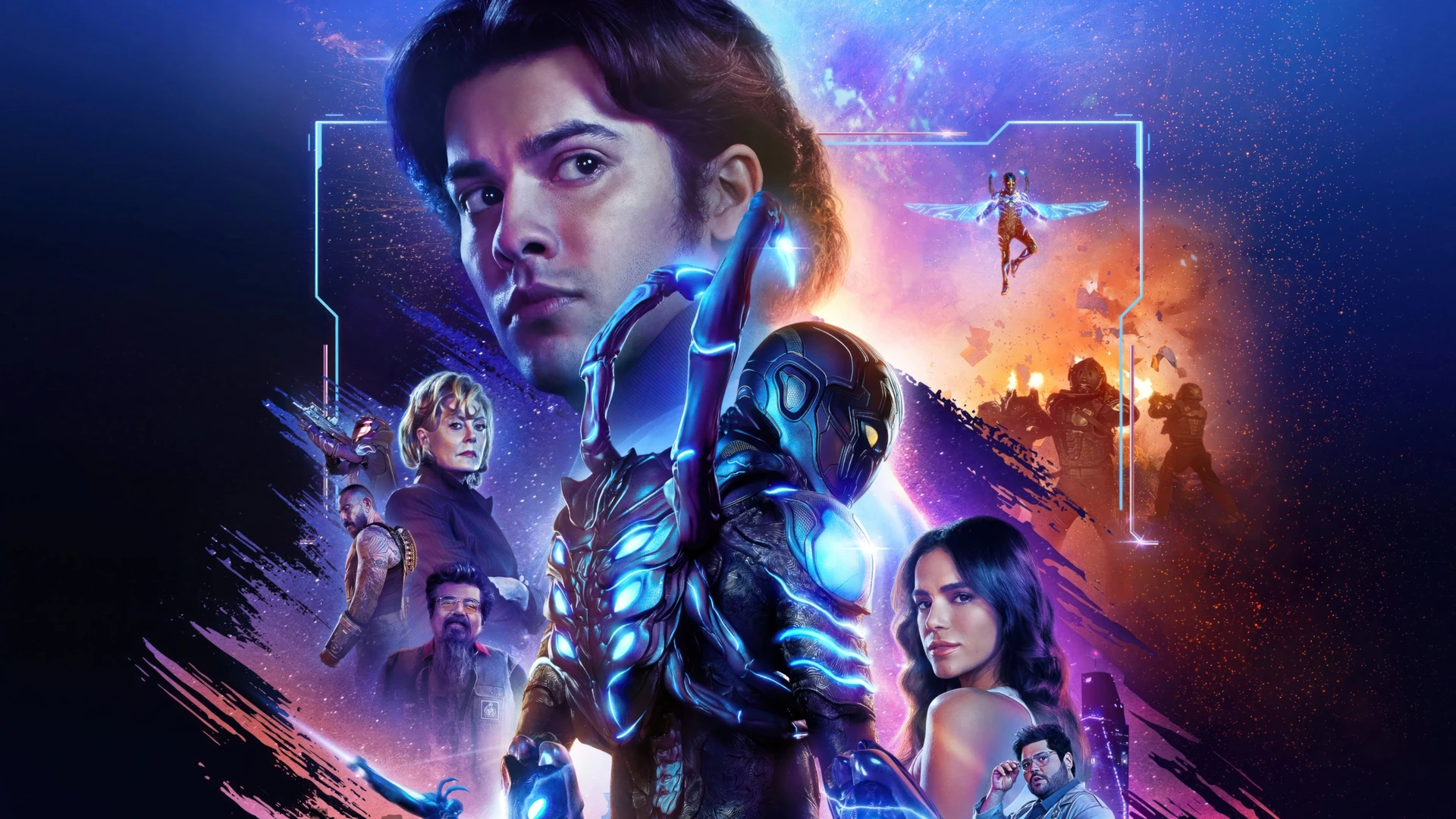
“We don’t get to choose our beginnings, but we do get to choose what we become.” — Unknown
When Blue Beetle soared into cinemas in 2023, it arrived with a particular kind of baggage – the weight of being yet another superhero origin story in a saturated market, and the first live-action DC film centered on a Latino hero. Critical reception, while largely positive, often settled on a familiar refrain: a heartfelt, charming entry elevated by its family dynamic and star Xolo Maridueña, yet undeniably formulaic in its broader narrative beats. Indeed, Rotten Tomatoes clocked it in the mid-70s for critics, while audiences embraced it much more warmly, pushing its score into the 90s. This disparity is telling, hinting that while the film might not rewrite the genre playbook, it connects on a deeply human, culturally specific level that’s worth a closer philosophical look. Beyond the familiar alien tech and corporate villains, *Blue Beetle offers a compelling meditation on identity, legacy, and the true meaning of belonging.*
The Imposition of Destiny: Identity in the Age of the Scarab
Jaime Reyes (Xolo Maridueña) begins his journey in a very relatable place for many young adults: fresh out of college, full of aspirations, only to return home and find the reality of economic struggle. He’s looking for his purpose, a sense of direction, and instead, a literal alien artifact, the Scarab, chooses him. This isn’t a hero who seeks power; power is thrust upon him, fusing with his very being. This sudden, involuntary transformation plunges Jaime into an existential crisis that is at the heart of the film.
Critics often pointed to Blue Beetle’s adherence to the superhero origin story template, and it’s true, the beats are familiar. We see the initial confusion, the struggle for control, the reluctant acceptance. But what makes Jaime’s experience philosophically distinct is the sheer imposition of his new identity. The Scarab, Khaji-Da, isn’t just a suit; it’s a sentient being that integrates with his nervous system, speaks to him, and demands to be used. This raises profound questions about agency and self-determination. Is Jaime still Jaime when his body is controlled by an alien intelligence? How much of his actions are truly his own? He’s not just wearing a costume; he’s becoming something else, something ancient and powerful, without a clear choice in the matter.
Key themes to explore here:
- The Burden of the Chosen — Jaime’s lack of choice in his transformation forces him to confront an identity he didn’t seek.
- Integration vs. Erasure — The Scarab doesn’t just grant power; it fundamentally alters Jaime’s self-perception and his place in the world.
- Purpose Beyond Self — His new existence immediately comes with an ancient, universal conflict, pulling him away from his personal aspirations.
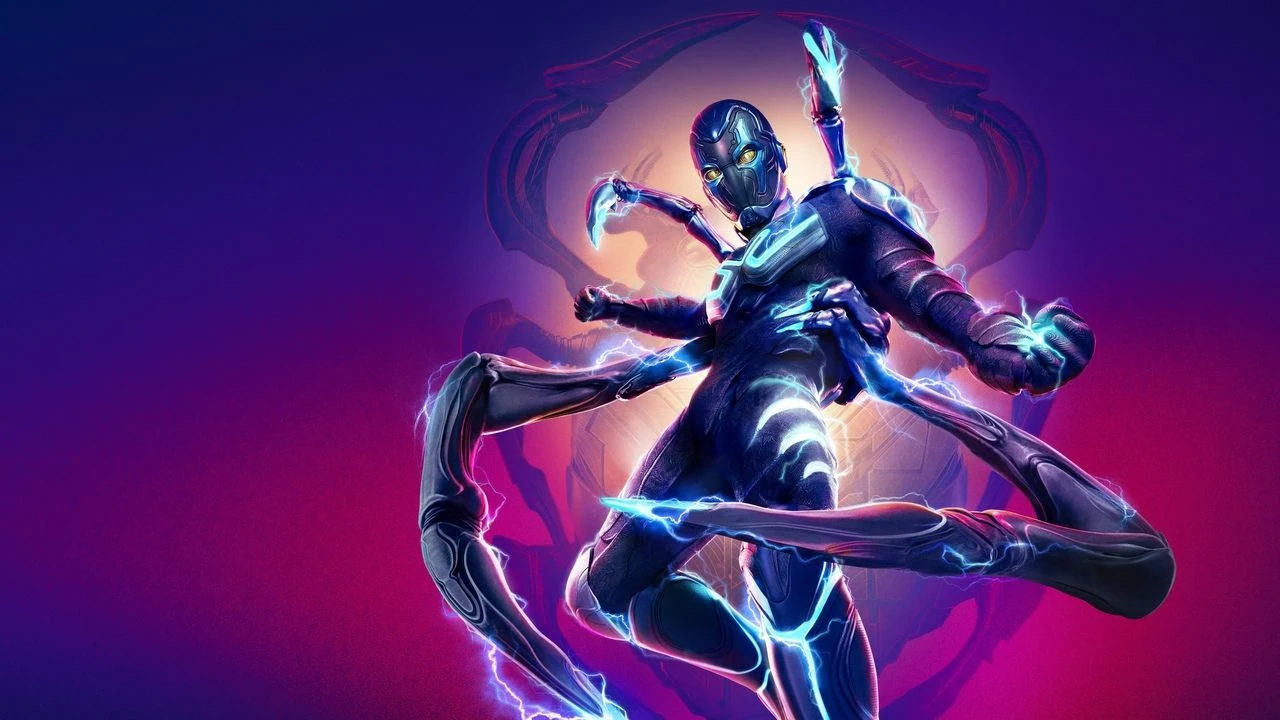
 Jaime Reyes, mid-transformation, grappling with the power and alien consciousness of the Scarab, a visual metaphor for the struggle of identity.
La Familia as the True Armor: A Counter-Narrative to Individual Heroism
Where Blue Beetle truly carves out its unique space, and what resonated so deeply with audiences and critics alike, is its unwavering focus on family. In a genre often dominated by lone wolves and orphaned heroes, the Reyes family isn’t just a supporting cast; they are an integral, active force in Jaime’s journey. They’re loud, supportive, meddling, and fiercely protective, embodying a cultural emphasis on communal bonds.
Many reviews, even those critical of the film’s generic plot points or somewhat one-dimensional villain (played by Susan Sarandon with a predictable corporate ruthlessness), lauded this aspect as the film’s beating heart. The family’s humor, their Spanglish dialogue, and their collective effort to protect Jaime offer a refreshing counterpoint to the superhero cliché of the hero hiding their identity from loved ones. Here, Jaime’s identity as Blue Beetle is immediately shared, embraced, and fought for by his entire family.
The strength found in interdependence, not just independence, is a radical reinterpretation of heroism in a world that often fetishizes individual might.
This communal approach to heroism isn’t just charming; it’s a philosophical statement. It suggests that true power isn’t just about the suit or the alien tech, but the network of relationships that ground and empower us. When Jaime is at his weakest, it’s his family’s love, their collective will, and even their unexpected combat skills that pull him through. They don’t just inspire him; they become his literal backup, his strategic advisors, and his emotional anchors. This emphasis on familial ethics and the collective unconscious of a community provides a powerful ethical framework, contrasting sharply with the cold, self-serving corporate greed represented by Kord Industries. It’s a testament to the idea that our personal battles are rarely fought alone, and our greatest strengths often come from those closest to us.
 The Reyes family, united and defiant, facing an unseen threat together; their solidarity is the film’s moral compass.
Echoes of Legacy and the Ethics of Power
Beyond Jaime’s immediate struggle and his family’s support, Blue Beetle touches upon the broader themes of legacy and the ethical use of power. The Scarab itself is an ancient relic of alien biotechnology, a tool of conquest repurposed by a previous Blue Beetle, Ted Kord, for good. This immediately brings up questions of inherited responsibility. What do we do with the tools and legacies of the past? Do we continue their intended purpose, or do we forge a new path?
Despite some pacing issues and plot contrivances that critics highlighted, particularly in the film’s setup of Kord Industries’ villainy, the underlying questions about the Scarab’s true nature and the Kord family’s history remain compelling. Victoria Kord’s ruthless pursuit of the Scarab represents unchecked corporate ambition and the desire to weaponize ancient power for profit, contrasting sharply with Jaime’s instinct to protect and his family’s values. This juxtaposition forces us to consider: Who truly deserves power? Is it those who seek to control it, or those who are chosen by it and learn to wield it with compassion and community?
The film subtly argues for a heroism rooted not in individual prowess, but in collective wisdom and ethical grounding. Jaime’s struggle to control Khaji-Da, his eventual partnership with the alien consciousness, is a metaphor for integrating different aspects of one’s being and heritage. It’s about finding harmony between disparate forces—man and alien, past and present, individual and family—to forge a truly potent identity.
 A close-up of the Scarab, glowing ominously, symbolizing ancient power, alien wisdom, and the ethical dilemmas it bestows upon its wielder.
“We are shaped by what we love. If what we love is family, community, and integrity, then that is the shape of our heroism.”
Blue Beetle might not reinvent the superhero genre, and its narrative can certainly feel familiar at times, echoing criticisms about its formulaic approach. However, to dismiss it as ‘just another superhero movie’ would be to overlook its genuine philosophical contributions. It’s a film that thoughtfully, and often joyfully, grounds its cosmic conflicts in the very human, very specific bonds of family and cultural identity. It asks us to consider what it truly means to be a hero, not through isolation, but through fierce connection; not just by wielding power, but by understanding the ethical weight of the legacies we inherit and the communities that shape us. In a genre often focused on individual might, Blue Beetle reminds us that our greatest strength often lies in our collective heart.
Where to Watch
- HBO Max
- HBO Max Amazon Channel
- YouTube TV
- Cinemax Amazon Channel
- TNT
What’s Up? explores the philosophical depths of cinema.