Choona's Crooked Path: Revenge, Superstition, and the Absurdity of Agency
Exploring the philosophical depths of Choona, a Netflix series that blends dark comedy, crime, and revenge with a critical look at superstition and collective agency.
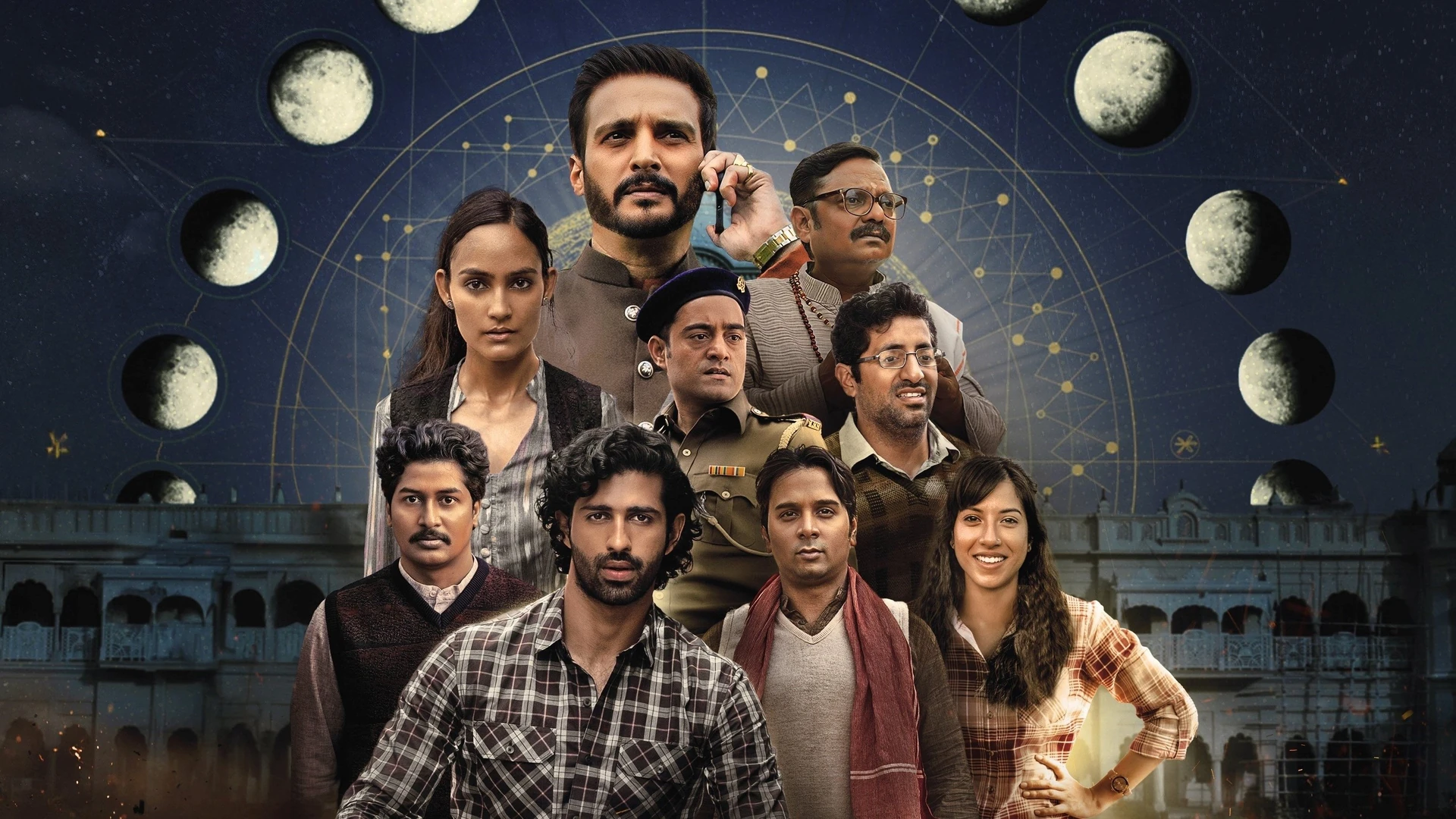
“Man is condemned to be free; because once thrown into the world, he is responsible for everything he does.” — Jean-Paul Sartre
Netflix’s Choona, a 2023 Indian original, slides onto our screens promising a heady cocktail of crime, comedy, drama, and thriller. It’s a series built around a classic premise: an unlikely ensemble of outcasts banding together to take down a common, formidable enemy. Here, that enemy is a ruthless yet deeply superstitious politician, Avinash Shukla (played with chilling charm by Jimmy Shergill). While the series, directed by the nan, certainly had its moments of ingenious plotting and stellar performances, it’s also fair to say that critical and audience reception has been a bit of a mixed bag. Many praised its fresh concept and ensemble acting, particularly Shergill’s menacing turn, but others pointed to an uneven pace and a plot that occasionally veered into convoluted territory. Yet, beneath the surface of this often-chaotic heist narrative, Choona inadvertently (or perhaps intentionally) stumbles upon some profoundly existential and ethical questions about power, destiny, and the very nature of human agency.
The Illusion of Control: Fate, Fortune, and Folly
At its core, Choona is fascinated by control – who has it, who seeks it, and how easily it can be undone, often by the most improbable forces. The antagonist, Avinash Shukla, is a man of immense political power, yet he is paradoxically enslaved by his superstitions. He consults astrologers, believes in auspicious timings, and fears bad omens more than any human adversary. This isn’t just a character quirk; it’s a profound philosophical statement. Shukla, despite his ruthlessness, embodies the human desire to impose order on a fundamentally chaotic universe, to believe that there’s a cosmic blueprint guiding events, or at least a way to manipulate it.
This reliance on external forces—fate, fortune, cosmic alignment—stands in stark contrast to the protagonists, a ragtag group whose lives are defined by their lack of control, their marginalization. Their very decision to plot a heist is an act of reclamation, a defiant assertion of their free will against the predetermined paths life has seemingly laid out for them. Critics, while often enjoying the premise, sometimes found the narrative’s oscillation between slapstick comedy and genuine menace to be disorienting, a stylistic choice that perhaps mirrors the very absurdity of characters trying to assert control in a world that often feels arbitrary. The series, for all its structural wobbles, asks: Are we truly masters of our destiny, or merely pawns in a larger cosmic game, perhaps one orchestrated by our own ingrained beliefs and fears?
Key themes explored:
- The Paradox of Power: How absolute power can breed a strange vulnerability to the irrational.
- Superstition as a Crutch: A coping mechanism, or a dangerous blind spot, especially for the powerful.
- Agency vs. Determinism: The constant push and pull between individual choice and perceived fate.
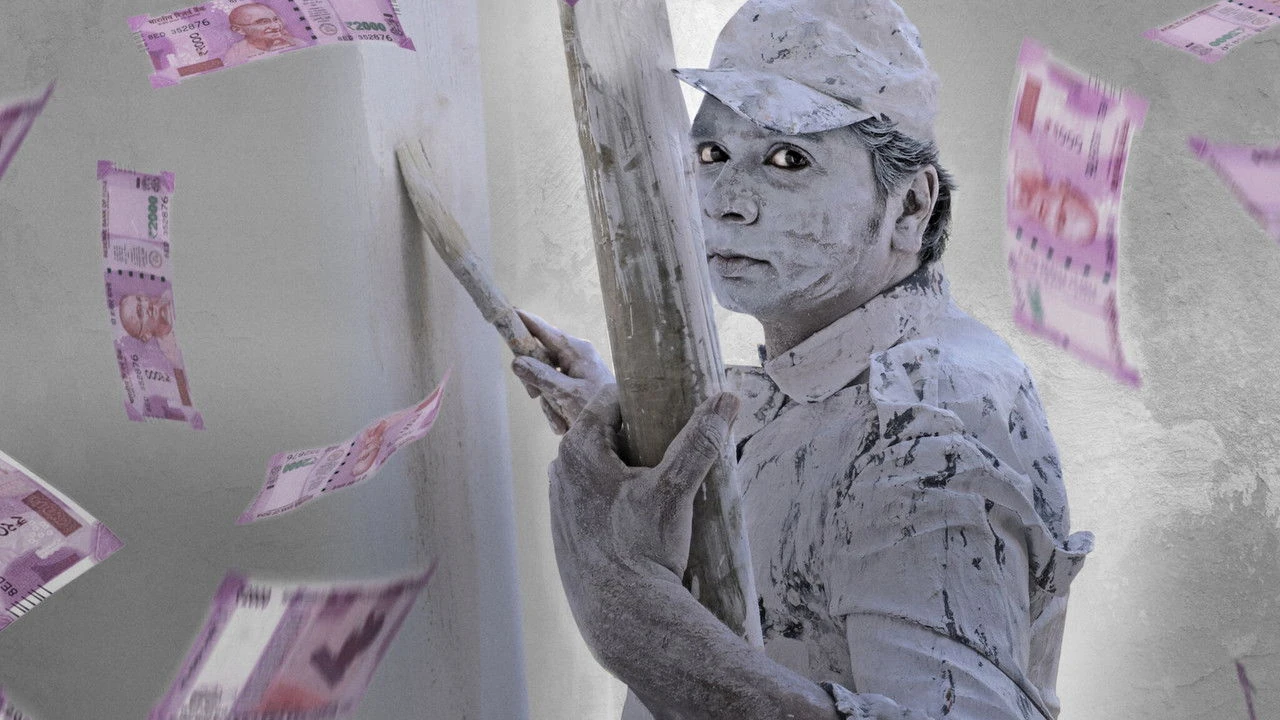 The collective will of the marginalized, poised against an insurmountable foe.
The Crooked Path of Retribution: When Justice Wears a Disguise
Choona is fundamentally a revenge story, and like most revenge narratives, it immediately plunges us into the murky waters of retributive justice. The protagonists aren’t seeking legal recourse; they’re seeking personal vindication, an eye for an eye, albeit executed with a healthy dose of dark humor. This choice immediately raises ethical questions: Is choona (limestone, or being “duped”) merely about getting even, or is it an attempt to restore a moral balance that the official systems have failed to provide?
Reviewers were often drawn to the ensemble cast – Jimmy Shergill, Arshad Warsi, Aashim Gulati, Namit Das, Atul Srivastava – noting their strong performances. However, some criticisms revolved around the narrative’s tendency to get lost in its own labyrinthine plot, diluting the emotional impact of the revenge for certain characters. The show’s often inconsistent tone between laugh-out-loud moments and genuinely dark threats left some viewers feeling emotionally adrift. Yet, this very tonal inconsistency might be its strength in a philosophical sense. It mirrors the messy reality of human motivation: revenge isn’t a clean, linear path. It’s often fraught with unexpected humor, moments of doubt, and the constant awareness of the moral compromises one makes.
This is where we discover the true weight of choice — not in the outcome, but in the becoming of someone capable of such an act.
The series doesn’t shy away from depicting the moral greyness of its “heroes.” They are not paragons of virtue; they are flawed individuals, driven by their own grievances, seeking to inflict the same kind of humiliation and loss they suffered. This makes Choona an interesting study of moral relativism, asking us to empathize with characters who are undeniably engaging, even as their methods venture into ethically dubious territory. It subtly suggests that justice, particularly when self-administered, rarely aligns with classical notions of fairness or impartiality.
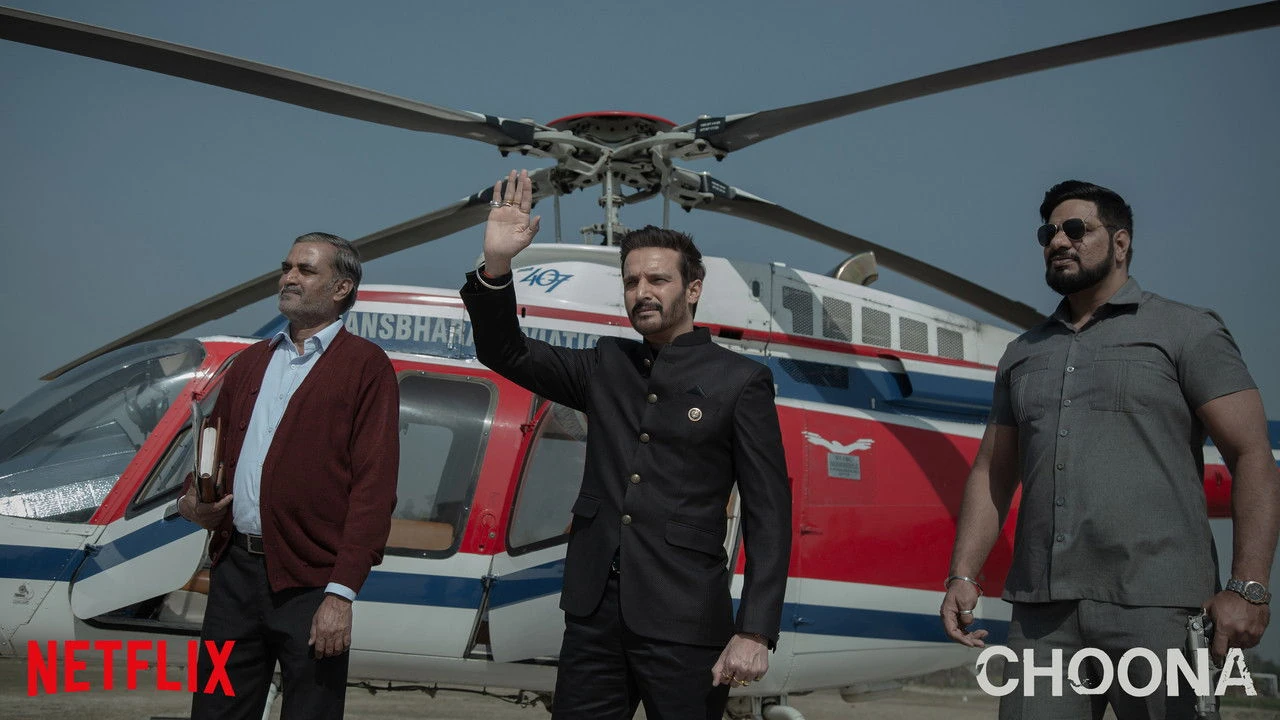 Even the powerful are susceptible to their own internal battles and beliefs.
Beyond the Surface: The Absurdity of Human Endeavor
Despite its noted flaws—the occasionally meandering plot, the uneven pacing that drew criticism, and moments where the narrative felt a bit too convenient—Choona still manages to provoke deeper thought. The juxtaposition of a ruthless, seemingly all-powerful politician with his crippling superstitions highlights the inherent absurdity of the human condition. We build empires, accrue wealth, wield immense influence, yet remain tethered to irrational beliefs, seeking meaning or control in omens and rituals. It’s a darkly comedic reflection on how fragile our carefully constructed realities truly are.
The series doesn’t offer easy answers. Does the heist bring genuine catharsis? Does it truly dismantle the system Shukla represents, or merely replace one power dynamic with another? The ending, which for some viewers felt less than fully satisfying, might be Choona’s most profound philosophical statement. It suggests that the quest for revenge, while emotionally compelling, might not lead to the promised land of peace or justice. Instead, it might simply perpetuate a cycle, albeit with a new set of players. The individual acts of defiance, while momentarily exhilarating, often dissolve back into the larger, unchanging currents of power and human folly. It challenges us to consider if true liberation lies in escaping the cycle of retribution, rather than merely reversing its flow.
 The human face of resilience, or perhaps, desperation, in the face of insurmountable odds.
“We are what we pretend to be, so we must be careful about what we pretend to be.” — Kurt Vonnegut
Choona is far from a perfect series; its narrative ambition sometimes outstrips its execution, leading to a viewing experience that can be both exhilarating and frustrating. Yet, even in its imperfections, it holds up a fascinating, albeit distorted, mirror to our own existence. It asks us to confront the inherent absurdity of human endeavors, the seductive but dangerous allure of revenge, and the eternal struggle between our perceived agency and the forces, both rational and irrational, that shape our lives. What does it truly mean to win against an opponent who, despite all his power, is ultimately a slave to his own fears and beliefs? And what kind of person do we become in the process of trying to bring them down?
Where to Watch
- Netflix
- Netflix Standard with Ads
What’s Up? explores the philosophical depths of cinema.