Citadel: Diana – The Double Agent's Existential Mirror
Exploring Citadel: Diana as a philosophical inquiry into identity, loyalty, and the burden of deception in a world built on fractured truths. Despite mixed reception, its core themes resonate deeply.

“We are what we pretend to be, so we must be careful about what we pretend to be.” — Kurt Vonnegut
When a new chapter in the sprawling Citadel universe drops, there’s always a certain kind of anticipation mixed with apprehension. Citadel: Diana (2024), Amazon’s latest foray into this high-octane spy thriller world, arrived with the promise of more intricate espionage, sleek action, and a compelling new lead in Matilda De Angelis’s Diana Cavalieri. But let’s be honest, the Citadel brand, while undeniably ambitious in its global scope, has often struggled with critical consensus, frequently drawing flak for its convoluted narratives, uneven pacing, and sometimes generic spy tropes. Diana steps into this legacy, and while it certainly delivers on the visual spectacle and a magnetic central performance, it, too, navigates the choppy waters of audience expectations and critical scrutiny. Yet, beneath the slick surface and the occasional narrative stumble, Citadel: Diana offers a surprisingly fertile ground for philosophical excavation, probing deep into the nature of identity, loyalty, and the existential weight of choice when your very being is a carefully constructed lie.
The Labyrinth of Self: Deception as Existence
Diana Cavalieri isn’t just a spy; she’s a walking paradox, a double agent for the defunct Citadel, embedded within the rival Manticore. Milan, 2030, sets the stage for a world where trust is a liability and truth is a weapon. The series immediately plunges us into Diana’s predicament: eight years after Manticore destroyed Citadel, she’s living a double life, a phantom limb of a fallen empire. Critics, much like with its predecessor, have pointed out instances where the plot can feel overly intricate, at times sacrificing character depth for twists and turns. Some early reviews noted that while De Angelis is captivating, the narrative often struggles to fully flesh out the motivations of supporting characters or the precise machinations of the two omnipresent, shadowy agencies.
However, it’s precisely this backdrop of systemic deceit that elevates Diana beyond a mere action spectacle into a contemplation of personal authenticity. What does it mean to be Diana Cavalieri when every interaction, every relationship, is predicated on a falsehood? Her existence is a constant performance, a calculated act. This isn’t just about professional espionage; it’s about the deeper human struggle with identity. Is the “real” Diana the loyal Citadel agent, the seemingly dedicated Manticore operative, or something else entirely, forged in the crucible of constant pretense? The series, even when its plot mechanics occasionally clunk, forces us to consider the layers of self we present to the world, and what happens when those layers become our entire reality.
- The Mask as the Face: Diana’s life is a series of adopted personas. When does the mask become indistinguishable from the face beneath it?
- Echoes of the Past: The trauma of Citadel’s fall shapes Diana’s present, making her a ghost of her former self, haunting the halls of her enemies.
- The Burden of Knowledge: She knows the truth, while those around her operate on engineered lies. This isolation is a heavy philosophical burden.
 A lone figure caught between two worlds, the weight of allegiance etched on her face.
Allegiances in an Amoral World: The Price of Trust
The core conflict of Citadel: Diana — her chance to leave the agency forever, contingent on trusting Edo Zani, the heir of Manticore Italy — is a classic spy thriller setup. Yet, it also serves as a potent vehicle for exploring the fragility of trust and the relativity of morality. In a world where global agencies operate outside conventional legal frameworks, “good” and “evil” become fluid concepts, largely dependent on which side you’re on. Many viewers found the constant shifting of allegiances and the opacity of the “good guys” vs. “bad guys” frustrating at times, contributing to the feeling of a convoluted plot. It’s a valid criticism if you’re looking for clear-cut heroes and villains, but perhaps that’s the point.
In espionage, the only constant is betrayal, and the truest loyalty is often reserved for the idea of something, rather than the flawed individuals who embody it.
The series pushes Diana to confront the very nature of her loyalties. Is she loyal to a fallen institution, a personal vendetta, or a sense of justice? Edo Zani represents a potential path to freedom, but at what cost? Can she truly trust someone from the very organization that destroyed her former life? This dynamic compels us to ask: What do we owe to our past affiliations? When does loyalty become a chain rather than a bond? And in a world stripped of moral absolutes, how do we forge a personal ethical compass? Diana presents a compelling, if at times imperfectly executed, case study in moral relativism, where every decision is a calculated risk, and every relationship is a potential trap. The series, despite its narrative speed bumps, doesn’t shy away from the deeply uncomfortable questions inherent in such a setup.
 A tense standoff, where the lines between friend and foe blur in the digital age.
Echoes of a Fractured Past: Agency Amidst Determinism
The destruction of Citadel eight years prior isn’t just a plot point; it’s the foundational trauma that underpins Diana’s entire existence. It’s a past that dictates her present, seemingly removing her agency. She’s trapped behind enemy lines, driven by a mission whose origins are steeped in loss. This raises profound questions about free will versus determinism. Is Diana truly making choices, or is she merely reacting to the predetermined trajectory set by past events and her ingrained programming? The series, at its most thought-provoking, hints at the struggle to reclaim agency in a life that feels pre-written by external forces.
The high-stakes world of Citadel: Diana often feels like a grand chessboard, with individuals as pawns moved by unseen hands. While some critics found this vast, interconnected universe to be overwhelming or even a bit derivative of other spy franchises, it undeniably serves to emphasize the smallness of the individual against global power structures. Diana’s dilemma is an echo of a more universal human experience: how do we assert our individual will and forge our own path when caught in the currents of larger historical, societal, or even personal forces that seem beyond our control? Her potential alliance with Edo Zani offers not just a chance at escape, but perhaps, a chance at self-determination – a terrifying leap of faith into an unknown future that isn’t dictated by the ghosts of the past.
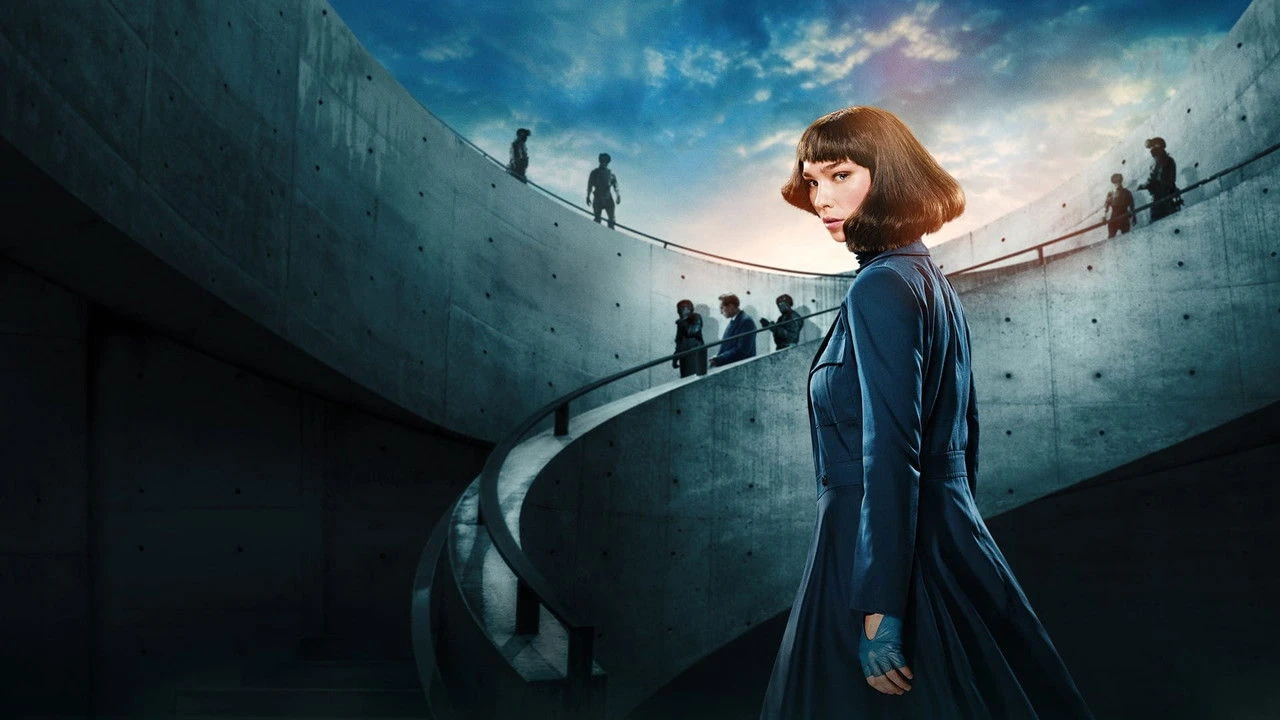 A moment of quiet contemplation amidst the chaos, reflecting on choices and consequences.
The greatest betrayals are not always those committed against others, but those we inflict upon our own authentic selves in the relentless pursuit of an imposed purpose.
Citadel: Diana might not be a flawless masterpiece, and it will likely continue the Citadel legacy of being a divisive series—appreciated by some for its spectacle and core themes, while criticized by others for its narrative complexities and occasional genericism. Yet, to dismiss it entirely would be to overlook its capacity for philosophical resonance. It forces us to peer into the mirror held up by Diana Cavalieri’s double life and ask ourselves: How many masks do we wear? What is the cost of our allegiances? And in a world where truth is negotiable, how do we find, and hold onto, our authentic self? The series, despite its narrative imperfections, offers a compelling, if at times frustrating, exploration of the human condition caught in the relentless gears of deception and loyalty.
Where to Watch
- Amazon Prime Video
- Amazon Prime Video with Ads
What’s Up? explores the philosophical depths of cinema.