Civil War's Unsettling Gaze: When the Camera Becomes the Last Line of Defense
Exploring the philosophical weight of Alex Garland's Civil War, its divisive reception, and the ethics of witnessing conflict.
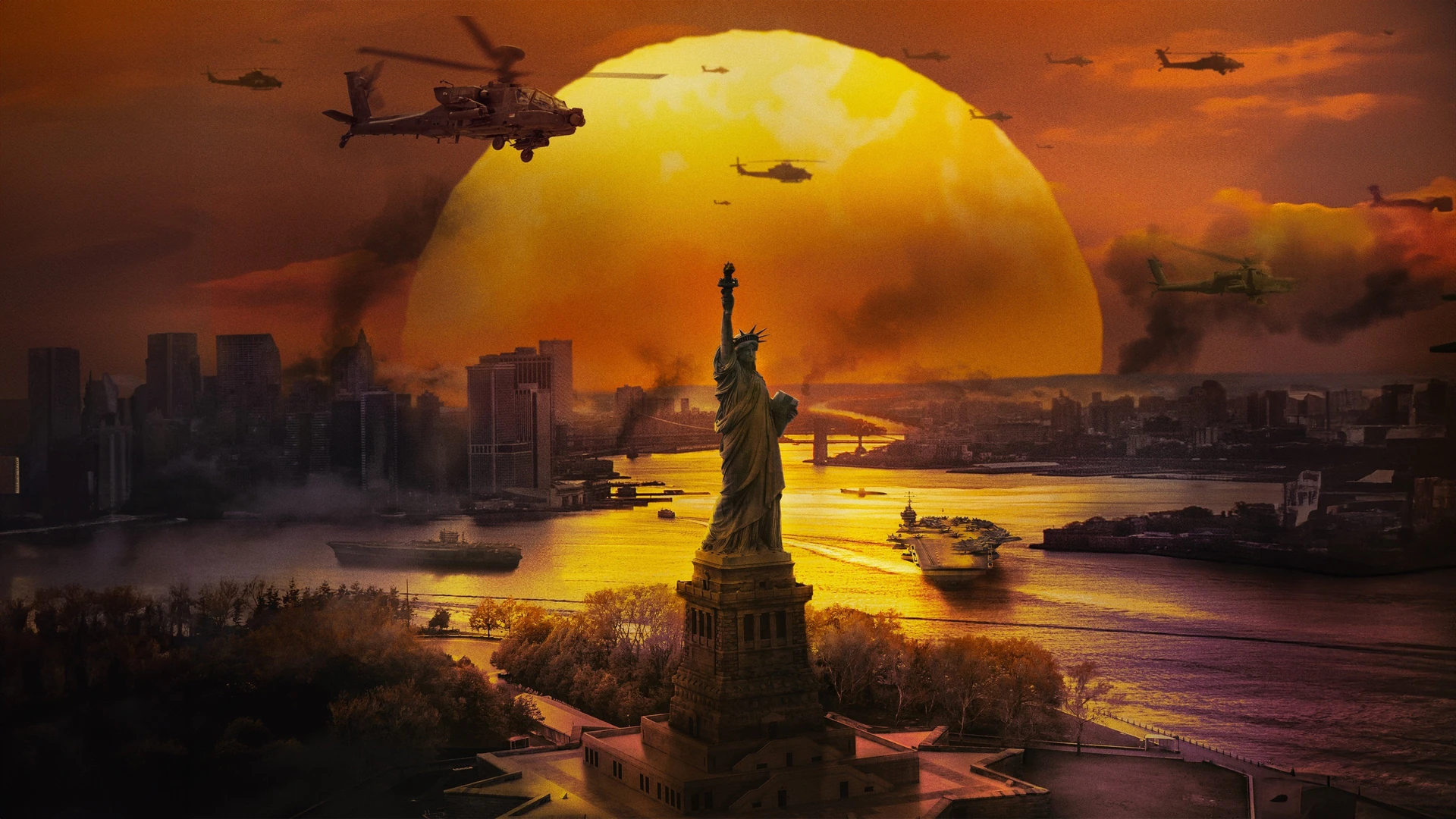
“The true horror of war is not in the death of one, but in the death of humanity itself.” — Unknown
Alex Garland’s Civil War isn’t just a movie; it’s a visceral, often uncomfortable, confrontation. Released in 2024, this action-thriller throws us headfirst into a near-future America tearing itself apart, seen almost exclusively through the lenses of a group of war journalists. Right off the bat, it’s important to acknowledge that this film has been nothing short of divisive. While critics largely praised its technical prowess and immersive intensity (garnering an 81% on Rotten Tomatoes and a 75 on Metacritic), a significant portion of the discourse, both critical and audience-driven, revolved around its deliberate, almost defiant, lack of specificity. Many viewers walked away frustrated, wanting to know how and why America had descended into such chaos, who the factions truly were, and what ideologies drove them. And honestly, that’s fair. But, for me, that very ambiguity isn’t a flaw to be overlooked, but rather the film’s most potent philosophical weapon, transforming a potential narrative weakness into a profound, chilling statement on the banality of emergent evil and the ethics of observation.
The Witness and the Void: When Context Disappears
From the outset, Civil War refuses to hold our hand. We’re dropped into a fragmented America where the “Western Forces” (an unlikely alliance of California and Texas) are pushing on Washington D.C., attempting to unseat a tyrannical President. But beyond that, details are scarce. There are no clear political parties, no manifestos, no talking heads explaining the breakdown. This narrative choice was, without question, the film’s most controversial aspect. Critics noted the frustrating vagueness of the conflict, with some arguing it felt like an evasion, a way to avoid taking a stance. And indeed, for a film titled Civil War, the absence of overt political ideology feels jarring.
However, I believe this is precisely where Garland’s philosophical intention crystallizes. By stripping away the familiar political rhetoric, he forces us to confront the raw, unfiltered experience of civil war. The film isn’t interested in the ‘why’ – it’s fixated on the ‘what happens when’. It posits that once the machinery of conflict is set in motion, the original ideologies can become secondary to the sheer, horrifying momentum of violence. The film’s vagueness isn’t a cop-out; it’s an invitation to recognize that the specifics of how a society collapses might be less important than the terrifying fact that it can collapse, regardless of its particular political flavor. It creates a universal dystopia, suggesting that the seeds of such destruction lie dormant in any deeply polarized society, ready to sprout when the thin veneer of order gives way. The horror isn’t in their reasons, but in the realization that our reasons might not be so different, or that the reasons eventually cease to matter at all.
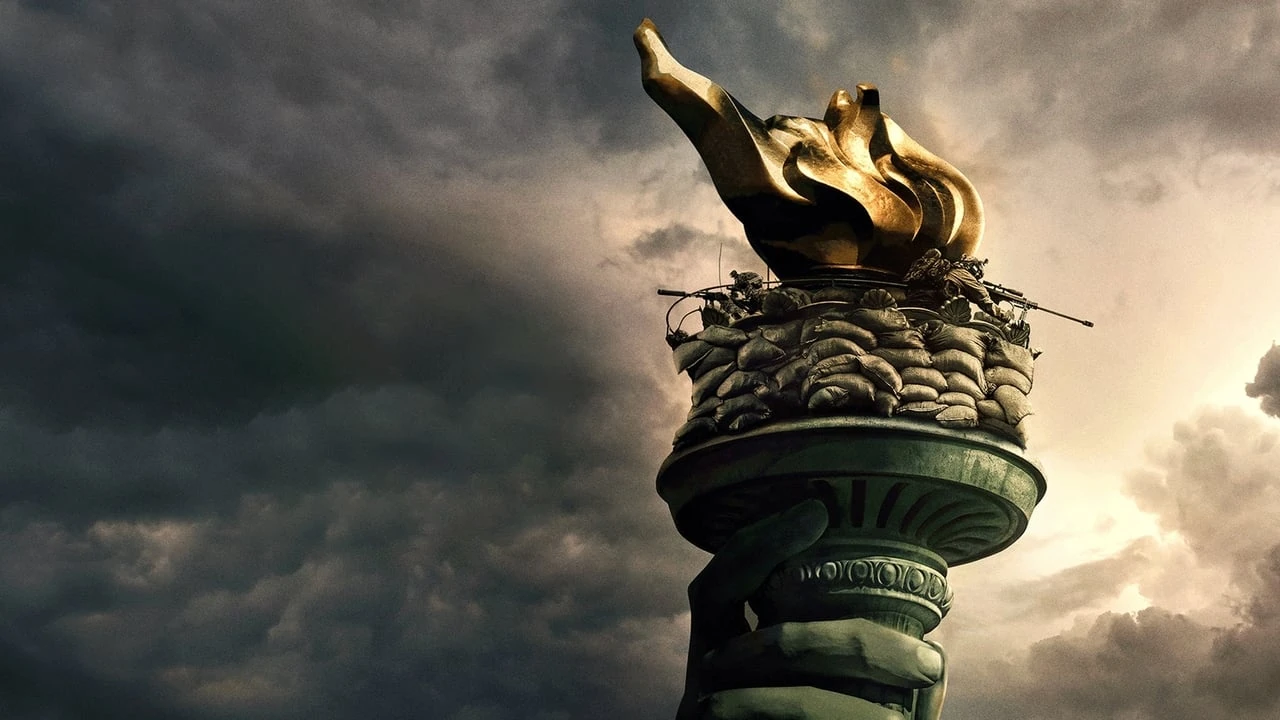 A photojournalist frames a moment of profound despair or destruction, highlighting the film’s focus on the act of witnessing.
The Camera as Shield, The Lens as Burden
At the heart of Civil War are the journalists: the stoic, world-weary photographer Lee (Kirsten Dunst), her adrenaline-junkie colleague Joel (Wagner Moura), the veteran Sammy (Stephen McKinley Henderson), and the eager, naive aspiring photographer Jessie (Cailee Spaeny). Their journey to D.C. is fraught with peril, but their primary directive remains the same: document. They are committed to being impartial observers, even when faced with unspeakable atrocities. This unwavering commitment raises profound ethical questions about the role of journalism in a collapsing society. Is it enough to simply “report the truth,” or does the act of witnessing carry a greater moral obligation?
The film expertly portrays the psychological toll this takes. Lee, in particular, embodies the concept of empathy fatigue. Her face is a canvas of suppressed trauma, her eyes having seen too much. As Joel aptly puts it, she’s become a “hardened fucker,” but that hardness is a shield, not an absence of feeling. Many critics, while praising Dunst’s performance, noted that the characters felt somewhat underdeveloped beyond their professional roles. I’d argue that this, too, serves a purpose. By focusing on their professional mandate rather than their personal backstories, Garland emphasizes the universal burden of those who bear witness. Their individual identities become secondary to their function, their humanity tested and eroded by the horrors they must capture.
The camera, in Civil War, is not just a tool for capturing reality; it’s a psychological buffer, a moral barrier, and ultimately, a witness’s cross to bear. It allows them to maintain a semblance of detachment, but it also traps them in a perpetual cycle of observation, unable to intervene, unable to truly escape the images burned into their minds.
Jessie’s arc, from an amateur who flinches at every horror to one who unflinchingly captures a summary execution, is particularly chilling. It illustrates the terrifying process of desensitization, a necessary evil for survival in such an environment, but one that strips away a piece of the soul. The film forces us to consider the price of objective truth, and whether such objectivity is even possible when confronted with pure, unadulterated barbarism.
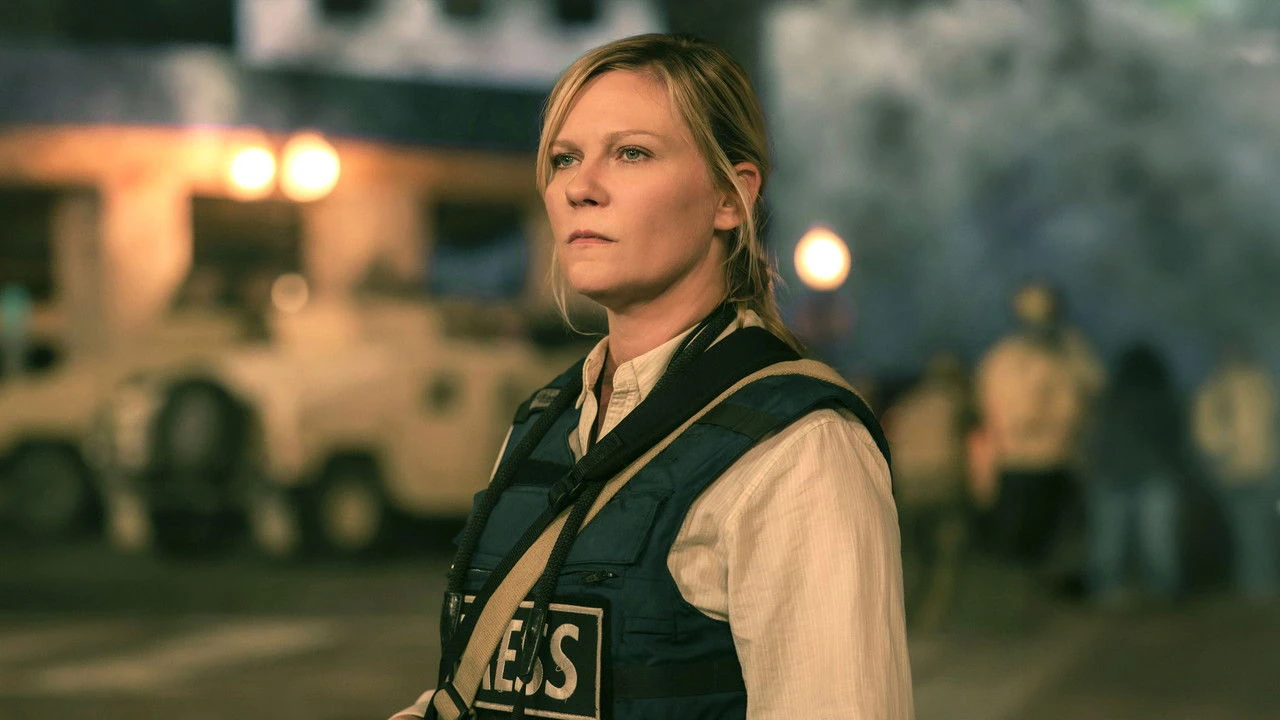 A close-up of a journalist’s hands, worn and scarred, holding a camera, symbolizing the physical and emotional toll of their work.
What We See When We Don’t Understand Why
Civil War’s greatest strength, despite its narrative controversies, lies in its ability to immerse the viewer in the visceral reality of conflict. The sound design is phenomenal, creating an almost unbearable tension. The action sequences are terrifyingly realistic, devoid of Hollywood glamor. Garland doesn’t glorify war; he presents it as chaotic, brutal, and deeply personal. The film is less a political statement and more an existential warning. It doesn’t offer solutions or even explanations, but rather presents a grim snapshot of a potential future, asking us to reflect on its implications.
The film’s refusal to spoon-feed us the ‘why’ forces us to confront the fragility of our own societal structures. It challenges the implicit assumption that such a collapse “couldn’t happen here.” By making the antagonists nameless, faceless combatants driven by an unseen, unstated motivation, Garland shifts the focus from specific political grievances to the inherent human capacity for cruelty once the rule of law breaks down. It asks us to look beyond the headlines and ideologies and consider the fundamental human experience of terror, survival, and the desperate search for meaning (or just a good photo) in a world gone mad. The ending, without spoiling it, reinforces this stark reality, leaving a haunting impression that lingers long after the credits roll.
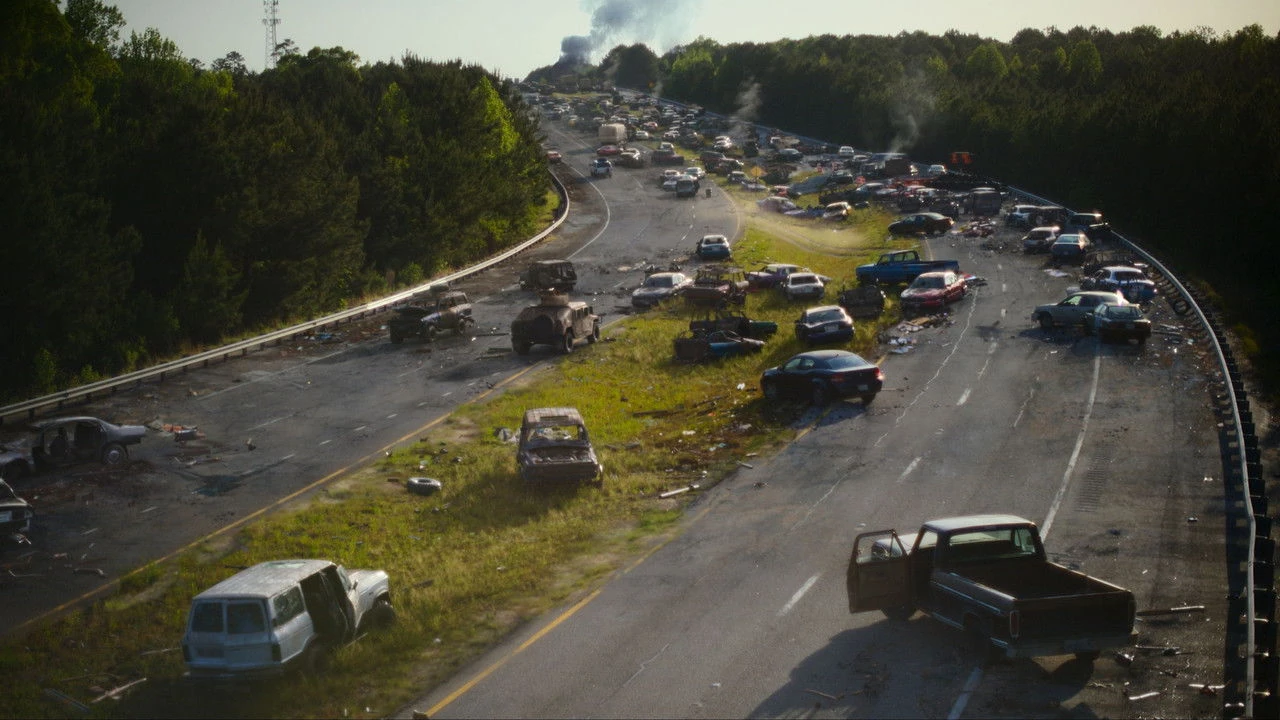 A wide shot of a ruined American landmark, a stark visual metaphor for the destruction of familiar ideals and order.
Civil War will undoubtedly continue to spark debate, its deliberate narrative omissions frustrating some and profoundly impacting others. Its legacy will be one of a provocative, unsettling experience that forces introspection, rather than offering easy answers. It’s a challenging watch, but one that holds up a grim mirror to potential futures, urging us to consider the unseen cracks in our foundations before they become chasms.
Ultimately, Civil War isn’t a documentary or a political polemic. It’s a speculative fiction that uses the lens of journalism to explore the human cost of societal collapse and the psychological burden of witnessing it. It may not tell us how a civil war starts, but it chillingly illustrates what it feels like when it’s already here, and what happens to those who try to capture its truth. What does it mean for us, the audience, to be passive witnesses to this fictional horror, when the real world often feels on the brink?
Where to Watch
- Amazon Prime Video
- Hulu
- Amazon Prime Video with Ads
What’s Up? explores the philosophical depths of cinema.