Constellation's Quantum Quandary: A Labyrinth of Self and Shifting Realities
Exploring Constellation 2024's mind-bending sci-fi, dissecting its themes of identity, reality, and grief amidst critical praise and audience confusion.
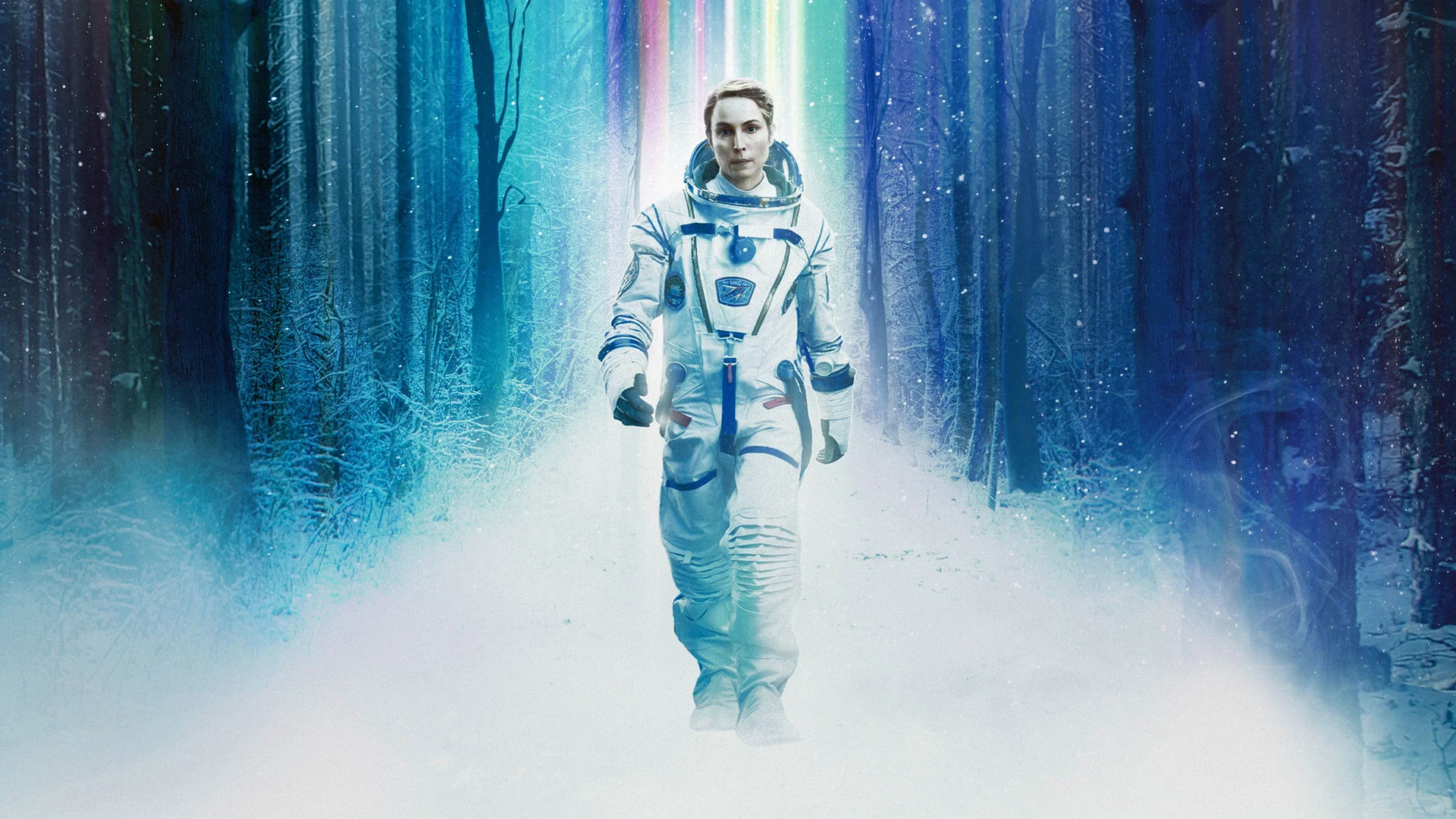
“The only way to make sense out of change is to plunge into it, move with it, and join the dance.” — Alan Watts
Apple TV+’s Constellation (2024) arrived on the streaming scene with a quiet intensity, promising a mind-bending sci-fi thriller that would unravel the very fabric of reality. And for many critics, it delivered, earning a respectable 82% on Rotten Tomatoes and a Metascore of 64, with particular praise for its unsettling atmosphere and Noomi Rapace’s deeply committed performance. Yet, as often happens with ambitious, cerebral narratives, audience reception has been a more fractured affair. While some viewers lauded its intricate plotting and existential dread, others found themselves lost in its slow-burn pacing and labyrinthine narrative, accusing it of being overly convoluted or simply too ambiguous for its own good. It’s precisely this tension between critical acclaim and audience division that makes Constellation a fascinating subject for philosophical inquiry, even with its acknowledged stumbles.
The Labyrinth of Identity
At its core, Constellation is a chilling exploration of identity and perception, filtering these grand philosophical questions through the lens of extreme trauma and quantum uncertainty. We meet Jo Ericsson (Rapace), an astronaut on the International Space Station, whose world is literally and figuratively shattered by a fatal accident. Her heroic journey back to Earth isn’t the end of her ordeal, but merely the beginning of a far more disorienting one. Upon her return, Jo quickly realizes that key pieces of her life – her home, her husband, even the color of her beloved piano, and most crucially, the very essence of her young daughter, Alice – have subtly, yet terrifyingly, shifted.
This central premise immediately plunges us into a realm of metaphysical doubt. Is Jo suffering from severe PTSD, a post-space psychosis? Or has something far more profound and unsettling occurred, something that fundamentally alters her reality? The series deliberately toys with these possibilities, crafting a pervasive sense of disorientation that mirrors Jo’s own descent into confusion. Critics noted the series’ deliberate, sometimes glacial, pacing in its early episodes, which for some was a masterclass in building tension and dread, but for others, a frustrating exercise in vagueness. However, this slowness is arguably integral to the show’s philosophical project, forcing us to inhabit Jo’s fragmented state, questioning every detail and every memory alongside her. It’s a challenging watch, designed not for passive consumption, but for active, engaged thought, even if that engagement occasionally veers into exasperation.
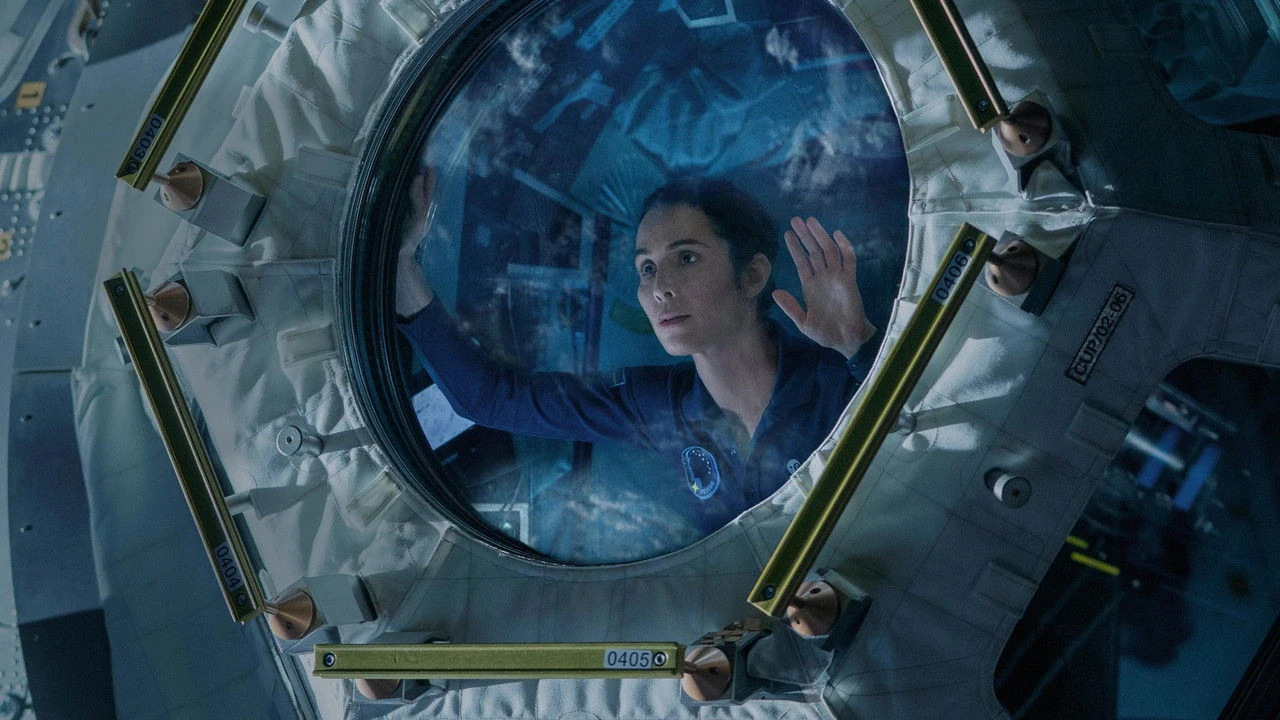 Jo Ericsson grappling with the disquieting realization that her reality has shifted.
When Worlds Collide: The Cost of Dislocation
Constellation’s strength lies in its ability to ground its high-concept sci-fi in raw, human emotion, particularly the overwhelming weight of grief and trauma. Jo’s desperate attempts to reconnect with a daughter who seems both familiar and utterly alien form the emotional backbone of the series. This isn’t just a story about two parallel realities; it’s a story about a mother’s primal instinct to protect and understand her child, even when that child seems to be a stranger.
While the series’ convoluted plot threads and sometimes ambiguous explanations drew criticism from viewers who craved clearer answers, its exploration of the psychological impact of dislocation remains incredibly potent. Noomi Rapace delivers a tour-de-force performance, embodying Jo’s escalating terror, confusion, and fierce determination with heartbreaking conviction. Her portrayal anchors the more abstract elements, making the existential horror feel deeply personal. Jonathan Banks as Henry Caldera, a Nobel-winning physicist with his own shadowy connection to the space anomaly, provides a compelling, if often morally ambiguous, counterpoint, subtly guiding us through the more esoteric scientific concepts.
This is where the series truly shines, exposing the fragility of our perceived stability and how easily our cherished certainties can crumble under the weight of an unseen, incomprehensible force.
The show’s visual storytelling, with its stark contrasts between the desolate beauty of space and the claustrophobic anxieties of Earth, reinforces the psychological tension. The cold, sterile environments highlight Jo’s internal turmoil, making her sense of otherness palpable. Yet, despite these strengths, some audience members found the constant ambiguity frustrating, leading to criticisms of plot holes or a feeling that the narrative was “too clever for its own good.” It’s a valid point for those who prefer more definitive resolutions, but for those willing to lean into the uncertainty, Constellation offers a rich tapestry for reflection.
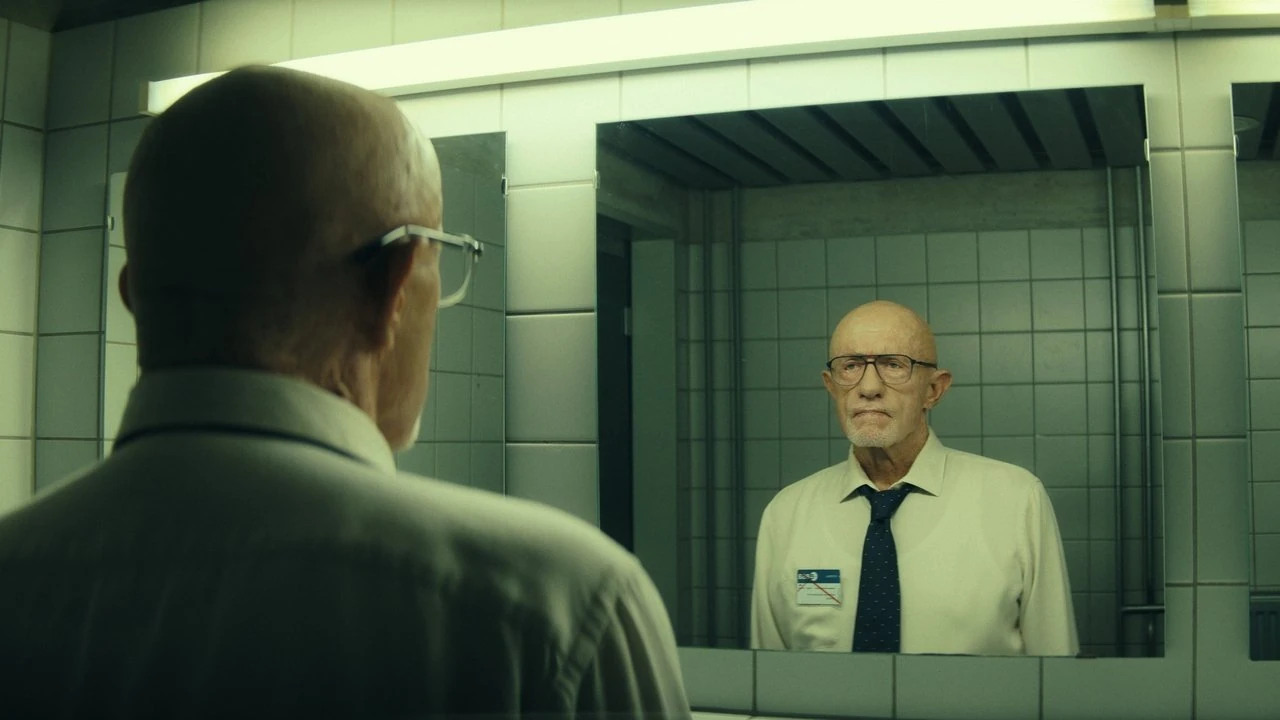 A fragmented reality, where familiar objects take on unsettling new meanings.
The Unseen Threads of Reality
Beyond the immediate mystery, Constellation dares to ask profound questions about the nature of existence itself. It flirts with concepts reminiscent of quantum entanglement, the many-worlds interpretation of quantum mechanics, and the idea that our choices might not just lead to different outcomes, but to entirely different realities. The series suggests that the universe, far from being a singular, linear experience, might be an infinite tapestry of parallel possibilities, and that a tear in that fabric could allow for terrifying, bewildering crossovers.
The series doesn’t offer easy answers, nor does it neatly tie up every loose end. This deliberate ambiguity, while a point of contention for some, is precisely where its philosophical power lies. It forces us to confront our own assumptions about what is real, what is memory, and what constitutes a coherent self. If our lives are but one iteration among countless others, if our loved ones could be subtly, irrevocably different in another existence, what does that mean for our sense of belonging, our sense of self, and our capacity for love? Constellation doesn’t just show us a fractured reality; it makes us feel the terrifying weight of that fracture. It’s a meditation on solipsism and the terror of being the only one aware of a fundamental shift in the universe.
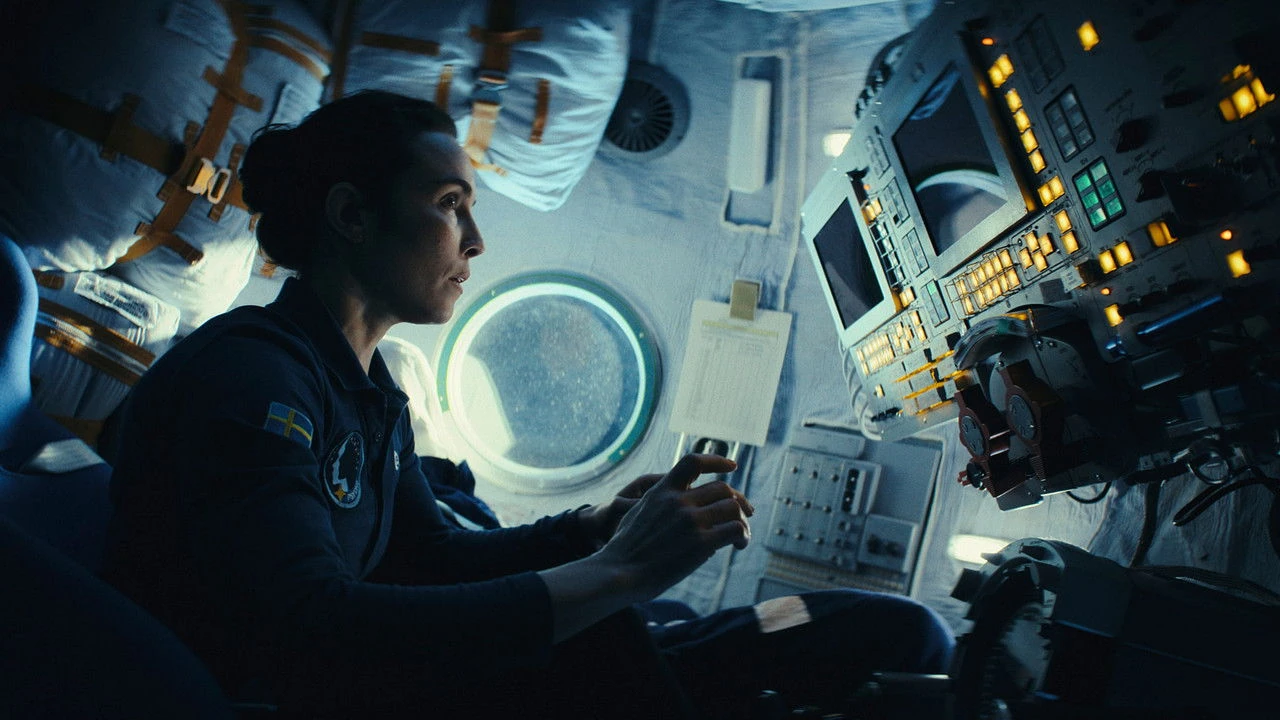 A mother and daughter, separated by more than just distance, reaching for a connection that might no longer exist.
“Perhaps the greatest terror is not that we are alone in the universe, but that we are not, and that the boundaries between our realities are far more porous than we dare to imagine.”
Constellation is undoubtedly a divisive series. Its slow burn, intricate plotting, and refusal to provide simple answers will undoubtedly alienate some viewers who prefer a more straightforward narrative. Yet, for those who embrace its challenges, it offers a deeply unsettling and profoundly thought-provoking experience. It’s a series that lingers, forcing us to reconsider the solidity of our own lives and the invisible threads that might bind us to other, unseen realities. It’s a testament to the power of genre to explore the most fundamental questions of existence, even if the journey there is as disorienting as a trip through a wormhole. What if the life you’re living isn’t the only life you’re living? And what if you suddenly remembered the others?
Where to Watch
- Apple TV
- Apple TV Amazon Channel
What’s Up? explores the philosophical depths of cinema.