Daddio's Confessional Cab: Navigating Grief, Connection, and the Stories We Tell
A philosophical dive into Daddio, exploring its intense two-hander format, the complexities of stranger intimacy, and how we narrate our past relationships.
“We are condemned to be free, and in that freedom, we are defined by the choices we make and the stories we tell ourselves about them.” — Jean-Paul Sartre
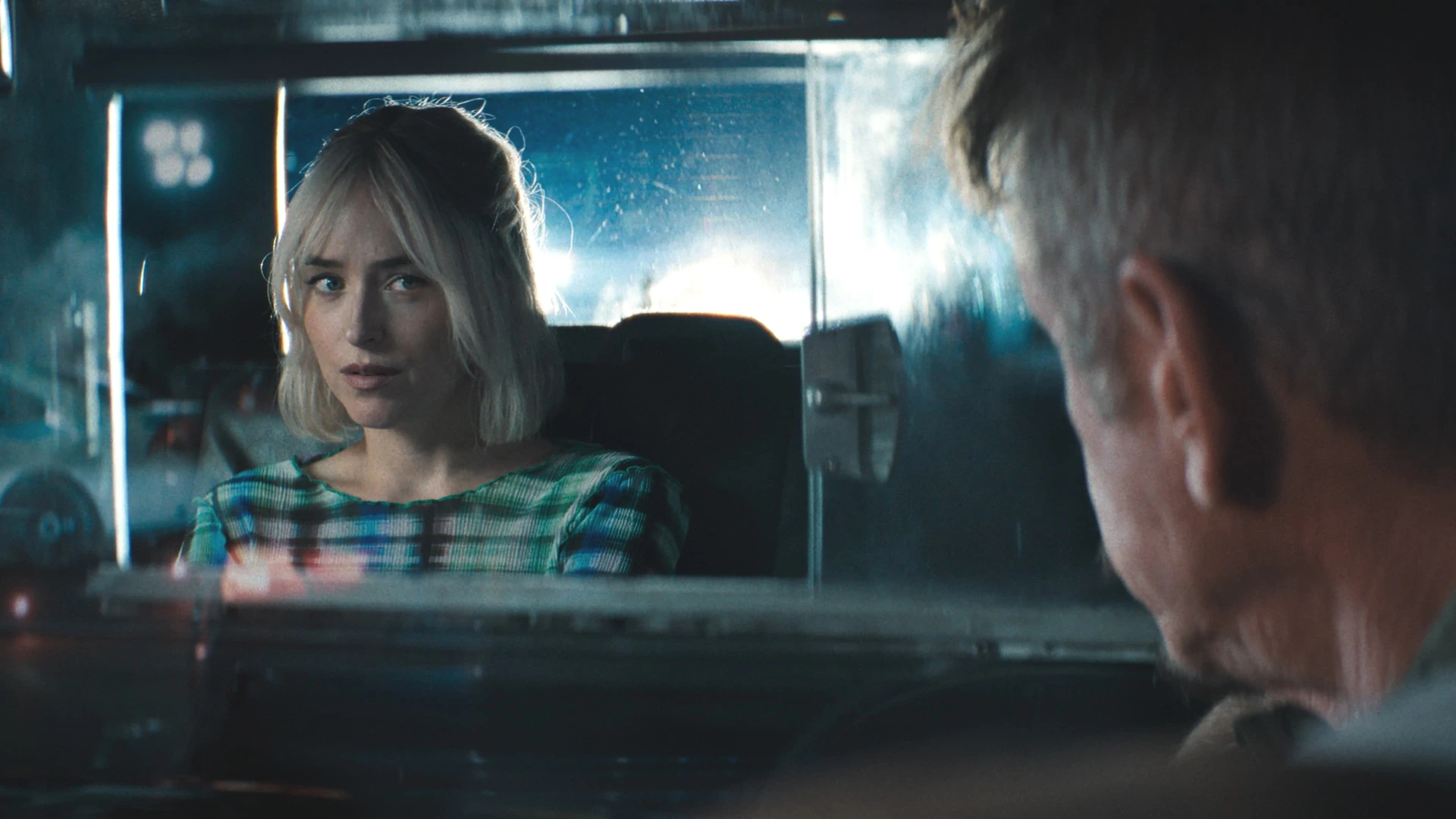
Christy Hall’s Daddio (2023) arrives on the scene with a premise that’s both daringly simple and inherently fraught with risk: a two-person play confined almost entirely to the backseat of a taxi. From the moment the young woman (Dakota Johnson), fresh off a flight, steps into the cab driven by Clark (Sean Penn) at JFK, we’re plunged into an intimate, often uncomfortable, and deeply philosophical conversation about life, love, loss, and the ever-present shadow of past relationships. It’s a film that asks us to lean in, to listen intently, and to consider the profound weight of words exchanged between strangers. Yet, this very premise, while fertile ground for introspection, also proved to be a tightrope walk for critics and audiences alike. While it boasts a respectable 70% on Rotten Tomatoes, indicating a generally fresh reception, the average rating sits lower, around 6.5/10, suggesting a film that, while appreciated, didn’t quite land with universal acclaim. It’s a testament to its ambition that Daddio evokes such strong, often polarized, reactions – a sign, perhaps, that it truly dares to touch upon something raw.
The Confessional Cab: A Microcosm of Connection
The film’s strength, and arguably its central philosophical gambit, lies in its setting: a taxi cab late at night. This cramped, transient space becomes a liminal zone, a temporary sanctuary where the usual social conventions can be shed. For the duration of the ride from JFK to Manhattan, these two souls, united only by a transactional necessity, embark on a journey far deeper than mere geography. They share vulnerabilities, recount deeply personal anecdotes, and challenge each other’s perspectives on love, masculinity, and the scars left by parental figures.
This setup immediately brings to mind films like My Dinner with Andre or the Before Sunrise trilogy, where dialogue is king and character revelation unfolds almost exclusively through verbal exchange. What Daddio attempts, however, is a more immediate, less idyllic encounter. It’s an exercise in stranger intimacy, a phenomenon where the very lack of shared history or future obligation allows for an unfiltered honesty that might be impossible with loved ones. There’s a beautiful, terrifying freedom in confessing to someone you’ll likely never see again, shedding the masks worn for daily life. Critics, while often praising the courage of this format, sometimes pointed to the dialogue itself as feeling a touch too crafted, too literary, occasionally sacrificing naturalism for philosophical heft. Is the conversation authentically spontaneous, or is it a cleverly constructed stage play attempting to pass as cinéma vérité? This tension is central to the film’s identity.
- The anonymity paradox — how strangers can unlock deeper truths than intimates
- The transient space — the taxi as a modern-day confessional booth
- The burden of narrative — how we selectively recount our past to shape our present identity
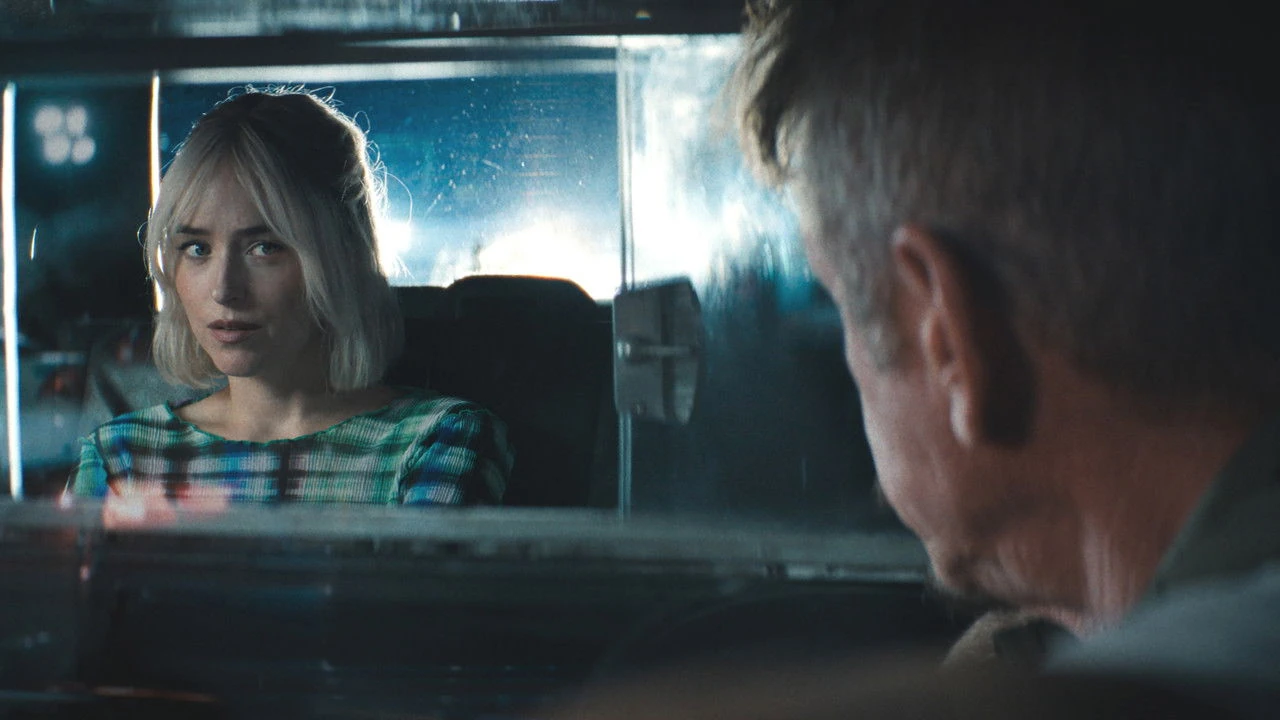 A close-up shot of the passenger, hinting at her internal world and the vulnerabilities she’s about to share.
Dialogue and Discomfort: The Theatricality of Truth
The performances of Dakota Johnson and Sean Penn are, predictably, the engine of Daddio. Johnson’s character, initially guarded and somewhat enigmatic, slowly peels back layers of her emotional life, revealing a complex tapestry of grief, insecurity, and longing. Penn, as Clark, is both a sounding board and a provocateur, his own life experiences informing his often blunt, sometimes tender, interjections. Their dynamic is the core of the film, and when it works, it’s genuinely captivating.
However, this is also where some of the film’s significant criticisms arise. Many reviewers found the pacing to be uneven, with the 100-minute runtime feeling extended at points. The dialogue, while ambitious, occasionally veers into areas that feel less like a spontaneous cab ride and more like a carefully orchestrated philosophical debate. Some felt Penn’s performance, while undeniably committed, leaned into a certain performance-y quality, perhaps a touch too mannered for the supposed realism of the setting. Conversely, some lauded Johnson’s quiet intensity, finding her character’s gradual unfolding to be profoundly resonant.
A critical point often missed is that even “unnatural” dialogue can serve a purpose in revealing character; it’s not always about realism, but about the artifice characters employ to protect themselves or project an image.
The film struggles, at times, to maintain the delicate balance between authentic human interaction and the heightened reality required for such a concentrated dramatic exercise. When the characters delve into detailed analyses of their past relationships, or offer sweeping generalizations about gender dynamics, it can pull the viewer out of the moment, reminding them they are watching a constructed narrative rather than eavesdropping on real life. This perceived artifice was a common sticking point for those who found the film less than compelling, arguing that the profound subject matter deserved a more grounded execution. Yet, it also forces us to consider the performance of self in everyday life – are our conversations ever truly unscripted? Don’t we all curate our stories, even for strangers?
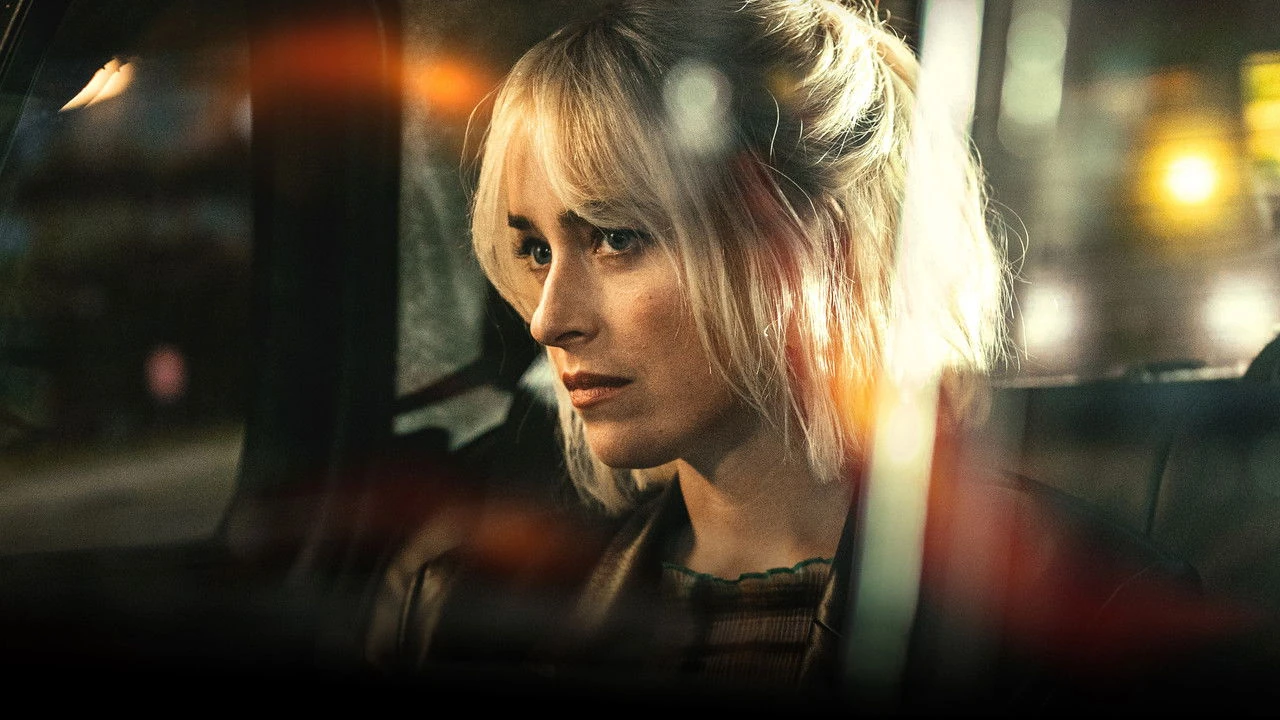 The taxi driver, illuminated by passing streetlights, reflecting on the conversation, his face etched with experience.
Echoes in the Rearview: Memory, Narrative, and Vulnerability
Despite its structural and tonal challenges, Daddio undeniably raises profound questions about how we process our past and construct our personal narratives. Both characters, through their shared exchange, are forced to confront the ghosts of relationships past – particularly their fathers, highlighting the generational impact of unresolved issues. They are, in a sense, using each other as mirrors, reflecting back facets of their own experiences and forcing a reconsideration of their own coping mechanisms.
The film delves into the often-uncomfortable truth that our perception of past events is not static; it shifts, evolves, and is reinterpreted through the lens of our current emotional state and the people we encounter. Daddio suggests that every conversation, even a fleeting one with a stranger, has the potential to be a micro-therapy session, an opportunity to externalize inner turmoil and perhaps, through the act of vocalizing, begin the process of healing or understanding. The vulnerability they display, even amidst the occasional conversational misstep or awkward silence, is a testament to the universal human need for connection and validation, even in the most unexpected of places. It’s a film about the courage it takes to unpack your emotional baggage, even if it’s just for a 100-minute ride.
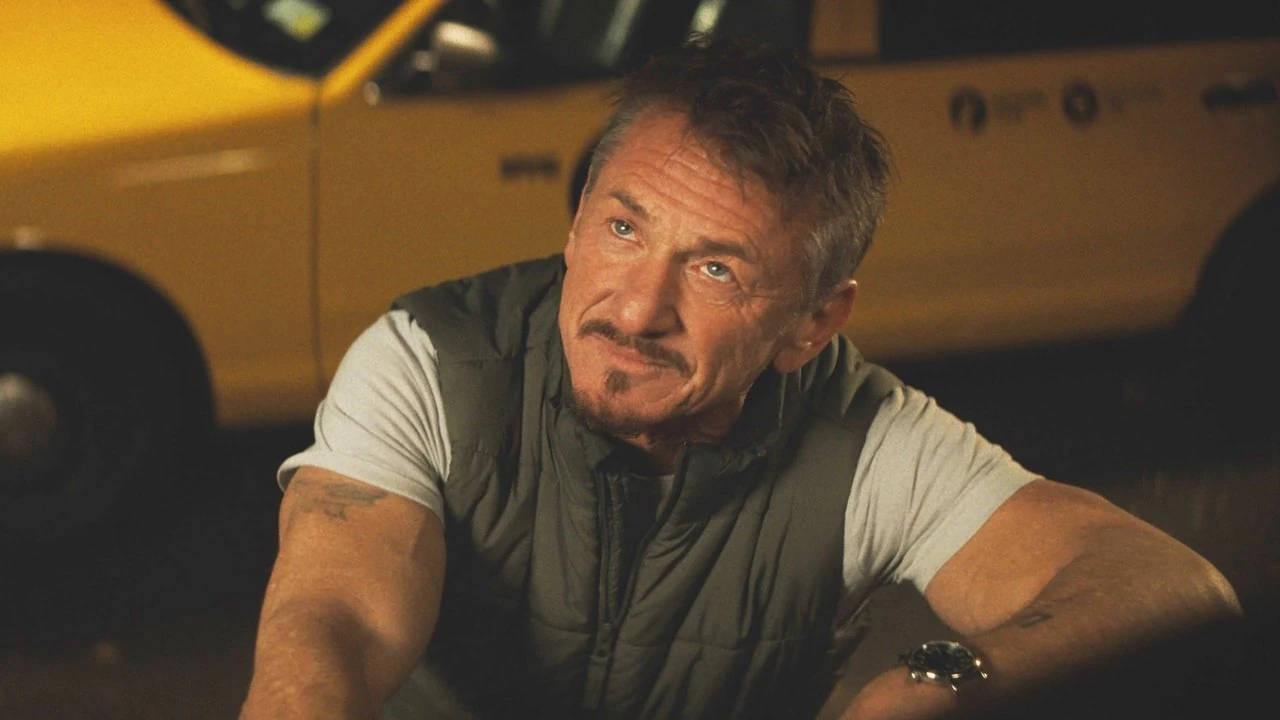 A wide shot inside the taxi, emphasizing the confined space and the unspoken tension between the two protagonists.
While Daddio may not achieve perfect equilibrium between its ambitious dialogue and its intimate setting, its audacious exploration of human connection and the narratives we build around our pain ensures it lingers, a challenging whisper in the quiet aftermath.
Daddio is a film that demands patience and an openness to its unique, dialogue-heavy rhythm. It’s not a movie for everyone, and its mixed reception is understandable given its specific artistic choices. However, for those willing to lean in, it offers a surprisingly potent meditation on the therapeutic power of conversation, the fluid nature of memory, and the enduring quest to understand ourselves through the fragmented reflections we find in others. It’s a reminder that sometimes, the most profound journeys happen not across continents, but within the confines of a simple, shared ride.
Where to Watch
- Netflix
What’s Up? explores the philosophical depths of cinema.