Dangal: The Brutal Grace of Paternal Ambition and True Liberation
Dangal explores the profound, often challenging, philosophy behind Mahavir Singh's relentless pursuit of his daughters' wrestling dreams and the complex path to liberation.

“The hardest choices require the strongest wills.” — Thanos (an ironic quote, but fitting for the sheer will involved)
When Dangal burst onto screens in 2016, it wasn’t just a sports drama; it was a cultural phenomenon. Audiences globally, and particularly in India, embraced its inspiring true story of Mahavir Singh Phogat and his daughters, Geeta and Babita, with fervent enthusiasm. Critics, too, largely showered it with praise, noting its powerful performances, emotional core, and uplifting message. Indeed, it holds an impressive 88% on Rotten Tomatoes and an 8.3/10 on IMDb, signaling its widespread appeal. Yet, beneath the triumphant story of breaking barriers and winning gold, Dangal quietly — and sometimes loudly — grapples with complex philosophical questions concerning paternal ambition, individual agency, and the very nature of liberation itself. It asks us to consider: what is the cost of greatness, and who truly pays it?
The Paradox of Paternal Benevolence
At its heart, Dangal is a story of a father’s dream. Mahavir Singh, a former national wrestling champion, sees his deferred ambition reborn in his daughters, Geeta and Babita. What begins as a personal quest, however, quickly morphs into an almost militaristic training regimen. He cuts their hair, forces them into a traditionally male sport, and demands unwavering discipline. This is where the film’s philosophical tension truly lies. On one hand, Mahavir is undeniably a visionary, challenging patriarchal norms in rural Haryana by pushing his daughters into wrestling, a path unheard of for girls. He sees their potential where society sees only domesticity.
On the other hand, critics and some audience members have pointed to the film’s uncritical portrayal of Mahavir’s authoritarian methods. Is this empowerment or enforced destiny? The film largely frames his actions as ‘tough love’ necessary for their success, often overlooking the daughters’ initial resistance and their lack of choice. This isn’t a flaw in the storytelling, perhaps, but a deliberate choice that forces us to confront uncomfortable questions about the ethics of parental ambition. When does a parent’s pursuit of a child’s ‘best interest’ verge into stripping them of their autonomy? Dangal largely absolves Mahavir of this ethical dilemma by showcasing the ultimate, undeniable success, implying that the ends justify the means. But a thoughtful viewer can’t help but ponder the grey areas.
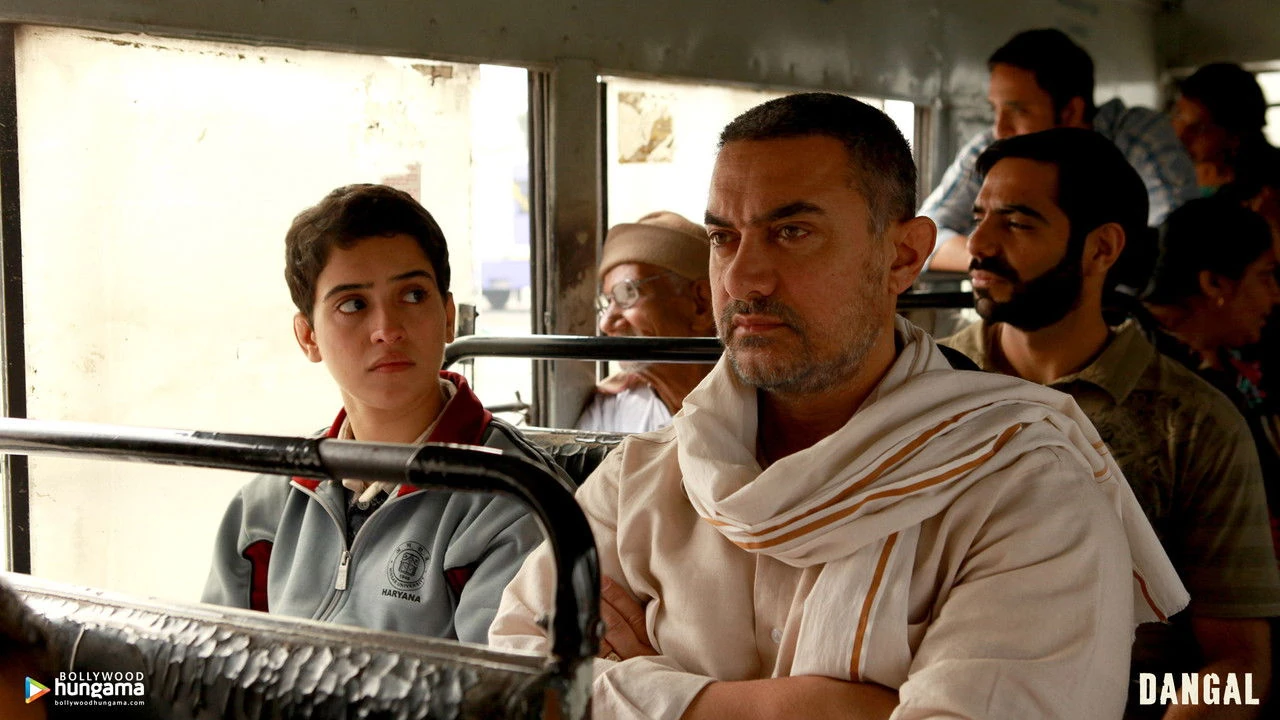
 Mahavir Singh, played by Aamir Khan, observes a wrestling match with intense focus, embodying the film’s central theme of paternal ambition and its impact.
The Weight of Gold and the Burden of Expectation
The narrative arc of Dangal is undeniably compelling: the underdog story, the triumph over adversity, the breaking of gender stereotypes. However, the film is also a powerful exploration of the burden of expectation. Geeta and Babita aren’t just wrestling for themselves; they are wrestling for their father’s pride, for their village’s honor, and eventually, for the nation. This expansion of their purpose is skillfully handled, transforming personal struggle into a collective narrative. Yet, it also adds immense pressure.
The film subtly reveals that true strength isn’t just about physical prowess; it’s about the psychological fortitude to carry the hopes of an entire community, and to do so under the relentless gaze of both expectation and judgment.
Some reviews noted that while the film excels in its emotional beats and inspirational moments, it occasionally simplifies the psychological toll on the girls. We see their tears and frustration, but the film quickly moves past them to focus on the next training montage or competition. This isn’t a major criticism, given the genre, but it does highlight a potential area for deeper philosophical inquiry: what is the true cost of singular focus and unwavering dedication? Does the pursuit of a gold medal necessarily lead to personal fulfillment, or can it become an existential weight? Dangal wants us to believe in the former, but the lingering questions about sacrifice and selfhood remain. The narrative, while thrilling, can sometimes feel a bit formulaic in its sports drama beats, predictable in its emotional crescendos, yet it’s precisely this familiarity that allows its more profound questions to resonate universally.
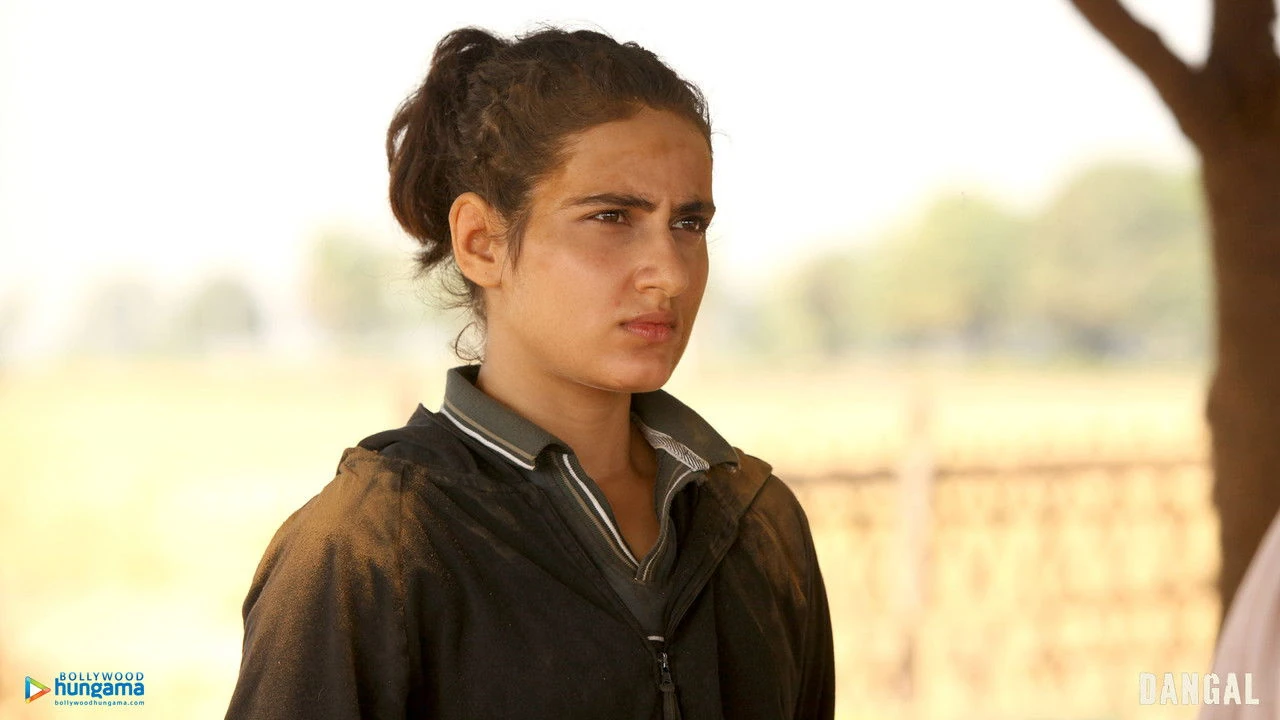
 Geeta Phogat, mid-bout, showcasing the raw determination and physical power that challenges traditional gender roles within the sport.
Beyond the Mat: True Liberation and Identity
Ultimately, Dangal transcends the confines of a mere sports film by engaging with profound questions about identity and liberation. For Geeta and Babita, wrestling becomes not just a sport but a vehicle for self-discovery and agency. Through the very discipline imposed upon them, they find their own voices, their own power, and their own path. The film culminates in Geeta’s gold medal victory, a moment presented as not just a win for India, but a personal triumph that validates their arduous journey.
What Dangal powerfully argues is that liberation can manifest in unexpected forms. It’s not always about rebelling against authority, but sometimes about internalizing a discipline that allows one to break free from societal constraints. The film suggests that Mahavir’s seemingly oppressive methods, in a paradoxical twist, actually forged the very strength and resilience needed for his daughters to achieve genuine self-actualization and escape the predetermined roles for women in their society. The final scene, with Mahavir watching from the stands as Geeta wins, is a poignant reversal of power, signifying that his dream has now become theirs. This isn’t about him anymore; it’s about them. It’s about their individual contribution to a larger narrative of breaking barriers.
 Mahavir Singh watches from the sidelines, a subtle shift in perspective as his daughters take center stage in their own battles.
“The true measure of a legacy isn’t in what you achieve, but in the freedom you create for those who follow.”
Dangal isn’t a flawless film; some might find its portrayal of the father figure a little too saintly, or its nationalist undertones a tad overwhelming at times. Its narrative, while impactful, does not delve deeply into the potential internal conflicts or psychological complexities of its characters beyond surface-level frustration. Yet, despite these points of contention, its philosophical resonance is undeniable. It forces us to examine the complex interplay between tradition and modernity, individual will and collective identity, and the often-unconventional paths to personal freedom. What does it truly mean to break free, and can one be liberated even through the most stringent of disciplines? Dangal doesn’t offer easy answers, but it certainly sparks the conversation, leaving us to wrestle with its profound implications long after the final whistle.
Where to Watch
- Netflix
- Netflix Standard with Ads
What’s Up? explores the philosophical depths of cinema.