The Spectral Echoes of Youth: Finding Purpose Beyond the Veil in Dead Boy Detectives
Exploring the philosophical undercurrents of Dead Boy Detectives, a series that grapples with life, death, and the meaning of existence.
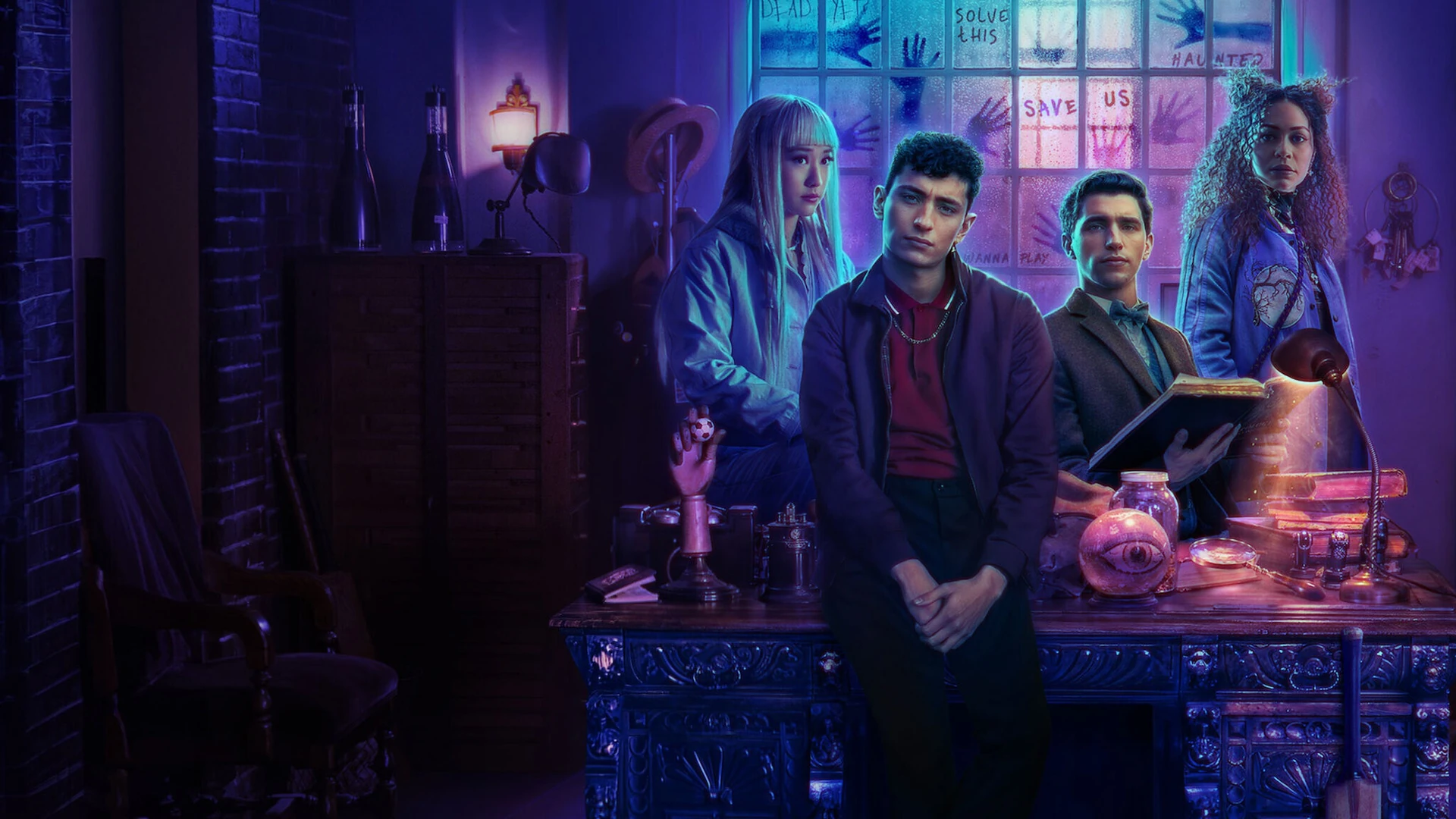
“Even in death, purpose can bloom anew, a spectral echo refusing the silence.”
When Netflix dropped Dead Boy Detectives earlier this year, audiences and critics alike were largely charmed, often praising its unique premise and the undeniable chemistry of its core cast. Spun from Neil Gaiman’s Sandman universe, this series, at first blush, feels like a supernatural procedural with a heavy dose of YA angst and humor. Yet, beneath the vibrant visual effects and the snarky banter, there’s a surprisingly profound undercurrent that nudges at some truly existential questions. While it certainly has its quirks and some narrative wobbles that critics were quick to point out, the show dares to ask: What does it mean to live, or indeed, to exist, when death has already claimed you? And how do we find meaning when the conventional paths are irrevocably closed?
The Unending Quest for Purpose
Dead Boy Detectives introduces us to Edwin Paine (George Rexstrew) and Charles Rowland (Jayden Revri), two spectral teenagers who, rather than moving on to the afterlife, have chosen to remain on Earth, running a detective agency dedicated to solving supernatural mysteries. They’re ghosts, yes, but they’re also defiant, active participants in a world that believes they should be gone. This defiance lies at the heart of the show’s philosophical intrigue. It’s a compelling exploration of post-mortem agency. Most narratives about ghosts focus on their inability to interact, their lingering sadness, or their quest for revenge. Edwin and Charles, however, are proactive; they’ve forged a new form of existence, one defined not by their death, but by their chosen purpose.
Their raison d’être directly confronts the fear of oblivion. Edwin, trapped in hell for decades after his death in 1916, knows the terror of losing oneself. Charles, a victim of bullying in the 80s, understands the pain of an unfulfilled life cut short. Their joint venture is a refusal to be forgotten, a declaration that their stories aren’t over just because their hearts stopped beating. Critics largely lauded the charm of this setup and the earnest performances of Rexstrew and Revri, though some noted that the “monster-of-the-week” structure occasionally outpaced deeper character development, leaving some background arcs feeling a bit rushed.
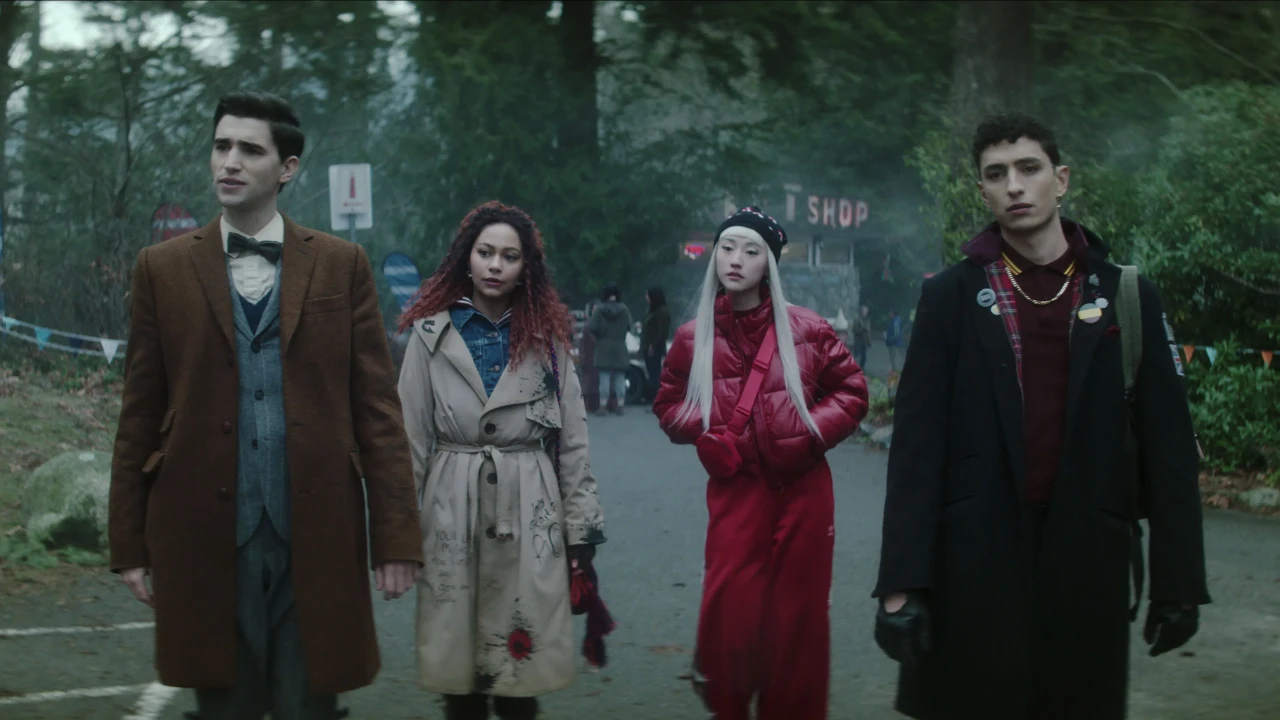 Edwin and Charles, forever bound by their spectral partnership, delve into another mystery.
Spectral Shadows and Human Connections
The introduction of Crystal Palace (Kassius Nelson), a living clairvoyant who can see and communicate with the boys, complicates and enriches their existence. Crystal, herself battling amnesia and a past trauma, becomes their bridge to the living world, and more importantly, their anchor. Their dynamic—a ghost, another ghost, and a living girl with a missing memory—is a potent metaphor for the ways we all seek connection to define ourselves. Can one truly live (or un-live) without the mirror of another’s gaze? The show suggests a resounding “no.”
This is where we discover the true weight of choice — not in the outcome, but in the becoming, a process always shaped by the reflections we find in others.
The series, with its blend of action, adventure, and comedy, navigates tonal shifts that, while mostly successful, occasionally drew minor critiques for uneven pacing. Some viewers found the overarching plot involving a powerful witch (played with relish by Briana Cuoco) and the mysterious Night Nurse (Yuyu Kitamura) to be less compelling than the episodic mysteries, leading to moments where the narrative momentum felt a little disjointed. Yet, it’s in these struggles, both internal and external, that the show finds its most human moments. Crystal’s journey to reclaim her identity parallels the boys’ fight to maintain theirs. Niko, their friend, a beacon of quirky optimism, further grounds their otherworldly adventures in genuine, if unusual, human relationships. This interconnectedness underscores the profound philosophical notion that even beyond the grave, our identities are relational, constantly being negotiated through our interactions with others, living or dead.
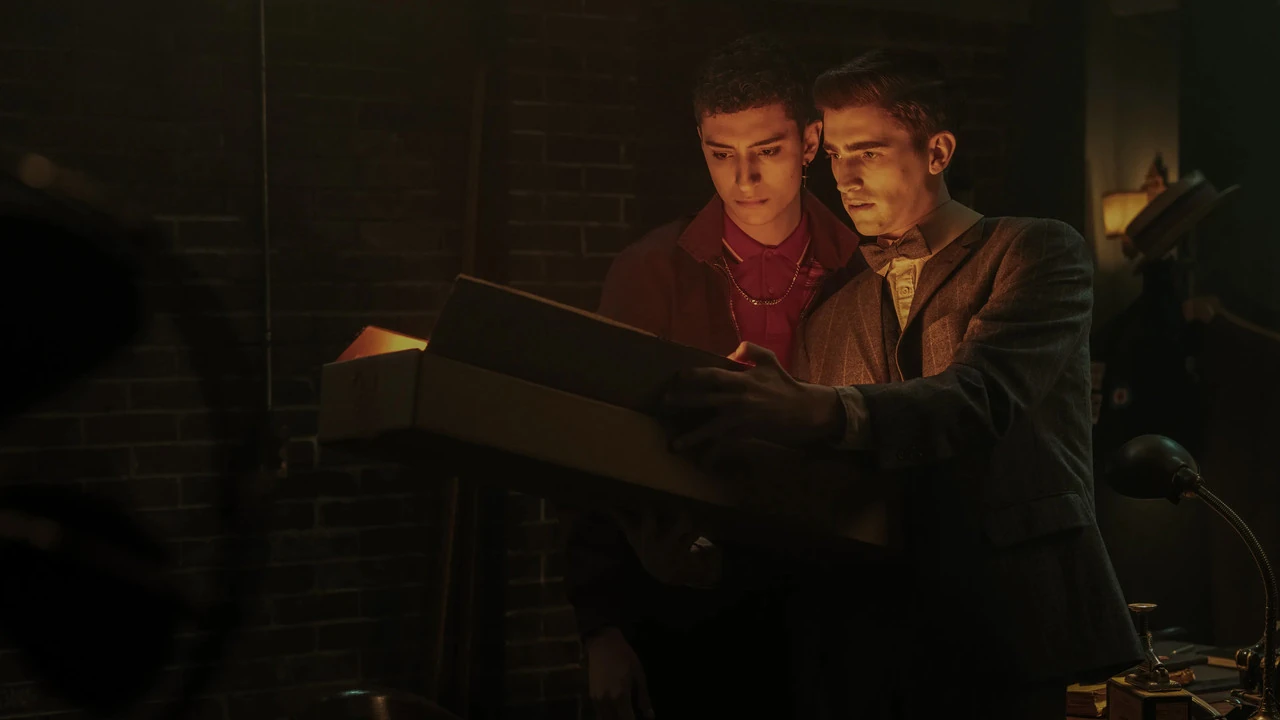 The unlikely trio stands united, a testament to the power of chosen family in the face of the unknown.
The Ghosts of Our Own Making
Ultimately, Dead Boy Detectives isn’t just a fun romp through the supernatural; it’s a meditation on liminality and the persistent human need for meaning-making. Edwin and Charles exist in a permanent state of “between.” They are not truly alive, nor are they truly at rest. This state of being, while fantastical, resonates with anyone who has ever felt stuck, unseen, or out of place. Their detective work isn’t just about solving cases; it’s about providing closure, about righting wrongs, and in doing so, creating a narrative for themselves. Each solved mystery is a brick in the foundation of their continued, chosen existence.
The show implicitly asks us to consider our own relationship with death and the unknown. In a world that often shies away from acknowledging mortality, these characters embrace it, not by succumbing, but by finding a novel way to engage with the world after it. It’s a message steeped in hope: that even when faced with the ultimate end, there can be a new beginning, a new purpose, and a new family. The series, despite some of its minor narrative imperfections and occasional dips in pacing, maintains a spirited optimism that champions connection and self-determination.
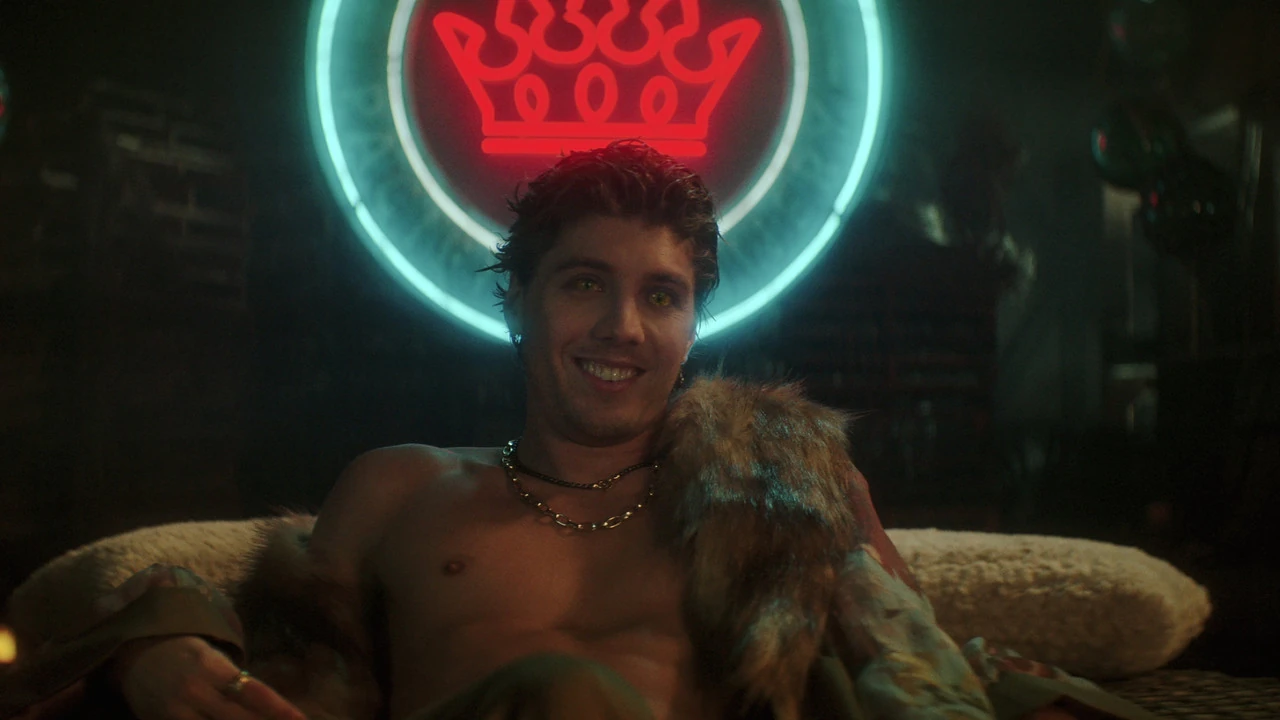 A glimpse into the vibrant, often perilous, supernatural world the detectives inhabit.
“To refuse the finality of an ending is to embrace an infinite, if uncertain, becoming. But what a heavy, beautiful choice that is.”
While the series might not reinvent the wheel in terms of plot structure, its philosophical heart beats strongly. Dead Boy Detectives offers a captivating blend of lighthearted adventure and thoughtful exploration of what it means to truly live—even when you’re already dead. It’s a testament to the human (and ghostly) spirit’s capacity for resilience, connection, and the unending quest for purpose. What does your own spectral echo whisper about the life you choose to lead, or the one you refuse to let go?
Where to Watch
- Netflix
- Netflix Standard with Ads
What’s Up? explores the philosophical depths of cinema.