The Chilling Paradox: Unmasking 'Deadly Virtues' in Domesticity
Exploring Deadly Virtues: Love.Honour.Obey.'s divisive take on domesticity, power, and the dark undercurrents of human connection, despite its critical reception.
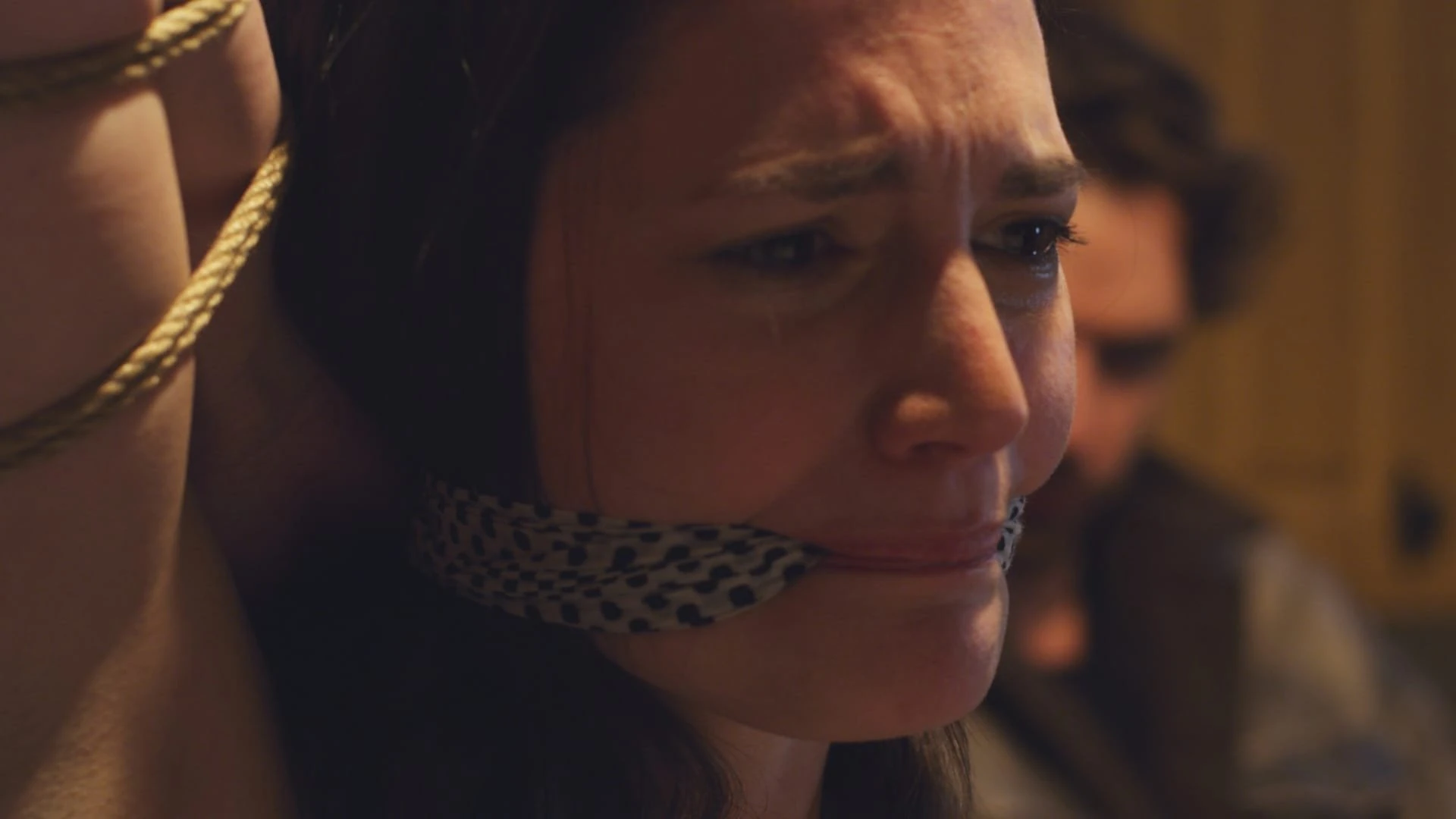
“The line between good and evil is not a fixed boundary, but a shifting territory, easily traversed by those who confuse duty with desire.” — Unknown
A film like Ate de Jong’s Deadly Virtues: Love.Honour.Obey. (2014) doesn’t exactly land with the fanfare of a blockbuster, nor does it typically grace the hallowed halls of critical consensus with universal acclaim. Indeed, this 87-minute psychological thriller, largely overlooked by mainstream critics and met with a decidedly mixed reception from audiences on platforms like IMDb, is the kind of cinematic experience that demands a different kind of engagement. It’s a slow-burn, claustrophobic piece that some viewers found frustratingly opaque or even tedious, while others lauded its unsettling atmosphere and willingness to delve into the murky depths of human depravity. But irrespective of its reception, Deadly Virtues forces us to confront a chilling paradox embedded within the very fabric of our most cherished institutions: what happens when the virtues we hold sacred – love, honour, obedience – become the instruments of our undoing?
The Cracks in the Domestic Façade
The film begins with a seemingly idyllic setup: a suburban home, a couple, Karen (Megan Maczko) and Tom (Matt Barber), whose domestic bliss is shattered by an unexpected home invasion. This initial premise is classic thriller fodder, designed to exploit our primal fears of vulnerability and the violation of personal space. However, de Jong, as critics and audiences alike have observed, isn’t content with a straightforward cat-and-mouse game. Instead, he uses this traumatic event as a catalyst, an acetylene torch to the foundations of an already precarious marriage.
Many viewers, grappling with the film’s pacing, noted that its deliberate slowness in the initial act could feel drawn out, a criticism not unfounded if one is expecting rapid-fire suspense. Yet, it’s precisely in this extended tension that Deadly Virtues begins to reveal its philosophical hand. The home isn’t just invaded; it becomes a crucible. The ‘virtues’ of a conventional marriage – the implicit trust, the expectation of mutual protection, the honouring of vows – are systematically dismantled. The arrival of the enigmatic, unnamed intruder (Edward Akrout) doesn’t just threaten physical safety; it exposes the emotional and psychological fissures already present, hinting at a rot beneath the surface of respectability. It asks: how fragile is our sense of order, our very identity, when the external world intrudes, and the internal world is already compromised?
Key themes the film, despite its flaws, brings to the fore:
- The Illusion of Security — both physical and emotional, within a relationship and a home.
- The Perversion of Vows — Love.Honour.Obey. are turned on their head, becoming tools of control and destruction.
- The Nature of Victimhood — exploring how agency can be seized, relinquished, or warped under duress.
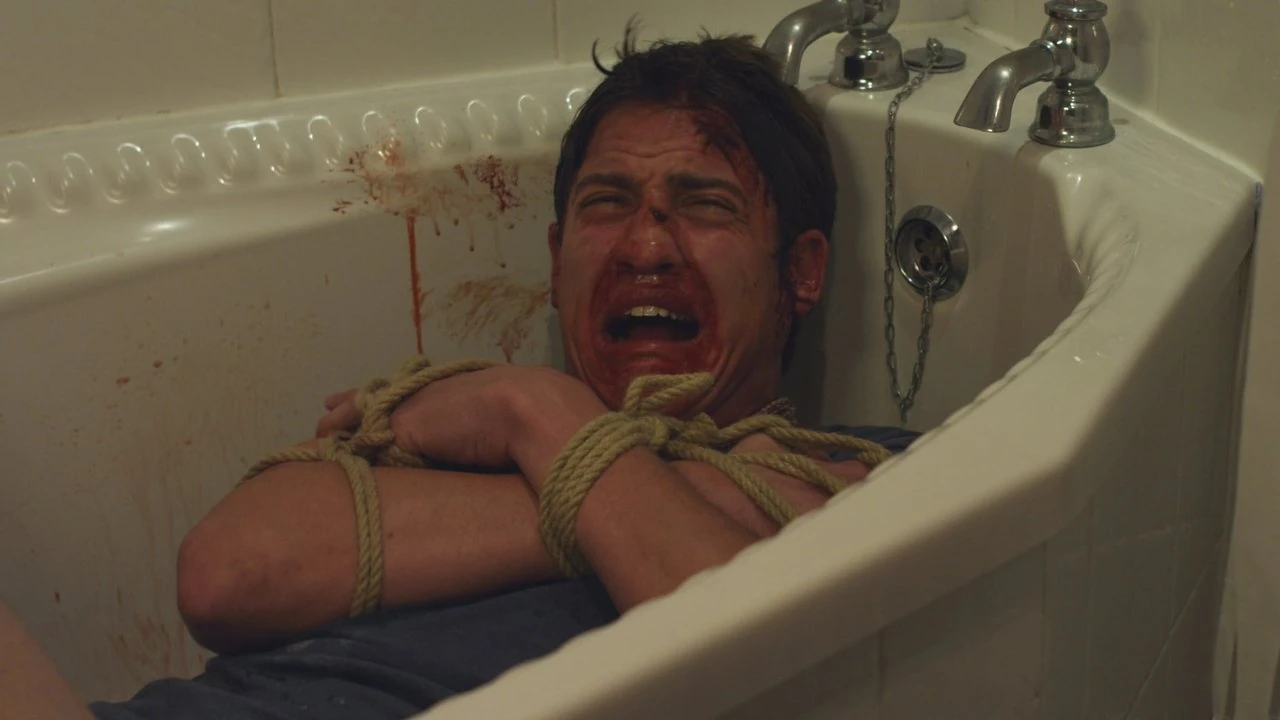 A fragmented reflection, symbolizing the shattered reality within the domestic space.
The Performance of Power and Subjugation
As the narrative unfolds, Deadly Virtues veers sharply into psychological territory, moving beyond a simple crime drama. The dynamic between Karen, Tom, and the intruder becomes less about escape and more about manipulation, control, and a disturbing exploration of human psychology. Edward Akrout’s performance as the intruder, often praised by those who connected with the film, is central to this. He embodies a disquieting calm, a calculated menace that is less about brute force and more about psychological warfare. Many viewers, however, found the motivations of all characters, particularly Karen’s eventual actions, to be opaque or even illogical, leading to frustration and accusations of plot holes. Some critics also noted that the film occasionally veered into sensationalism without fully earning its narrative turns.
In the suffocating grip of manipulation, the boundaries between captor and captive, victim and willing participant, begin to dissolve, revealing the terrifying fluidity of identity under duress.
The film’s exploration of power is particularly unsettling. The intruder doesn’t merely assert physical dominance; he dismantles Karen and Tom’s relationship from the inside out, exposing their secrets, their resentments, and their unacknowledged desires. This resonates with Foucault’s ideas of power operating not just as repression, but as a productive force, shaping identities and relationships. The ‘virtues’ of love and honour are tested, bent, and ultimately broken, revealing the potential for cruelty and control inherent in human connection when stripped of empathy and genuine respect. The concept of “obedience” takes on a particularly dark connotation, as it becomes less about mutual consent and more about forced compliance, blurring the lines of what it means to truly submit, or to reclaim agency in an extreme situation. The question of whether Karen is a victim, a co-conspirator, or something more complex, becomes the film’s philosophical core, even if its execution left some audiences bewildered or unconvinced by her transformation.
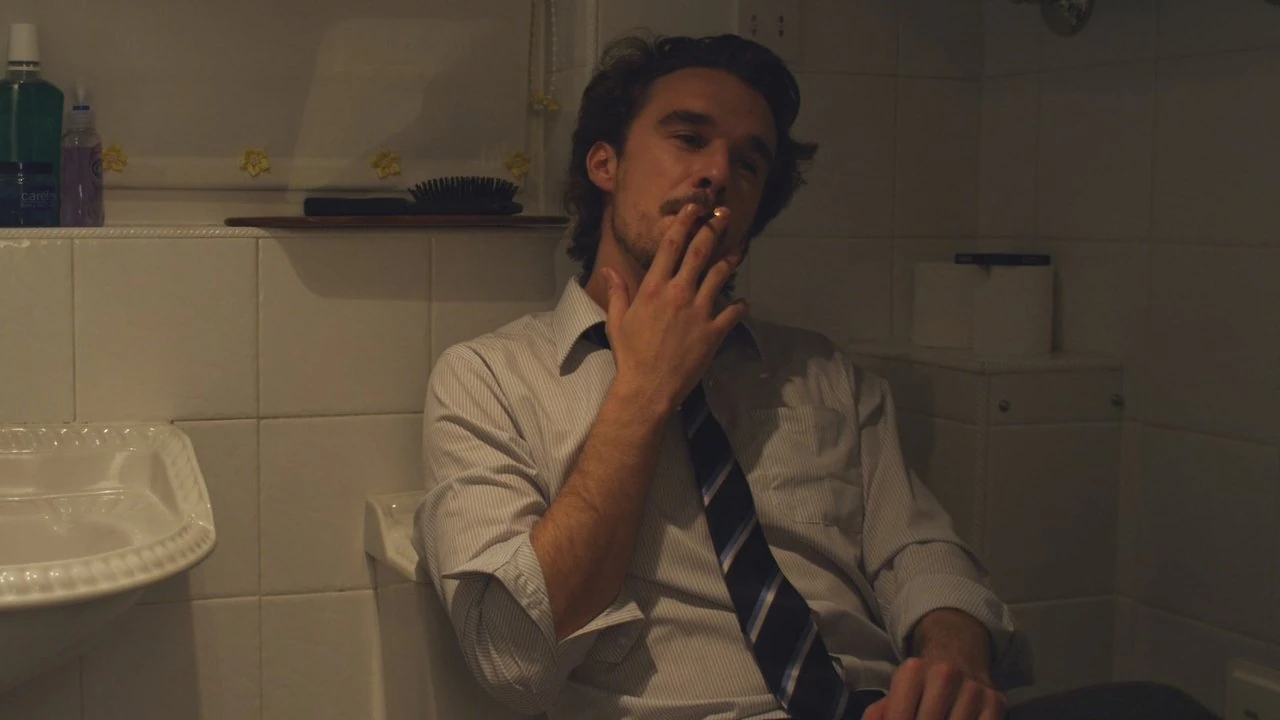 A close-up capturing intense emotional vulnerability and a hint of defiance.
Virtue, Vice, and the Void Within
Despite its polarizing reception and the valid criticisms regarding narrative coherence or pacing, Deadly Virtues dares to ask profound questions about human nature. It posits that the virtues we profess—love, honour, obedience—are not immutable shields against darkness, but rather fragile constructs that can be corrupted or weaponized. Director Ate de Jong, even if unevenly, attempts to peel back the layers of polite society to expose the primal drives lurking beneath: fear, desire, revenge, and the chilling capacity for cruelty that can reside in anyone.
The film’s ending, which many found ambiguous or unsatisfying, forces the viewer to grapple with the aftermath of trauma and the permanent scarring it leaves. It doesn’t offer easy answers or clear-cut moral victories. Instead, it leaves us in a void, reflecting on the destructive potential of unspoken resentments and the insidious ways power can shift and settle. It’s an uncomfortable watch, and certainly not for everyone, but its refusal to neatly categorize characters as purely ‘good’ or ‘evil’ pushes us into a more existential space. It challenges our assumptions about who we are, what we’re capable of, and how easily our cherished ‘virtues’ can become deadly.
Deadly Virtues: Love.Honour.Obey. may be a flawed and divisive film, one that struggles with its own narrative ambitions, but its bleak, unflinching gaze into the perversion of domesticity and the fragility of human morality ensures it lingers, a disquieting whisper reminding us of the shadows within.
What does it truly mean to love, honour, and obey when the very foundations of those commitments have been irrevocably shattered, leaving only echoes of a twisted devotion?
What’s Up? explores the philosophical depths of cinema.