Death on the Nile - A River of Desire, Betrayal, and Fragile Idols
Exploring Kenneth Branagh's Death on the Nile, this post delves into its themes of fatal desire, the illusion of perfection, and the existential weight of choice amidst glamorous flaws.
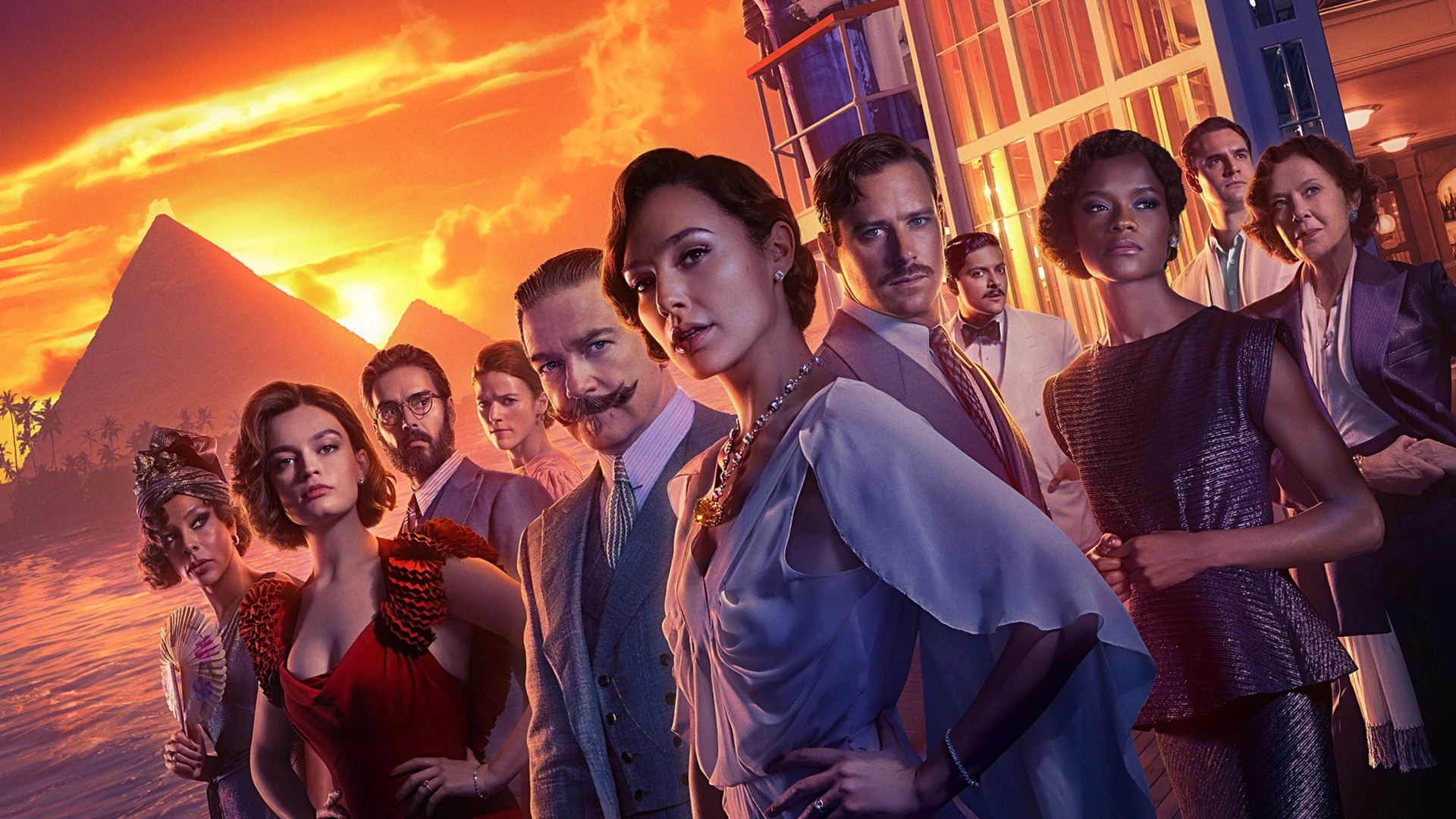
“The evil of which we speak is of a kind that preys upon the good, and turns it into a parody of itself.” — Agatha Christie
Kenneth Branagh’s Death on the Nile (2022) arrives on the scene much like its luxurious river steamer – a grand vessel promising an opulent journey, yet carrying a cargo of mixed expectations and, ultimately, a rather divisive reception. While its Rotten Tomatoes score of 62% and Metacritic’s 52/100 suggest a decidedly mixed bag, many critics and audiences alike pointed to a film that, despite its visual splendor and star-studded cast, often felt like a beautiful but somewhat hollow echo of its esteemed source material. There’s an undeniable allure to its lavish production design and picturesque Egyptian backdrops, yet this beauty can’t quite mask the criticisms leveled against its uneven pacing, sometimes clunky CGI, and a narrative that struggles to consistently build genuine suspense. But even in its imperfections, this iteration of Christie’s classic offers a fascinating, if flawed, lens through which to examine the corrosive nature of desire, the fragility of human connection, and the grim inevitability of consequence.
The Lure of Excess and Envy’s Venom
At its glittering heart, Death on the Nile is a story steeped in the intoxicating aroma of wealth and the deadly perfume of envy. We’re introduced to the ostensibly perfect couple, Linnet Ridgeway-Doyle (Gal Gadot) and Simon Doyle (Armie Hammer), whose whirlwind romance and immense fortune become both their gilded cage and their death warrant. Critics often found the film’s attempts at establishing deep emotional connections between the characters to be superficial, particularly in the rushed prologue meant to give Poirot’s stoicism a personal anchor. This lack of initial emotional investment, some argued, makes it harder to truly feel the impact of the tragedy that unfolds.
However, even if the film sometimes falters in building profound empathy, the philosophical undercurrent remains potent. It’s a stark portrayal of how material abundance and perceived happiness can, paradoxically, breed the most venomous forms of resentment. Linnet’s vast inheritance, her seemingly effortless charm, and her audacious appropriation of another woman’s fiancé don’t just spark jealousy; they ignite a primal, destructive rage. The film lays bare a fundamental human truth: that our deepest insecurities often fester in the shadows of someone else’s perceived perfection. It asks us to consider: is absolute happiness, particularly when flaunted, an invitation to destruction? And does true love, when born of betrayal, carry an inherent, fatal flaw?
- The Illusion of Perfection: Linnet and Simon’s ‘perfect’ union is a facade, easily shattered by past indiscretions and present desires.
- The Corrosive Nature of Envy: The film vividly demonstrates how envy, unchecked, can warp perception and lead to catastrophic actions.
- The Price of Possession: Both wealth and love are treated as possessions to be seized, leading to a brutal realization of their true cost.
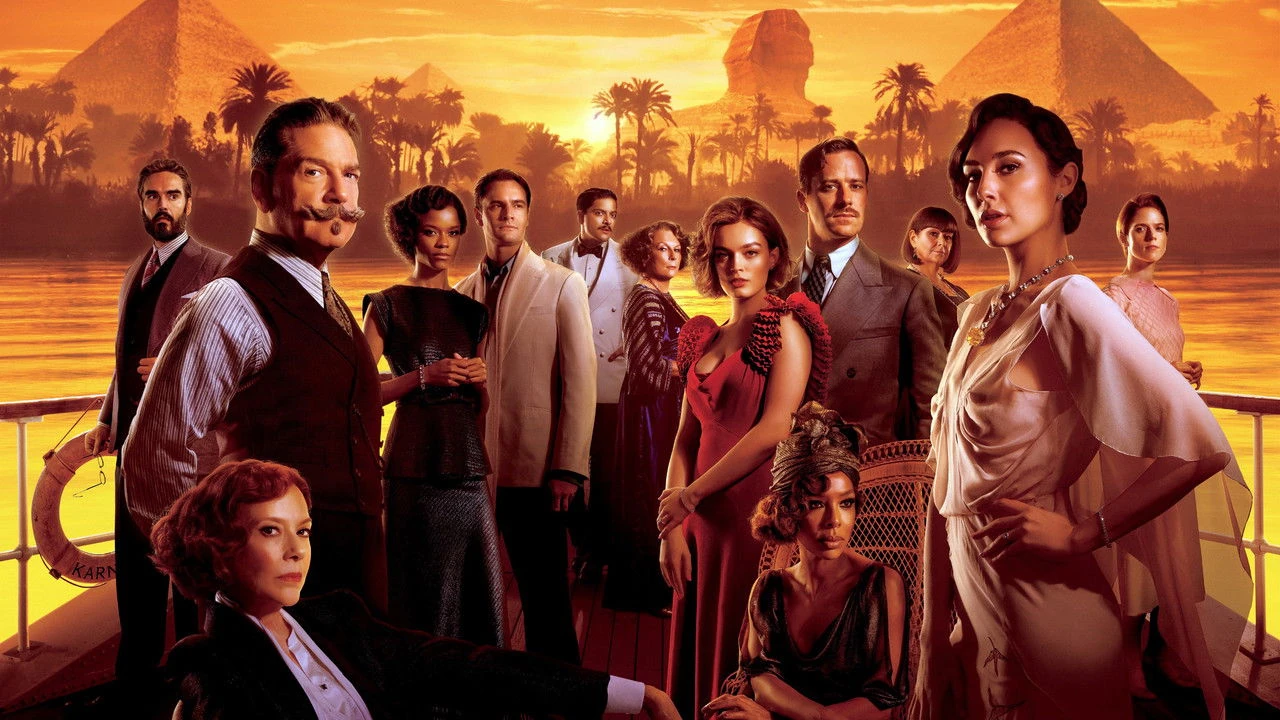 A scene of lavish opulence aboard the S.S. Karnak, a stark contrast to the darkness that will soon unfold.
Performance and Pacing: A Crooked Mirror
Branagh, not just directing but also reprising his role as Hercule Poirot, once again presents a detective burdened by a rigid moral code and a surprising emotional vulnerability. While some reviewers found his take on Poirot compelling, adding layers to the iconic sleuth, others felt his attempts at a tragic backstory, particularly surrounding his famously formidable mustache, detracted from the core mystery. The ensemble cast, a mix of seasoned actors like Annette Bening and rising stars like Emma Mackey, also received varied feedback. Some performances, like Bening’s Euphemia Bouc, were praised for their gravitas, while others were seen as underdeveloped or overshadowed by the film’s visual spectacle.
The pacing was another frequent point of contention. The film, clocking in at 127 minutes, often feels protracted, particularly in its setup. Critics noted that the narrative meanders, failing to consistently build the claustrophobic tension essential to a good locked-room mystery. Yet, even in this unevenness, there’s an unintentional philosophical point about how we perceive time and the slow burn of inevitability. The languid pace of the river journey, punctuated by moments of forced gaiety and simmering resentment, mirrors the slow, agonizing realization that something is deeply, irrevocably wrong. It’s a film that asks us to sit with the discomfort, to observe the human drama unfold, even if it doesn’t always grip us with white-knuckle suspense.
The film’s structural issues, while frustrating for a mystery, inadvertently highlight how often we miss the obvious signs of distress or danger, distracted by the very ‘glamour’ that conceals the truth.
The CGI, especially in certain wide shots of the Nile and historical landmarks, also garnered criticism for its occasionally artificial appearance. This digital sheen, while intended to create grandeur, sometimes ironically distances the viewer from the lived reality of the setting, creating a sense of unreality that can make it harder to invest in the very human drama playing out. It’s a subtle reminder that sometimes, the pursuit of visual perfection can inadvertently diminish emotional authenticity.
 Hercule Poirot, a figure of meticulous order, observing the chaotic dance of human passion and deceit.
The Fragility of Perfection and the Weight of Choice
Beyond the murder plot, Death on the Nile delves into deeper existential questions about human autonomy and the inescapable consequences of our choices. Every character on the S.S. Karnak is, in some way, chasing an ideal: perfect love, perfect revenge, perfect wealth, perfect escape. The film masterfully, if sometimes broadly, illustrates how these pursuits, when driven by selfish desires or a sense of entitlement, inevitably lead to suffering. It’s a dramatic demonstration of cause and effect, where even the smallest transgression or unspoken desire ripples outwards, eventually culminating in violence.
The film, despite its flaws, compels us to consider the moral calculus of crime. Poirot’s relentless pursuit of truth isn’t just about solving a puzzle; it’s about restoring a semblance of order to a chaotic world, about holding individuals accountable for their choices. The tragedy of Death on the Nile isn’t merely the murders themselves, but the crushing realization that nearly everyone involved is complicit in some form, entangled in a web of deceit and self-interest. It forces us to confront the uncomfortable truth that beneath the veneer of sophistication and wealth, human nature remains raw, primal, and capable of profound darkness. The river itself, ancient and indifferent, acts as a silent witness to humanity’s cyclical dance of love, lust, betrayal, and death, reminding us of the enduring patterns of our existence.
 A clandestine moment, where hidden desires and dark intentions begin to coalesce into a tragic fate.
“There is no evil in the world which is not a perversion of good. And so, too, there is no crime which does not, at its heart, whisper of a lost or twisted yearning for something pure.”
Death on the Nile may not be a flawless cinematic journey; its unevenness and occasionally superficial characterizations are legitimate criticisms. Yet, for those willing to look beyond its narrative bumps and CGI imperfections, it offers a surprisingly rich philosophical tapestry. It’s a film that, despite its mixed legacy, compels us to reflect on the seductive dangers of obsession, the unbearable weight of unfulfilled desire, and the chilling truth that even in the most picturesque settings, the human heart remains a dark and unfathomable mystery. What does it truly mean to desire, and what limits should we place on our pursuit of it, before the beautiful dream turns into a waking nightmare?
Where to Watch
- Amazon Prime Video
- fuboTV
- YouTube TV
- Amazon Prime Video with Ads
What’s Up? explores the philosophical depths of cinema.