Dhadkan's Enduring Echo: The Philosophy of Love's Evolution
Dhadkan (2000) explores the evolving nature of love, duty, and sacrifice, prompting reflection on whether love is a fixed state or a conscious choice.
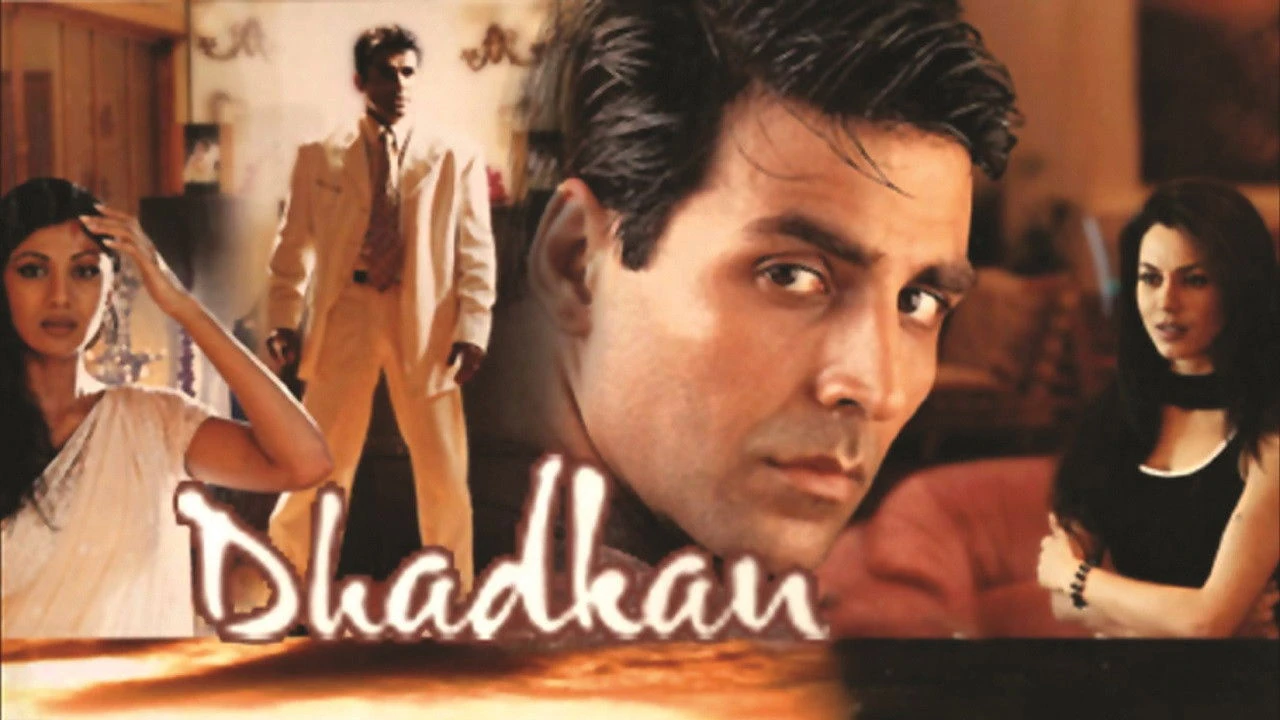
“The heart has its reasons of which reason knows nothing.” — Blaise Pascal
Dharmesh Darshan’s 2000 romantic drama, Dhadkan, is one of those quintessential Bollywood films that, despite its undeniable flaws, embeds itself into the cultural consciousness with a startling tenacity. It’s a film that asks profound questions about the nature of love, sacrifice, and the often-unpredictable evolution of the human heart, all wrapped in a lavish, undeniably melodramatic package. While it might not land on every critic’s “masterpiece” list – and indeed, some contemporary reviews and audience discussions pointed to its uneven pacing and heightened emotionality – Dhadkan nonetheless offers a compelling case study in the philosophy of attachment and detachment, choice and fate.
The Shifting Sands of Love and Duty
At its core, Dhadkan presents a classic, almost archetypal conflict: the passionate, unapproved love between Anjali (Shilpa Shetty Kundra) and Dev (Akshay Kumar), brutally severed by societal expectation and her family’s decision to marry her off to the noble, wealthy Ram (Suniel Shetty). The initial premise is standard Bollywood fare, a rich girl-poor boy narrative that, frankly, could have become entirely predictable. However, the film then takes a turn that elevates it beyond mere trope: years later, when Dev, now wealthy and driven by a thirst for reunion, re-enters Anjali’s life, he finds a woman transformed. She no longer pines for him; her heart, against all initial resistance, has genuinely embraced Ram.
This narrative pivot, while initially a point of contention for some viewers who found Anjali’s shift in affection too convenient or sudden, is precisely where the film’s philosophical muscle flexes. It challenges the very notion of “first love” as the “only love” or “true love.” Dhadkan suggests that love isn’t a static, immutable force, but rather a dynamic, evolving entity shaped by experience, commitment, and the conscious choices we make. Critics at the time often grappled with the film’s melodramatic excesses, noting how Darshan leaned heavily into heightened emotions, sometimes at the expense of subtle character development. Yet, even through the lens of heightened drama, the fundamental question remains: Can love be cultivated? Can it blossom from duty, respect, and kindness, even if passion wasn’t its genesis?
 Anjali (Shilpa Shetty Kundra) grapples with her past and present loves, embodying the film’s central dilemma.
The Dialectic of Desire and Devotion
Dhadkan truly shines in its exploration of the different facets of love, personified by its three central characters. Dev represents raw, untamed desire and the fierce, almost possessive, nature of a love scorned. His journey from vengeful, driven businessman to a man capable of letting go is a testament to the film’s attempt at character arc, albeit one that many viewers found a bit jarring in its intensity. Akshay Kumar’s performance, while initially criticized for its villainous overtones, ultimately contributes to the film’s powerful emotional resolution.
Ram, on the other hand, embodies selfless devotion and unconditional love. Suniel Shetty’s portrayal of Ram is widely regarded as the film’s moral compass and emotional anchor. He is the ideal husband, patient, understanding, and utterly devoted. His love is a quiet, steady flame that gradually wins Anjali’s heart. This portrayal resonated deeply with audiences, often drawing praise even from those who found the overall plot a bit stretched. The film, in many ways, champions Ram’s form of love – a love built on respect, sacrifice, and unwavering support – over Dev’s more passionate, yet initially destructive, longing.
The film subtly argues that while initial sparks ignite, it’s the consistent tending of the flame, the everyday acts of kindness and respect, that forge an enduring love.
Shilpa Shetty Kundra, in her role as Anjali, navigates this complex emotional landscape with remarkable grace and conviction. Her performance, often cited as one of her career-best, anchors the film’s emotional core. She convincingly portrays the internal conflict of a woman torn between a past she cherished and a present she has grown to cherish even more. While some critics noted the film’s tendency to simplify her emotional journey in favor of dramatic turns, Anjali’s ultimate choice becomes a powerful statement on agency and the capacity for redefinition of self within a relationship.
The Metaphysics of the Heart
Beyond the love triangle, Dhadkan delves into deeper metaphysical questions about what constitutes a “soulmate.” Is it the person you first loved, the one whose very presence ignited a fire? Or is it the person who sees you, cherishes you, and helps you become the best version of yourself, even if the connection wasn’t instantaneous? The film implicitly argues for the latter, suggesting that a soulmate isn’t predetermined by fate or a singular moment of passion, but rather forged through shared experience, mutual growth, and consistent, selfless love.
The film also explores the philosophical concept of redemption. Dev’s journey is one of profound transformation, forcing him to confront the destructive nature of his obsession and ultimately embrace the happiness of the woman he loves, even if it means his own heartbreak. This act of letting go, of prioritizing the beloved’s happiness over one’s own possessive desires, is perhaps the most philosophically mature aspect of Dhadkan. It’s a challenging proposition, one that few romantic dramas dare to fully embrace without resorting to contrived happy endings for all parties.
“Sometimes, the deepest love isn’t about holding on, but about having the courage to release, to let another’s joy be your own, even in absence.”
Dhadkan may be a product of its time, steeped in the melodrama and narrative conventions of early 2000s Bollywood. Its pacing can feel leisurely, its emotional beats occasionally overplayed, and some plot points might strain credulity for a modern audience. Yet, its enduring popularity and the philosophical questions it provokes are undeniable. It challenges us to reconsider the very architecture of love – its origins, its growth, and its capacity for transformation and sacrifice. It asks whether love is a fixed destination or an ongoing journey, constantly redefined by our choices and the quiet devotion we extend to one another. And in doing so, Dhadkan beats with a surprisingly profound rhythm.
What’s Up? explores the philosophical depths of cinema.