The Ominous Whisper: Navigating Donnie Darko's Labyrinth of Fate and Free Will
Exploring the enduring, divisive legacy of Donnie Darko, a film that challenges our perceptions of reality, choice, and mental landscapes. A cult classic.
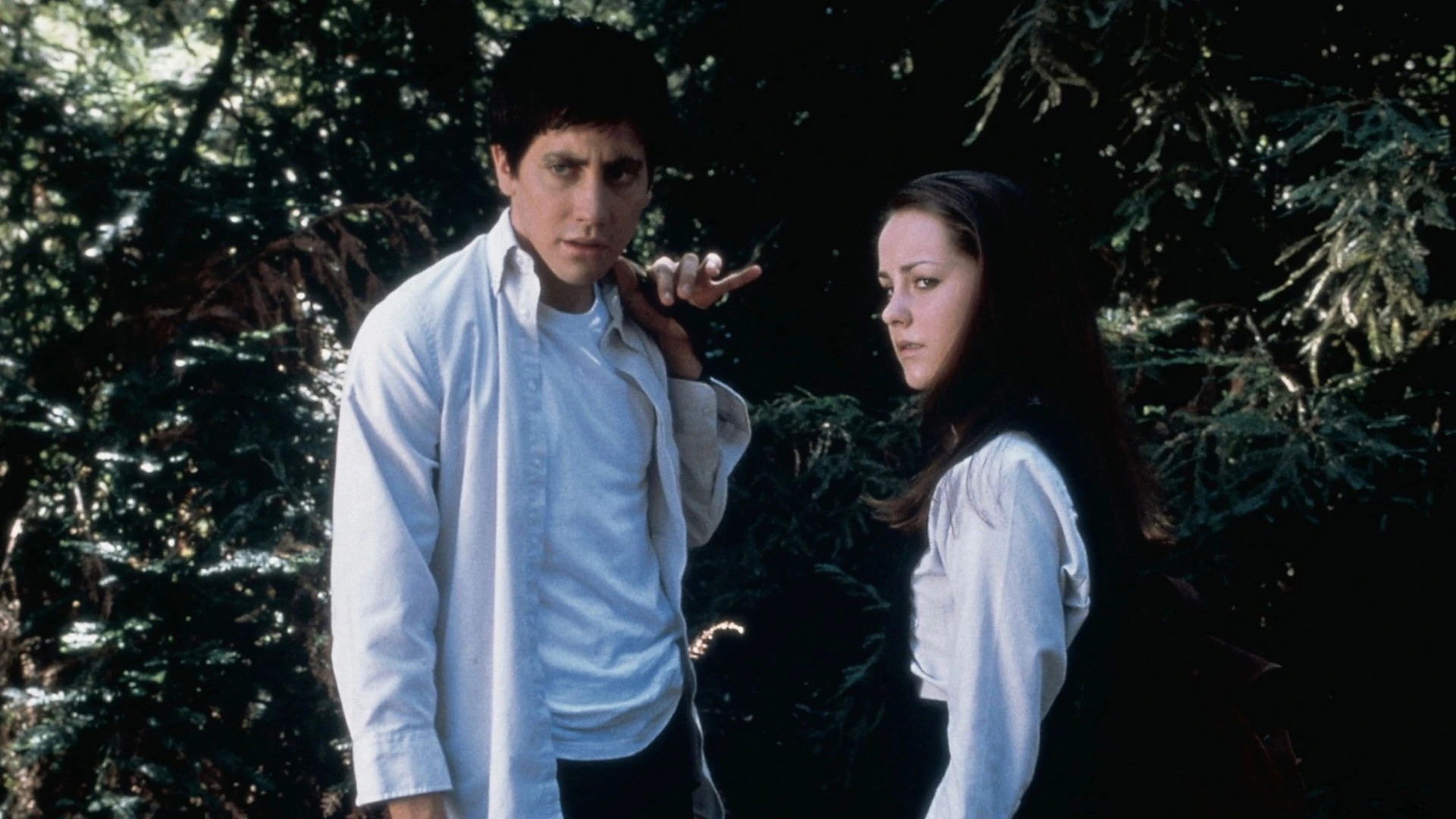
“Every living creature on Earth dies alone.” — Roberta Sparrow, The Philosophy of Time Travel
Richard Kelly’s 2001 film, Donnie Darko, isn’t merely a movie; it’s a riddle wrapped in an enigma, cloaked in an 80s nostalgia trip. From its perplexing opening to its haunting conclusion, it has captivated, confused, and profoundly moved audiences for over two decades. While critically well-received upon its belated release – boasting an impressive 87% on Rotten Tomatoes and a “generally favorable” 71 on Metacritic – its true legacy lies in its divisive nature and its ability to spark endless debate. It’s a film that demands multiple viewings, not just for clarity, but for the sheer intellectual exercise of grappling with its dense tapestry of science fiction, psychological drama, and adolescent angst. Jake Gyllenhaal, in a breakout role, anchors this surreal journey, drawing us into the troubled mind of a teenager whose world is quite literally coming apart at the seams.
The Labyrinth of Fate and Choice
At its core, Donnie Darko plunges us into the dizzying philosophical debate between determinism and free will. Donnie, a troubled teenager, is plagued by visions of Frank, a monstrous rabbit who warns him of the world’s impending end in 28 days, 6 hours, 42 minutes, and 12 seconds, manipulating him into committing a series of destructive acts. Is Donnie merely a puppet of some unseen cosmic force, an unwitting agent in a grand, predetermined plan? Or do his choices, however guided by delusion or prophecy, still hold the weight of personal agency? This is where the film truly shines, forcing us to confront the existential dread of a life potentially devoid of true choice.
Yet, even its staunchest admirers often concede that the film’s labyrinthine plot can be incredibly difficult to follow, especially on a first viewing. Many critics, while praising its originality, noted its convoluted narrative and the sheer interpretive burden it places on the viewer. Some found the film’s ambition occasionally outstripping its clarity, leading to moments of genuine confusion rather than deliberate ambiguity. It’s a tightrope walk between profundity and obfuscation, and Donnie Darko doesn’t always keep its balance perfectly. But perhaps that’s part of its charm; it doesn’t offer easy answers, and arguably, it’s better for it.
- Existential dread — the weight of a preordained path.
- Destiny’s grip — the unsettling feeling of being a cog in a larger machine.
- The burden of knowledge — knowing a terrible truth and being powerless to stop it.
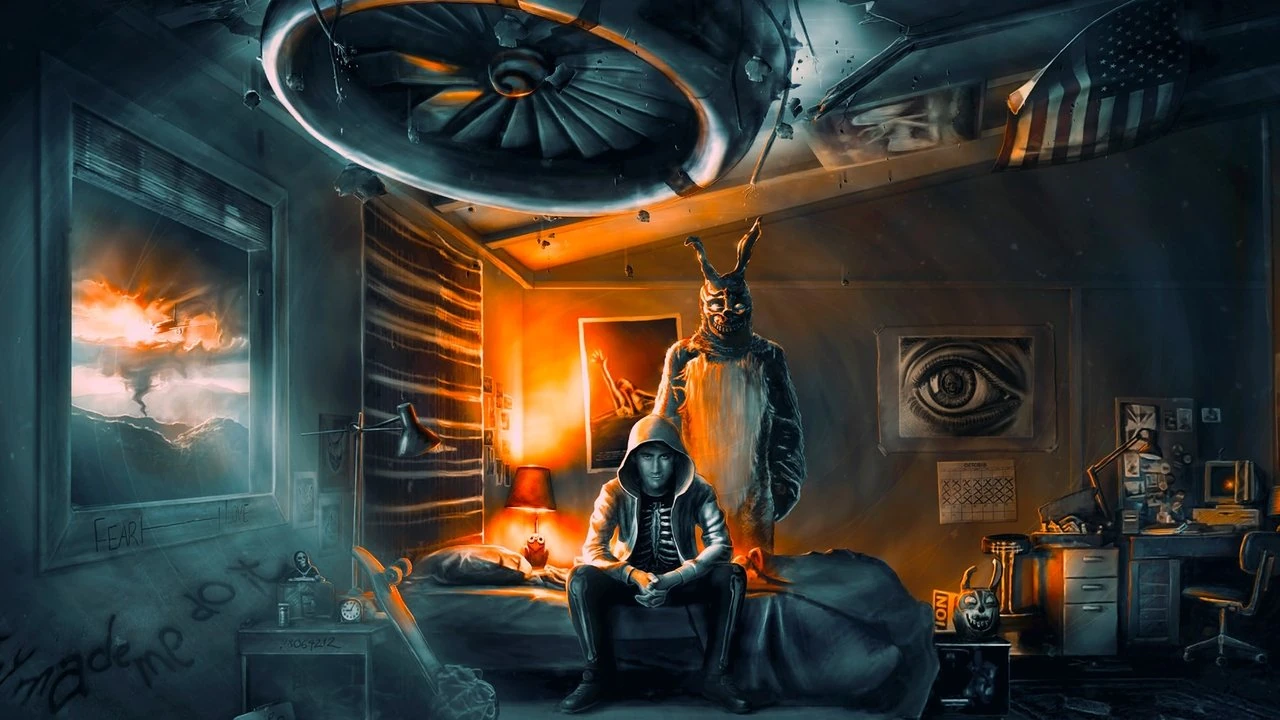 Donnie Darko, isolated and contemplative, grappling with the weight of an unseen burden in the quiet suburban sprawl.
The Double-Edged Sword of Ambiguity
The film’s enduring cult status is undeniable, a testament to its unique atmosphere, the chillingly effective soundtrack, and Gyllenhaal’s mesmerizing portrayal of a young man on the brink. Critics lauded its originality and the audacity of its vision, creating a deeply immersive, unsettling experience. The eerie suburban setting, the sharp social satire, and the brilliant ensemble cast (including Jena Malone, Drew Barrymore, and Beth Grant) all contribute to its hypnotic pull.
However, the very qualities that make Donnie Darko so compelling also fuel its criticisms. The uneven pacing was a common point of contention, with some finding its slow burn occasionally meandering. For others, the film’s profound themes occasionally tipped into what felt like pretentiousness, trying too hard to be deep without fully earning its narrative leaps. The famously ambiguous theatrical cut, beloved by many for its open interpretation, was later overshadowed for some by the Director’s Cut, which attempted to explain the intricate mechanics of “The Philosophy of Time Travel” more explicitly. This move, ironically, often demystified the very magic that drew viewers in, leading to arguments about whether clarity actually served the film or diluted its power.
True meaning in art often isn’t delivered on a silver platter; it’s forged in the crucible of individual interpretation, making the journey of discovery as vital as the destination itself.
The film’s strength lies in its ability to inspire such vigorous debate. It doesn’t just present a story; it presents a puzzle, daring us to piece together its fragments of quantum mechanics, adolescent psychology, and spiritual awakening. This active engagement is precisely why it resonates so deeply with those who connect with it, despite the occasional narrative stumbles or moments where the metaphorical weight threatens to buckle the plot.
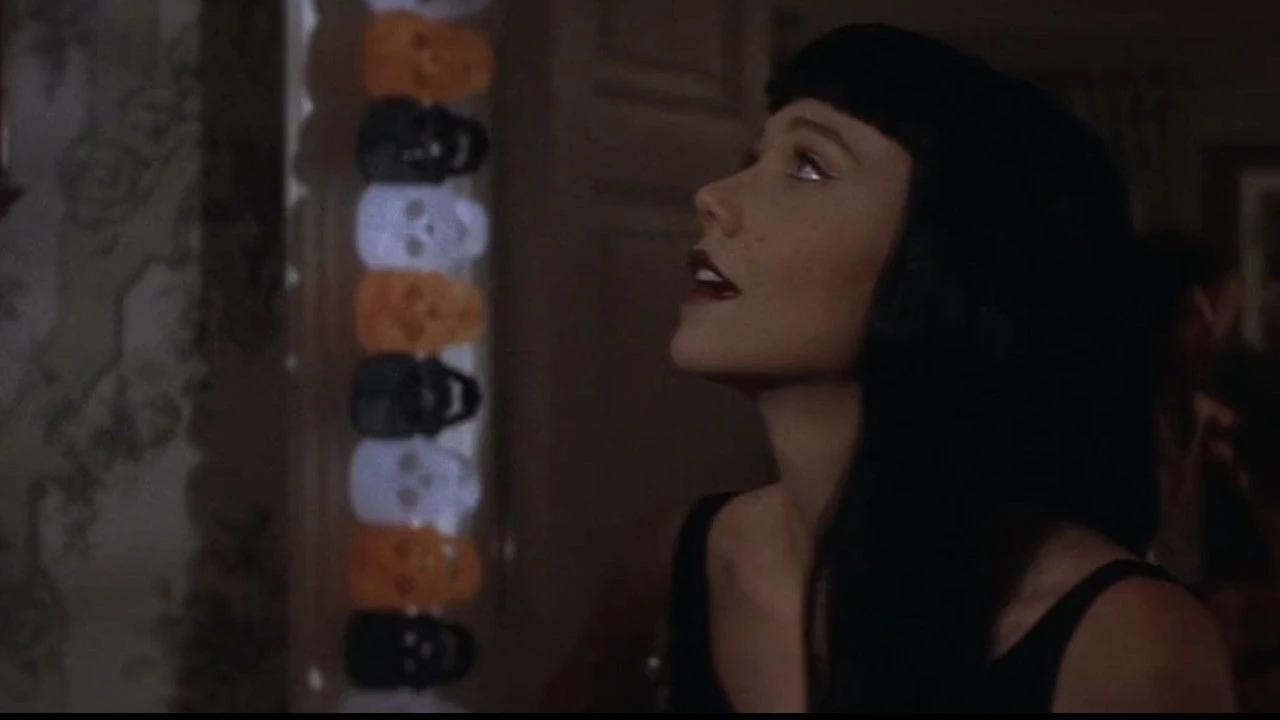 Frank the Rabbit, a menacing yet enigmatic figure, embodying the blend of horror and guidance that defines Donnie’s journey.
A Mirror to Adolescent Anguish and Metaphysical Angst
Beyond the time travel mechanics and the looming apocalypse, Donnie Darko functions as a potent exploration of adolescent alienation and the fragile landscape of the teenage mind. Donnie’s schizophrenia, whether literal or a metaphorical lens through which he perceives a fractured reality, speaks to the universal experience of feeling out of step with the world. The film brilliantly skewers the hypocrisy of suburban life, the superficiality of self-help gurus, and the oppressive conformity of 1980s society, providing a backdrop against which Donnie’s internal turmoil feels acutely justified.
His journey becomes a metaphysical quest for purpose in a chaotic universe. He is the “Living Receiver,” burdened with the knowledge of a catastrophic event, forced to navigate the thin line between savior and destroyer. This narrative taps into our own anxieties about destiny, sacrifice, and the ultimate meaning of individual existence. What would we do if we knew the end was near? Would we fight it, accept it, or, like Donnie, embrace a role that transcends our understanding for a greater, unspoken good? The film dares to ask whether true heroism might involve an act of profound self-annihilation, not just for others, but to reset the very fabric of reality.
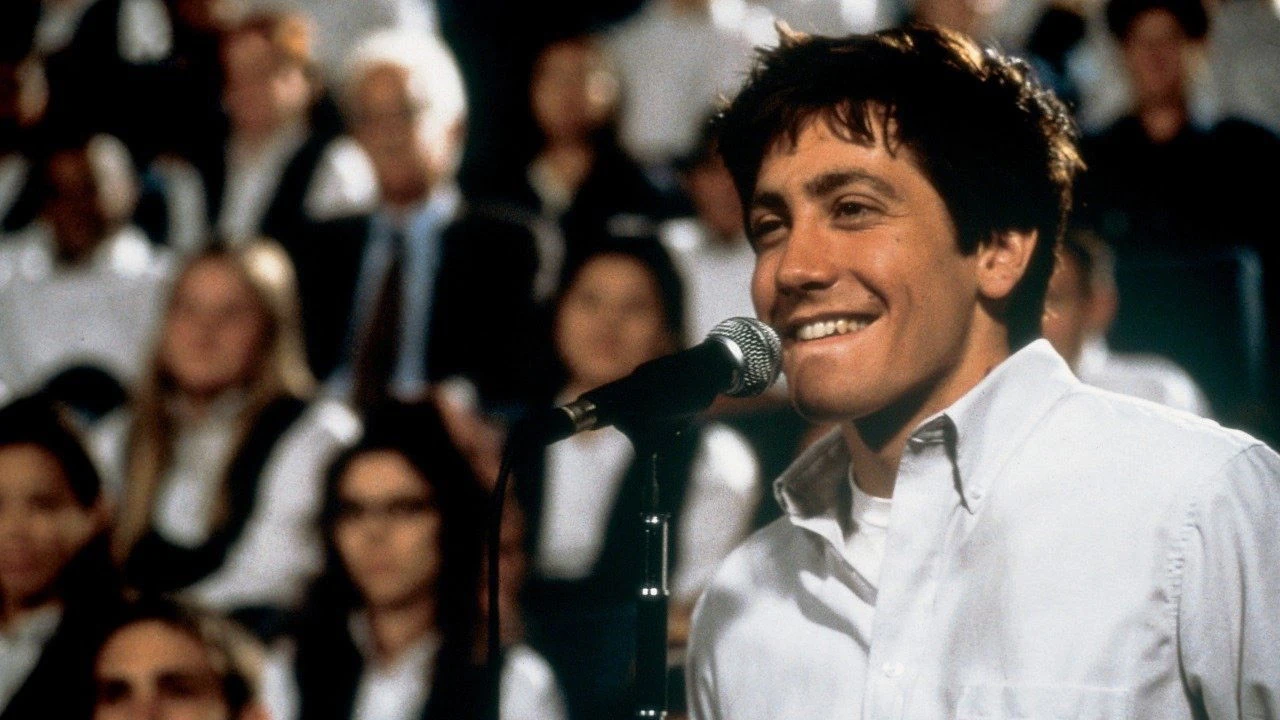 The iconic imagery of the falling jet engine, a harbinger of doom and the catalyst for Donnie’s surreal odyssey.
“Sometimes I doubt your commitment to Sparkle Motion!” — Kitty Farmer, Donnie Darko
Donnie Darko remains a fascinating, if occasionally frustrating, piece of cinema. Its mixed legacy isn’t a sign of failure but a testament to its audacity. It’s a film that doesn’t just demand your attention; it demands your interpretation, your emotional investment, and perhaps even a piece of your sanity. While some critics found its ambition occasionally outstripping its clarity, and audiences were certainly divided on its dense plotting, its ability to provoke thought, discussion, and a deep sense of connection to its troubled protagonist is undeniable. It forces us to look beyond the surface, to question the very nature of our perceived reality, and to ponder the silent sacrifices that underpin our existence.
What hidden truths do we ignore in our own lives, and what price are we willing to pay to confront them?
Where to Watch
- Amazon Prime Video
- Hulu
- fuboTV
- Criterion Channel
- Amazon Prime Video with Ads
What’s Up? explores the philosophical depths of cinema.