Dumb Money's Smart Questions: Unmasking the Market's Illusion
Dumb Money explores the GameStop saga, dissecting market power, collective action, and the illusion of value in our digital age.

“The market can remain irrational longer than you can remain solvent.” — John Maynard Keynes
Craig Gillespie’s Dumb Money crashes into the chaotic, meme-fueled world of the GameStop stock phenomenon, a David-and-Goliath tale for the digital age. Released in 2023, this biographical comedy-drama attempts to capture the frenetic energy and underlying social frustration that propelled a seemingly dying retail stock to unprecedented heights, all driven by a band of amateur investors rallying on Reddit. The film’s reception has been, much like the market it depicts, a bit of a mixed bag. While Rotten Tomatoes critics gave it a respectable 84% “Certified Fresh” rating, praising its accessibility and energetic performances, Metacritic’s 66/100 suggests a more “mixed or average” critical consensus. And IMDb users landed around a 6.9/10, indicating it resonated well enough but perhaps didn’t quite hit the profound notes for everyone. It’s a film that definitely has its flaws, yet it undeniably taps into something deeply existential about our modern economy and the illusion of control.
The Arena of Value and Its Discontents
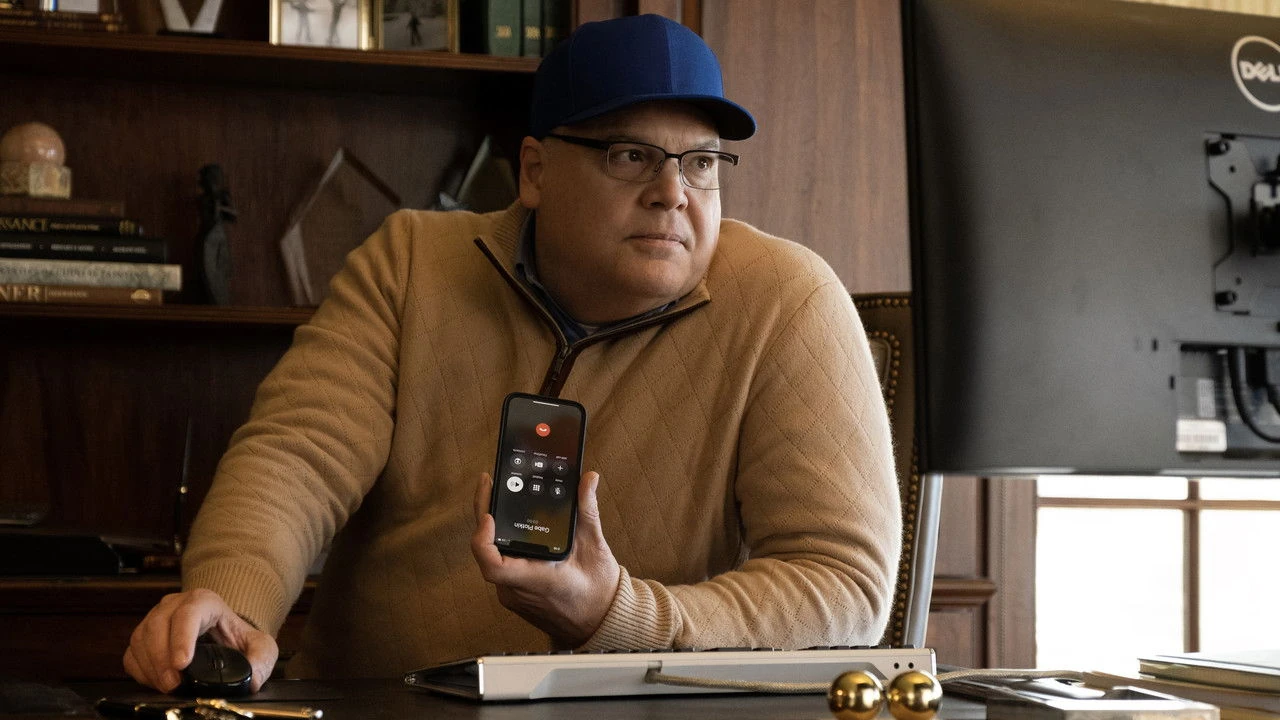
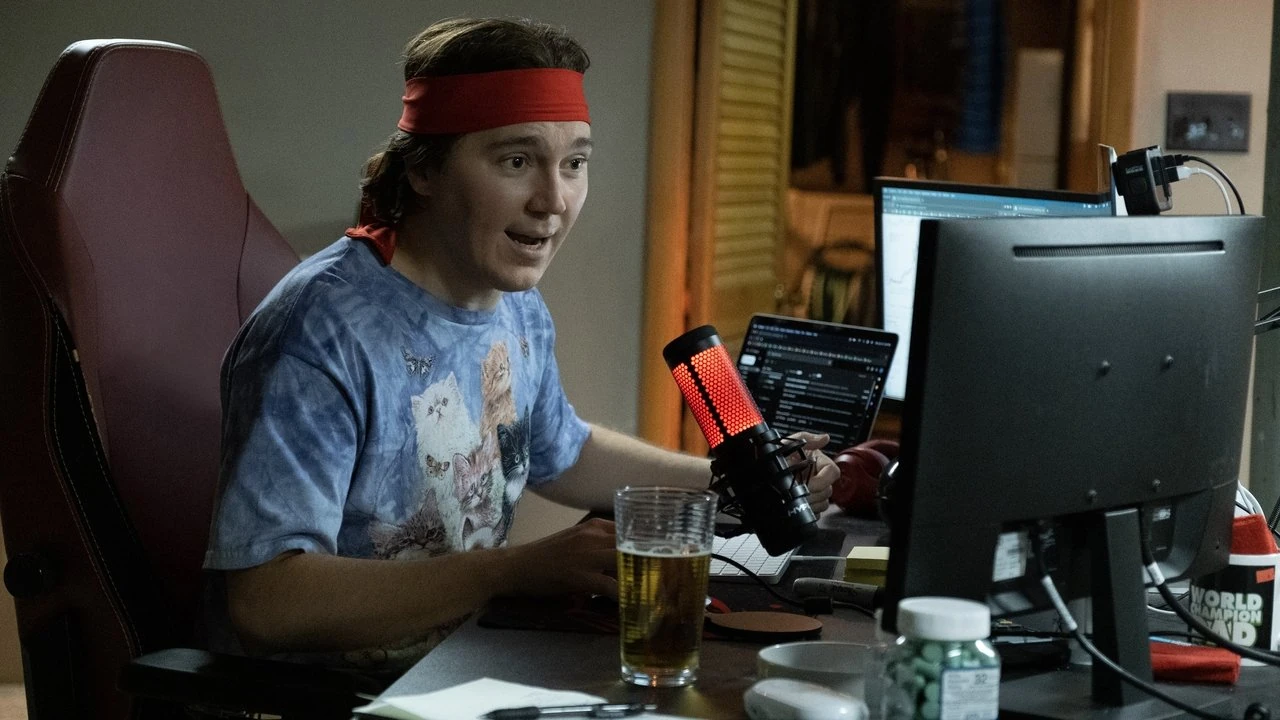
Dumb Money is at its most compelling when it strips back the complex jargon of finance to reveal a fundamentally human story of belief, hope, and desperation. Paul Dano, as the unassuming vlogger Keith Gill (aka Roaring Kitty), anchors the film with a quiet intensity that perfectly embodies the everyday person who dares to question the established order. The film effectively portrays the stark contrast between the “smart money” of hedge fund billionaires like Gabe Plotkin (Seth Rogen) and Ken Griffin (Nick Offerman), and the “dumb money” of retail investors.
However, some critics noted that the film, in its efforts to simplify the intricate financial mechanics for a mass audience, occasionally veers into an almost cartoonish portrayal of its antagonists. This simplification, while making the story digestible, perhaps diminishes the opportunity for a deeper, more nuanced exploration of systemic greed. Despite this, the film powerfully illustrates the construct of value itself. What is a stock truly “worth”? Is it the underlying fundamentals of a company, or is it a collective agreement, a shared narrative, a performative act driven by millions of individual wills? The GameStop saga, as depicted, forces us to confront the arbitrary nature of market value, suggesting that the “truth” of a company’s worth is often less about intrinsic merit and more about the stories we tell ourselves, and the power dynamics that dictate whose story wins.
 Paul Dano as Keith Gill, embodying the everyman prophet of the GameStop revolution.
Collective Action and the Human Cost
Beyond the market mechanics, Dumb Money truly shines in its portrayal of the diverse individuals drawn into Gill’s orbit. America Ferrera plays a struggling nurse, Shailene Woodley a college student burdened with debt, and Pete Davidson a GameStop employee barely scraping by. These characters, though sometimes feeling like archetypes to serve the plot’s momentum, are crucial in grounding the abstract financial concepts in tangible human stakes. Their stories highlight the desperation and the flicker of hope that fueled the movement – a chance, however slim, to escape the cycle of precarity and finally feel a sense of agency in a system that often feels rigged against them.
This is where we discover the true weight of choice — not in the outcome, but in the becoming, in the collective belief that even a small act can ripple into a tidal wave.
The film does a commendable job of showcasing the exhilarating highs of collective action, the sense of camaraderie and shared purpose that emerged from the Reddit forum r/wallstreetbets. Yet, it doesn’t shy away from the precipitous falls, the very real emotional and financial toll taken when the billionaires “fight back.” Critics noted that the pacing could feel a bit rushed at times, particularly in conveying the rapid emotional swings from euphoria to despair, which might have benefited from a slightly longer runtime or more focused character arcs. Nevertheless, the film asks profound questions about the ethics of speculation, the moral responsibility of those who manipulate markets, and the inherent imbalance of power when a coordinated online community challenges the titans of finance. It’s a compelling look at how digital connectivity can forge new forms of solidarity and rebellion, making it a truly divisive subject for some who see it as market manipulation and others as a justified uprising.
 America Ferrera portrays the deeply personal stakes behind the market’s abstract numbers.
Beyond the Surface: The Illusion of Fairness
Ultimately, Dumb Money is less about the intricacies of stock trading and more about the enduring battle between the powerful and the powerless. It’s an exploration of the illusion of fairness in a system designed to benefit the few. The congressional hearings depicted in the film, where Gill and the hedge fund managers face off, highlight the performative nature of accountability when the rules are fundamentally skewed. The film suggests that while the “dumb money” may win a battle, the war for a truly equitable financial landscape is far from over.
The movie, despite its energetic and often comedic tone, raises existential questions about the very fabric of our capitalist society. Is it truly a meritocracy, or is it a game where the house always wins? Can individual or collective action truly dismantle entrenched power, or does the system simply adapt and absorb these challenges? The GameStop phenomenon, as presented in Dumb Money, becomes a powerful metaphor for any movement that seeks to disrupt the status quo, reminding us that the fight for justice often means challenging not just policies, but the very narratives that uphold existing power structures.
 The confrontation: individual conviction against institutional power, a tableau of modern rebellion.
The lingering question isn’t whether the “dumb money” won, but whether the game itself is fundamentally unwinnable for anyone who isn’t already inside the castle walls.
Dumb Money might not be a perfect film; it’s perhaps not as incisive or complex as The Big Short, a common comparison point. Its rapid-fire narrative and character breadth sometimes sacrifice depth. Yet, its weaknesses are undeniable, particularly for those who sought a more profound socio-economic critique. However, it succeeds in being a highly accessible and entertaining entry point into a complex, frustrating, and deeply philosophical event. It leaves us with a potent reflection on power, collective identity, and the ever-present yearning for equity in a world where the odds often feel impossibly stacked. It asks us to consider: in an increasingly digital and financially precarious world, what does it truly mean to have agency, and who ultimately decides what something is worth?
Where to Watch
- Hulu
- fuboTV
- YouTube TV
What’s Up? explores the philosophical depths of cinema.