Living, Dying, Repeating: Edge of Tomorrow's Existential Loop
Examining Edge of Tomorrow's profound exploration of identity, transformation, and the absurd heroism found within an endless cycle of combat and death.
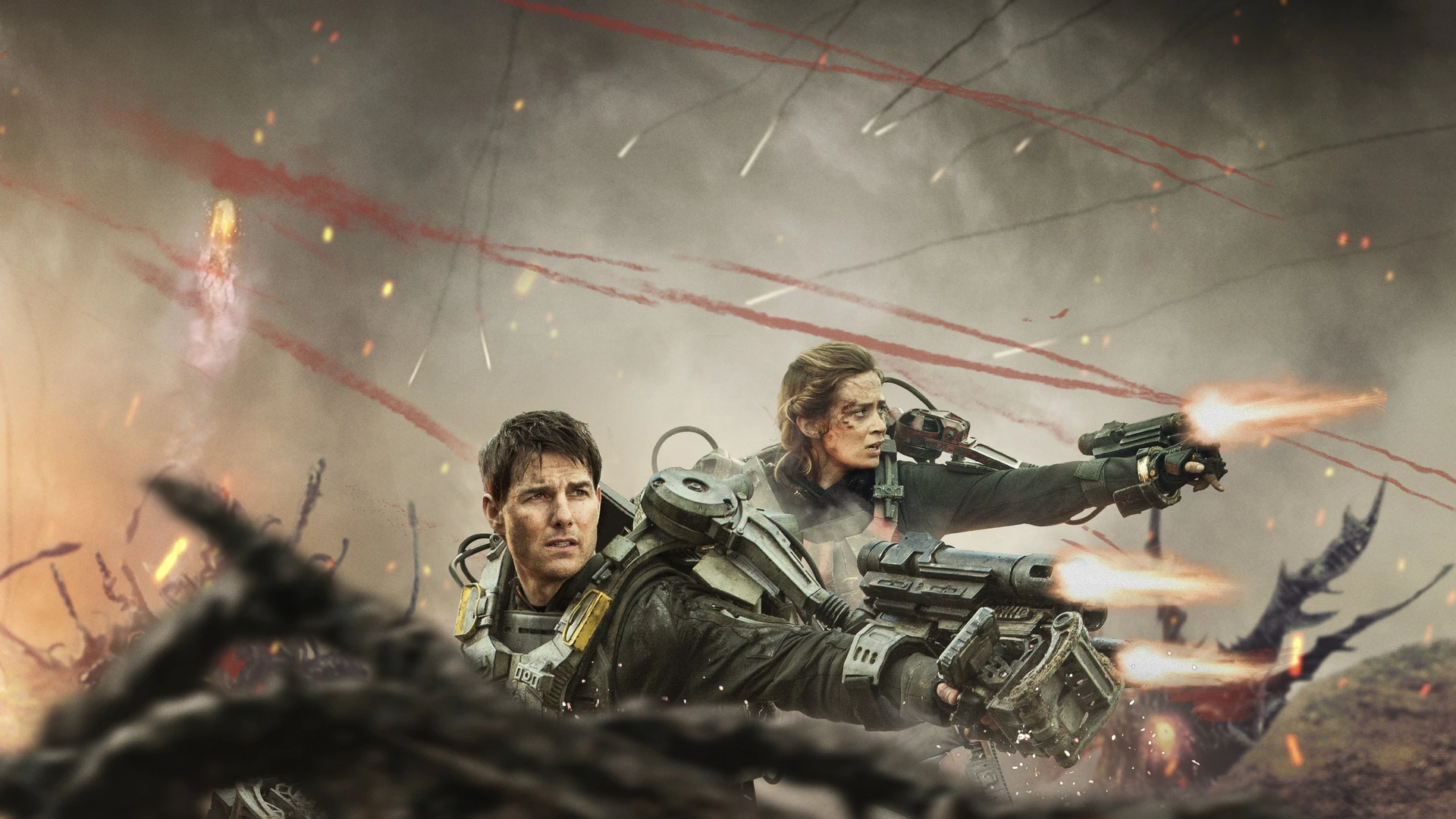
“We are condemned to be free.” — Jean-Paul Sartre
Doug Liman’s Edge of Tomorrow (2014) is one of those rare blockbusters that manages to be both a pulse-pounding action spectacle and a surprisingly cerebral exploration of the human condition. Starring Tom Cruise as the hilariously inept Major Bill Cage and Emily Blunt as the formidable Rita Vrataski, the film thrusts us into a perpetually resetting alien invasion scenario. While it received widespread critical acclaim—boasting a stellar 91% on Rotten Tomatoes and a “generally favorable” 71 on Metacritic—and was praised for its clever script, inventive action, and crackling chemistry between its leads, it’s not without its minor quibbles. Some viewers, myself included, have occasionally found the ending a touch too neat, perhaps even undermining some of the hard-earned stakes. Yet, even with these slight narrative concessions, Edge of Tomorrow manages to dig deep, challenging us to consider what it truly means to learn, to change, and to find purpose when every day is literally the same.
The Absurdity of the Loop: Sisyphus with a Railgun
At its core, Edge of Tomorrow is a masterclass in existential repetition. Major Bill Cage, a smarmy PR officer who’s never seen combat, is unceremoniously dropped into a futuristic D-Day against an alien race known as Mimics. He dies almost instantly, but not before getting splattered with the blood of an Alpha Mimic, accidentally inheriting its ability to reset the day upon death. Suddenly, Cage is stuck in a loop, forced to relive the same brutal battle, the same humiliating deaths, over and over again.
This setup immediately evokes the myth of Sisyphus, condemned to eternally push a boulder up a hill, only for it to roll back down. Albert Camus argued that Sisyphus finds meaning not in the futile outcome, but in the act of pushing, in his defiance against the absurd. Cage’s journey mirrors this; his initial despair and attempts to escape slowly morph into a grim determination. He’s not just fighting aliens; he’s fighting his own cowardice, his own limitations. Critics lauded how the film takes a familiar Groundhog Day premise and elevates it with kinetic action and genuine character growth, avoiding the trap of becoming repetitive itself. The loop isn’t just a plot device; it’s a crucible for transformation, where every death is a lesson, every failure a step towards mastery.
Key themes to explore:
- Existential Absurdity — confronting a meaningless, endless cycle of death.
- Forced Evolution — the relentless pressure of the loop driving involuntary self-improvement.
- The Value of Failure — each death serves as a vital learning experience, stripping away ego and ignorance.
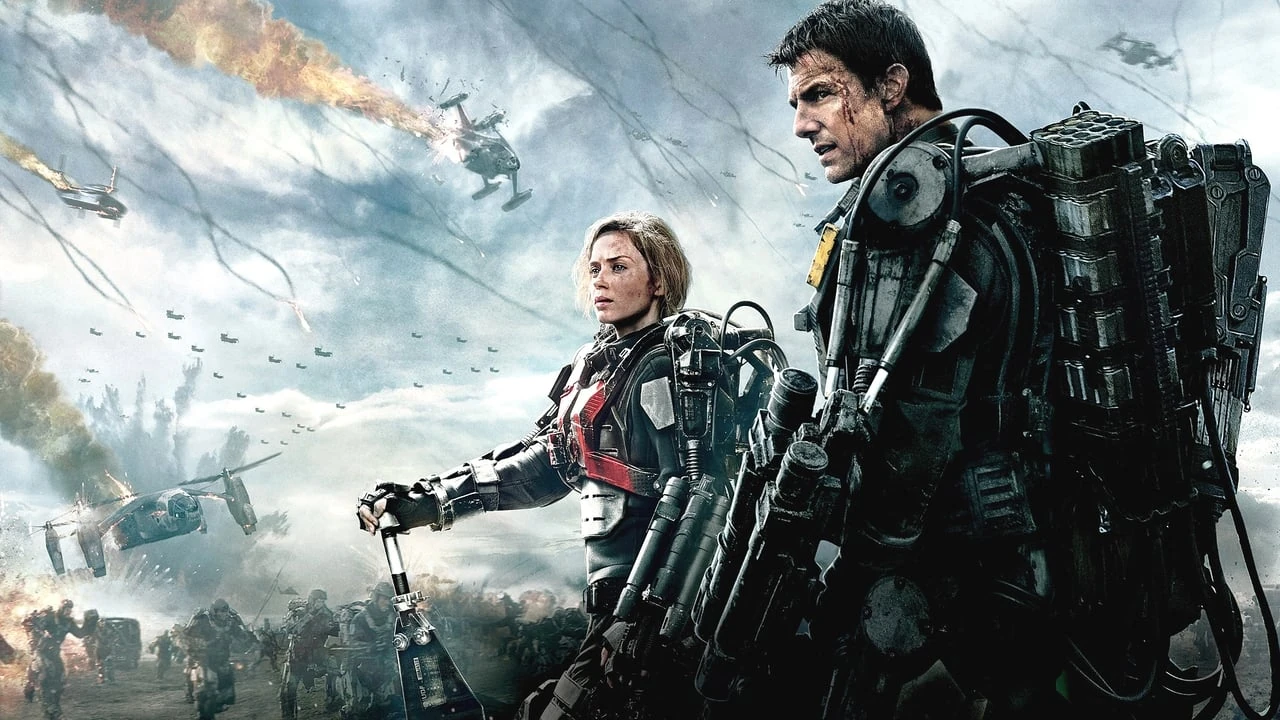 Major Bill Cage, initially out of his depth, facing the overwhelming chaos of the battlefield
Forging a Hero: From PR Flack to War Veteran
What truly works in Edge of Tomorrow is the meticulous, almost brutal, development of Bill Cage. We watch him go from a sniveling, self-serving coward to a highly skilled, selfless warrior. This isn’t a quick montage; it’s a journey painstakingly built through literally thousands of deaths, each one refining his combat skills, his tactical knowledge, and his very character. Emily Blunt’s Rita Vrataski, the “Full Metal Bitch,” serves as his hard-edged mentor, embodying the stoic resilience the loop demands. Their dynamic is the film’s beating heart, a blend of dark humor, reluctant partnership, and eventually, profound respect.
True heroism isn’t born in a single moment of courage, but forged in the relentless fires of repeated failure and the stubborn refusal to stay down.
Audience reactions were overwhelmingly positive regarding this character arc and the chemistry between Cruise and Blunt. People loved seeing Cruise, often cast as the invincible hero, play a character who starts utterly incompetent and vulnerable. This subversion of his usual persona was a refreshing change. However, as noted, the film’s ending has occasionally drawn mild criticism. Some viewers felt that the final reset, which sees Cage awaken before the loop began, alive and well, felt a little too convenient, perhaps softening the impact of his sacrifices. It raises questions about whether his growth truly mattered if he gets to wipe the slate clean, or if the “lessons learned” are transferred to a new, pristine timeline. Despite this minor contention, the film’s commitment to showing the process of becoming a hero, rather than simply presenting one, is what makes it so compelling. It’s a testament to the power of iteration and perseverance.
 Rita Vrataski, the “Full Metal Bitch,” leading a bewildered Major Cage through a training exercise
The Metaphysics of Time and the Burden of Memory
Beyond the adrenaline and the engaging character work, Edge of Tomorrow asks profound questions about time, memory, and identity. If every day resets, is Cage truly the same person? Or is he a new iteration, a constantly rebooting consciousness that accrues experience but loses direct memory of personal interactions within the loop? The film cleverly sidesteps deep dives into these metaphysical paradoxes, but they linger beneath the surface. Each reset is a form of death and rebirth, stripping him of relationships formed and moments shared, leaving only the raw data of combat.
This forced amnesia of emotional connection, while retaining practical knowledge, is a poignant element. Cage and Rita develop a bond through shared trauma and countless deaths, but for Rita, each new day is their first meeting. This burden of unilateral memory falls squarely on Cage, highlighting the loneliness of his unique predicament. It forces us to consider: What is the true nature of self? Is it our memories, our actions, or the cumulative sum of our experiences, even those forgotten? The film suggests that perhaps it’s the transformation that counts, the becoming of a better version of oneself, irrespective of whether the universe remembers the journey.
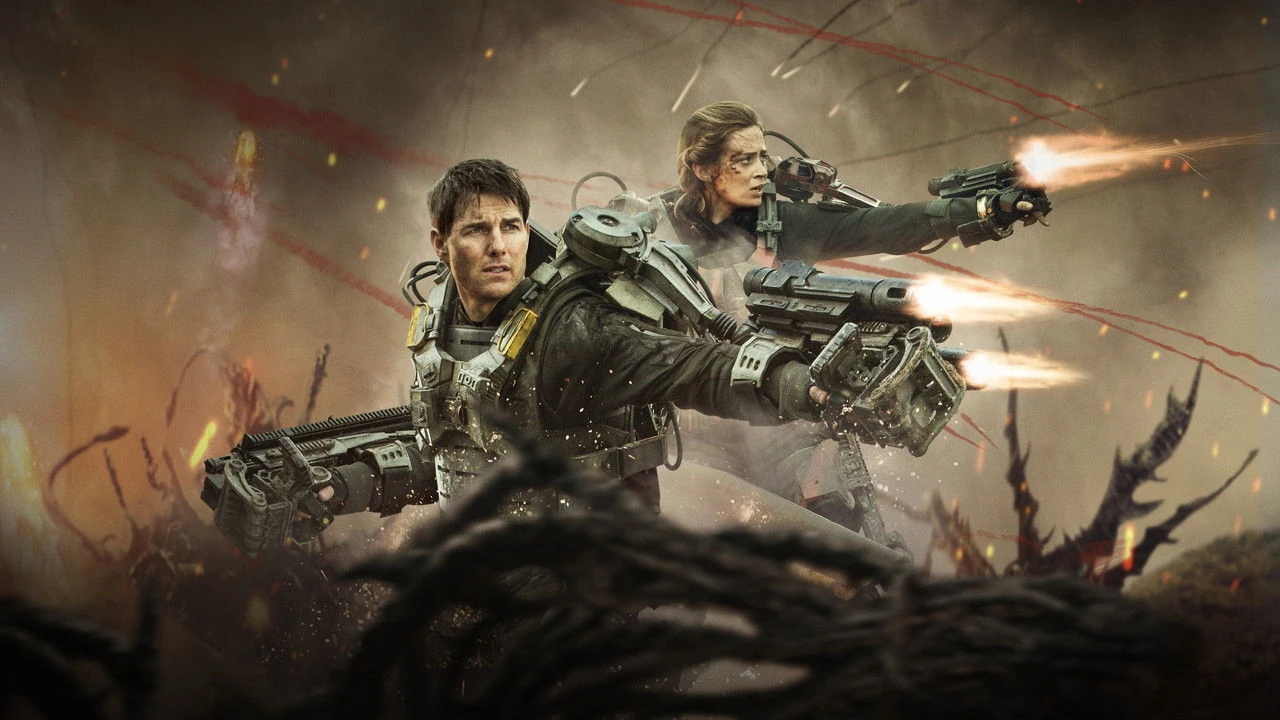 Major Cage, now a hardened veteran, demonstrating his mastery in combat
“We are shaped by our thoughts; we become what we think. When the mind is pure, joy follows like a shadow that never leaves.” — Buddha
Edge of Tomorrow might be a high-concept sci-fi action flick, but it’s also a surprisingly thought-provoking meditation on the human capacity for growth under extreme duress. While the resolution might feel a tad too optimistic for some who prefer their existential dilemmas unresolved, the journey itself is rich with philosophical resonance. It’s a compelling argument that even in the face of an endlessly repeating, seemingly meaningless existence, there is always an opportunity for self-improvement, for courage, and ultimately, for genuine heroism. It asks us: If you had infinite chances, what kind of person would you choose to become?
What’s Up? explores the philosophical depths of cinema.