Enola Holmes 2: The Art of Finding Your Own Name in a Shadow of Giants
Exploring Enola Holmes 2's philosophical depth: identity, agency, and the search for self in the shadow of expectation. A nuanced look at its charm and minor flaws.
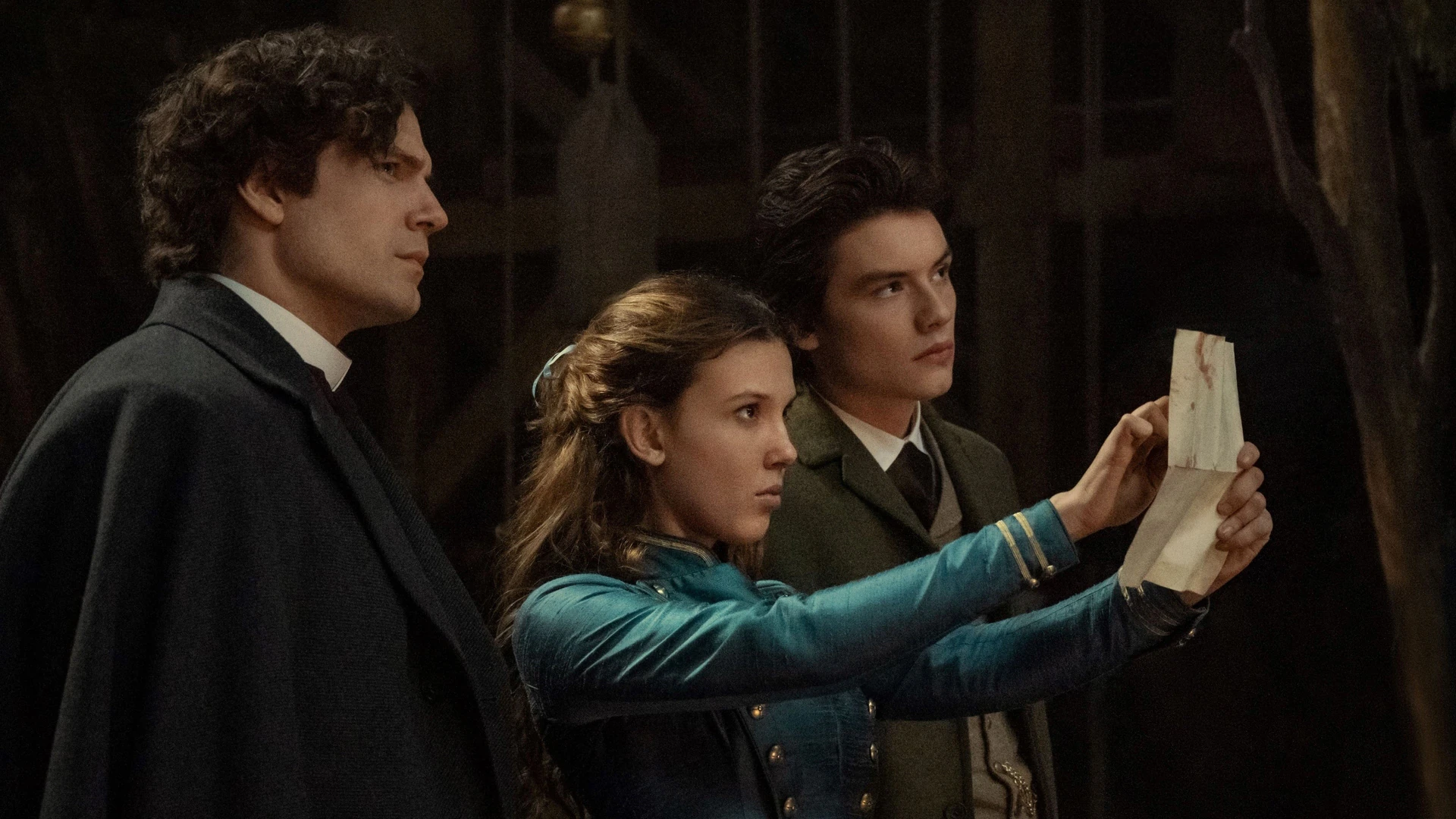
“To be yourself in a world that is constantly trying to make you something else is the greatest accomplishment.” — Ralph Waldo Emerson
Harry Bradbeer’s Enola Holmes 2 (2022) arrived with the kind of charming confidence that few sequels manage to muster. Building on the delightful foundations of its predecessor, this second outing for Millie Bobby Brown’s titular detective was, by most accounts, a resounding success. Critics largely adored it, with Rotten Tomatoes scoring a glowing 93% and audiences following suit at 80%. Metacritic’s 64/100, while slightly more tempered, still indicated “generally favorable reviews.” Yet, even in this wave of positive reception, a careful eye can discern the subtle undercurrents of critique: a plot sometimes deemed a touch formulaic, pacing that occasionally felt a bit overlong for its 129-minute runtime, and a central mystery that, while engaging, didn’t always quite match the vibrancy of Enola’s own journey. But it’s precisely within these perceived imperfections, these moments where the narrative perhaps leaned a little too comfortably on genre tropes, that Enola Holmes 2 offers its most potent philosophical insights.
The Existential Weight of a Name
At its heart, Enola Holmes 2 is a profound meditation on identity and the arduous, often messy, process of self-discovery. Enola, now a full-fledged detective-for-hire, desperately wants to escape the colossal shadow cast by her brother, Sherlock. Her opening plight is clear: no one takes her seriously unless she’s associated with him. This isn’t just a plot device; it’s an existential crisis for a young woman striving for agency in a world that prefers to label her by her familial connections.
The film cleverly externalizes this internal struggle through the very act of detective work. Enola’s first official case—the search for a missing matchgirl, Sarah Chapman—becomes a metaphor for her own search for purpose and recognition. She’s not just solving a crime; she’s solving the riddle of her own place in the world. The constant comparison to Sherlock, the subtle digs, the dismissive attitudes – these are the societal pressures that threaten to define her, to strip away her nascent individuality.
Key themes resonate here:
- Individuation — Jung’s concept of becoming a unified, distinct self, separate from collective identity.
- Legacy vs. Self-Creation — The tension between the path laid out by one’s heritage and the desire to forge an entirely new one.
- The Burden of Expectation — How the weight of others’ perceptions can hinder authentic self-expression.
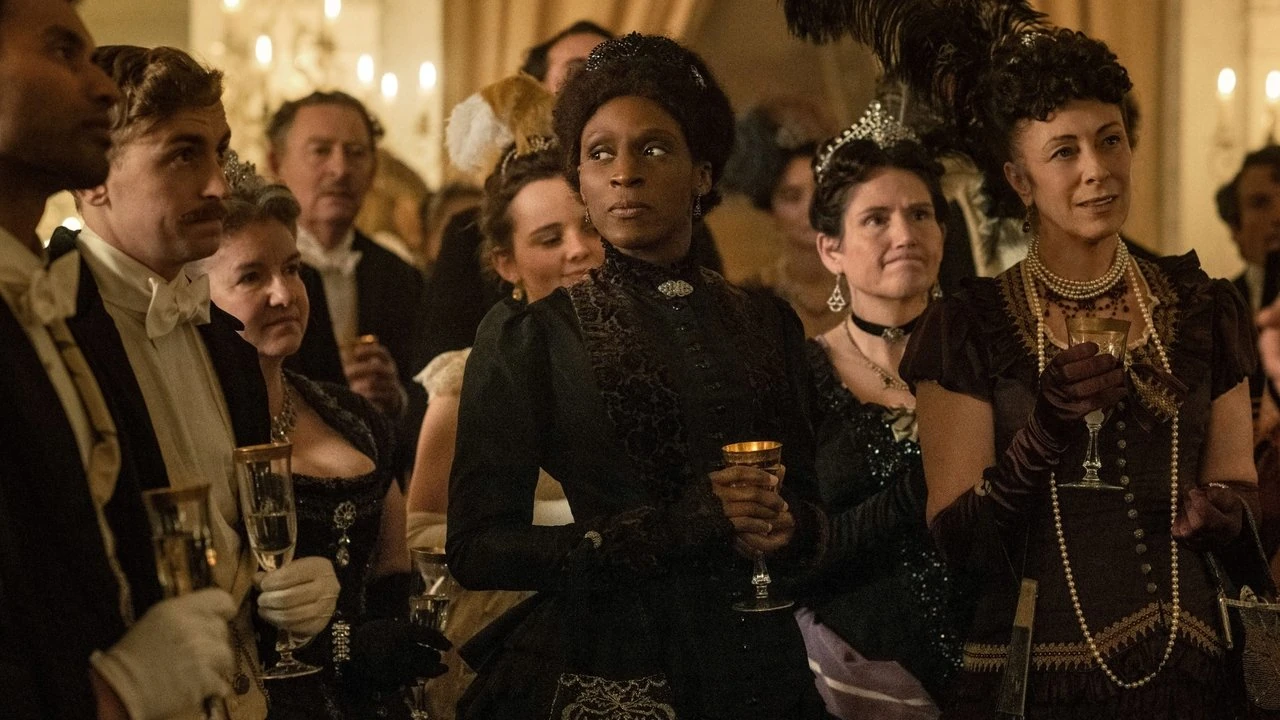 Enola, alone but resolute, navigates the bustling streets of London, determined to make her own mark.
Navigating Narrative Nuances: Charm, Flaws, and Growth
While the film’s overall charm and Millie Bobby Brown’s magnetic performance were widely lauded, some critics and audiences pointed to the mystery itself as less intricate than one might hope from a “Holmes” story. “It’s a fun ride,” many said, “but the plot is a bit predictable.” And indeed, the broad strokes of the industrial conspiracy and the ‘missing girl’ trope aren’t groundbreaking. However, to frame this as a flaw might be missing the point. Enola Holmes 2 isn’t trying to be a cerebral puzzle like a classic Sherlock tale; it’s a bildungsroman disguised as a mystery, an adventure focused more on its protagonist’s internal growth than the twists of its external plot.
The true ‘mystery’ isn’t who did it, but how Enola will find her own unique way to do it, and what kind of detective — and person — she will become in the process. This shift in narrative focus elevates the familiar to the profoundly personal.
The film’s pacing, at nearly two and a half hours, did feel a little stretched at times, particularly in the middle act as Enola crisscrosses London. Yet, this extended journey allows for greater character development and world-building. We see Enola fumble, make mistakes, and learn. We witness her forge alliances, not just with her brother and Lord Tewkesbury, but with the working-class matchgirls, embodying a nascent social consciousness that differentiates her from Sherlock’s more detached intellectualism. This slower burn allows for moments of genuine connection and a deeper exploration of themes like solidarity and collective action, which critics like The Guardian noted as a refreshing departure.
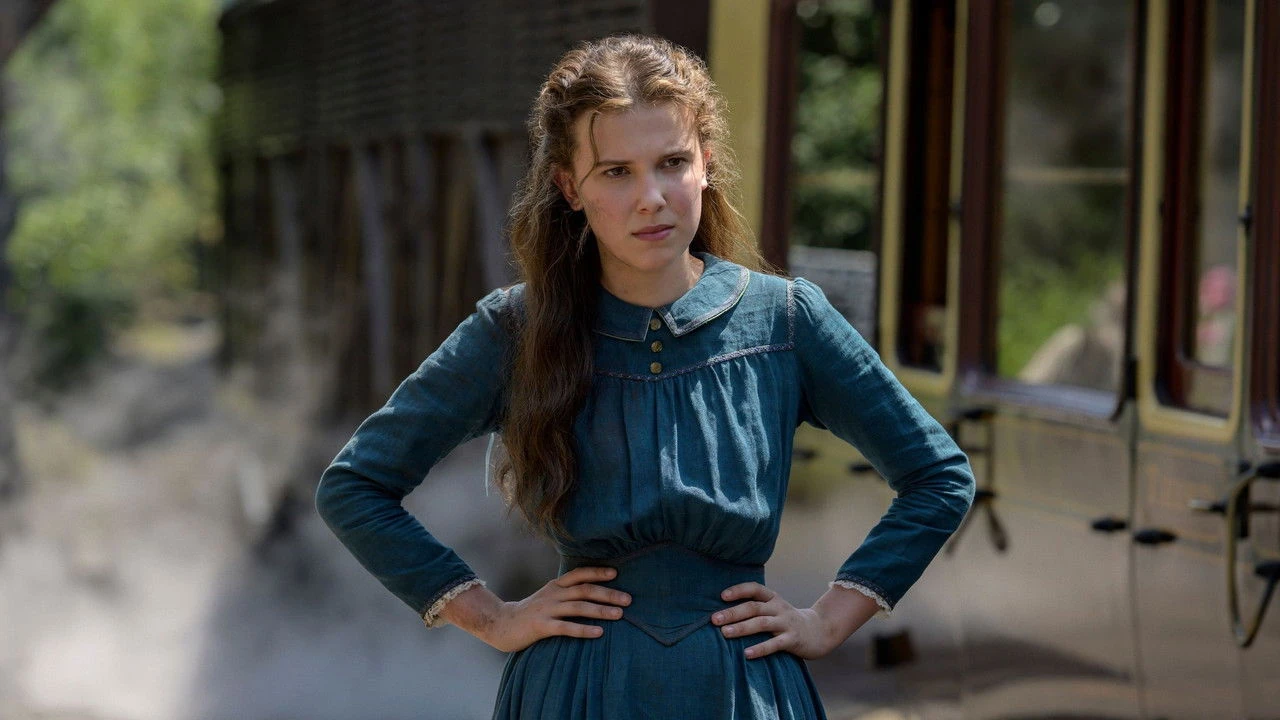 A quiet moment of reflection for Enola, as she pieces together clues, both external and internal.
Beyond the Surface: A Philosophy of Interconnectedness
The most potent philosophical current running through Enola Holmes 2 is its powerful argument for interconnectedness. Enola begins her journey fiercely independent, almost stubbornly so, wanting to prove she can do it all herself. This lone wolf mentality, inherited perhaps from her eccentric family, is repeatedly challenged. She learns that true strength isn’t found in isolation, but in collaboration.
Her interactions with Sherlock (Henry Cavill), who here is less a rival and more a reluctant mentor, illustrate this beautifully. Their shared case, initially disparate, eventually converges, forcing them to work together. This isn’t just convenient plot mechanics; it’s a statement on how even the most brilliant minds benefit from diverse perspectives. Enola’s empathy and connection to the common person provide insights that Sherlock’s more purely logical approach might miss.
This film, then, subtly argues for an ethics of care over pure rationality. Enola’s method is not just deduction, but connection—she literally walks in the shoes of the missing girl, feels the plight of the factory workers, and understands the systemic injustices they face. This is a profound shift from the often detached, cerebral pursuit of truth, highlighting that sometimes, the most important truths are those tied to human experience and suffering. The discovery of the true villain and the subsequent call for justice are not just about solving a crime, but about righting a social wrong, amplifying the voices of the unheard.
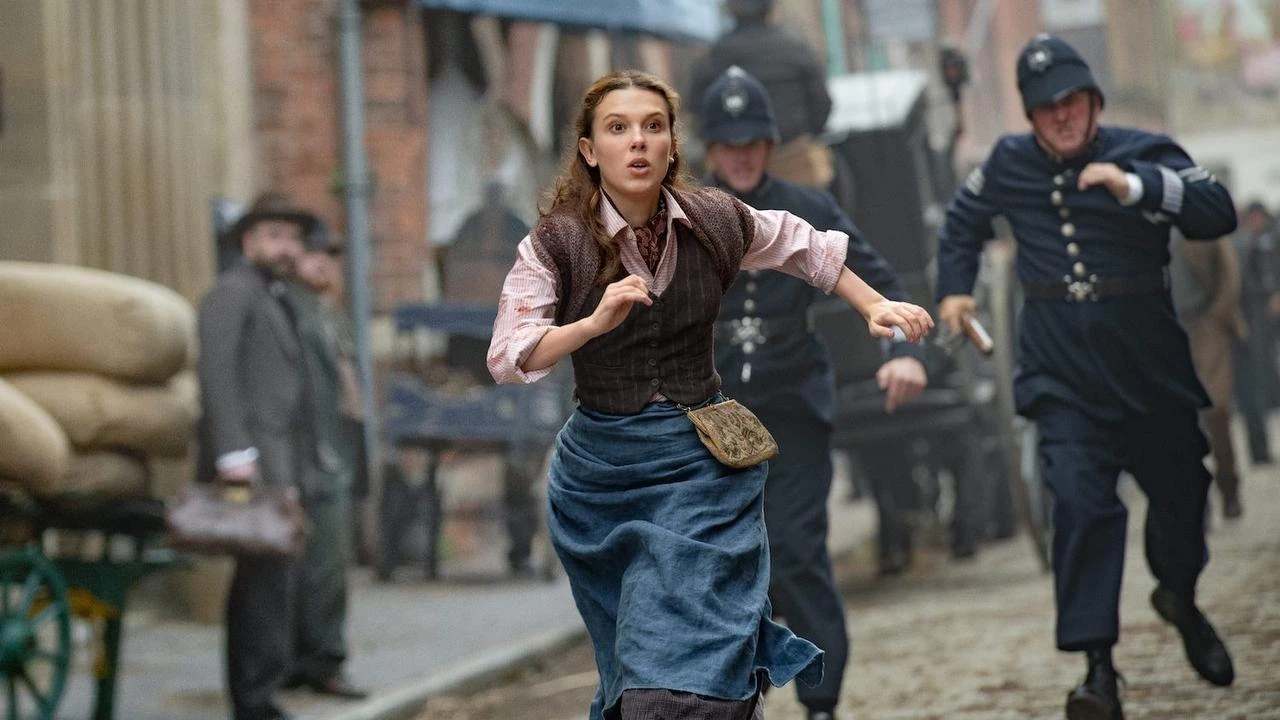 Enola and Sherlock, two minds united, facing a challenge that requires both intellect and empathy.
“The hardest thing in life is to know yourself. The second hardest is to stand up and be yourself, especially when ‘yourself’ doesn’t fit the mold others have carved for you.”
Enola Holmes 2 may have its minor structural quibbles—a slightly predictable mystery, a pace that occasionally meanders—but these are minor ripples in a deeply engaging and philosophically resonant adventure. It’s a film that asks us to consider what it truly means to step out from a shadow, to claim our own name, and to understand that our greatest strengths often lie not in our isolated brilliance, but in our shared humanity. It’s a joyful, witty, and ultimately hopeful exploration of agency, solidarity, and the messy, beautiful process of becoming who you’re meant to be, even if that means being an “Enola Holmes” in a world that expects another “Sherlock.”
Where to Watch
- Netflix
- Netflix Standard with Ads
What’s Up? explores the philosophical depths of cinema.