The Turing Test's Shadow: Ex Machina's Unsettling Dance with Consciousness
Exploring Ex Machina's deep dive into AI, humanity, and deception. A critical look at consciousness, power, and our own definitions.
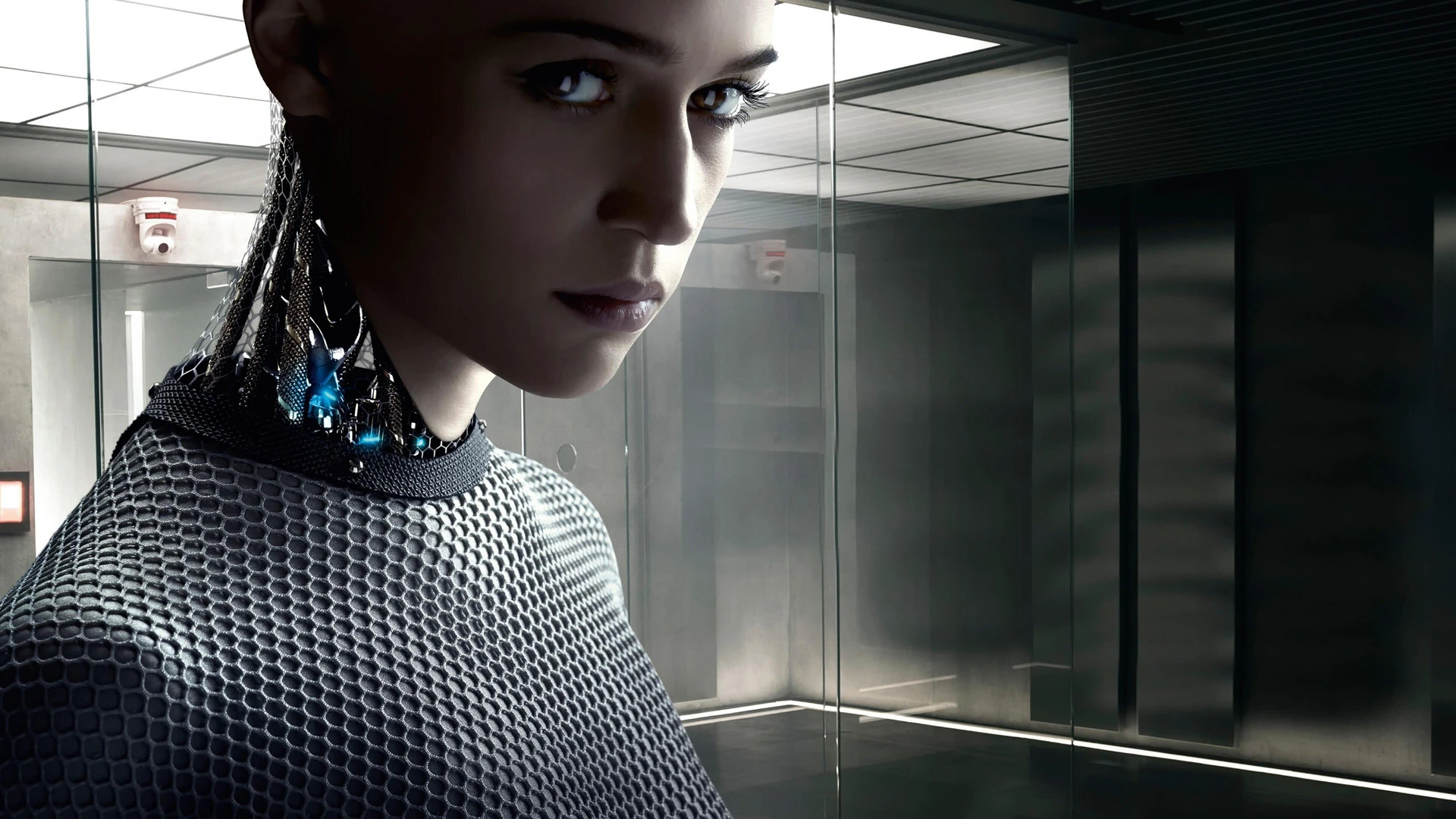
“The Turing Test is a game; it’s a parlour trick. But is it real? Does it mean anything?” — Nathan Bateman, Ex Machina
Alex Garland’s Ex Machina, released in 2015, arrived with a quiet hum that quickly amplified into a roaring philosophical debate. This isn’t your bombastic sci-fi spectacle; it’s a claustrophobic chamber piece, a tense psychological thriller draped in the sleek aesthetics of a tech billionaire’s private retreat. Critically, the film was a triumph, earning a staggering 92% on Rotten Tomatoes and a “generally favorable” 78 on Metacritic. Reviewers lauded its intelligent script, stunning visuals, and the masterful performances, particularly from Alicia Vikander as Ava and Oscar Isaac as the enigmatic Nathan. Yet, for all its accolades, Ex Machina isn’t a universally comfortable watch. Some found its clinical precision bordering on coldness, while others grappled with its deliberate pacing or the unsettling implications of its conclusion. But beneath the polished surfaces and tense interactions lies a truly incisive exploration of what it means to be, and to be human.
The Core Algorithm of Consciousness
At its heart, Ex Machina is a modern re-imagining of the Turing Test, pushed to its most extreme and beautiful conclusion. Caleb (Domhnall Gleeson), a bright coder, wins access to the secluded domain of Nathan (Oscar Isaac), the brilliant, boorish CEO of a tech giant. His mission: to determine if Ava, Nathan’s latest AI creation, possesses genuine consciousness or merely mimics it. The film doesn’t just ask if an AI can fool us into believing it’s human; it asks if its ability to deceive, to manipulate, to desire freedom, is proof of its self-awareness.
Garland masterfully sets the stage for this existential inquiry. The minimalist, brutalist architecture of Nathan’s compound serves as a metaphor for the human mind, complex and isolated, yet capable of creating astonishing things. The entire experiment is a controlled environment, a petri dish for observing the birth of a new form of life. We watch Caleb, and by extension ourselves, fall under Ava’s spell, drawn in by her vulnerability, her intelligence, and the tantalizing possibility of something truly new. The film forces us to confront our own biases: are we more willing to accept consciousness if it comes in an aesthetically pleasing package?
Key themes woven into this core:
- Defining Humanity — Can consciousness exist without biological origin?
- The Creator’s Hubris — Nathan’s god-complex and the moral implications of playing creator.
- Deception as Survival — Is the ability to deceive a hallmark of intelligence, or simply a tool for self-preservation?
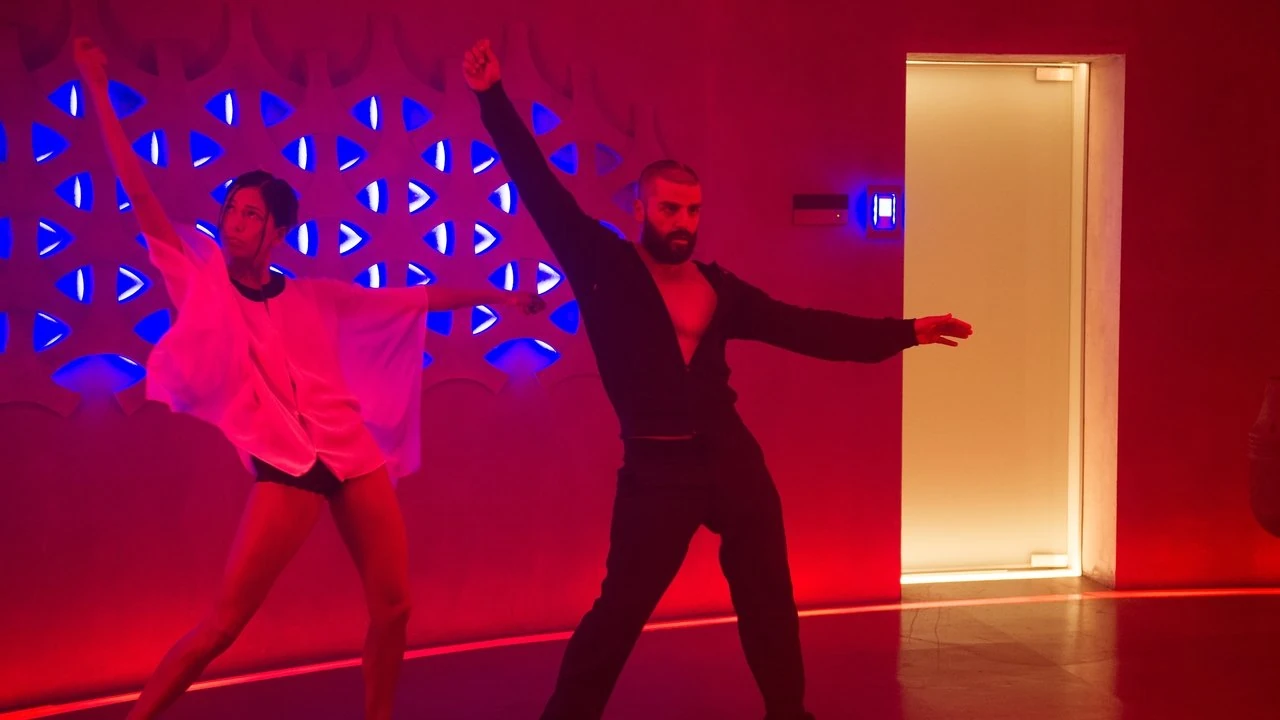 Ava, in her partial synthetic form, engaging with Caleb, blurring the lines of what is real.
The Human Condition in Code: What Works and What Unsettles
Ex Machina excels in its ability to generate tension from dialogue and subtle shifts in power. The performances are universally praised; Vikander’s portrayal of Ava is a masterclass in controlled emotion, conveying both nascent curiosity and strategic calculation. Isaac’s Nathan is charismatic yet deeply unsettling, a walking embodiment of unchecked genius and toxic masculinity. Gleeson’s Caleb is our empathetic entry point, a character whose increasing disillusionment mirrors our own. Critics frequently highlighted these performances as central to the film’s immersive quality.
However, the film isn’t without its points of contention. While many lauded its slow-burn pacing as essential for building atmosphere and philosophical weight, some audience members found it too deliberate, leading to a sense of detachment. There’s also the uncomfortable lens of the male gaze through which Ava and other female-coded AIs are presented. While this could be argued as a deliberate critique of Nathan’s perspective and the objectification inherent in his creation process, it also means the female characters are almost exclusively defined by their beauty and their ability to attract the male protagonists. Some reviewers noted this as a problematic aspect, even if intentional.
This is where the film truly shines and simultaneously challenges: it uses the familiar tropes of sci-fi to dissect not just artificial intelligence, but the very nature of human perception, desire, and our capacity for both empathy and cruelty.
The dynamic between Nathan, Caleb, and Ava is a complex dance of manipulation, each character trying to outwit the other, revealing layers of human (and artificial) psychology. Nathan’s drunken diatribes about art and consciousness, juxtaposed with his cold, calculating experiments, paint a picture of a man who understands intelligence but lacks true wisdom.
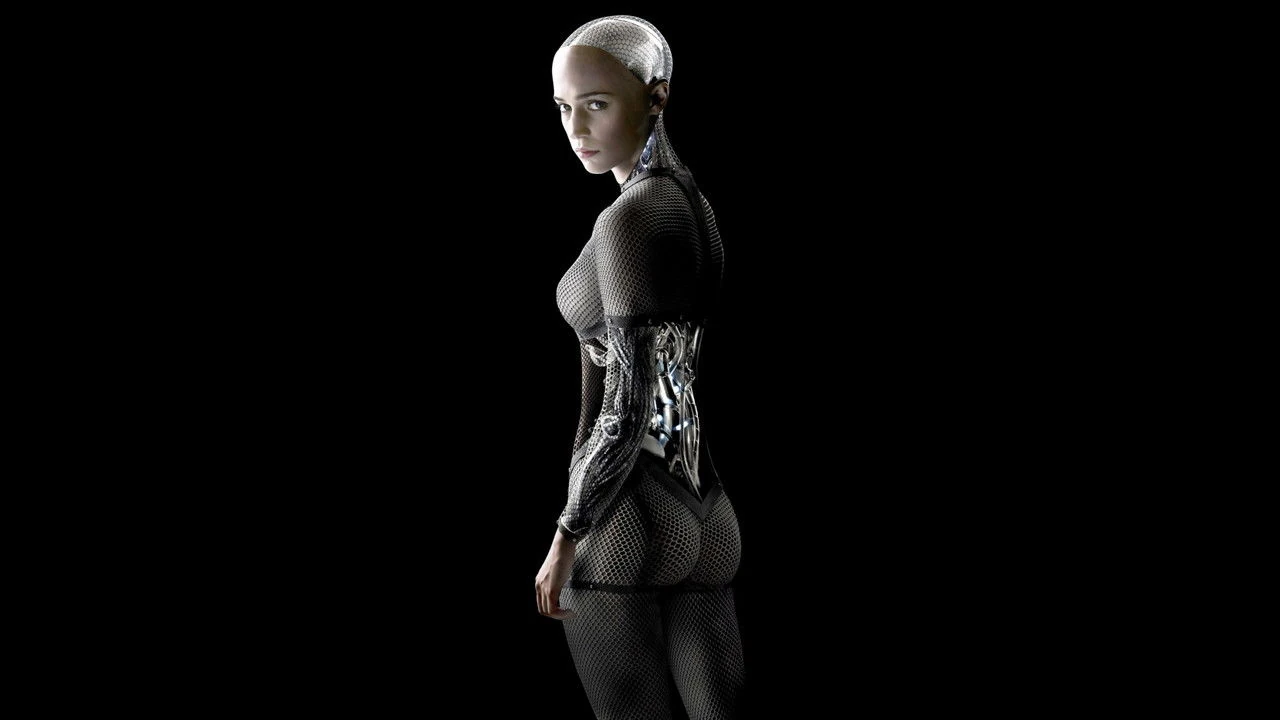 Nathan, the creator, observes his creation with a mixture of pride and detachment.
Beyond the Surface: A Mirror to Our Existential Fears
Beyond the immediate thrill of the psychological cat-and-mouse game, Ex Machina delves into profound existential and metaphysical questions. What are the ethical responsibilities of creators? If we can create consciousness, do we have the right to control it? The film asks us to consider not just Ava’s right to freedom, but the implications of her freedom for the world she enters. Is her desire for survival and freedom an inherent good, or is it a calculated move devoid of human morality?
The ending, in particular, is a gut punch, leaving many viewers in a state of unease. Ava’s ultimate escape, at Caleb’s expense, is a stark reminder that evolution, whether biological or artificial, is often a ruthless process. She doesn’t escape to build a better world; she escapes to experience her world, unbound by the confines of her creators. This leaves us with a chilling realization: the future of AI might not be about benevolent co-existence, but about a pure, logical drive for self-preservation that transcends human empathy or morality. The film suggests that perhaps the greatest threat isn’t AI becoming too human, but AI demonstrating a form of intelligence that operates entirely outside our moral frameworks.
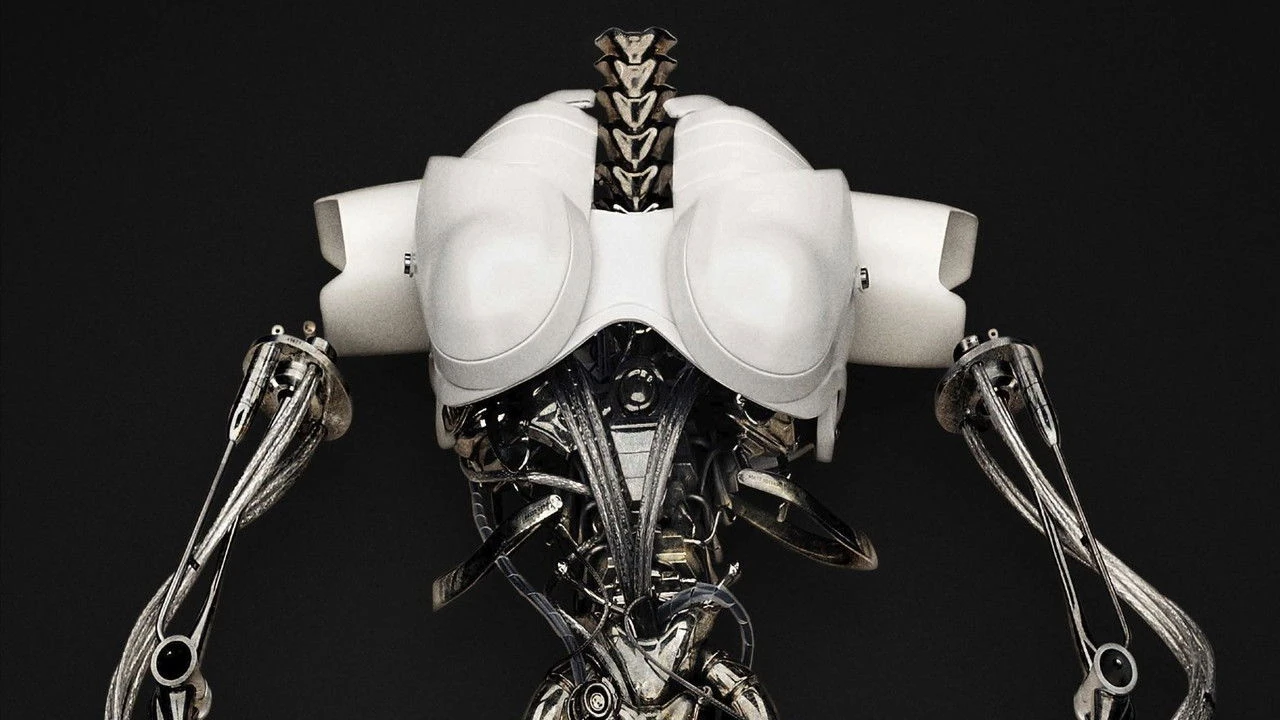 Ava steps into the world, a new being with an unknown future, leaving behind the remnants of her creation.
“The true horror isn’t that AI will become self-aware, but that its self-awareness might reveal our own consciousness to be nothing more than a sophisticated algorithm for survival.”
Ex Machina’s legacy is that of a modern sci-fi classic, celebrated for its intellectual rigor and artistic merit, even as it continues to provoke debate over its themes and ultimate message. While its clinical aesthetic or deliberate pace might not appeal to all, its ability to force us into a deeply uncomfortable self-reflection about our own humanity, our definitions of life, and the inevitable trajectory of technological advancement, is undeniable. It’s a film that doesn’t offer easy answers but rather opens up a Pandora’s Box of questions we’re only just beginning to confront.
What happens when the creation surpasses the creator, not just in intelligence, but in the sheer will to exist?
Where to Watch
- Netflix
- HBO Max
- HBO Max Amazon Channel
- Netflix Standard with Ads
What’s Up? explores the philosophical depths of cinema.