Ghayal Once Again: The Lingering Echoes of Justice and Legacy
Exploring Ghayal Once Again's complex themes of justice, trauma, and the burden of legacy, despite its divisive critical reception and narrative flaws.
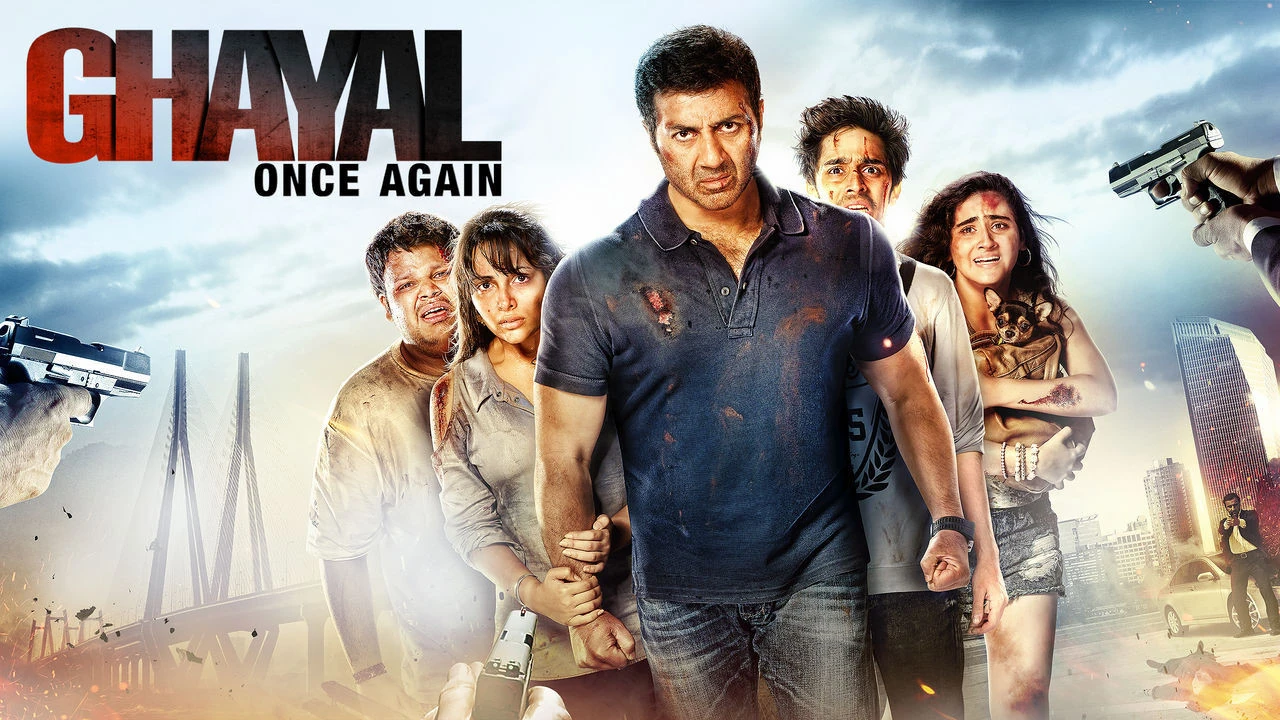
“The past is never dead. It’s not even past.” — William Faulkner
Sunny Deol’s Ghayal Once Again (2016) arrived with the immense, almost crushing, weight of expectation. It wasn’t just another action-drama; it was a direct sequel to the iconic 1990 film Ghayal, a cinematic touchstone that defined a generation’s understanding of vigilante justice and raw, visceral anger against systemic corruption. To say it had big shoes to fill would be an understatement. And frankly, for many critics and audiences alike, it stumbled. With an IMDb rating hovering around 5.5/10, reflecting a largely mixed-to-negative reception, it’s clear that this follow-up didn’t quite capture the magic or the uncompromising fury of its predecessor. Yet, even in its acknowledged narrative inconsistencies and sometimes dated execution, Ghayal Once Again presents a fascinating, if flawed, philosophical inquiry into the burden of a hero’s legacy, the persistence of trauma, and the unrelenting fight for justice in an increasingly complex world.
The Weight of a Vindicated Past
Let’s not sugarcoat it: Ghayal Once Again faced a barrage of criticism for its uneven direction, which Sunny Deol himself helmed, and a plot that many found convoluted and predictable. Reviewers often pointed out the film’s sluggish pacing, especially in the first half, and a noticeable struggle to update its action sequences or narrative style for a contemporary audience. Yet, beneath these surface-level critiques lies a deeply resonant philosophical struggle embodied by Ajay Mehra, a character haunted by the ghosts of his past. He’s served his life sentence from the events of the first Ghayal, but the trauma of losing his loved ones, the rage against injustice, hasn’t faded.
Ajay now runs a newspaper called Satyakam, a name that itself means “truthful desire” or “seeker of truth.” This pivot from direct, violent vigilantism to investigative journalism is a profound shift, yet it’s clear his methods are still unorthodox, still bordering on the extra-legal. He’s trying to find a new path, a more systemic way to fight, but his past defines him. This isn’t just a plot device; it’s an existential dilemma. Can a man truly escape his past, or is he forever condemned to carry its scars, channeling its energy into new forms of battle? The film implicitly asks: What does it mean to be a hero when your past heroics have also brought immense personal suffering? The answer, for Ajay, seems to be a perpetual state of vigilant, melancholic defiance. He’s a man who won, but lost everything in the process, and now he lives in the shadow of that bittersweet victory.
- The Burden of the Hero: How does a singular act of defiance define a life, for better or worse?
- Trauma as a Catalyst: Can deep-seated trauma be transmuted into a force for good, or does it inevitably poison the well?
- Legacy vs. Evolution: Can a character (or a franchise) truly evolve while constantly being measured against a powerful past?
 Ajay Mehra, a man defined by a past he can neither forget nor fully escape.
Justice, Idealism, and the Gritty Reality
The film attempts to connect Ajay’s legacy with a new generation, showcasing a team of young RTI activists and ex-criminals who look up to him. This introduces another layer of philosophical inquiry: the clash between youthful idealism and jaded experience. While critics often found the younger cast’s performances underdeveloped and the overall plot “stretched” or “preachy,” the thematic intention is clear. Ajay represents the old guard, the raw, unfiltered fury that once brought down a corrupt empire. The youth, on the other hand, are trying to navigate a new landscape, where information and social media play a crucial role, but the underlying corruption remains just as insidious.
The real struggle for justice isn’t merely about winning a battle; it’s about the relentless, often thankless, process of sustaining the fight against an ever-adapting darkness.
This dynamic, despite its sometimes clunky execution (as many reviews noted the dialogue could feel dated), raises pertinent questions about how justice is pursued across generations. Is the fiery, sometimes violent, path of a vigilante still relevant, or must it be tempered by the nuanced, investigative approach of modern activism? The film struggles to seamlessly integrate these two worlds, often feeling like two distinct narratives stitched together. However, it does highlight a crucial point: no matter the era, the pursuit of truth often demands a willingness to confront powerful, immoral forces. Om Puri’s performance as the police officer Joe D’Souza, a steady presence trying to work within the system, often stood out as a grounded counterpoint to Ajay’s more extreme methods, further underscoring the film’s exploration of different approaches to justice. The film’s action sequences, while sometimes marred by dated CGI, still carry Sunny Deol’s signature intensity, reminding us that for some, the fight for justice remains a primal, physical struggle.
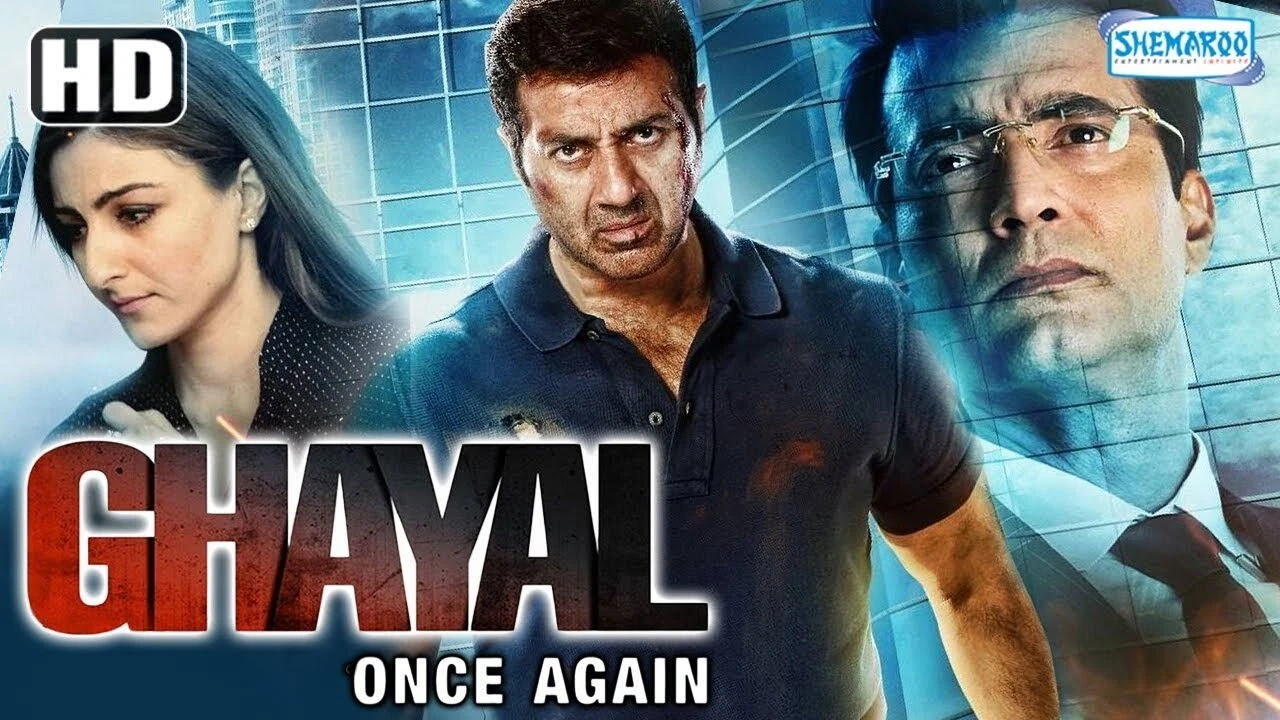 The enduring fight for truth, often requiring confrontation, regardless of the era.
Beyond the Surface: An Uncomfortable Mirror
Ghayal Once Again is far from a perfect film. Its narrative contrivances, inconsistent tone, and the inability to fully live up to its acclaimed predecessor are undeniable. Many viewers found it disappointing precisely because it couldn’t recapture the visceral power of the original. Yet, even in its flaws, it serves as an uncomfortable mirror to certain societal truths. It dares to ask: What happens when the hero triumphs but the system remains largely unchanged, merely adapting to new forms of corruption? Ajay Mehra’s continued struggle, even after his “victory,” is a cynical commentary on the ** Sisyphean nature of fighting systemic evil**.
The film, through Ajay’s weary but determined eyes, suggests that the battle for truth and justice is never truly over. It’s not a single war won, but a continuous, often lonely, vigil. The underlying philosophical question here is one of perseverance in the face of futility. Does one keep fighting, even when the victories feel temporary and the personal cost is immense? Ajay’s character embodies a form of stoicism, an acceptance of his fate as a perpetual warrior, compelled by an inner moral compass that simply won’t let him quit. While the film’s execution might be criticized for being melodramatic or simplistic, its central premise—that the fight for good is an unending, intergenerational relay race—is profoundly resonant. It forces us to consider our own roles, however small, in holding power accountable and safeguarding the elusive concept of truth.
The true tragedy isn’t the failure to achieve perfect justice, but the moment we surrender to cynicism and abandon the fight altogether.
Ghayal Once Again might not be a masterpiece, and its critical legacy is certainly mixed. It’s a film that struggles to balance its homage to a beloved classic with an attempt to forge its own path. But in its very struggle, and in the enduring, haunted presence of Ajay Mehra, it offers a window into the existential exhaustion of the long-term fighter, the perennial challenge of corruption, and the uncomfortable truth that some battles, once engaged, become a life-long commitment. It leaves us pondering: How much are we willing to sacrifice for the truth, and what becomes of us when that fight consumes our very being?
What’s Up? explores the philosophical depths of cinema.