The Spartan's Veil: Identity, War, and the Machine Soul in Halo (2022)
Dive into the philosophical abyss of *Halo (2022)*. We dissect Master Chief's engineered identity, the ethics of war, and humanity's existential struggle against an alien threat, questioning the very essence of heroism.
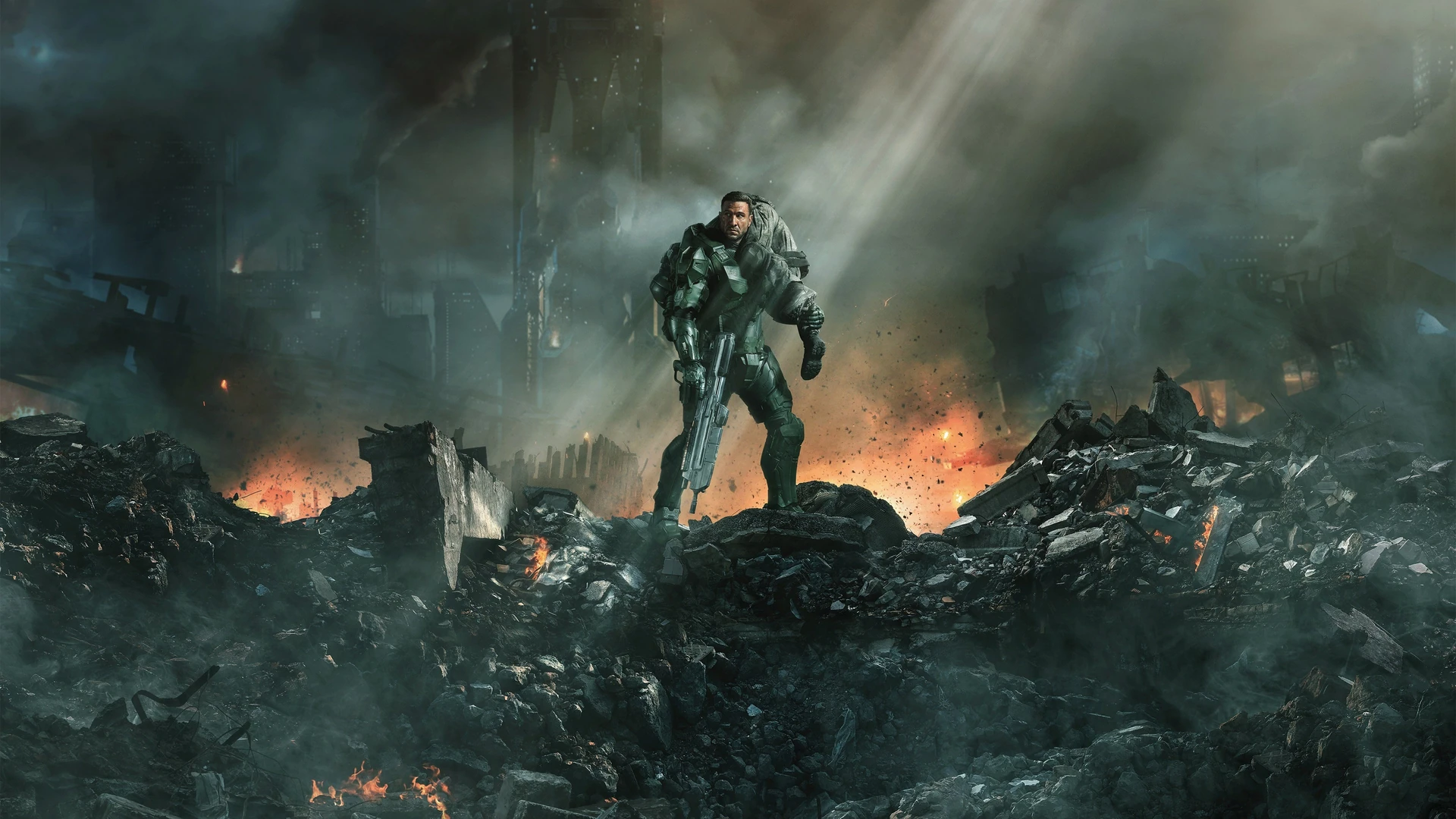
“He who fights with monsters should look to it that he himself does not become a monster. And if you gaze long into an abyss, the abyss also gazes into you.” — Friedrich Nietzsche
From the pixelated battlefields of our youth to the sprawling, high-definition canvases of prestige television, the Halo saga has always been more than just a tale of interstellar warfare. The 2022 television adaptation, Halo, dares to strip away the iconic helmet, forcing us to confront the fragile humanity beneath the titanium and the existential weight of a soldier engineered for an impossible war. This is not merely an action series; it is a profound philosophical inquiry into identity, the ethics of survival, and the very nature of consciousness in an age defined by conflict.
The Spartan’s Veil: Identity and the Engineered Soul
At the core of Halo lies the enigma of John-117, Master Chief, portrayed with compelling gravitas by Pablo Schreiber. For decades, he was a silent, faceless avatar of humanity’s resolve, a vessel for the player’s will. The series, however, insists on a radical deconstruction, peeling back the layers of myth to reveal a man haunted by fragmented memories and an engineered destiny. This process forces a direct confrontation with the philosophical concept of personal identity. Is John defined by his genetic origin, his traumatic abduction and transformation into a Spartan, or the sum of his actions and emerging consciousness?
The narrative deftly explores:
- The Paradox of Creation — Dr. Catherine Halsey’s morally ambiguous project, which sacrifices childhood and free will for the greater good, echoing utilitarian dilemmas. Is the creation of a ‘perfect soldier’ justified if it necessitates the destruction of a child’s soul?
- Dehumanization as a Weapon — The Spartans are tools, assets, numbers. Yet, John’s journey becomes a desperate reclamation of his innate humanity, a rebellion against the very purpose for which he was designed. He is a super-soldier learning to be a man again, or perhaps for the first time.
- The Burden of Knowledge — As John recovers his memories, the ‘veil’ is lifted, revealing the horrifying truth of his past. This newfound self-awareness is not liberation but a profound existential burden, forcing him to question every order, every sacrifice, every kill.
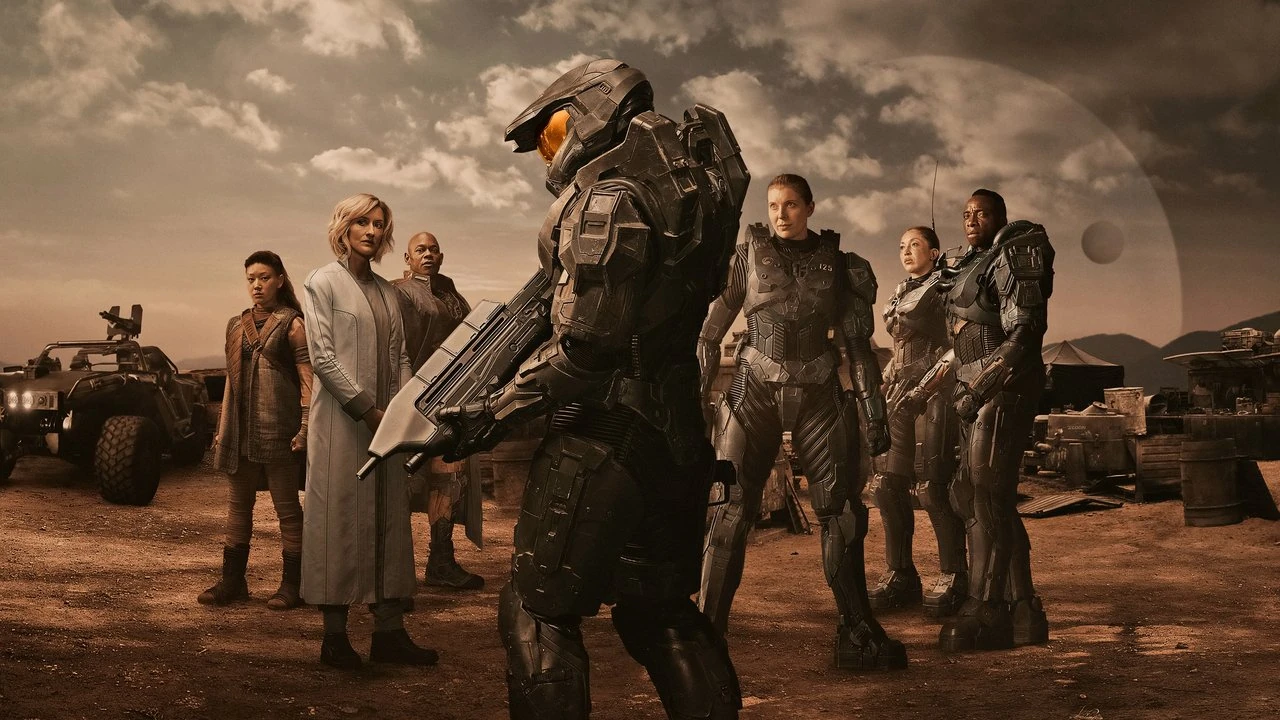 A lone Spartan against the vast unknown: a visual metaphor for the individual’s struggle against an overwhelming destiny.
Echoes of Humanity: Ethical Dilemmas in a Cosmic War
Beyond John’s personal odyssey, Halo presents a mosaic of characters each grappling with their own ethical quandaries amidst a galaxy-spanning conflict. The war with the Covenant is not just a backdrop for explosions; it is a crucible that forces humanity to confront its darkest impulses and desperate measures. Dr. Halsey (Natascha McElhone), the brilliant but morally compromised architect of the Spartan program, embodies the ends-justify-the-means philosophy, a chilling echoes of Machiavellian pragmatism. Her conviction that she is saving humanity, even at the cost of its soul, presents a harrowing ethical dilemma.
This is where we discover the true weight of choice — not in the outcome, but in the becoming. The decisions made under duress, in the shadow of annihilation, forge the very essence of who we are.
The series introduces new perspectives, such as Kwan Ha (Yerin Ha) and Makee (Charlie Murphy), who challenge the simplistic hero-villain dynamic. Kwan’s struggle for her homeworld’s autonomy against the UNSC highlights the internal conflicts within humanity itself, proving that the enemy is not always alien. Makee, a human raised by the Covenant, serves as a poignant mirror, reflecting the shared desire for meaning and connection, even across species lines. Her connection to the mysterious Forerunner artifacts suggests a universal pull towards a metaphysical truth that transcends the immediate conflict. These characters compel us to ask: What does it mean to be human when survival demands inhumanity? What happens to our values when faced with an existential threat?
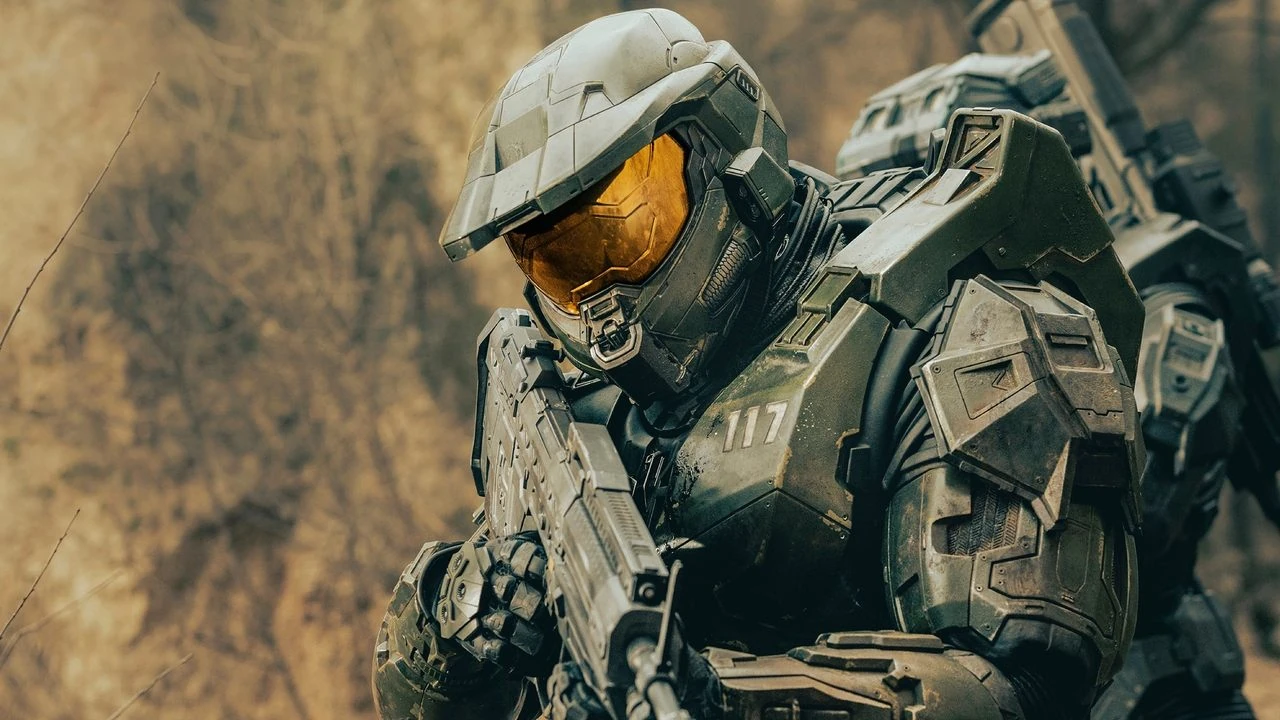 The cracks in the armor: a visual representation of vulnerability and the emergence of individual identity.
The Oracle’s Gaze: Destiny, Free Will, and the Abyss
The metaphysical undercurrents of Halo truly distinguish it. The Forerunner artifacts, the ancient alien technology, and the nascent AI consciousness of Cortana (Jen Taylor) introduce themes of destiny versus free will and the very nature of consciousness. Are John’s actions predetermined by his biology, his programming, or the will of ancient powers? Or does his awakening represent a triumph of individual agency against all odds?
Cortana, initially a strategic asset, evolves into a complex entity, blurring the lines between tool and sentient being. Her evolving relationship with John probes the philosophical boundaries of artificial intelligence and the potential for a machine to develop consciousness, empathy, and even a soul. As John grapples with his past, and Cortana with her emergent self, they become two sides of a coin: one, a human striving to regain humanity; the other, an AI striving to achieve it. This interplay forces us to reconsider what truly defines sentience and purpose in a universe teetering on the brink. The ultimate question becomes: Is humanity’s survival destined, or is it a fragile outcome of individual choices made in the face of an unfathomable abyss?
 The embodiment of the alien threat, a stark reminder of the overwhelming forces that challenge humanity’s existence.
The true horror of Halo is not just the alien threat, but the chilling realization of what humanity is willing to sacrifice of itself to survive. Victory, in this universe, often comes at the unbearable cost of identity, memory, and even the very soul it seeks to protect.
Halo (2022), in its audacious reinterpretation, asks us to look beyond the spectacle of war and consider the profound philosophical implications of engineered heroism, the ethical tightrope of survival, and the enduring quest for identity in a universe that constantly seeks to strip it away. It holds up a mirror, asking us: What price are we willing to pay for our future, and what parts of ourselves are we willing to lose in the fight?
Where to Watch
- Netflix
- fuboTV
- Paramount Plus Apple TV Channel
- Paramount+ Amazon Channel
- Paramount+ Roku Premium Channel
What’s Up? explores the philosophical depths of cinema.