The Echoes of Ronin: Hawkeye, Redemption, and the Burden of the Past
A philosophical dive into Marvel's Hawkeye, exploring themes of legacy, redemption, mentorship, and the inescapable echoes of a violent past during the festive season.
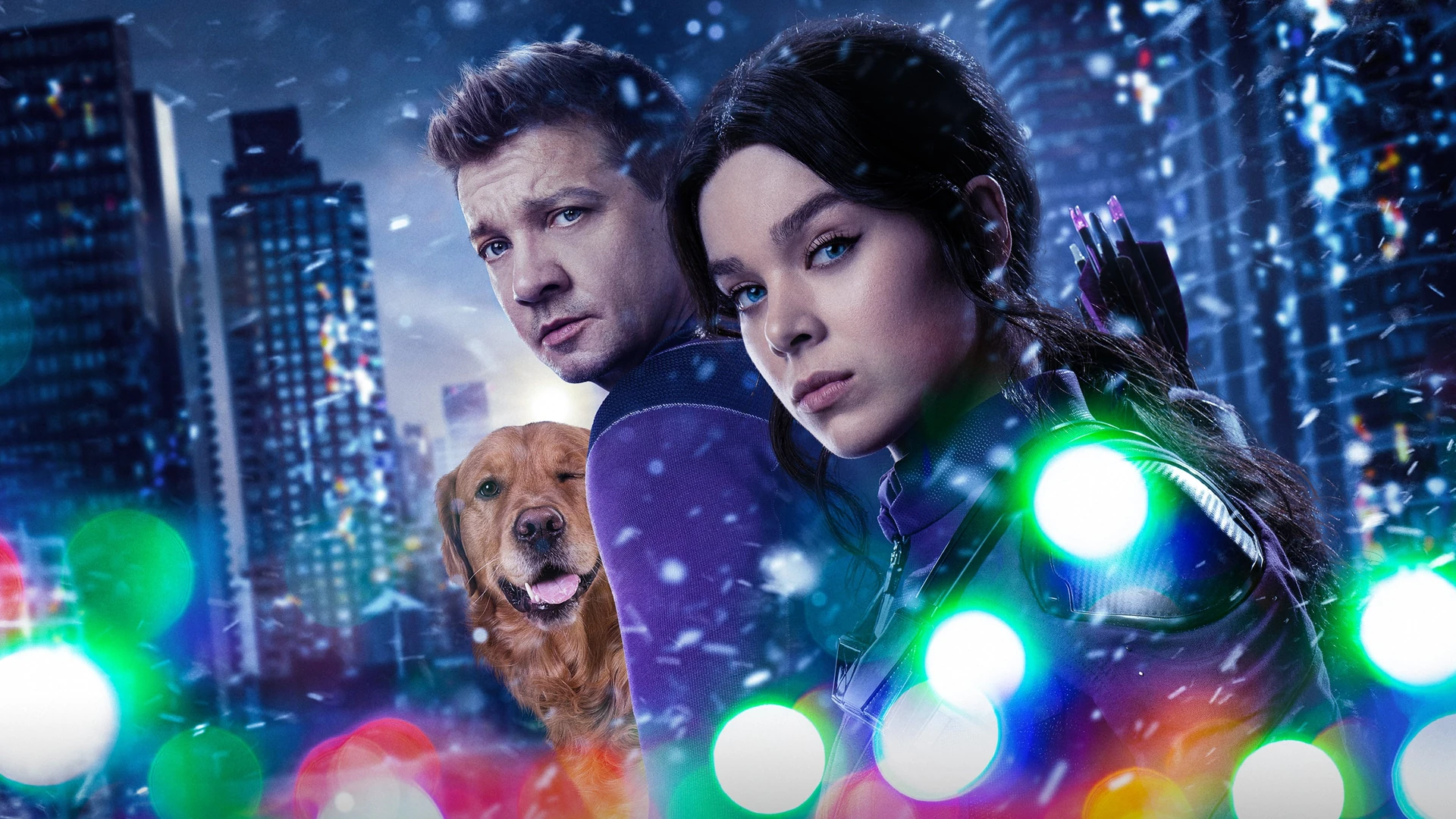
“The past is never dead. It’s not even past.” — William Faulkner
In the sprawling, often bombastic tapestry of the Marvel Cinematic Universe, Hawkeye emerges not as another thunderous epic, but as a surprisingly intimate and profoundly philosophical meditation. Set against the twinkling, consumerist backdrop of a New York Christmas, this series dares to strip away the cosmic grandeur, forcing its titular archer, Clint Barton, and his eager protégé, Kate Bishop, to confront the inescapable gravity of the past. It’s a narrative that grapples with the palimpsest of identity, where layers of heroic deeds, tragic mistakes, and mundane desires are written over one another, yet none truly erased. Here, the festive season becomes a crucible, melting down the facade of normalcy to reveal the raw, exposed nerves of trauma, legacy, and the arduous, unending quest for a quiet life.
The Echoes of Ronin: Legacy, Guilt, and the Weight of the Past
At the heart of Hawkeye’s philosophical inquiry lies Clint Barton’s enduring struggle with his alter ego, Ronin. The series is less concerned with what Ronin did, and more with the existential residue he left behind—the moral stain that clings to Clint, a phantom limb of violence that refuses to heal. The Ronin identity is not merely a costume; it’s a performative manifestation of grief and rage, an ethical descent taken in the wake of unimaginable loss. Clint’s mission to get home for Christmas is a desperate attempt to anchor himself in the present, to shed the skin of his violent past and embrace the sanctity of the everyday.
Key themes explored:
- Moral Consequence — The show relentlessly demonstrates that actions, particularly those born of extreme duress, carry indelible weight, shaping one’s present and future. The Tracksuit Mafia, Maya Lopez, and even Kate Bishop are all, in various ways, products or victims of Ronin’s brutal justice, forcing Clint to confront the unintended ripples of his vengeance.
- The Burden of Identity — Clint yearns to be “just Clint,” a father, a husband, unburdened by the world-saving or world-ending events that have defined his public persona. Yet, the world, and indeed his own conscience, refuse to let him forget. His identity is a complex interweaving of hero, killer, and family man, each thread pulling him in different directions.
- Redemption as an Ongoing Process — Hawkeye posits that redemption is not a single, definitive act, but a continuous, often painful, process of accountability and repair. Clint’s efforts to mentor Kate, to protect her, and to make amends for his past transgressions are all facets of this unending journey.
 A contemplative Clint Barton, the weight of Ronin heavy on his shoulders even amidst the festive glow.
The Apprentice and the Master: Ethics of Succession and Self-Realization
The dynamic between Clint Barton and Kate Bishop forms the ethical core of Hawkeye. Kate represents a vibrant, almost naive idealism, a belief in the clear-cut lines of heroism and villainy that Clint has long since seen blurred beyond recognition. Their relationship is a profound exploration of mentorship—not merely the transfer of skills, but the imparting of a complex moral philosophy. Clint, the reluctant teacher, finds himself confronting his own disillusionment through Kate’s unwavering hope.
This is where we discover the true weight of choice — not in the outcome, but in the becoming.
Kate’s journey is one of self-realization, where her youthful aspirations are tempered by the harsh realities of the superhero life. She learns that heroism isn’t just about cool costumes and impressive archery; it’s about making impossible decisions, facing personal demons, and understanding the profound human cost of extraordinary power. Clint, in turn, finds a glimmer of hope for a future where his legacy might be one of guidance rather than regret. Their partnership delves into:
- The Ethics of Responsibility: Kate grapples with the weight of consequence, understanding that her choices affect not just herself, but those she seeks to protect.
- The Nature of Courage: It’s not the absence of fear, but the ability to act despite it, often for others. Kate learns this through Clint’s quiet resolve and his moments of profound vulnerability.
- The Gift of Imperfection: Clint shows Kate that heroes are flawed, burdened individuals, and true strength often lies in acknowledging those imperfections and seeking help. This challenges the myth of the invincible hero.
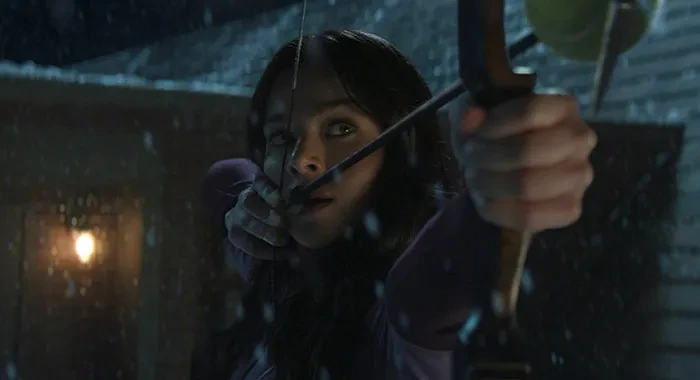 Kate Bishop, an aspiring hero, poised with her bow, ready to face an uncertain future.
Beyond the Surface: Time, Return, and the Illusion of Normalcy
Hawkeye masterfully uses the holiday season as a thematic counterpoint to the chaos that erupts. Christmas, traditionally a time of return, family, and peace, becomes a philosophical battleground where the desire for normalcy clashes violently with the inescapable reality of a fractured world. Clint’s simple wish to be home for Christmas is repeatedly thwarted by the resurgence of his past, highlighting the existential truth that some wounds are too deep for time to fully heal.
The series explores the fragility of peace and the illusion of control. No matter how much Clint tries to leave Ronin behind, Ronin’s specter—and his enemies—return. This cyclical nature of violence and retribution suggests a metaphysical tether to past actions, demonstrating that our narratives are not linear but often spiral back on themselves. The show subtly asks: Can one ever truly “retire” from a life defined by extraordinary violence? Or are some identities irrevocably etched into the fabric of one’s being, like a shadow that follows you home?
The overarching philosophical question becomes: How do we reconcile the desire for a simple, ordinary life with the extraordinary burdens we carry? The Christmas setting, with its emphasis on family and tradition, underscores the human yearning for stability and the profound disruption wrought by a life lived on the edge of catastrophe.
 Clint and Kate, sharing a moment of quiet camaraderie, the future uncertain yet shared.
“Every exit is an entry somewhere else.” — Tom Stoppard
Hawkeye is more than a seasonal superhero romp; it’s a poignant exploration of what it means to live with a heroic past, a guilty conscience, and an unyielding hope for a quieter future. It asks us to consider the ethical implications of our choices, the intergenerational transfer of responsibility, and the unending struggle to define ourselves amidst the echoes of who we once were. Ultimately, it’s a story about the possibility of light emerging from the darkest corners of the human experience, even if that light is just the fragile glow of a Christmas tree, bravely shining against the encroaching night. What does it truly take to go home, and can we ever truly leave our past behind?
Where to Watch
- Disney Plus
What’s Up? explores the philosophical depths of cinema.