Heropanti's Paradox: Finding Love, Forging Identity, and the Folly of Forced Heroism
Despite critical panning, Heropanti (2014) surprisingly offers a lens into love, freedom, and the performative nature of heroism within a rigid society.

“Love recognizes no barriers. It jumps hurdles, leaps fences, penetrates walls to arrive at its destination full of hope.” — Maya Angelou
Heropanti (2014), the action-romance vehicle that launched Tiger Shroff and Kriti Sanon, arrived on the cinematic landscape with a burst of high-octane stunts, vibrant songs, and a narrative that, at first glance, seemed utterly conventional. Clocking in at a rather generous 146 minutes, it’s a film that critics, by and large, struggled to embrace. With abysmal scores on Rotten Tomatoes and a generally lukewarm reception from most established reviewers, Heropanti was often lambasted for its thin plot, wooden performances, and a script that felt more like a series of disjointed action sequences and musical numbers than a cohesive story. And honestly, much of that criticism isn’t entirely unfounded. Yet, as a platform dedicated to unearthing the deeper currents beneath the surface of cinema, we can’t simply dismiss a film because of its commercial failings or critical drubbing. For all its undeniable flaws, Heropanti inadvertently, or perhaps even intentionally, taps into some surprisingly potent philosophical questions about love, freedom, and the very nature of what it means to be a “hero” in a world that often demands conformity.
The Weight of Tradition Against the Whisper of the Heart
At its core, Heropanti presents a classic dilemma: two young people, Bablu (Tiger Shroff) and Dimpy (Kriti Sanon), fall in love in a society steeped in rigid tradition and the looming threat of patriarchal violence. Dimpy’s father, Chaudhary (Prakash Raj), is a formidable figure, a landowner whose word is law, and whose “honor” dictates the fate of his daughters. The film opens with the elopement of Chaudhary’s eldest daughter, setting off a chain reaction of violence and retribution, forcing Bablu into this volatile world. Critics often pointed to the lack of genuine emotional depth in the romance, the unconvincing chemistry between the leads, and the clichéd plot devices used to propel the narrative. And yes, the film often leans heavily on tropes, sacrificing nuance for spectacle.
However, beneath the surface of these narrative shortcomings, there’s a compelling existential struggle at play. Bablu and Dimpy’s budding affection isn’t just a simple love story; it’s an act of defiance, a quiet rebellion against a system that seeks to erase individual will for the sake of collective honor. Their “love” becomes a proxy for personal freedom in a world where choices are predetermined by birthright, family expectations, and the threat of severe consequence.
Key themes, however clumsily executed, still resonate:
- Autonomy vs. Determinism: Can one truly choose their path when family, tradition, and violence conspire to dictate it?
- The Cost of Love: What sacrifices are truly acceptable for the sake of individual happiness?
- The Illusion of Control: Chaudhary believes he controls everything, but love, an irrational force, continuously undermines his power.
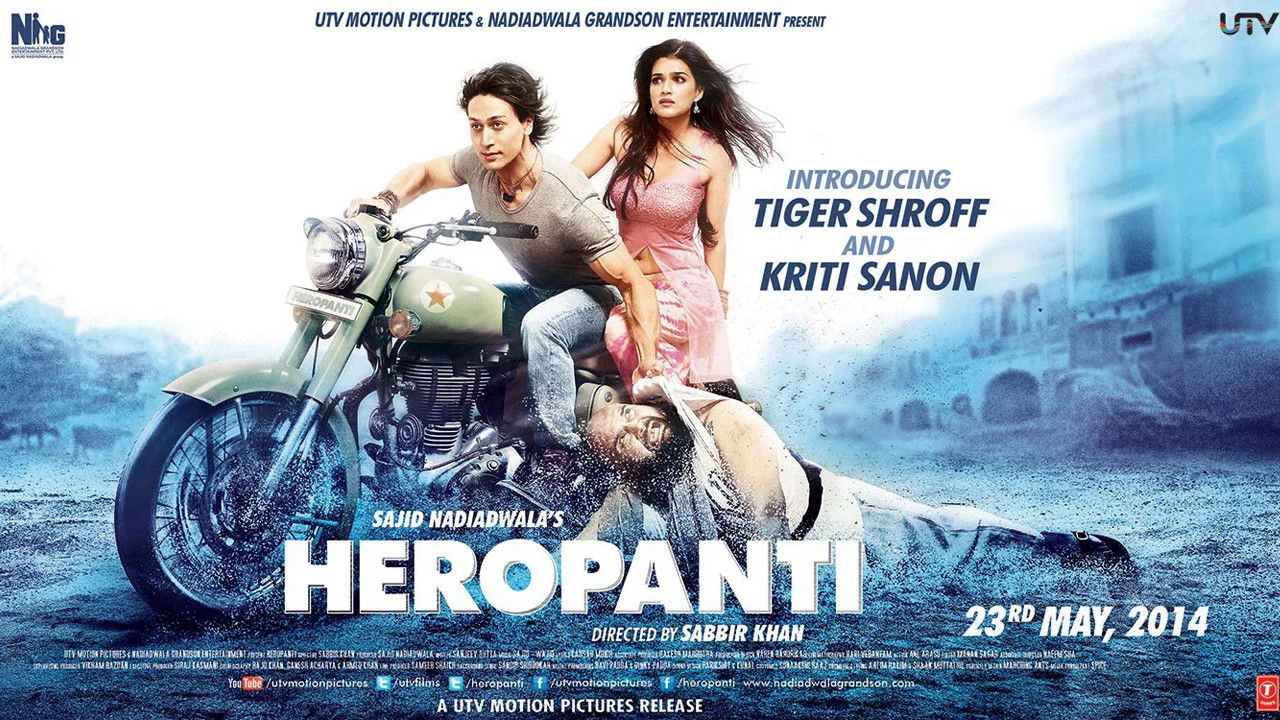 A visual metaphor for the clash between individual desire and societal control, often reduced to simplistic terms in the film.
The Performance of “Heropanti” and Its Discontents
One of the most frequent criticisms leveled against Heropanti was its uneven pacing and the sense that it was a showcase for its lead star’s athletic abilities rather than a coherent cinematic experience. Many reviewers felt that Tiger Shroff, while undeniably skilled in action and dance, lacked the emotional range to carry the dramatic weight of the film. Similarly, Kriti Sanon, despite her promising screen presence, was given a role that often felt underdeveloped, serving primarily as a catalyst for the hero’s actions. The film’s “heropanti” – its specific brand of heroism – often felt more like performative masculinity than genuine character development.
While Heropanti stumbles in its execution, reducing complex moral dilemmas to flashy fights and convenient plot twists, it inadvertently spotlights the absurdity of a world where one’s worth is measured by their ability to uphold a rigid, often violent, code of honor.
The film’s villains, particularly Prakash Raj’s Chaudhary, are painted with broad strokes, embodying the patriarchal system itself rather than nuanced individuals. This isn’t necessarily a bad thing for philosophical inquiry; it allows the film to personify the oppressive forces. However, critics correctly noted that the film rarely delves into the why of these traditions, simply presenting them as an immutable reality. This lack of deeper exploration prevents the film from truly grappling with the ethical complexities of such a society. It’s a film about consequences, but rarely about the foundations of moral choice. The “heroism” Bablu displays is largely physical – saving the girl, fighting the bad guys – rather than a profound ethical journey. This raises questions: Is true heroism merely the ability to overcome physical obstacles, or does it demand a deeper internal transformation? Heropanti seems to suggest the former, which, while entertaining, might be philosophically less satisfying.
 The stark contrast between youthful idealism and the harsh realities of a traditional society, a theme the film touches upon, however briefly.
Beyond the Surface: Questioning the Heroic Ideal
Despite its critical pounding and its often simplistic narrative choices, Heropanti does, in its own way, provoke reflection on the nature of the heroic ideal in contemporary Indian cinema. The title itself, Heropanti, evokes a sense of theatricality, of “doing heroics” rather than simply being heroic. It asks us to consider: what constitutes heroism in a world where personal freedom is constantly at odds with societal expectations? Is it the fearless defiance of a powerful elder, the willingness to risk everything for love, or simply the ability to perform gravity-defying stunts?
The film, through its very existence and its reception, became a focal point for discussions about the evolution of the Bollywood hero. Is the new hero simply a dancer and an action star, or does he still embody deeper ethical virtues? Heropanti leans heavily into the former, presenting a hero who is largely defined by his physical prowess and his unwavering, if somewhat naive, devotion. This makes the film a curious artifact for studying the shifting cultural landscape of what audiences expect from their cinematic saviors. It dares to ask, even if inadvertently, whether the grand gestures of romantic individualism can truly dismantle the entrenched systems of tradition and power, or if they merely provide a temporary, thrilling escape.
While Heropanti’s legacy is undeniably mixed, characterized by a chasm between its commercial aims and critical aspirations, it remains a curious cultural artifact. It’s a testament to the idea that even a film riddled with flaws can, in its clumsy exploration of love and rebellion, echo an ancient, vital question: how do we forge our own path when the world demands we follow theirs?
Ultimately, Heropanti might not be a masterpiece of philosophical cinema, nor even a particularly well-made film by conventional standards. But in its brash, often unsubtle way, it throws a spotlight on the eternal conflict between individual desire and collective pressure, between the heart’s yearning for freedom and the iron grip of tradition. It asks us to consider the burden and the allure of “heropanti” in a world that still struggles to reconcile ancient codes with modern aspirations. What kind of hero do we truly need, and what price are we willing to pay for their brand of freedom?
What’s Up? explores the philosophical depths of cinema.