The Programmed Soul: Searching for Humanity in Hitman: Agent 47
Exploring the philosophical depths of Hitman: Agent 47, a divisive action film that, despite its flaws, probes questions of identity, free will, and what it means to be human.

“We are all prisoners of our own minds, or, in some cases, the minds that made us.” — Unattributed
Let’s be honest, Hitman: Agent 47, the 2015 cinematic adaptation of the popular video game franchise, isn’t exactly hailed as a masterpiece. Critics, myself included, largely dismissed it upon release. With a dismal 8% on Rotten Tomatoes and a Metascore of 28, the consensus was clear: it’s a generic, often clunky action flick, devoid of character and narrative flair. Audiences were only slightly kinder, often citing the film’s hollow plot and wooden performances as major drawbacks. Yet, for all its undeniable flaws—and there are many, from its convoluted script to its often sterile execution—there’s a peculiar, almost accidental philosophical current running beneath the surface. For those of us who appreciate digging for diamonds in the rough, Hitman: Agent 47 offers a surprisingly fertile ground for contemplating identity, agency, and the very definition of humanity in a world of engineered beings.
The Engineered Soul: A Crisis of Identity
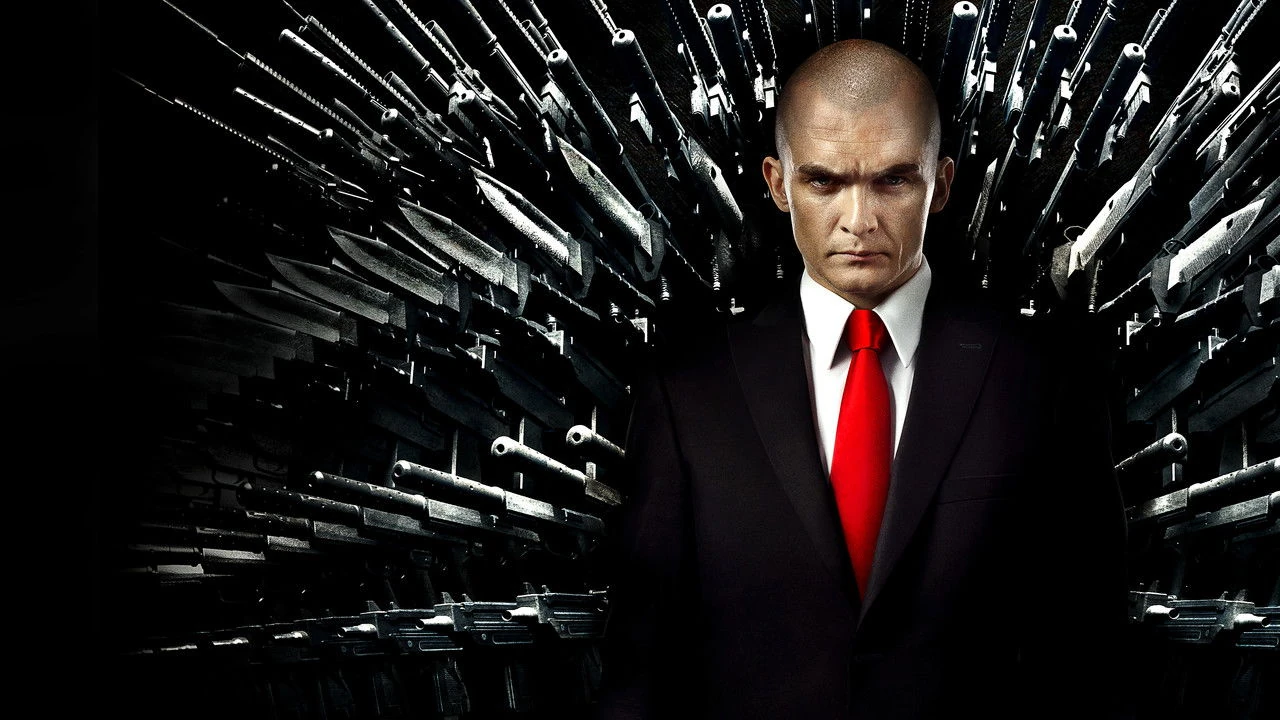
At its core, Hitman: Agent 47 presents us with a world populated by “Agents”—genetically engineered super-soldiers designed for maximum efficiency and obedience. Rupert Friend’s portrayal of Agent 47, while often criticized for its stoicism (perhaps intentionally, perhaps not), embodies this concept of a being stripped of conventional human experience. He’s a blank slate, programmed for a singular purpose: kill. But what happens when a designed entity begins to question its design, or when its raison d’être is challenged by the emergence of another, seemingly more “human” engineered individual, Katia van Dees (Hannah Ware)?
This immediately throws us into deep existential waters. Are the Agents merely tools, or do they possess an nascent form of consciousness? Their very existence challenges our anthropocentric view of selfhood.
- Nature vs. Nurture on a Grand Scale: Is their inherent programming their ultimate destiny, or can external factors—like a shared mission or a glimmer of emotional connection—forge a new path?
- The Illusion of Free Will: The film posits that Agents are free of emotion, fear, and pain, making them perfect killers. But is this freedom or ultimate servitude? Their ‘choices’ are pre-determined by their genetic makeup and training.
- The Search for Origin: Katia’s journey to find her father, the creator of the Agent program, isn’t just a plot device; it’s a primal human quest for origin and understanding. Who am I, and why am I here?
Critics rightly pointed out the film’s struggle to translate these fascinating concepts into compelling storytelling. The narrative often feels rushed, sacrificing character development for explosive, albeit repetitive, action sequences. The philosophical underpinnings are there, but they’re often buried under layers of generic thrills.
 Agent 47, a figure of stoic resolve, stands amidst the ruins of a chaotic encounter, a poignant symbol of engineered perfection confronting the messy reality of the human world.
The Blueprint of Being: What Works, What Doesn’t
Let’s not pretend Hitman: Agent 47 is a cinematic triumph. Many aspects simply didn’t land. The pacing, as noted by numerous reviewers, is wildly uneven, careening between exposition dumps and frenetic violence without much grace. Zachary Quinto’s performance as John Smith, a seemingly enhanced operative, often veers into the cartoonish, undermining any potential for a nuanced antagonist. And yes, the attempts at building emotional stakes often fall flat, leaving viewers detached from the characters’ plight.
Where the film falters in execution, it inadvertently succeeds in highlighting the very fragility of our self-perception, laying bare the unsettling thought that our ‘humanity’ might simply be a more complex form of programming.
However, for all its missteps, there are glimpses of something more. The visual aesthetic, while cold and sterile, effectively conveys the dehumanizing nature of the world the Agents inhabit. The sleek, almost clinical violence, when it works, underscores the Agents’ efficiency and their detachment from the consequences of their actions. This detached violence, ironically, is what makes the occasional, almost accidental flashes of empathy or connection between 47 and Katia so intriguing. These moments, however brief and underdeveloped, hint at a potential breach in their engineered conditioning. They suggest that even the most meticulously designed blueprint can’t entirely account for the messy, unpredictable elements of sentience.
The film tries to explore the idea of a “perfected” human, devoid of perceived weaknesses. But in doing so, it inadvertently asks: what are these weaknesses? Are emotions, fear, and connection truly liabilities, or are they the very things that define our strength and allow for genuine growth and meaning? The film’s biggest strength, then, might be in posing these questions, even if it doesn’t offer satisfying answers.
 Katia van Dees, eyes wide with a mix of fear and defiance, embodies the struggle for self-discovery and the raw vulnerability of a being awakening to their true potential.
Echoes of Humanity: Beyond the Surface
Despite its critical pounding, Hitman: Agent 47 provides a curious lens through which to examine our own anxieties about control, destiny, and what it means to be alive. The Agents, with their barcode tattoos and programmed existences, are extreme metaphors for anyone who feels trapped by circumstance, genetics, or societal expectations. Their struggle, however clumsily depicted, mirrors our own quest for autonomy.
The film grapples, however superficially, with the idea of transhumanism—the enhancement of human capabilities. But it flips the script, showing us beings engineered from the ground up to be “better,” yet somehow less whole. Katia, in particular, represents the potential for an engineered being to transcend its programming, to feel, to question, and to ultimately choose her own path. This resonates with broader philosophical debates about:
- The inherent value of human imperfection.
- The ethical implications of genetic manipulation and artificial intelligence.
- The elusive nature of genuine self-determination.
The narrative, in its less cluttered moments, suggests that even without a soul in the traditional sense, the drive to understand oneself and one’s place in the world is a powerful, perhaps even universal, impulse. It forces us to ask: If an Agent can strive for something beyond their programming, what excuse do we have?
 A fragmented cityscape, cold and geometric, reflects the film’s sterile aesthetic and the fractured identities of its protagonists, searching for meaning in a meticulously constructed world.
“The ultimate freedom is not to be free from all constraints, but to choose which ones we will live by, even if those choices are merely echoes of a programmed design.”
Hitman: Agent 47 won’t be remembered for its nuanced performances or groundbreaking script. Its legacy is one of a flawed, often frustrating, video game adaptation. Yet, within its generic action beats and underdeveloped characters, it inadvertently sparks some profound questions about existence. It serves as a reminder that even the most critically maligned art can, through its very premise, illuminate deeper philosophical anxieties about who we are, where we come from, and whether we truly have the free will we so readily claim. Perhaps the film’s true philosophical value lies not in its answers, but in its accidental provocation, forcing us to consider the programmed souls within ourselves.
Where to Watch
- YouTube TV
- Apple TV
- Google Play Movies & TV
- Vudu
- Prime Video
What’s Up? explores the philosophical depths of cinema.