The Profound Innocence of Mischief: What I Am Groot Teaches Us About Being
Exploring the philosophical depth of I Am Groot, a series of shorts often dismissed as fluff, through its themes of innocence, autonomy, and the joy of pure being.
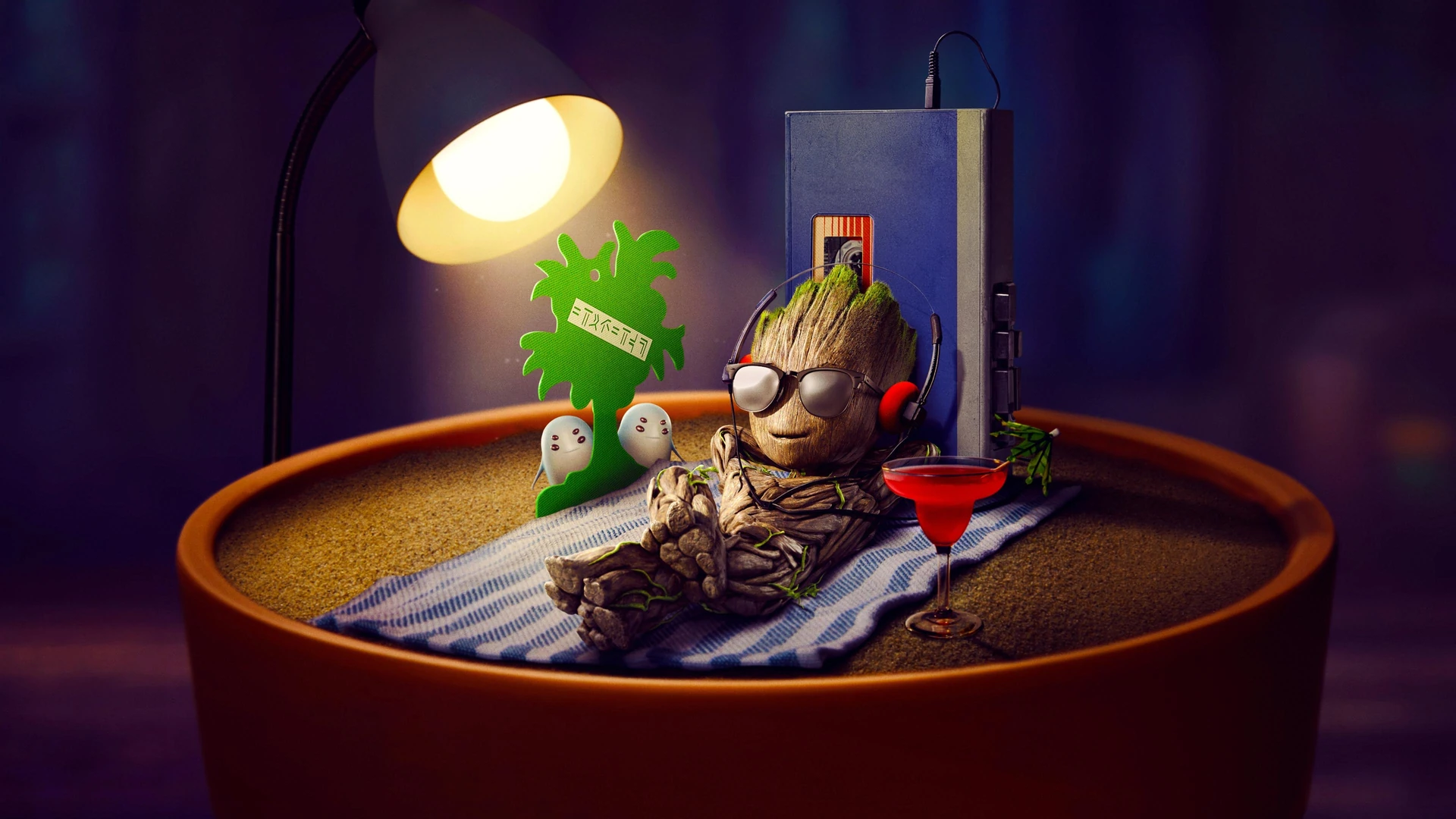
“To be or not to be, that is the question.” — William Shakespeare (reimagined by a cosmic toddler as “I am Groot!”)
When I Am Groot premiered in 2022, a collection of five (later extended) four-minute animated shorts, the general consensus among critics and audiences was a collective, “Aww, isn’t he cute?” It’s an undeniable truth: Baby Groot is an adorable, mischievous force of nature. Yet, many reviews, while acknowledging its charm and lighthearted fun, often dismissed the series as little more than fluff—a delightful but ultimately inconsequential snack designed purely for fan service. And honestly, it’s hard to argue that point on a narrative level. These shorts don’t advance the overarching MCU plot, they don’t introduce complex new characters, and they certainly don’t tackle grand cinematic themes in the way a feature film might. They’re brief, whimsical vignettes. But to stop there would be to miss a quiet, perhaps unintentional, philosophical profundity bubbling just beneath the surface of its chaotic cuteness.
The Philosophy of Play and Pure Being
Critics were right to note the episodic nature and the lack of a cohesive narrative arc; each short is essentially a self-contained gag. Some found the humor repetitive, others longed for more substantial storytelling. Indeed, if you’re looking for an epic journey or a character-driven drama, I Am Groot will leave you wanting. But perhaps its very simplicity is its strength, philosophically speaking. These shorts strip away the complexities of plot and dialogue, forcing us to focus on something far more fundamental: pure being.
Baby Groot, a sentient tree-like creature, operates on instinct, curiosity, and an almost primal urge for play. He doesn’t grapple with moral dilemmas in the conventional sense, nor does he ponder his existence aloud (beyond his iconic phrase). Instead, he experiences. He finds joy in a bubble bath, fascination in a miniature alien civilization, frustration with a bonsai tree, and wonder in a new scent. This isn’t just childish escapism; it’s a profound exploration of phenomenology – the study of experience and consciousness. We are invited to witness the world through his unburdened, unfiltered perception.
- Innocence as a Lens: Groot’s innocence isn’t naive; it’s a state of being prior to the imposition of adult fears, societal rules, or even language’s full grasp. He reacts to the world as it presents itself.
- The Power of Play: Every short is essentially a form of play—exploration, experimentation, mischief for its own sake. Philosophers like Johan Huizinga, in Homo Ludens, argued that play is not just an activity but a fundamental aspect of human culture and meaning-making. For Groot, play is existence.
- Mindfulness in Motion: Despite the chaos, Groot often embodies a form of present-moment awareness. He’s fully engaged with whatever fleeting distraction or challenge arises, a stark contrast to the often distracted, future-oriented adult human condition.
Mischief, Autonomy, and the Cosmic Toddler
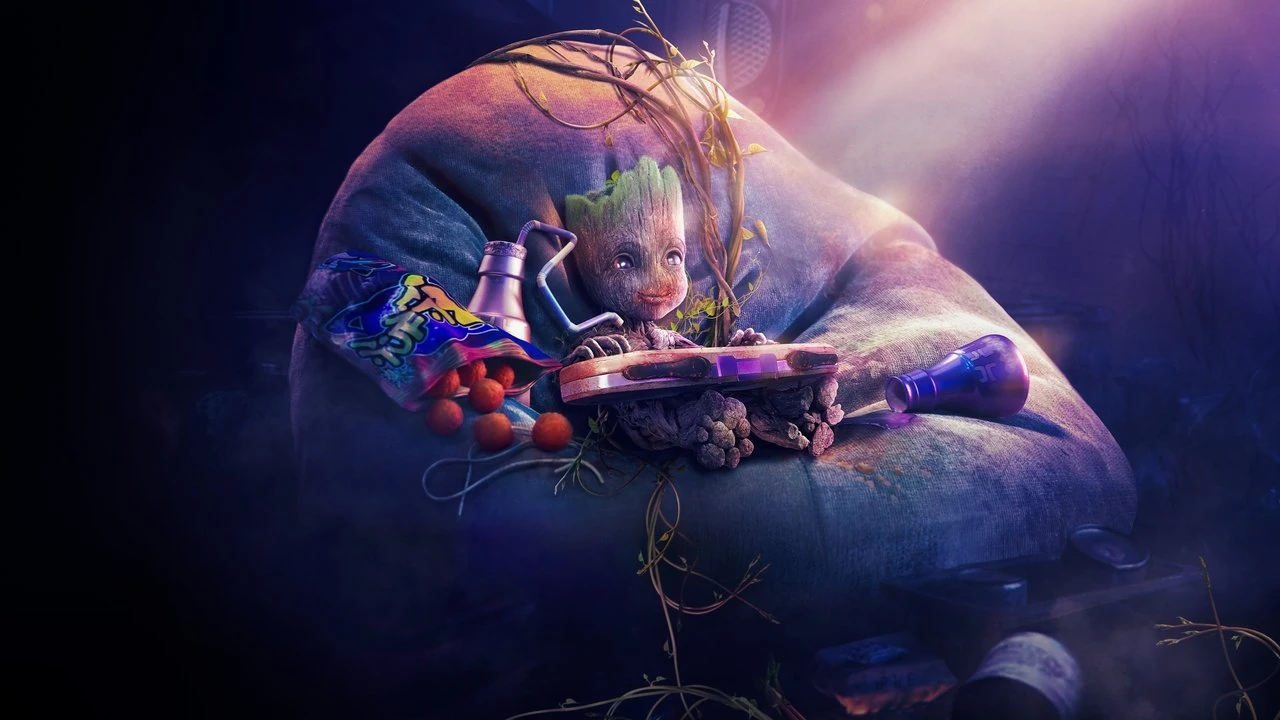
One of the most frequent observations about I Am Groot is how perfectly it captures the essence of a mischievous toddler. Audiences loved his antics, while some found his destructive tendencies a bit much. This duality points to a fascinating philosophical tension: the interplay between autonomy and the boundaries imposed by a larger universe.
Baby Groot, despite his size and limited vocabulary, is undeniably an agent of his own will. He makes choices, sometimes questionable ones, often with hilarious or chaotic consequences. He rebels against rules he doesn’t understand (or simply ignores), whether it’s a carefully cultivated bonsai or the natural order of a small ecosystem. This isn’t malevolence; it’s an exploration of his own burgeoning free will within a vast, indifferent cosmos.
Even in the most confined spaces, or the most limited forms of expression, the yearning for individual agency and self-determination asserts itself with an undeniable, sometimes messy, force.
His repeated defiance, whether it’s stealing a coat, making a mess, or engaging in a cosmic dance-off, isn’t just for laughs. It’s a statement. “I am Groot” isn’t just his name; it’s an existential declaration. It means: I exist. I act. I am myself, distinct and separate, even if I don’t fully comprehend the implications of my actions. He’s a tiny, green, arboreal anarchist, challenging the expectations of order simply by being himself. This resonates with existentialist thought, where the individual is condemned to be free, constantly defining themselves through their choices, even in the face of the absurd.
The Paradox of the Miniature Epic
The very short runtime of I Am Groot (a mere 4 minutes per episode, including credits) was a point of criticism for those seeking more narrative bang for their buck. “It’s over before it begins,” some lamented. Yet, within these fleeting moments, the series manages to craft miniature “epics” of discovery and confrontation. Groot might be battling a sentient tree, confronting a shape-shifting alien, or simply trying to get a good night’s sleep, but to him, these are monumental undertakings.
This introduces a paradox of scale. We see a universe of vastness—stars, planets, alien life—but our focus is narrowed to the highly localized, intensely personal experiences of a single, small being. This challenges our perception of what constitutes an “epic” or a “significant event.” Is significance solely determined by impact on a grand scale, or can it be found in the intense, subjective experience of the individual?
- Microcosm and Macrocosm: Groot’s small adventures mirror larger struggles for survival, identity, and connection within the Guardians of the Galaxy universe. His world is a microcosm, reflecting universal themes in miniature.
- Meaning in the Ephemeral: The brevity of the shorts forces us to consider the value of transient moments. Not everything needs to be a grand, lasting narrative to hold meaning. The joy of a single burst bubble, the frustration of a broken toy, the momentary connection with another being—these fleeting experiences can be just as potent as any prolonged saga.
- The Cosmic Joke: There’s a subtle cosmic irony at play. The Guardians protect the galaxy from cataclysmic threats, while their youngest member is busy trying to perfect a dance move or steal a piece of candy. This contrast highlights the absurdity of existence—the juxtaposition of the mundane with the monumental, and the idea that all these scales of experience are equally valid and, in their own way, equally important.
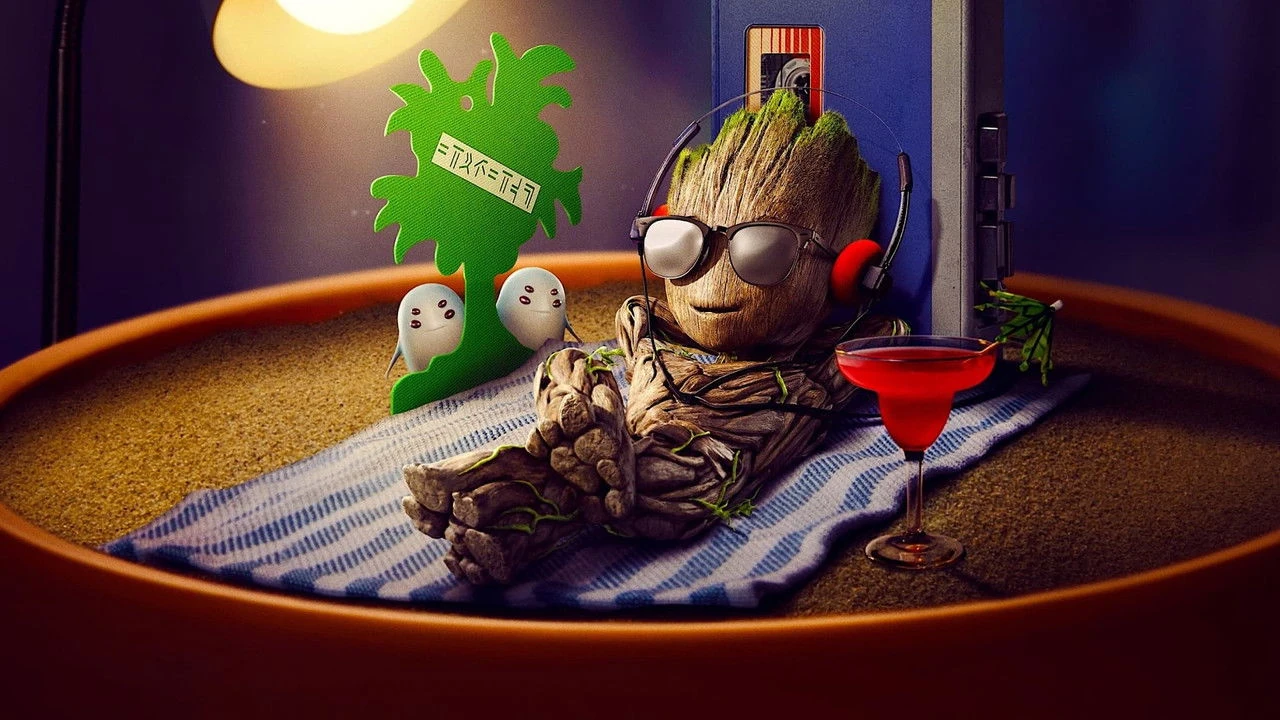
While I Am Groot is undeniably a lighthearted diversion, and critics were not wrong to highlight its narrative limitations, to dismiss it entirely as inconsequential would be to overlook its quiet, profound invitation to rediscover the joy of unburdened existence and the enduring power of individual spirit, however small. Its legacy might be minor, but its philosophical whisper lingers.
So, what does I Am Groot ultimately ask of us? Perhaps it’s an invitation to embrace the chaos, find wonder in the everyday, and recognize the inherent value in simply being. It’s a reminder that even the smallest, most seemingly insignificant life can contain an entire universe of experience, mischief, and profound self-discovery. In a world obsessed with grand narratives and monumental stakes, sometimes the most philosophical statement is simply: “I am Groot.”
Where to Watch
- Disney Plus
What’s Up? explores the philosophical depths of cinema.