Invincible's Unflinching Gaze: The Existential Weight of Super-Power and Shattered Ideals
Exploring Invincible's brutal deconstruction of superhero myths, its profound questions on identity, betrayal, and the heavy cost of extraordinary power.
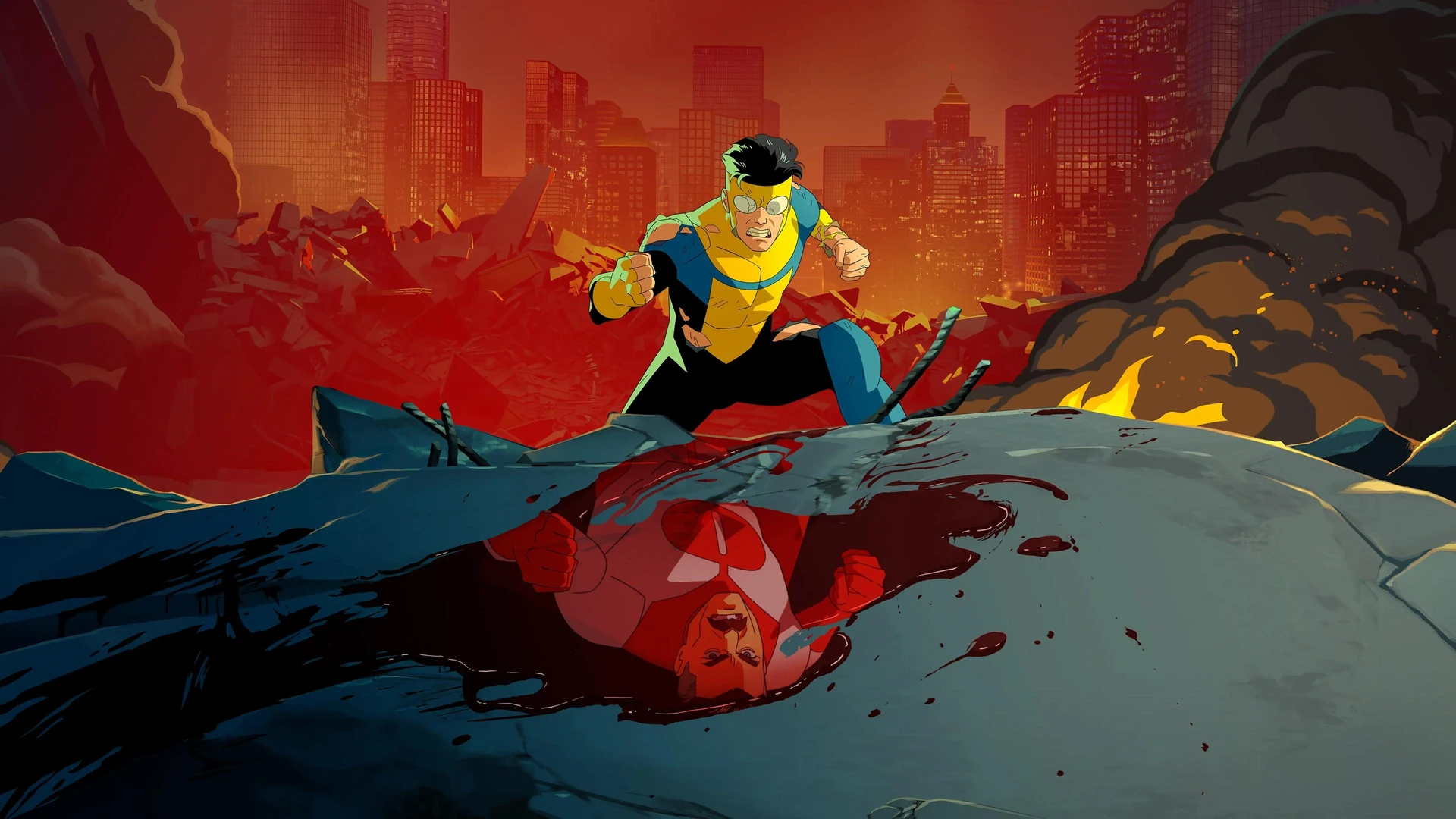
“Every hero is a myth until they bleed. Then, they are merely human, wrestling with the same cosmic absurdities as the rest of us.”
When Invincible burst onto Amazon Prime Video in 2021, it didn’t just join the burgeoning pantheon of superhero narratives; it detonated it. From its initial episodes, it was clear this wasn’t another shiny, family-friendly caper. Critics and audiences alike, as evidenced by its near-perfect scores on Rotten Tomatoes and Metacritic, lauded its audacious deconstruction of the superhero mythos, its unflinching violence, and its surprisingly deep emotional core. Yet, for all its acclaim, it’s precisely the show’s deliberate shock tactics—the brutal gore, the visceral betrayals—that sparked conversations, sometimes uncomfortable ones, about the line between impactful storytelling and gratuitous spectacle. But if you look past the crimson splashes and shattered bones, what you find is a profoundly existential exploration of identity, legacy, and the true cost of power.
The Burden of the Cape: When Heroism Turns Horrific
At its heart, Invincible is a coming-of-age story for Mark Grayson (Steven Yeun), a normal teenager whose father, Omni-Man (J.K. Simmons), just happens to be the planet’s most revered superhero. The premise sounds familiar, a classic hero’s journey setup. But Invincible takes that expectation and gleefully — almost sadistically — twists it. Mark’s burgeoning powers aren’t a simple rite of passage; they’re an initiation into a world far more complex and morally grey than he, or we, could ever anticipate.
The series quickly established its reputation for unflinching violence, a characteristic that, while central to its subversive tone, certainly isn’t for everyone. Some early reviews and audience comments noted that the sheer brutality could feel overwhelming, even a little gratuitous, especially in contrast to the seemingly innocent animation style. Yet, this visual paradox serves a philosophical purpose: it shatters the sanitized image of superhero conflict. When a punch lands in Invincible, it doesn’t just knock someone out; it splatters them. This isn’t just for shock value; it’s a constant, visceral reminder of the fragility of life and the devastating impact of god-like power wielded by imperfect beings. It forces us to confront the true, horrifying scale of what these conflicts would actually look like, stripping away the comfort of comic book invincibility. It asks: what is the moral calculus of saving a city if countless innocents are obliterated in the process?
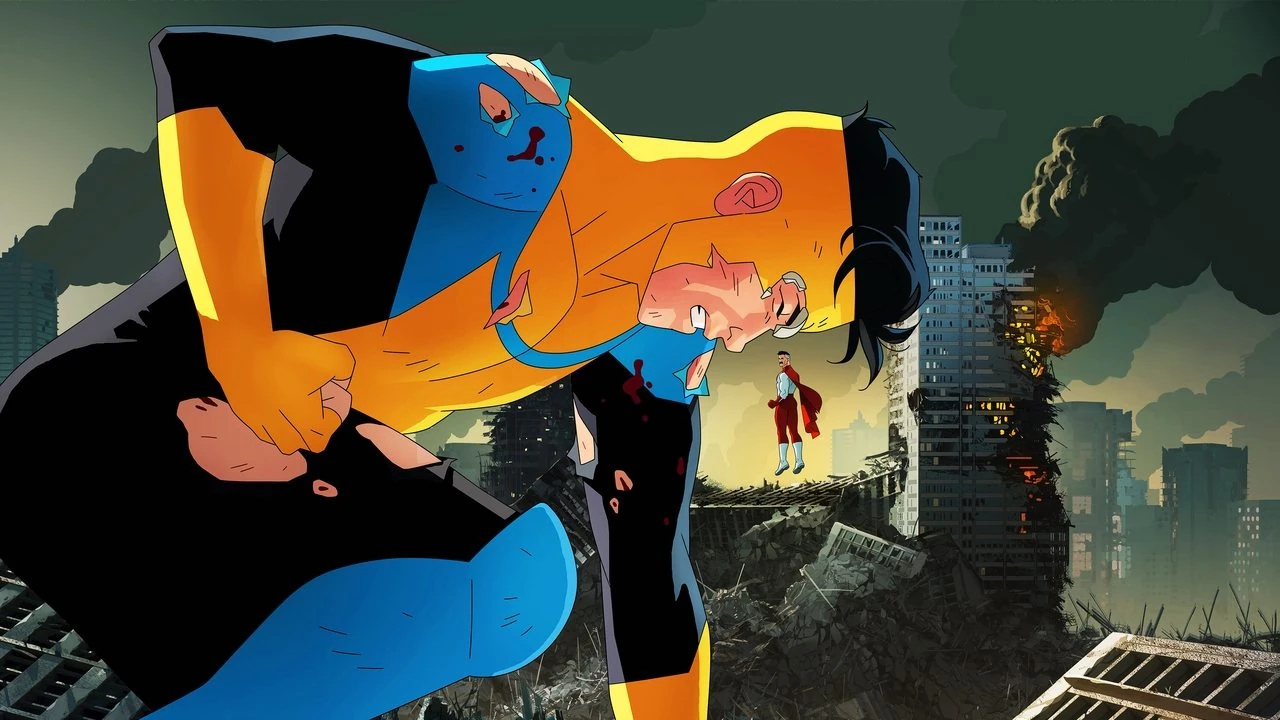 Mark Grayson, newly endowed with powers, grapples with the terrifying reality of his father’s strength and the inherent violence of his new world.
The Cracks in the Myth: Deconstructing the Ideal Family
The true philosophical punch of Invincible doesn’t come from its action, but from its devastating emotional core, particularly the relationship between Mark and Omni-Man. While critics universally praised the voice acting — Steven Yeun’s nuanced portrayal of Mark’s youthful idealism and growing dread, Sandra Oh’s powerful performance as the emotionally battered Debbie Grayson, and J.K. Simmons’s chilling turn as Omni-Man — it’s the shattering of the father figure that truly resonates. The revelation of Omni-Man’s true intentions isn’t just a plot twist; it’s a metaphysical betrayal, upending Mark’s entire understanding of his world, his family, and himself.
The most insidious forms of betrayal aren’t from strangers, but from those we’ve placed on pedestals, whose very existence defines our understanding of safety and truth.
This deception forces Mark into an agonizing process of identity formation. He’s no longer just Omni-Man’s son; he’s a being with immense power, grappling with a terrifying inheritance. The series asks: how do you forge your own moral compass when your most fundamental hero has proven to be your greatest villain? How do you reconcile the love you felt with the monstrous truth? This isn’t just about good versus evil; it’s about the intergenerational trauma of legacy, the struggle to define oneself against the overwhelming shadow of a parent, especially when that shadow is cast by a being capable of planetary destruction. The domestic drama, skillfully interwoven with cosmic warfare, elevates Invincible beyond mere superhero fare into a profound meditation on family, duty, and self-determination.
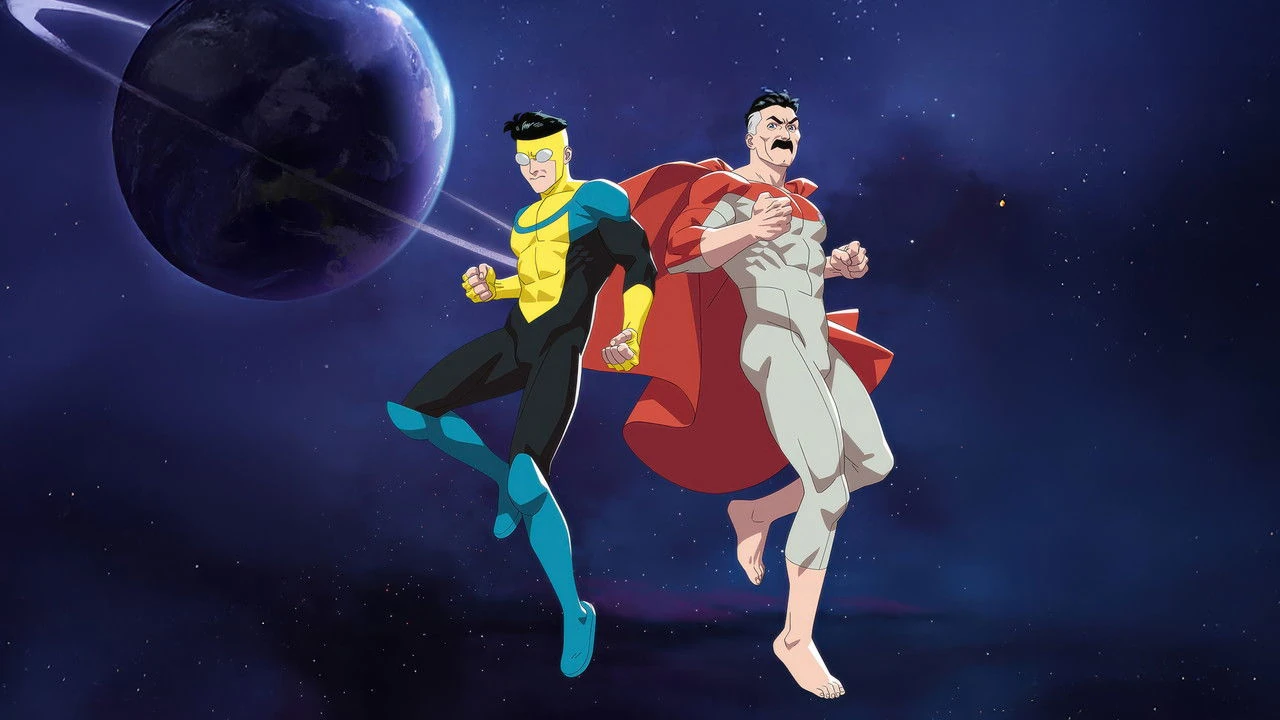 Omni-Man, a figure of paternal authority and terrifying power, looms over a distraught Mark, symbolizing the crushing weight of legacy and betrayal.
Beyond the Surface: A Mirror to Our Own Frailties
Despite some minor quibbles about pacing in its earlier episodes, a criticism often leveled at shows building a complex world, Invincible quickly found its stride, delivering a relentless narrative that constantly asks us to re-evaluate our preconceived notions. It explores the dangerous allure of ideology, the justifications power can create for its own expansion, and the terrifying realization that ‘good’ and ‘evil’ are often matters of perspective, scale, and species.
The series dares to ask questions that many superhero stories shy away from: What if humanity is merely a stepping stone, or an obstacle, for a more advanced civilization? What does it mean to be ‘heroic’ when faced with an insurmountable, morally absolute force? Mark’s journey becomes a crucible for these questions, as he tries to carve out a space for altruism and empathy in a universe seemingly indifferent to both. His struggle is our own, writ large: the attempt to find meaning, to do good, to protect what we love, in a world that often feels arbitrary and cruel. Invincible is a brutal, yet ultimately hopeful, testament to the enduring human (and Viltrumite-human) spirit to choose compassion over conquest, even when the odds are stacked against it.
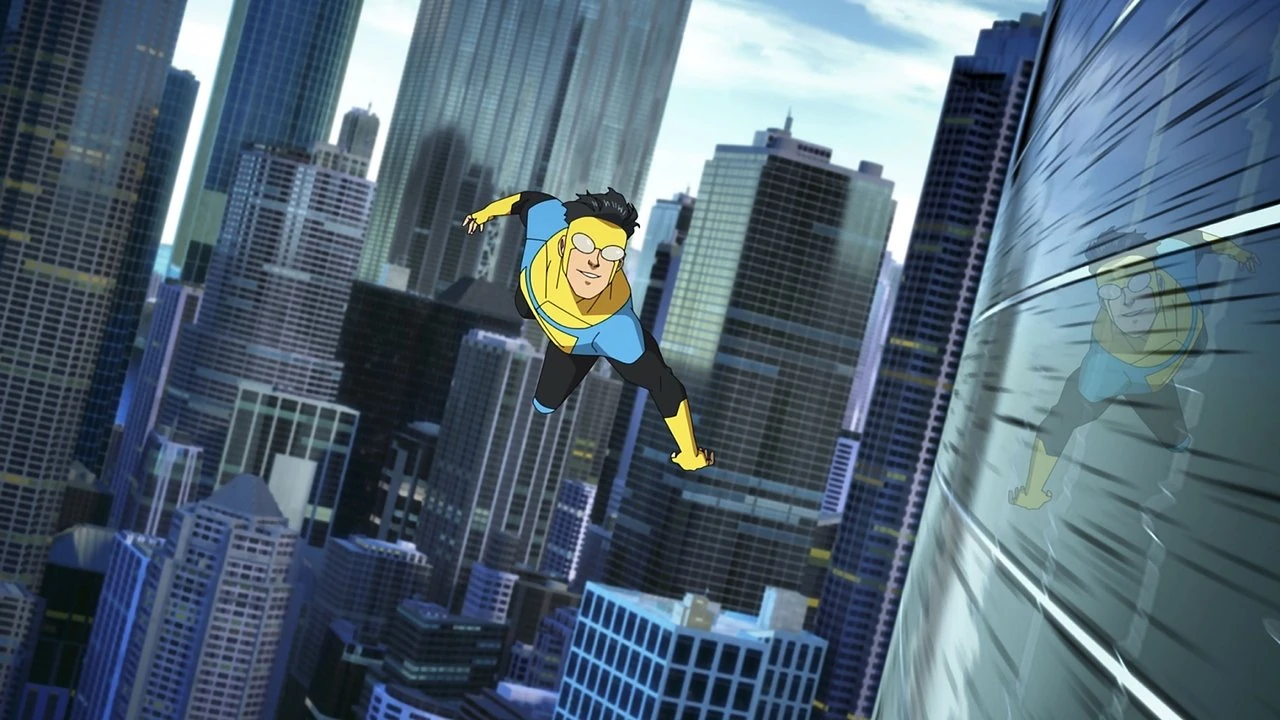 The desolate aftermath of a cosmic battle, hinting at the vast, indifferent universe Mark must navigate, fraught with moral dilemmas and existential threats.
“The true horror isn’t in monsters, but in the realization that the ideals we cherished were always just fragile illusions, sustained by the very powers that could, at any moment, tear them apart.”
Invincible doesn’t just entertain; it interrogates. It forces us to look beyond the flashy costumes and spectacular battles, confronting the existential dread of a universe where even our greatest protectors can become our gravest threats. It’s a challenging watch, certainly not for the faint of heart, and its deliberate violence remains a point of division for some. But its philosophical depth, its unflinching gaze into the dark heart of power and betrayal, and its surprisingly tender exploration of grief and resilience, cement its place as a pivotal work in the deconstruction of modern mythology. What kind of heroes do we truly need when the very fabric of heroism is revealed to be a lie?
Where to Watch
- Amazon Prime Video
- Amazon Prime Video with Ads
What’s Up? explores the philosophical depths of cinema.