Jailbait's Gritty Mirror: Finding Agency in the Asylum
Exploring the challenging philosophical underpinnings of Jailbait (2014), a film criticized for its execution but rich in themes of confinement and redemption.
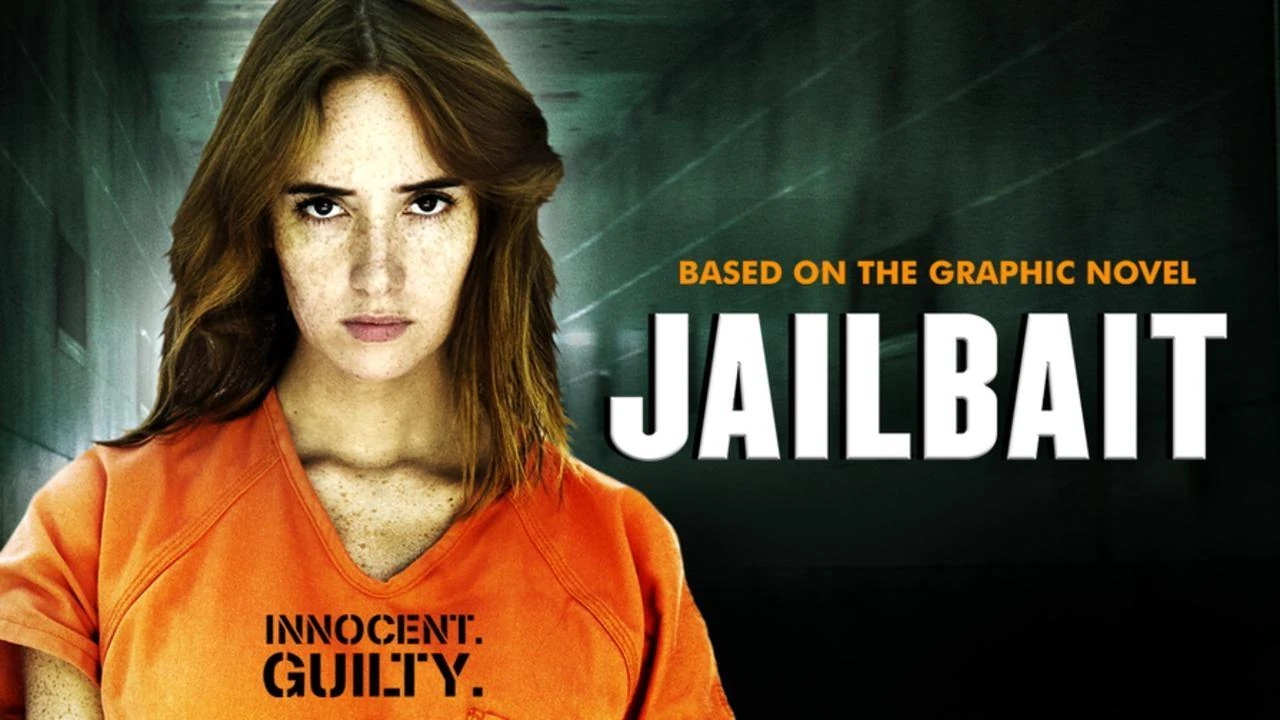
“The cage is not a place, but a condition.” — Simone Weil
Let’s be honest, Jailbait (2014) isn’t a film that landed on critics’ “must-see” lists or garnered much in the way of accolades. Directed by Jared Cohn, this low-budget crime drama, often filed under ‘thriller’ and ‘romance’ in a rather perplexing categorisation, was largely panned by audiences and critics alike. IMDb user reviews hover around a meager 3-4 out of 10, often citing predictable plots, wooden acting, and a general lack of authenticity. It’s the kind of film that often gets dismissed as a straight-to-video misfire, another entry in the vast sea of cinema that promises much in premise but delivers little in polish.
Yet, as philosophers of film, our task isn’t always to celebrate perfection, but to excavate meaning even from the most unpolished of gems, or perhaps, from the unyielding roughage that nonetheless contains a kernel of human truth. Jailbait, despite its undeniable flaws and its frequently criticized execution, thrusts us into a raw, uncompromising world that, by its very nature, forces us to confront uncomfortable questions about agency, redemption, and the shaping of identity under extreme duress.
The Crushing Weight of Confinement
The film drops us into the harrowing journey of Anna Nix, a young girl sent to juvenile prison for the murder of her abusive stepfather. Immediately, the setting itself is a philosophical crucible. A juvenile detention center is not just a place of punishment, but a place where nascent identities are either forged in fire or utterly consumed. Anna’s descent into this “dark world of an all girls jail,” as the synopsis describes it, immediately poses an existential dilemma: can one truly become oneself when one’s freedom is entirely stripped away?
Critics often pointed out the film’s reliance on familiar tropes of the prison genre: the ruthless queen bee, the vulnerable new inmate, the corrupt guards. And they’re not wrong; the narrative frequently leans into these well-trodden paths, sometimes feeling more like a B-movie pastiche than a gritty exploration. The dialogue, too, was frequently singled out for being clunky and unrealistic, hindering a genuine connection with the characters’ plight. However, beneath these surface-level missteps, the film attempts to illustrate the profound impact of institutionalization on the human spirit. It asks us to consider what remains of an individual’s moral compass when survival dictates an entirely new set of rules. The “complex relationships” Anna forms are less about genuine connection and more about power dynamics, protection, and manipulation – a microcosm of a distorted social contract.
- Survival Instincts: How far would you go to survive in an environment designed to strip you of your humanity?
- Moral Ambiguity: Can “good” and “evil” even exist in such a system, or are they mere conveniences?
- Loss of Innocence: The brutal acceleration of maturity forced upon these young women.
 A stark corridor in the juvenile facility, a symbol of lost freedom and impending choices.
Fractured Selves, Fragmented Reality
One of the most significant criticisms leveled against Jailbait concerned its uneven pacing and the performances of its supporting cast. Many viewers found the portrayal of mental illness and drug use within the facility to be superficial or sensationalized, rather than a genuine exploration of these serious issues. This is a valid point; the film often rushes through moments that demand deeper introspection, opting instead for quick, impactful (if not always effective) dramatic beats.
Despite these weaknesses, the film’s core premise inherently tackles the concept of the fractured self. Anna, already traumatized by her past, enters an environment that threatens to shatter her further. Her “journey” isn’t just physical confinement, but an internal struggle to piece together a coherent identity amidst the chaos. The film, in its own rough-hewn way, explores how external pressures – the threat of violence, the allure of drugs, the desperate need for belonging – can redefine one’s sense of self. It might not execute this with the psychological nuance of a prestige drama, but the idea is there: the self is not static, but constantly in flux, especially when subjected to extreme conditions.
This is where we discover the true weight of choice — not in the outcome, but in the becoming.
The concept of “jailbait” itself, while a provocative and somewhat problematic title, points to the vulnerability and exploited innocence of its subjects. It’s a reminder that these are young lives, caught in a system that often fails to rehabilitate, instead reinforcing cycles of trauma. The film, however imperfectly, tries to show how these young women, despite their circumstances and past mistakes, are still evolving, still capable of change – for better or worse. It’s a harsh lens through which to view the human condition, highlighting how easily compassion can erode and how desperately it’s needed.
 Two young women in a tense moment, reflecting the complex, often fraught, relationships within confinement.
The Elusive Search for Redemption
Anna’s “eventual search for redemption” forms the narrative backbone of Jailbait. This is perhaps where the film’s philosophical ambition is most evident, even if its execution is, as many have argued, often simplistic or contrived. Redemption, in this context, isn’t just about atoning for a crime; it’s about reclaiming one’s narrative, finding meaning in suffering, and asserting one’s intrinsic worth in a place designed to strip it away.
Many viewers found the plot’s resolution simplistic or unearned, a criticism that’s hard to dispute given the film’s often rushed narrative beats and occasionally thin character development. The ‘romance’ aspect, in particular, felt out of place or underdeveloped for many, diluting the grittier themes. But perhaps the philosophical weight isn’t in the achievement of redemption, but the struggle for it. Can one truly be redeemed by a system that is itself flawed? Is redemption an internal state, independent of external judgment? Or is it a communal act, requiring acceptance from others?
Jailbait ultimately asks us to consider the enduring human capacity for hope, even in the bleakest of environments. It might not provide a sophisticated answer, but the very act of posing the question, however crudely, holds value. It forces us to acknowledge that even those discarded by society are on a journey, wrestling with their pasts and striving for a future that feels, however faintly, like freedom. The film, in its own rough way, explores the existential burden of accountability and the deeply personal quest for self-forgiveness.
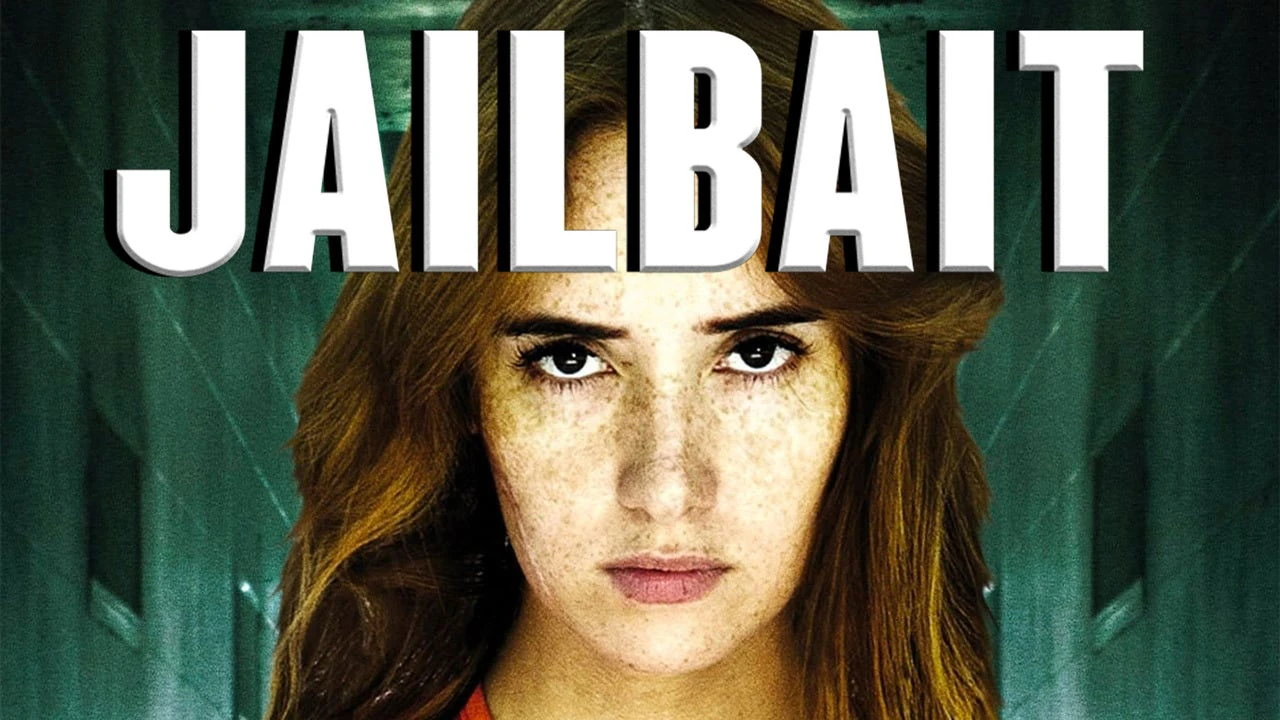 A solitary figure gazing out, perhaps contemplating a future beyond the bars, a search for light in the darkness.
“The hardest prison to escape is in your mind.”
While Jailbait (2014) certainly won’t be remembered for its cinematic artistry or critical acclaim, its philosophical undercurrents offer a surprising depth for those willing to look past its evident flaws. It’s a testament to the idea that even imperfect art can serve as a catalyst for reflection. It holds up a gritty, often distorted mirror to themes of confinement, identity, and the relentless human desire for redemption. It reminds us that the struggle for self, for meaning, and for a glimmer of hope, is universal, regardless of the circumstances, and often, regardless of the quality of the film attempting to portray it.
What does it truly mean to find your path when every direction seems predetermined by a system beyond your control?
What’s Up? explores the philosophical depths of cinema.