The Unbearable Weight of Being John Wick: Parabellum's Existential Reckoning
Chapter 3 of John Wick plunges deeper into a world of unforgiving rules, exploring themes of inescapable fate, identity, and the relentless cycle of consequence.
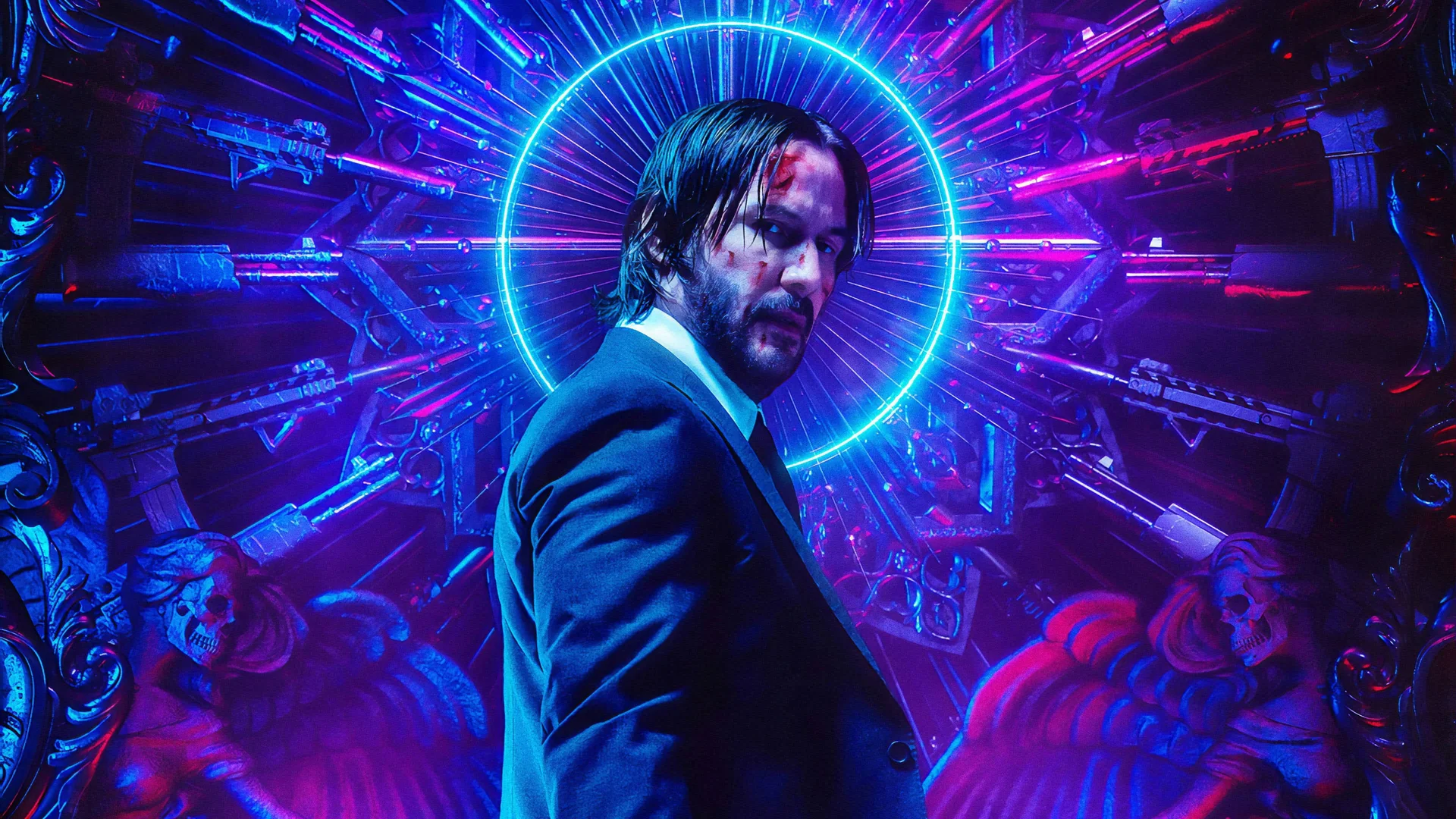
“The chains of habit are too weak to be felt until they are too strong to be broken.” — Samuel Johnson
John Wick: Chapter 3 - Parabellum isn’t just a film; it’s a statement, a ballet of bullets and broken glass that pushed the boundaries of modern action cinema. Released in 2019, Chad Stahelski’s third installment in the saga of the legendary assassin, John Wick, was met with overwhelmingly positive critical reception, boasting an 89% on Rotten Tomatoes and a 73 on Metacritic. Critics lauded its relentless, exquisitely choreographed action, Keanu Reeves’s stoic, committed performance, and the ever-expanding, darkly fascinating world-building. Yet, even in its praise, there were whispers, valid criticisms about a plot that, at times, felt like a mere excuse for the next elaborate set piece, or a relentless pace that, while exhilarating, could border on exhausting. But beneath the polished violence and the intricate mythology of the High Table, Parabellum offers a surprisingly rich vein of philosophical inquiry, inviting us to ponder the nature of fate, the burden of identity, and the brutal calculus of consequence.
The Sisyphus of Survival
At its core, John Wick: Chapter 3 - Parabellum is an exploration of an existential predicament — the individual pitted against an immutable, unforgiving system. From the moment the “excommunicado” clock ticks to zero, John Wick becomes a modern-day Sisyphus, perpetually pushing the boulder of his own survival up an endless hill. The $14 million bounty on his head isn’t just a monetary value; it’s the crushing weight of his past actions, his legendary reputation, and the unbreakable rules of a world he inadvertently defied. He is a man condemned not to death, but to eternal struggle, to a life defined by the fight itself.
While some critics, and rightfully so, pointed out that the narrative often serves as little more than a connective tissue for its elaborate set pieces, this structural choice inadvertently highlights John’s plight. There’s little room for introspection or character development in his world because every second is a fight for existence. His journey is a visceral, relentless meditation on fatalism – can John Wick ever truly escape his nature, his past, or the cosmic forces (the High Table) that govern his universe? The film seems to suggest not. He is a man whose identity is so inextricably linked to violence that his very attempt at peace only serves to drag him deeper into the abyss.
Key themes embedded in John’s relentless chase:
- The Inescapable Past — John’s legend precedes him, marking him for both reverence and relentless pursuit.
- The Burden of Identity — Is he John, the grieving husband, or Baba Yaga, the mythical killer? The distinction blurs, perhaps irrevocably.
- Consequence as Destiny — Every action, every kill, fuels the next, creating an unbreakable chain of cause and effect.
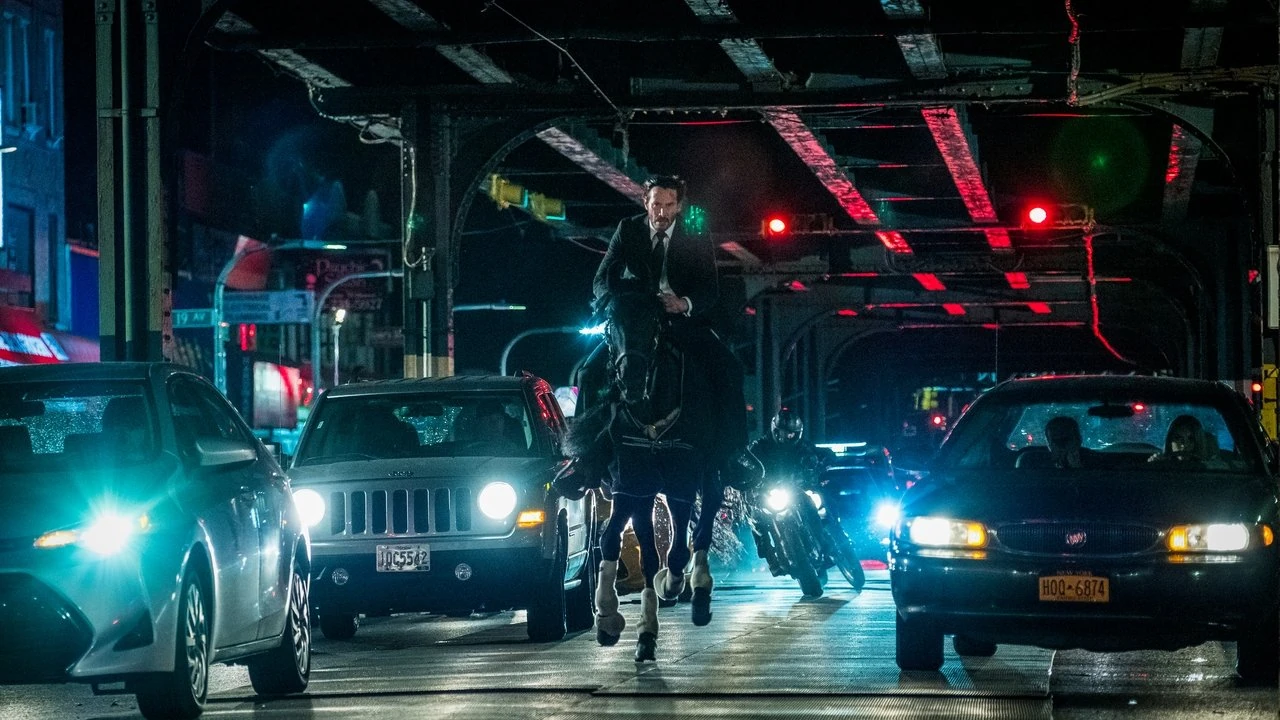 John Wick, perpetually on the run, symbolizes the individual’s endless struggle against an indifferent, overwhelming system.
The High Table’s Unyielding Grip
The High Table, with its shadowy Elders, arcane rules, and deadly enforcers, stands as a chilling metaphor for any all-encompassing institution that demands absolute obedience. Parabellum expands this lore dramatically, introducing new facets of its power structure, from the Adjudicator to the mysterious Elder. It’s a beautifully designed, meticulously detailed world that, for all its visual splendor, is built on a foundation of absolute, unquestioning authority. When John defies them, he’s not just breaking a rule; he’s challenging the very fabric of existence within this unique society.
This is where the film truly probes the nature of authority and rebellion, asking whether true freedom can ever exist within a system that dictates every aspect of life and death.
The film masterfully explores the moral grey areas of this world, particularly through characters like Winston and Sofia, played with captivating nuance by Ian McShane and Halle Berry. Their shifting allegiances and calculated betrayals highlight the brutal pragmatism required to survive within the High Table’s domain. Loyalty isn’t a moral virtue; it’s a strategic maneuver, a commodity to be traded. Some audience members and critics, however, found the High Table’s rules increasingly convoluted, stretched, or conveniently ignored to serve the plot’s needs. This criticism, while valid on a narrative level, ironically underscores the philosophical point: systems of power, even fictional ones, are often arbitrary, self-serving, and ultimately designed to maintain their own dominance, even if it means bending their own supposed “laws.” Others found the sheer relentlessness of the action, while stunning, occasionally exhausting, leading to moments where the film’s pacing felt less like a masterclass and more like a marathon of stylish brutality without enough narrative breathing room.
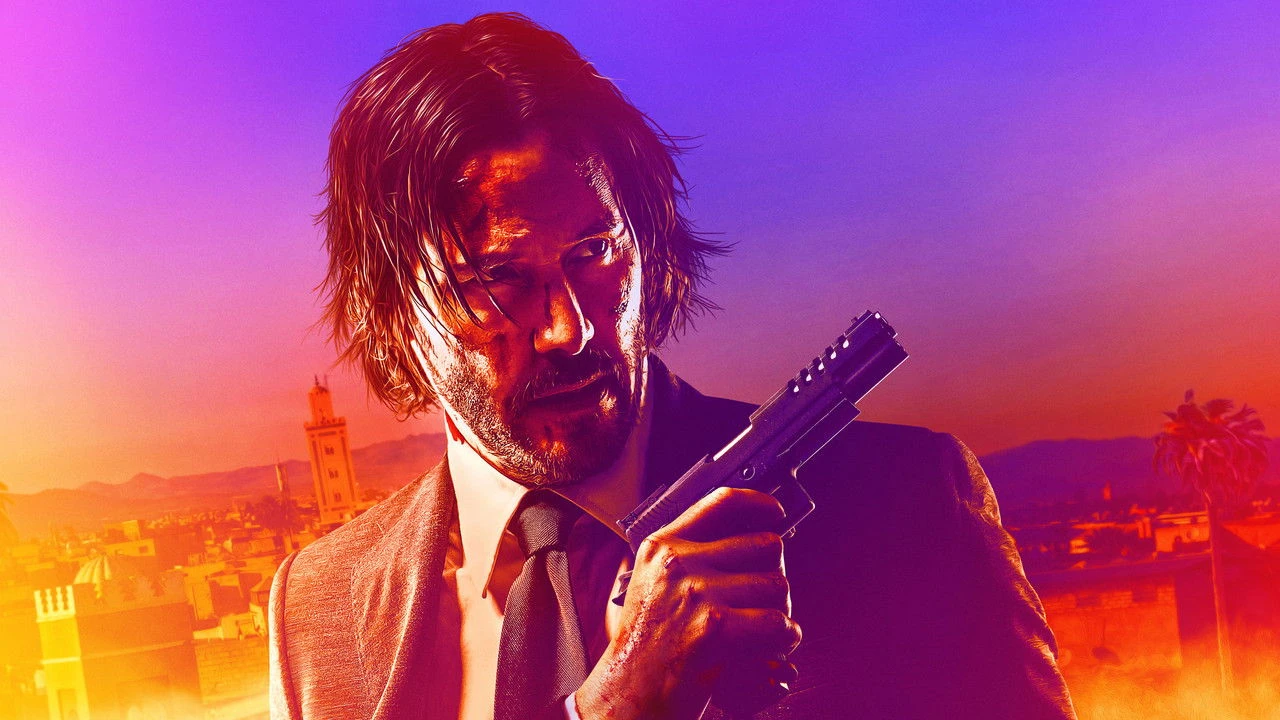 The High Table’s Adjudicator, a chilling embodiment of systemic power and unwavering judgment, reflects the impersonal nature of authority.
Beyond the Bullet Ballet
Despite the criticisms of its narrative thinness or relentless pacing, John Wick: Chapter 3 - Parabellum dares to ask profound questions about the human condition, even amidst its hyper-stylized violence. What does it mean to be a legend, a boogeyman, when all you desire is peace? John’s inability to shed the “Baba Yaga” persona speaks to the indelible marks our past and reputation leave upon us. Can one ever truly retire from their essential self? The film suggests not; our skills, our identity, and the choices we’ve made become an inescapable part of who we are.
The very concept of being “excommunicado” is a powerful metaphor for social ostracism and the loss of social contract. John is stripped of all protections, all connections, cast out into a world where every hand is turned against him. It’s a terrifying vision of absolute isolation, forcing us to consider the value of community, rules, and the subtle agreements that govern our everyday lives. His journey through various safe havens, from the Director’s ballet theater to the Bowery King’s subterranean realm, explores the limits of these hidden societies and the price of their protection. The film’s cliffhanger ending, which some found frustratingly open-ended and more a setup for Chapter 4 than a conclusion, reinforces this cyclical despair: John Wick is back in the game, perhaps more enraged than ever, but still trapped.
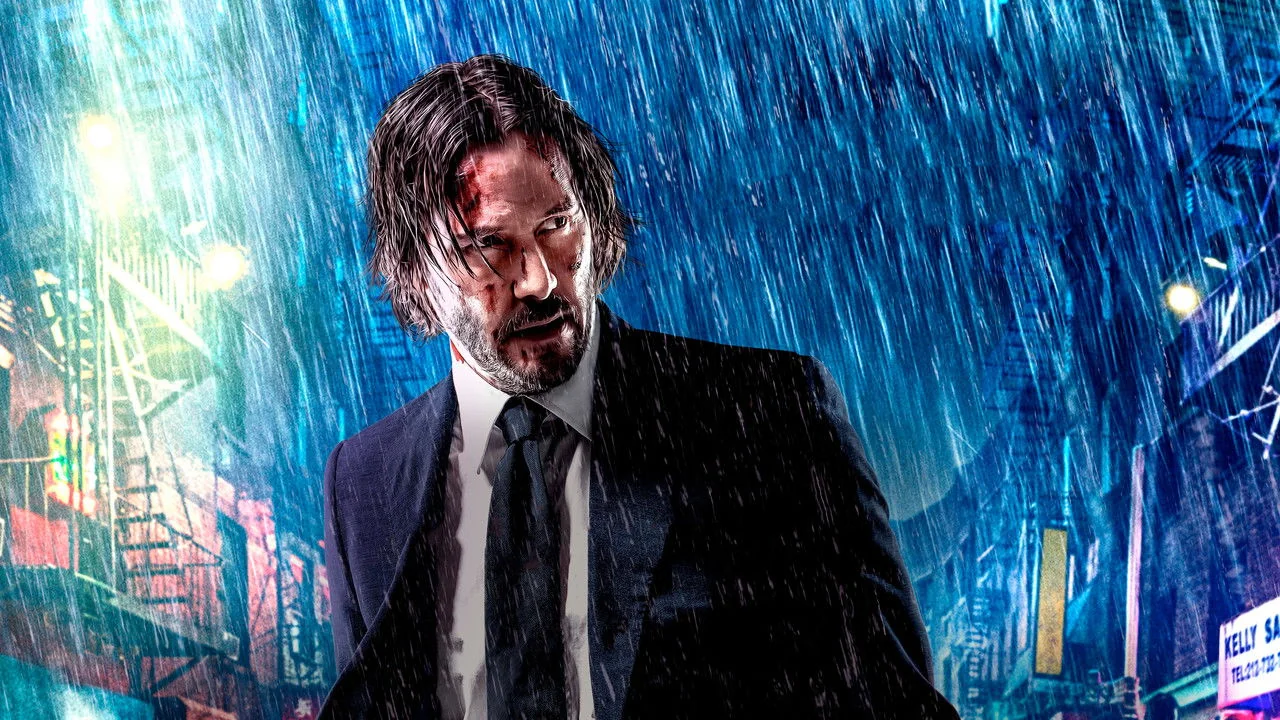 John Wick and Sofia, surrounded by formidable foes, illustrating the fleeting nature of alliances in a world built on calculated survival.
“We are condemned to be free, and every choice, even the choice not to choose, has consequences that ripple through our existence.” — Jean-Paul Sartre
John Wick: Chapter 3 - Parabellum is, without a doubt, a masterclass in action choreography and world-building, a visually stunning spectacle that further cemented its place as a modern action classic. While it faced valid critiques regarding its plot development and relentless, sometimes exhausting, pace, these very elements inadvertently serve its deeper philosophical currents. The film is a brutal, beautiful meditation on inescapable fate, the burden of identity, and the relentless cycle of consequence. It asks us to consider what it means to be a person of action in a world governed by unforgiving rules, and whether true freedom is ever attainable when your past is always catching up. John Wick’s story isn’t just about survival; it’s about the relentless pursuit of self, even when that self is defined by the very violence he desperately wants to leave behind. It leaves us pondering: in a world of endless battles, is there ever a final victory, or just the next chapter in an eternal fight?
Where to Watch
- HBO Max
- HBO Max Amazon Channel
What’s Up? explores the philosophical depths of cinema.