Mindhunter's Abyss: The Perilous Pursuit of Understanding Evil
Exploring Mindhunter's profound philosophical inquiry into the nature of evil, its divisive pacing, and the enduring questions it leaves unanswered.
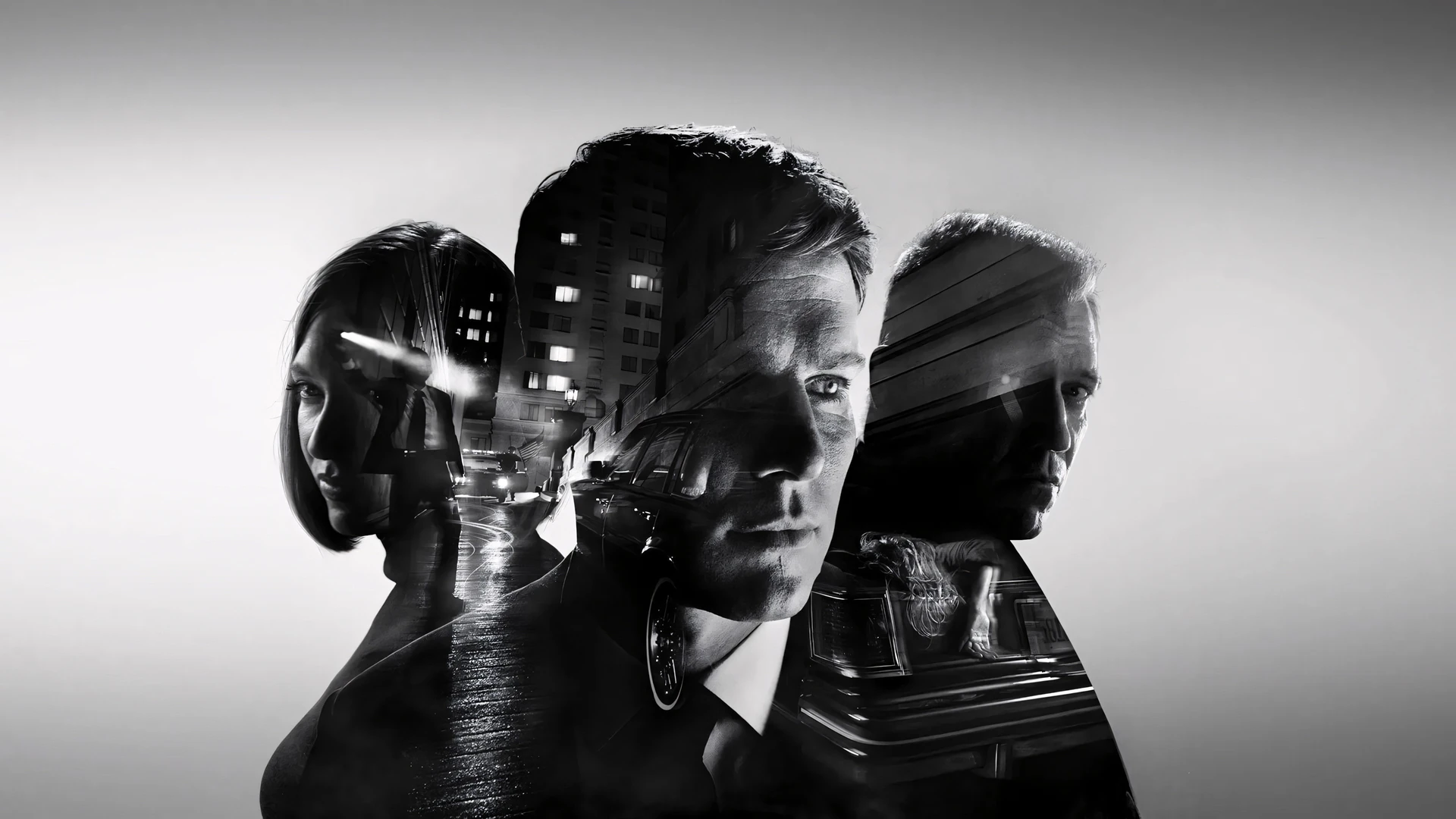
“Whoever fights monsters should see to it that in the process he does not become a monster. And if you gaze long enough into an abyss, the abyss will gaze back into you.” — Friedrich Nietzsche
David Fincher’s Mindhunter, a Netflix original series that first graced our screens in 2017, isn’t just a crime drama; it’s a deep, unsettling plunge into the very origins of human depravity. While critically acclaimed with near-unanimous praise across Rotten Tomatoes and Metacritic for its meticulous direction, phenomenal performances, and historical accuracy, it wasn’t without its detractors. Many viewers, accustomed to faster-paced procedurals, often found its deliberate, almost meditative pace to be a challenging watch. It’s a show that forces you to lean in, to contend with the discomfort, and to question not just the monsters, but the very act of trying to understand them. For me, that’s precisely where its profound philosophical value lies.
The Anatomy of Darkness: Deconstructing the ‘Why’
Mindhunter introduces us to FBI agents Holden Ford (Jonathan Groff) and Bill Tench (Holt McCallany), pioneers in the nascent field of criminal profiling during the late 1970s. Their mission: to interview incarcerated serial killers and rapists, attempting to construct a psychological framework for understanding motives that, until then, were often dismissed as pure madness. The genius of the series, masterfully helmed by Fincher’s signature bleak aesthetic and meticulous attention to detail, is in its dedication to the interview. These aren’t flashy interrogations; they’re painstaking, often mundane conversations that slowly, terrifyingly, peel back the layers of inexplicable horror.
This slow-burn approach, which some audiences critiqued as “boring” or “too talky,” is in fact the show’s philosophical engine. It denies us the catharsis of immediate answers or thrilling chases. Instead, it immerses us in the existential dread of confronting evil not as an external force, but as something deeply human, deeply flawed, and sometimes, terrifyingly mundane. The performances of actors portraying figures like Edmund Kemper, Charles Manson, and David Berkowitz are nothing short of transformative, forcing us to grapple with their chilling rationality, their twisted logic, and the disturbing echoes of our own societal failings that might have contributed to their making. The series refuses to offer easy answers, instead exploring the murky waters of nature vs. nurture, pathology vs. choice, and the terrifying realization that some horrors might simply be.
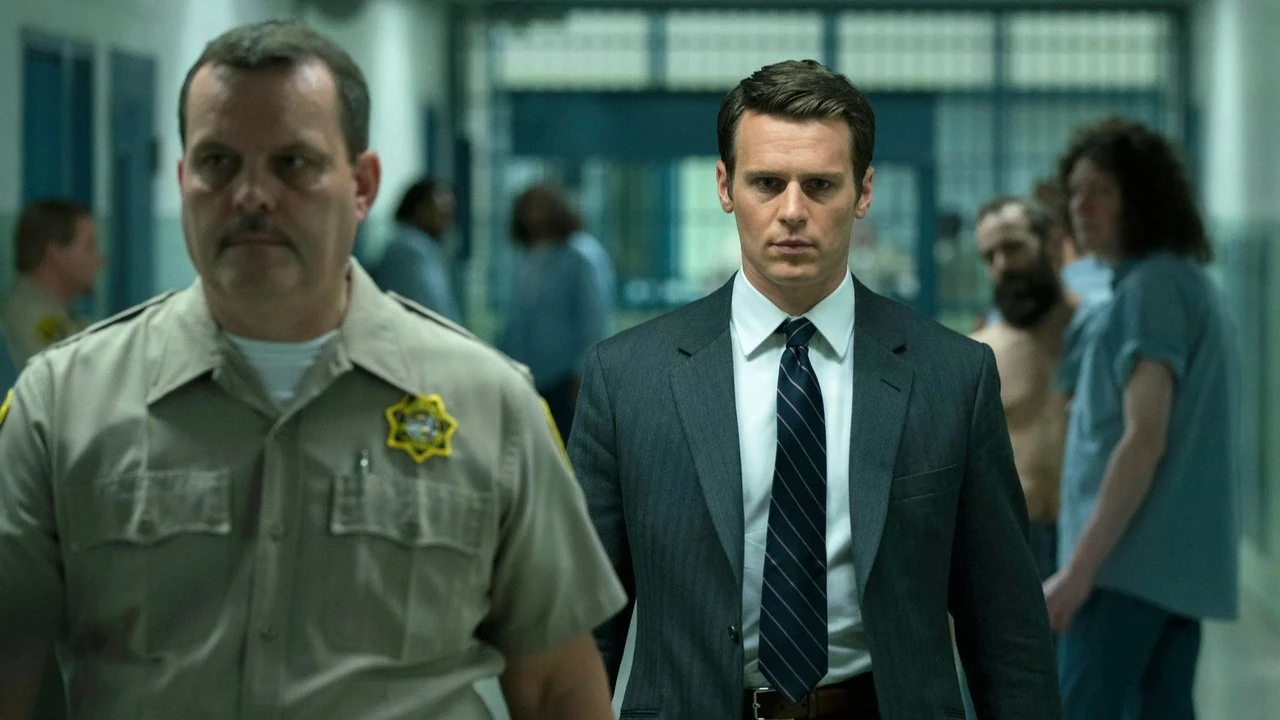 Holden Ford, caught between the intellectual thrill of discovery and the psychological toll of his work.
The Observer’s Burden: Ethics, Empathy, and the Self
The philosophical weight of Mindhunter isn’t just in the analysis of the killers; it’s in the profound impact this analysis has on the profilers themselves. Holden Ford, initially an idealistic academic, gradually sheds his naiveté, transforming into a figure often perceived by critics and audiences alike as arrogant, detached, and even cold. His journey raises critical questions about the ethics of observation: can one truly dissect evil without becoming tainted by it? His increasing psychological fragility, manifested in panic attacks and a growing inability to connect with others, mirrors the very abyss Nietzsche warned about.
Bill Tench, on the other hand, embodies the struggle with empathy. A seasoned, grounded agent, he finds his worldviews shattered by the horrors he encounters, exacerbated by his own family’s devastating struggles with his adopted son’s disturbing behavior. Bill’s arc is particularly poignant, highlighting the personal cost of confronting the unthinkable, the way the darkness they study seeps into their own lives, challenging their notions of normalcy and morality. Dr. Wendy Carr (Anna Torv) provides a crucial counterpoint, attempting to impose scientific rigor and objectivity on their inherently subjective work, while battling her own professional and personal isolation as a queer woman in a conservative institution.
This is where the true weight of the human condition is laid bare: the desperate need to categorize and understand, clashing violently with the inherent incomprehensibility of radical evil.
Critics often lauded the nuanced performances of Groff, McCallany, and Torv for capturing this complex interplay of intellect, emotion, and moral compromise. However, some audience members found Holden’s increasingly detached and arrogant demeanor off-putting, making him a less sympathetic protagonist. This was a deliberate choice, forcing us to question the hero archetype and the psychological toll of such a profession. The series dared to show us the moral ambiguity inherent in such a quest for knowledge.
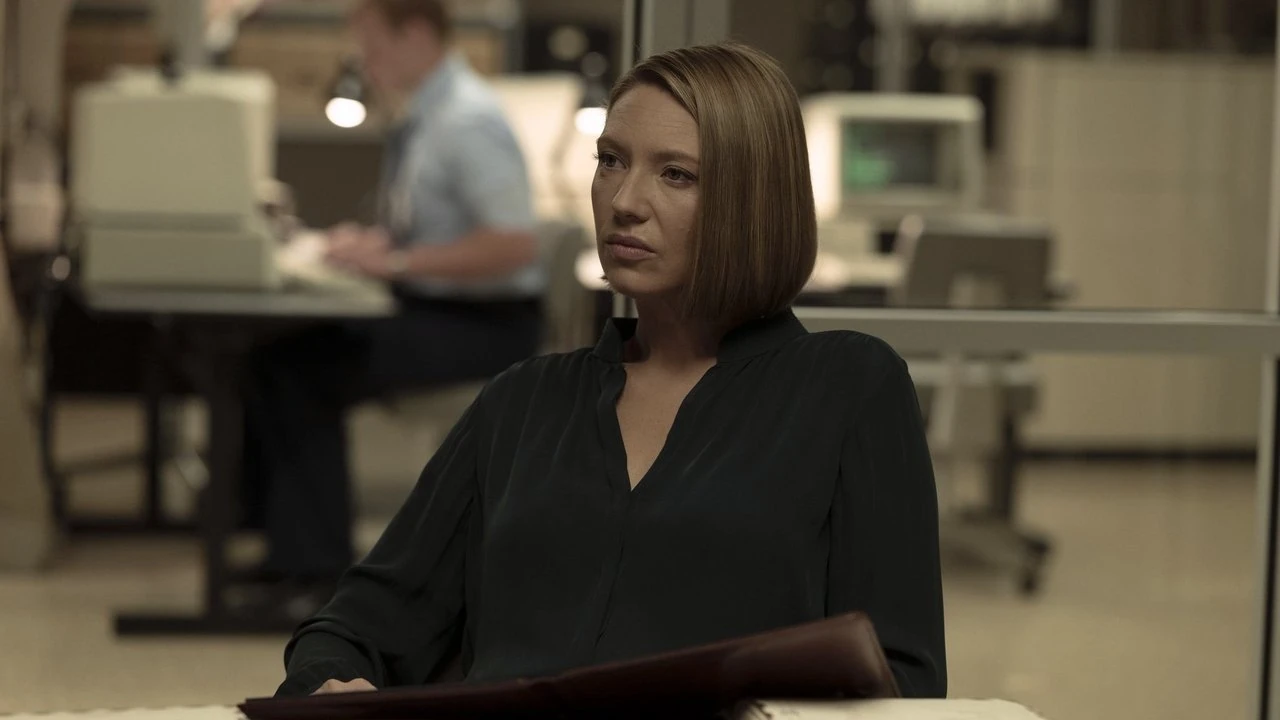 Bill Tench, grappling with the darkness that threatens to consume his personal life.
The Unfinished Conversation: Legacy of the Unseen
One of the most significant frustrations for viewers and critics alike was Mindhunter’s abrupt cancellation after its second season, leaving several major storylines, particularly the chilling narrative of the BTK killer, utterly unresolved. This lack of closure, while deeply unsatisfying from a narrative perspective, paradoxically amplifies the show’s philosophical impact. It leaves us with an enduring sense of the unseen, the unquantifiable, and the perpetually elusive nature of evil.
The show posits that perhaps some questions about human darkness are simply unanswerable, or that the answers, once found, are too terrifying to fully comprehend. The lingering thread of the BTK killer, appearing in chilling vignettes throughout the series, represents an evil that operates just outside the primary narrative, a constant reminder that the work is never truly done, the abyss never fully charted. This contributes to a profound sense of nihilism – not in the sense of meaninglessness, but in the terrifying realization that some actions defy rationalization, existing in a realm beyond our capacity to fully grasp or prevent. Mindhunter dared to suggest that some monsters simply are, and our attempts to understand them might only illuminate our own vulnerabilities. It’s a show that forces us to confront the epistemological limits of human understanding when faced with ultimate malevolence.
 Dr. Wendy Carr, striving for scientific objectivity in the face of profound psychological chaos.
“The true horror is not just what they did, but that we might never truly know why, and that the seeking of those answers exacts a price on the seeker.”
Mindhunter’s legacy is a complex one. Its deliberate pace and unresolved ending due to cancellation made it a somewhat divisive experience for audiences, despite its near-universal critical acclaim for its artistic merit and intellectual depth. Yet, its philosophical contribution remains undeniable. It holds up a mirror, asking us to gaze not just at the monsters in the dark, but at our own human compulsion to understand them, and the profound, often unbearable, consequences of that pursuit. What does it cost us, individually and collectively, to stare into the abyss of human evil, and can we ever truly walk away unchanged?
Where to Watch
- Netflix
- Netflix Standard with Ads
What’s Up? explores the philosophical depths of cinema.