The Impossible Calculus of Trust: Rogue Nation's Existential Espionage
A philosophical deep dive into Mission: Impossible - Rogue Nation, exploring its themes of trust, identity, and the ceaseless burden of heroism.

“The hardest thing in the world is to live in it.” — Buffy the Vampire Slayer
When Mission: Impossible - Rogue Nation burst onto screens in 2015, it wasn’t just another entry in a long-running franchise; it was a reaffirmation, a statement of intent. Critics, by and large, absolutely loved it, with a stellar 94% on Rotten Tomatoes and a solid 75 on Metacritic, praising its breathtaking practical stunts, Christopher McQuarrie’s masterful direction, and especially the magnetic introduction of Rebecca Ferguson’s Ilsa Faust. Yet, amidst the adrenaline and the accolades, a quieter, more profound conversation was taking place. This wasn’t merely a film about impossible missions; it was a meditation on the impossible calculus of trust, the ever-shifting nature of identity, and the relentless, almost existential burden of being the one man who always has to save the world.
The Labyrinth of Loyalty and Identity
At its heart, Rogue Nation presents us with the ultimate paradox: an international intelligence agency, the IMF, hunted by a shadowy, equally skilled “anti-IMF” known as the Syndicate. This isn’t just a physical threat; it’s a metaphysical mirroring. The Syndicate, as its name suggests, is a rogue nation without borders, a dark reflection of the very institutions it seeks to dismantle. It forces us to ask: what defines a nation, an organization, or even an individual, when all perceived boundaries dissolve? Ethan Hunt finds himself in a world where the lines between friend and foe, good and evil, are so blurred they’re almost meaningless.
Some critics, while lauding the film’s many strengths, did point to the plot’s occasionally convoluted nature, finding the intricate web of double-crosses and MacGuffin chases a touch dense. But perhaps this isn’t a flaw so much as a deliberate design. This narrative complexity forces both Ethan and the audience into a state of constant epistemological uncertainty. Who can be trusted? What is real? The film doesn’t offer easy answers, instead plunging us into a world where truth is a commodity, and loyalty is constantly tested. Ethan’s very identity as a hero is threatened, not just by external enemies, but by the internal erosion of his faith in the system he serves.
- The Syndicate as a philosophical construct: It’s not just a terrorist group; it’s a deconstructed state, a mirror showing the fragility of our own institutions.
- Trust as a gamble: Every alliance, every piece of information, comes with an inherent risk.
- The hero as a rogue: Ethan himself is often operating outside the law, blurring the line between sanctioned agent and renegade.
 Rebecca Ferguson’s Ilsa Faust, a figure of enigmatic allegiance, navigating a world of shadows.
The Art of the Impossible - Craft and Consequences
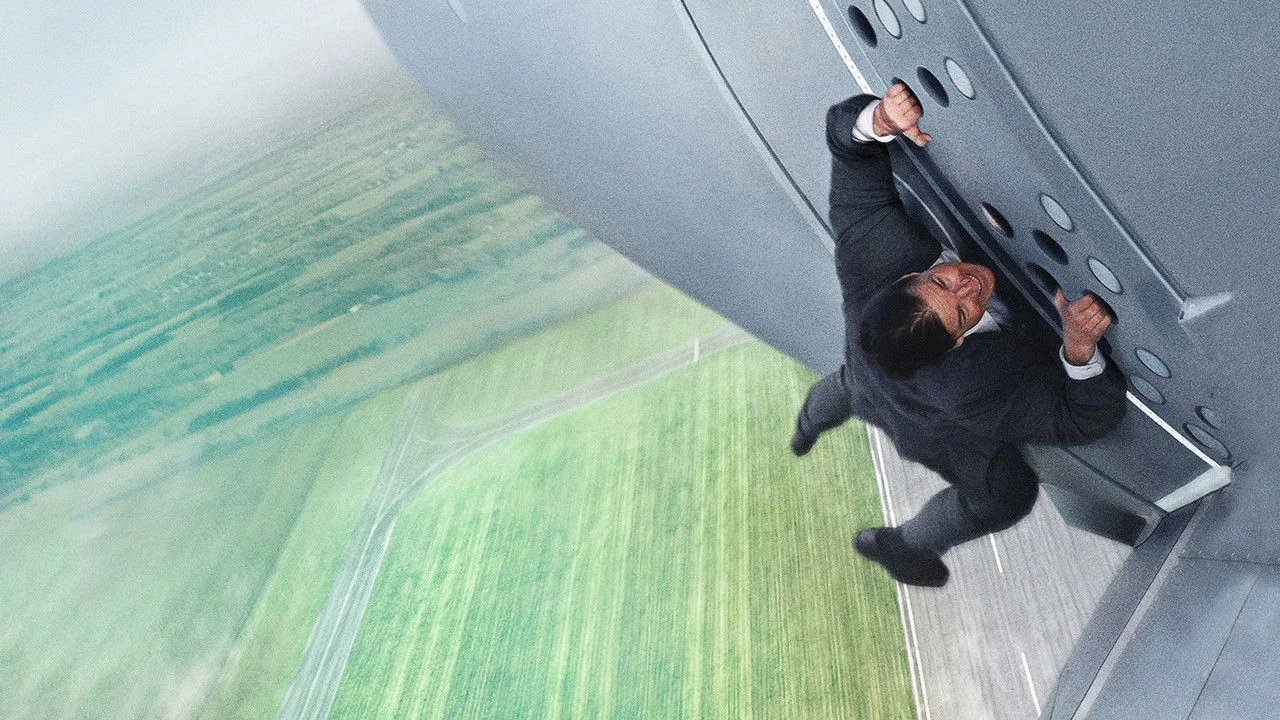
One of Rogue Nation’s most celebrated aspects is its commitment to practical stunts, a testament to Tom Cruise’s legendary dedication. The opening plane sequence, the breath-holding underwater heist, the thrilling motorcycle chase – these aren’t just spectacles; they represent a philosophical stance on effort, mastery, and the pursuit of the seemingly unattainable. Critics universally lauded McQuarrie’s direction and Cruise’s unparalleled commitment, often highlighting these sequences as pinnacles of modern action filmmaking.
This is where we discover the true weight of choice — not in the outcome, but in the becoming. Ethan’s willingness to push physical limits isn’t mere bravado; it’s an embodied philosophy of relentless perseverance in the face of insurmountable odds.
Yet, even in its brilliance, the film occasionally flirted with the outer limits of plausibility, leading some viewers to question the sheer resilience of Ethan Hunt. While a minor criticism, it raises an interesting point about the moral weight of survival. If Ethan always survives the impossible, does it diminish the stakes? Rogue Nation deftly sidesteps this by focusing on the consequences of his survival – the constant personal sacrifice, the friends he puts in peril, the sheer mental and physical toll. His physical struggles in the film are palpable, reminding us that even for Ethan, every impossible feat comes at a cost. The introduction of Ilsa Faust, a character with agency and a moral ambiguity that rivals Ethan’s own, further grounds the film, providing a compelling counterpoint to his singular drive. Her journey, often paralleling and intersecting with Ethan’s, explores the same themes of loyalty and self-preservation from a fresh, equally complex perspective.
 Tom Cruise’s Ethan Hunt, perpetually on the run, a symbol of unwavering commitment amidst chaos.
Beyond the Surface - The Existential Burden of the Hero
Beneath the expertly choreographed action and the intricate spycraft, Rogue Nation delves into the existential dilemma of its protagonist. What does it mean to be Ethan Hunt? He’s a man defined by his mission, a perpetual motion machine driven by a sense of duty that transcends personal gain or even safety. This isn’t just a job; it’s his very reason for being. The film implicitly asks: Is Ethan Hunt free, or is he a slave to the idea of the “impossible mission” itself?
The Syndicate, led by the chilling Solomon Lane (Sean Harris), represents a kind of nihilistic freedom, a desire to dismantle the very structures that give life meaning. Against this, Ethan embodies a tenacious, almost stoic resolve to maintain order, even if that order is often chaotic and elusive. His constant state of crisis isn’t just external; it’s an internal struggle with the overwhelming weight of responsibility. He carries the burden of knowing that if he fails, the world might truly crumble. This isn’t heroism for glory; it’s heroism as a self-imposed destiny, a never-ending cycle of sacrifice. He’s a modern Sisyphus, pushing the boulder of global stability up an eternal hill, only for it to roll back down. The film, despite its high-octane thrills, forces us to confront the lonely, often thankless, existence of the dedicated protector.
 The team, unified by purpose, yet each member burdened by their own choices and consequences.
“The world is full of obvious things which nobody by any chance ever observes.” — Arthur Conan Doyle
Mission: Impossible - Rogue Nation is undoubtedly a triumph of action filmmaking, often cited as one of the best in the series. While its intricate plot occasionally demanded close attention, and the ultimate villainy of the Syndicate could feel a touch less personal than some predecessors, these minor quibbles melt away in the face of its sheer craft and profound undercurrents. It’s a film that asks us to look beyond the adrenaline, to consider the philosophical weight of responsibility, the elusive nature of trust in a fractured world, and the existential toll of unwavering commitment. It leaves us with a lingering question: In a world perpetually on the brink, what does it truly cost to be the one who stands between order and chaos?
Where to Watch
- Paramount Plus Premium
- Paramount Plus Essential
- Paramount+ Amazon Channel
- MGM Plus
- Paramount+ Roku Premium Channel
What’s Up? explores the philosophical depths of cinema.