The Absurdity of Devotion: Finding Philosophy in Mrs. Serial Killer's Flawed Mirror
Exploring the philosophical depths of Mrs. Serial Killer (2020), examining themes of justice, sacrifice, and identity amidst its widely criticized narrative flaws.
“The moral arc of the universe is long, but it bends towards justice. Unless, of course, you have to bend it yourself, by force.” — Adapted from Theodore Parker
Shirish Kunder’s 2020 Netflix thriller, Mrs. Serial Killer, arrived with a premise that, on paper, sounds like a delicious slice of dark absurdity: a doting wife commits copycat murders to prove her innocent husband’s frame-up. It’s a setup ripe for exploring the outer limits of love, justice, and moral compromise. Yet, as many critics and viewers quickly pointed out, the film often stumbles in its execution, frequently tripping over its own convoluted plot holes and uneven performances. While it might not have achieved the critical acclaim its intriguing concept hinted at, earning a rather dismal reception from both critics and general audiences, I find myself drawn to the philosophical questions it inadvertently unearths, even amidst its narrative chaos. It’s a film that demands we look past its aesthetic and structural flaws to ponder the uncomfortable truths about human desperation and the distorted mirrors we hold up to justice.
The Desperate Act and Moral Relativism
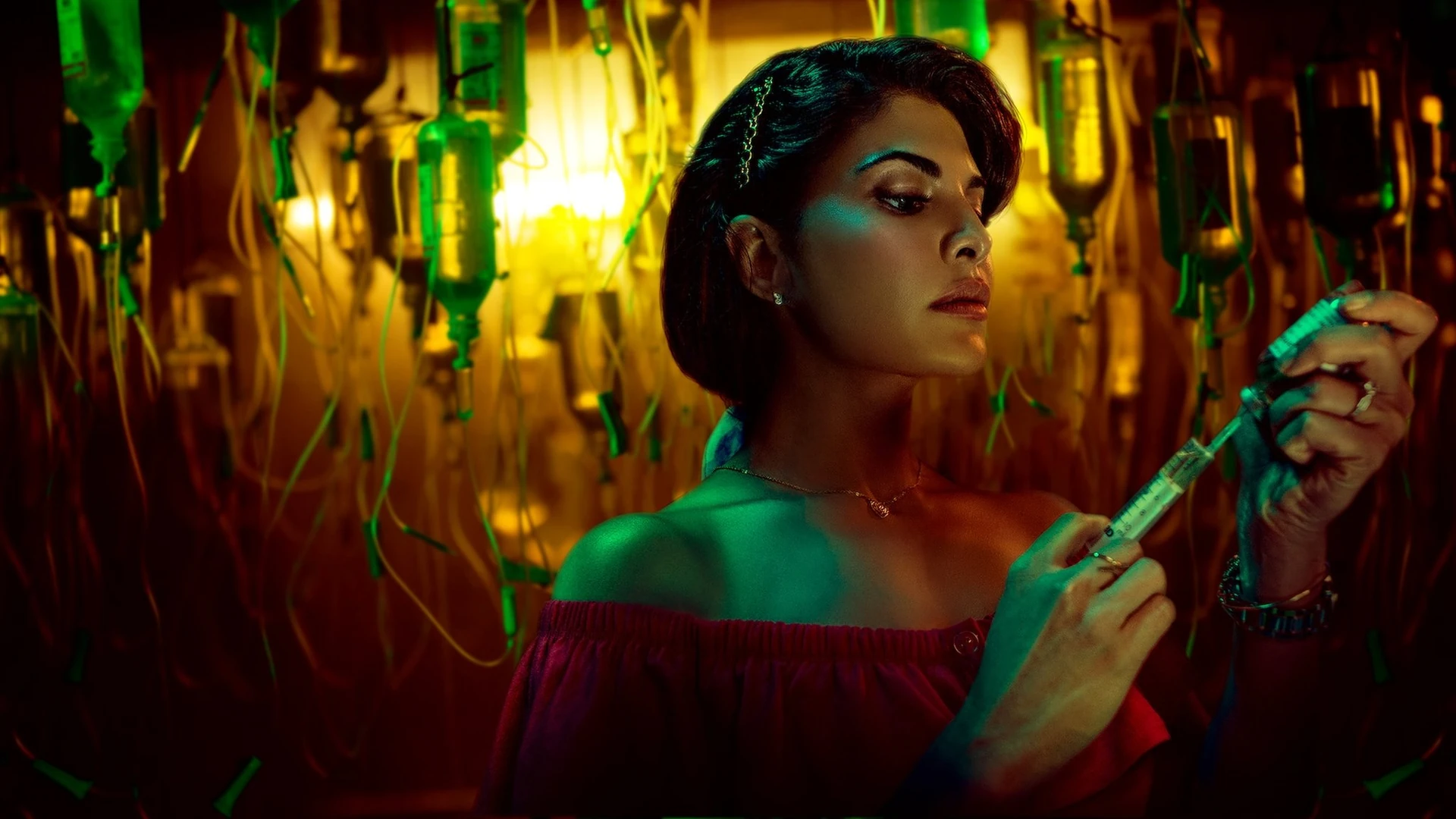
At its core, Mrs. Serial Killer asks us to confront a profoundly unsettling scenario: what if the only way to prove innocence is to commit a crime? Sona Mukherjee (Jacqueline Fernandez) is pushed to the brink when her gynecologist husband, Dr. Mrityunjoy Mukherjee (Manoj Bajpayee), is imprisoned, accused of being a serial killer targeting pregnant women. Her mission: replicate the murders to convince the police that the real killer is still at large. This premise immediately plunges us into a quagmire of moral relativism and existential choice.
The film, despite its narrative inconsistencies that critics widely lambasted for stretching credulity, forces us to consider the extreme utilitarian calculus Sona undertakes. Is it justifiable to commit evil (murder) for a perceived greater good (freeing an innocent man)? This isn’t just a simple crime thriller; it’s an exploration of how far love can warp one’s moral compass. Sona’s journey isn’t just about saving her husband; it’s about a complete redefinition of self through a grotesque act of devotion. She transforms from a seemingly ordinary wife into an active participant in the very horror she seeks to dismantle. The film’s glaring weaknesses in pacing and character development often obscure this potential depth, but the underlying question persists: what kind of person do you become when you embrace the monstrous to fight the monstrous?
Key themes, despite the film’s issues:
- Sacrifice vs. Self-Preservation: Sona’s complete abandonment of her own moral code.
- The Nature of Guilt and Innocence: How actions can blur these lines, even with pure intentions.
- Love as a Catalyst for Extremism: The dangerous precipice between devotion and obsession.
 Sona Mukherjee, caught between love and the horrifying path she must take.
When Intentions Clash with Execution
Now, let’s be frank. Mrs. Serial Killer received a largely negative critical reception. Reviewers frequently pointed to the film’s illogical plot twists, the stilted dialogue, and a pervasive sense of unintentional camp that undermined its thriller ambitions. Many found Jacqueline Fernandez’s portrayal of Sona lacking the necessary depth and gravitas for such a complex, morally compromised character, especially when depicting the darker, more unhinged aspects of her transformation. Manoj Bajpayee, a consistently brilliant actor, is somewhat sidelined, and even his formidable presence couldn’t salvage what many described as a script riddled with glaring plot holes and a distinct lack of genuine suspense.
The film’s potential lay in its audacious concept, but its execution often felt like a clumsy dance, stepping on its own feet rather than gliding towards a profound insight.
The uneven pacing—starting slow, then rushing through critical plot points—further contributed to the sense that the film didn’t quite know what it wanted to be. Was it a dark comedy? A gritty thriller? A psychological drama? This tonal confusion, along with character motivations that often felt underdeveloped or nonsensical, made it challenging for many viewers to engage with the story on anything more than a superficial level. It’s a classic case where a genuinely intriguing concept is let down by its narrative mechanics, preventing its philosophical underpinnings from truly resonating.
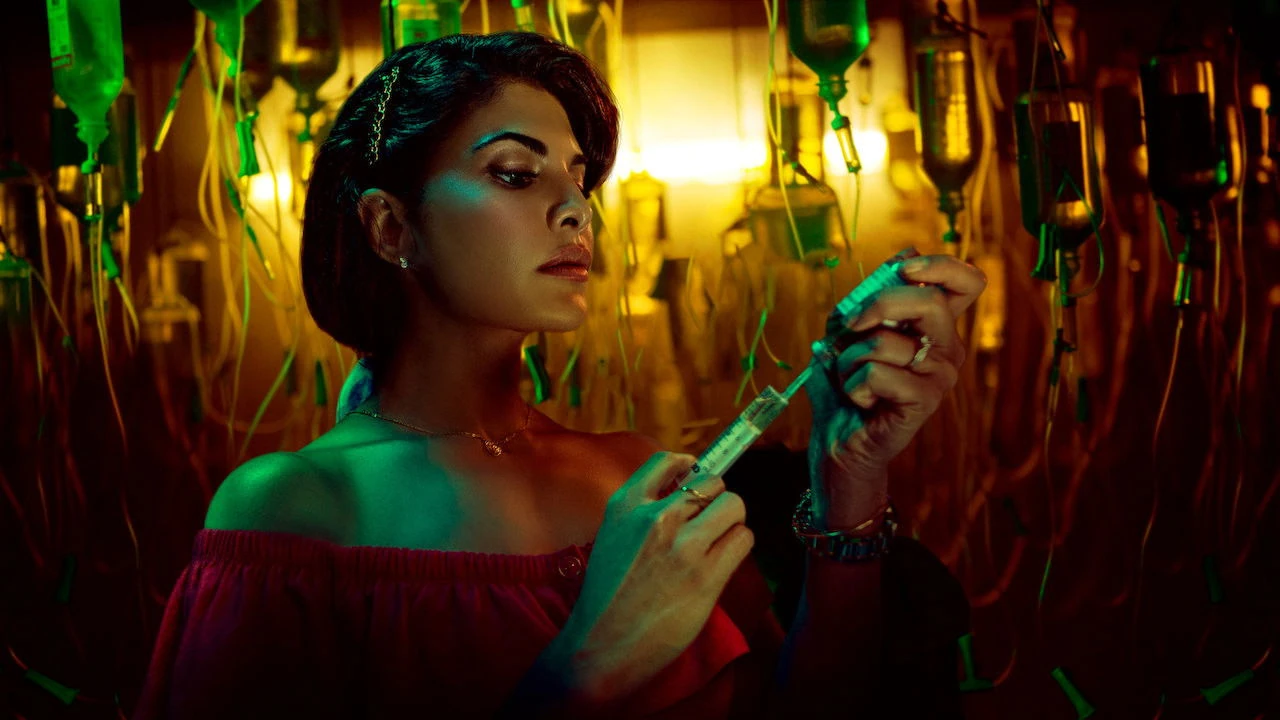 A moment of internal conflict, reflecting the film’s struggle with its own ambitious premise.
Beyond the Thriller’s Missteps: Questions of Identity and Justice
Despite its numerous shortcomings, Mrs. Serial Killer inadvertently forces us to ponder some profound questions about the nature of identity and the very fabric of justice. Sona’s attempt to become a serial killer to save her husband raises queries about performative identity – how much of who we are is defined by our actions, regardless of our true intent? Does the act itself define us, or is it the motive behind it?
The film also touches upon the fallibility of legal systems and the desperation that can drive individuals when they feel failed by conventional justice. When the system becomes a cage rather than a protector, what extraordinary measures are people willing to take? This isn’t a new question in cinema, but Mrs. Serial Killer frames it with a particularly dark, almost absurd, twist. It’s a clumsy mirror, perhaps, but one that still reflects the anxiety of living in a world where perceived innocence can lead to incarceration, and where the only path to freedom might involve embracing the very darkness one abhors.
Ultimately, Mrs. Killer may not be a cinematic masterpiece, and its flaws are undeniable. Yet, its audacious premise, however poorly executed, plants a seed of philosophical discomfort. It asks us to consider the terrifying possibility that sometimes, to prove someone’s innocence, one might have to shed their own.
“Sometimes, the most profound questions are embedded not in perfect art, but in the flawed attempts that dare to venture into the morally murky and existentially unsettling.”
Mrs. Serial Killer will likely be remembered more for its critical panning and ambitious misfires than for any cinematic brilliance. However, for those willing to look past the glaring narrative issues, it offers a peculiar, somewhat accidental, canvas for exploring the extremes of devotion, the slippery slope of moral relativism, and the desperate, often absurd, lengths to which individuals will go when faced with profound injustice. It’s a film that, despite its stumbles, still manages to provoke thought, leaving us to ponder the true cost of bending the arc of justice with one’s own bloodied hands.
Where to Watch
- Netflix
- Netflix Standard with Ads
What’s Up? explores the philosophical depths of cinema.