The Embiggening Soul: Ms. Marvel's Journey Through Identity and Inheritance
Exploring Ms. Marvel's philosophical depth, from Kamala Khan's identity struggles to inherited legacy, acknowledging its critical reception.

“We don’t need magic to change the world, we carry all the power we need inside ourselves already.” — Roald Dahl
When Ms. Marvel burst onto our screens in 2022, it brought with it a vibrant splash of color, youthful energy, and a much-needed breath of fresh air to the superhero landscape. Starring Iman Vellani as Kamala Khan, a Pakistani-American teenager in Jersey City, the series promised a delightful coming-of-age story wrapped in the familiar glow of MCU heroics. And in many ways, it delivered. Critics were largely effusive, praising its charming lead, unique visual style, and authentic cultural representation, garnering an impressive 98% on Rotten Tomatoes. Yet, beneath the critical acclaim, a more divisive conversation simmered among audiences. Some found its narrative meandering, its plot points convoluted, and its central mystery less compelling than its character work. This fascinating dichotomy makes Ms. Marvel a rich text for philosophical exploration, prompting us to look beyond the surface-level criticisms and ask: what deeper truths does Kamala Khan’s embiggening journey reveal about identity, legacy, and the sometimes-messy path to self-acceptance?
The Luminous Tapestry of Self-Discovery
At its heart, Ms. Marvel is an earnest exploration of identity. Kamala Khan isn’t just a fan-girl; she’s a walking, talking nexus of intersecting identities. She’s a daughter navigating traditional family expectations, a friend yearning for acceptance, a gamer lost in digital worlds, and a Muslim-American teenager finding her place in a diverse, often judgmental, society. Before she even gains powers, Kamala embodies the universal human struggle to reconcile who we are with who we’re expected to be. Her fantasies of Captain Marvel aren’t just childish whims; they’re a projection of an idealized self, a longing for a clearer, more powerful, more definitive identity.
The show excels in portraying this internal struggle with wit and heart, using innovative animation and on-screen graphics to visualize Kamala’s vibrant inner world. It’s a delightful, almost existential portrayal of a young mind grappling with its own becoming. However, as some audience members noted, this strong character foundation sometimes felt overshadowed by the later plot developments. The shift from an intimate, character-driven story to one involving the Clandestines and the history of Partition felt, to some, like a tonal disconnect, pulling focus from Kamala’s immediate, relatable dilemmas. While the intention was to weave her personal journey into a larger historical tapestry, the execution occasionally felt rushed, leading to an uneven pace that detracted from the initial charm.
 Kamala Khan navigating the vibrant, often overwhelming, world of high school and burgeoning powers.
Embiggening Pains: Strengths, Stumbles, and Storytelling
The series’ strengths are undeniable. Iman Vellani’s performance is nothing short of a revelation, imbuing Kamala with an infectious earnestness and relatability that anchors the entire show. The visual style, a kinetic blend of street art, text messages, and dynamic comic-book paneling, perfectly captures the whirlwind of a teenager’s imagination. And crucially, Ms. Marvel offers a nuanced, joyful, and often humorous look at Pakistani-American culture, normalizing experiences rarely seen on such a grand scale. This representation isn’t just window dressing; it’s integral to Kamala’s sense of self and community, making her journey of belonging all the more impactful.
However, many viewers and critics alike pointed to significant stumbles. The most significant point of contention was often the change in Kamala’s powers from the comics. In the source material, she can “embiggen” and stretch her body, a unique and often comical ability. In the show, her powers manifest as “hard light” constructs, which, while visually striking, felt less personal and more generic to some fans. This change, coupled with the introduction of the Clandestines – a group of interdimensional beings seeking to return home – led to a plot that critics found convoluted and, at times, underdeveloped. The narrative momentum that began with a charming high school drama often sagged when it ventured into the more fantastical and historical elements, particularly during the trip to Pakistan.
The challenge of adaptation often lies in balancing fidelity to the source with the demands of a new medium, and Ms. Marvel bravely (if imperfectly) attempted to forge its own path, sometimes at the expense of narrative clarity.
The initial episodes, with their focus on family dynamics and high school antics, resonated deeply, but as the scope widened, the show struggled to maintain its tight grip on what made Kamala so special. The CGI, while mostly effective, also drew some criticism for appearing inconsistent in certain sequences, which, for a show so reliant on visual flair, was a noticeable distraction.
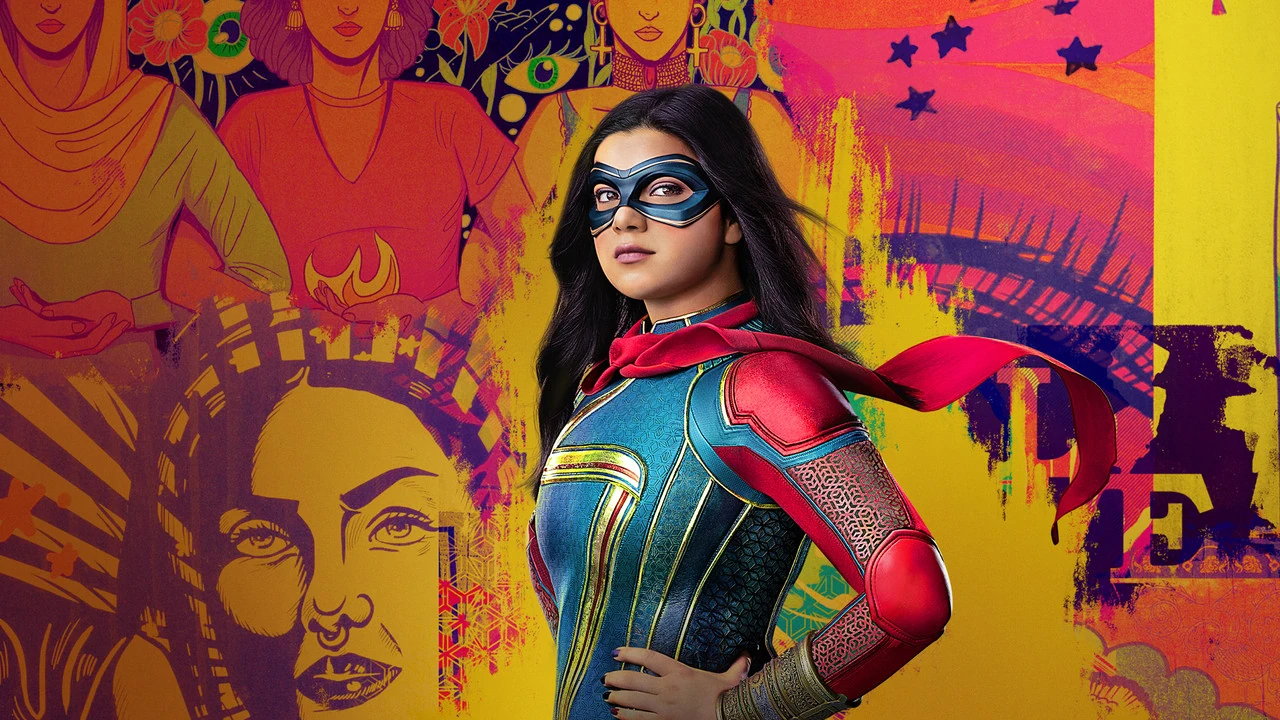 Kamala and her family sharing a meal, highlighting the cultural richness and familial bonds at the show’s core.
Echoes of Ancestry, Burdens of Becoming
Despite these acknowledged flaws, Ms. Marvel dares to ask deeper questions about legacy and inheritance. Kamala’s powers aren’t just random; they are activated by a mysterious bangle passed down through generations of her family, tying her directly to the traumatic history of the Partition of India. This shift elevates her personal journey into something far grander, connecting her individual destiny to the collective memory and unresolved pain of her ancestors. It explores how the past, even forgotten or misunderstood, continues to shape the present, bestowing not just gifts but also burdens.
What does it mean to inherit power that carries the weight of history? How do we reconcile our modern identities with the ancient echoes that flow through our bloodlines? Kamala’s journey becomes a powerful metaphor for coming to terms with one’s roots, understanding the sacrifices made, and finding strength in the stories that precede us. It suggests that heroism isn’t just about fighting villains; it’s about embracing our full, complex selves, including the parts that are ancient and unknowable. It’s a beautiful, if sometimes narratively unwieldy, exploration of how individual identity is inextricably linked to collective heritage, and how embracing both is essential for true empowerment.
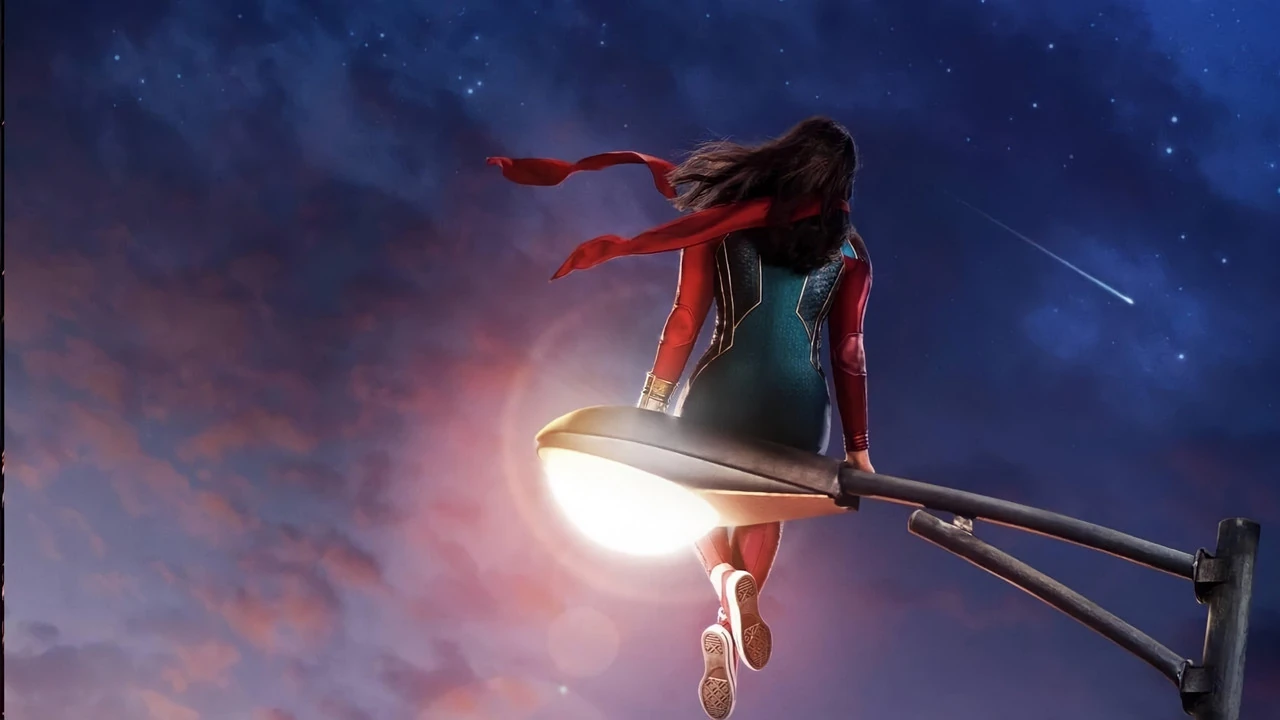 Ms. Marvel in action, her powers manifesting as luminous energy, symbolizing her inherited strength.
The legacy of Ms. Marvel is undoubtedly a mixed one for some, a vibrant triumph for others. But in its honest portrayal of a young woman grappling with identity, family, and the cosmic weight of history, it offers a compelling, if imperfect, canvas for reflection on what it truly means to become.
Ms. Marvel may have stumbled in its plotting or its power interpretations for some viewers, but its heart, its spirit, and its bold commitment to exploring the nuances of a modern, multicultural superhero are undeniable. It reminds us that the greatest powers often lie not just in what we can do, but in who we are, where we come from, and the courage it takes to embrace both. What does it mean to be a hero when your identity is your origin story?
Where to Watch
- Disney Plus
What’s Up? explores the philosophical depths of cinema.