The Kingpins and the Chasing Ghosts: Narcos' Existential Reckoning
A philosophical deep dive into Narcos, exploring its portrayal of power, moral ambiguity, and the unending cycle of violence in the drug trade.
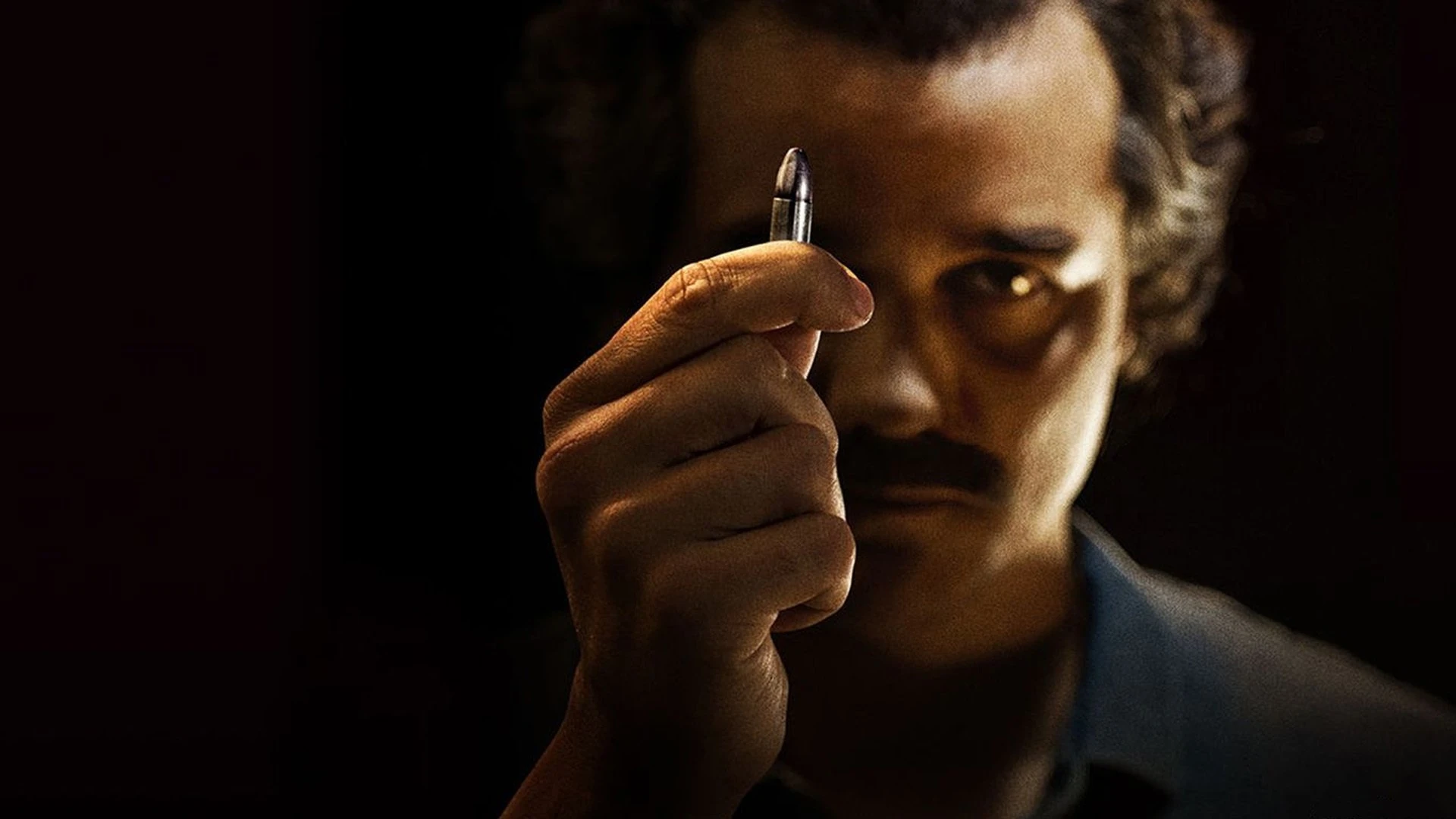
“The line between good and evil is permeable and fluid. On any given day, a person may be both.” — Philip Zimbardo
Netflix’s Narcos, which premiered in 2015, blasted onto our screens with the force of a cartel bomb, charting the brutal, labyrinthine war against Colombia’s infamously violent and powerful drug cartels. While widely lauded by critics for its gritty realism, electrifying performances, and propulsive narrative—especially the magnetic portrayal of Pablo Escobar by Wagner Moura—it wasn’t without its detractors or its lingering ethical questions. This isn’t just a historical dramatization; it’s a relentless examination of how power corrupts, how ambition devours, and how the pursuit of justice can blur the very lines it seeks to uphold. It’s a series that dares us to look into the abyss of human depravity and, in doing so, reflect on the systemic forces that perpetuate it.
The Seduction of Power and Its Price
Narcos pulls no punches in illustrating the meteoric rise and catastrophic fall of Pablo Escobar, turning him from a small-time smuggler into one of the wealthiest and most feared men in history. The series, particularly in its first two seasons, excels at showcasing the corrosive nature of absolute power. We see Escobar’s charisma, his cunning, his twisted paternalism towards his people, and his undeniable strategic brilliance. But we also witness his descent into unchecked paranoia and grotesque cruelty. This portrayal, while compelling, has always sparked a crucial debate: does the show inadvertently glamorize these figures? Critics and audiences alike grappled with this, questioning whether the compelling narrative made a monster too relatable, too human.
Yet, the philosophical depth lies not in simple glorification, but in its unflinching depiction of existential choice in a world devoid of easy answers. Escobar isn’t born a monster; he becomes one through a series of choices, each escalating in violence and moral compromise. The show presents a chilling thesis: that immense power, coupled with a belief in one’s own righteousness (however warped), can justify any atrocity. His empire, built on mountains of cocaine and rivers of blood, is a stark monument to the ultimate futility of ill-gotten gains. What good is absolute control when you live in constant fear, hunted and alone? The price, Narcos argues, is not just death, but the complete disintegration of one’s soul.
- The Myth of the Self-Made Man: Escobar’s journey challenges romantic notions of ambition, revealing the brutality required to ascend in lawless landscapes.
- The Justification of Means: A chilling exploration of how ends, however desired, can never truly justify monstrous means.
- The Illusion of Control: Despite his immense power, Escobar ultimately loses control over his life, his family, and his legacy.
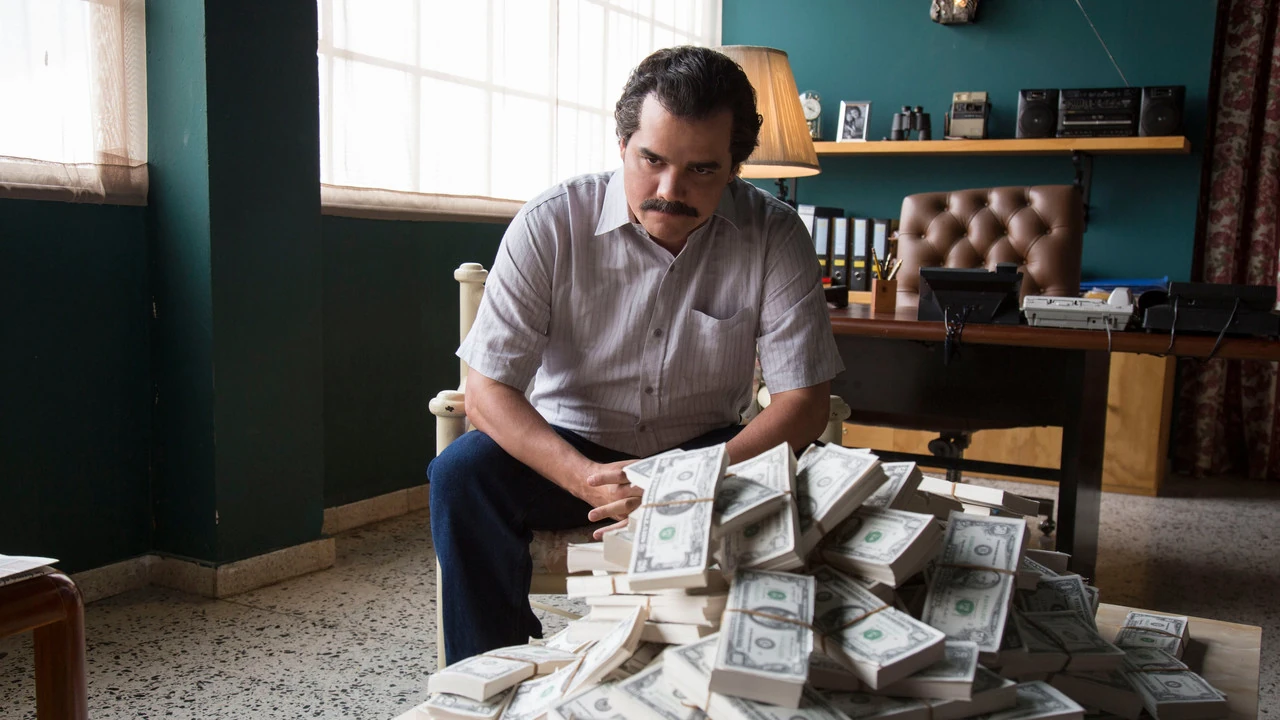 Pablo Escobar, a man who believed he could bend the world to his will, staring into an uncertain future.
Morality in the Maelstrom: The Grey Zones
Beyond Escobar, Narcos delves deep into the moral quagmire faced by everyone caught in the drug war’s orbit. The DEA agents, Steve Murphy (Boyd Holbrook) and Javier Peña (Pedro Pascal), are presented as the “good guys,” yet their journey is fraught with ethical compromises. They bend rules, work with unsavory characters, and sometimes resort to brutal tactics. This ethical relativism is one of the show’s most profound contributions, challenging viewers to question if fighting fire with fire inevitably makes one part of the conflagration.
The series’ narrative style, often driven by Murphy’s voiceover, has been a point of both praise and criticism. While some found it a convenient way to deliver exposition and historical context, others felt it could be overly didactic or occasionally distance the viewer from the raw emotions of the characters. Some reviewers noted that the pacing could occasionally feel uneven, particularly when shifting focus from the core cat-and-mouse game to broader political machinations. However, even these elements, whether intentional or not, contribute to the show’s philosophical underpinning: how do we narrate history, and whose perspective is prioritized in stories of conflict?
The true battle isn’t just against the drug lords, but against the insidious erosion of one’s own moral compass in the fight.
The constant pressure on the agents, the Colombian police, and even the politicians, forces them into a series of impossible choices. Do you negotiate with terrorists to save lives? Do you sacrifice legality for expediency? The show refuses to provide easy answers, instead holding up a mirror to the complex, often contradictory demands of justice in a truly lawless environment. Pedro Pascal, in particular, embodies this internal conflict with a weary gravitas, his Peña a man perpetually walking the tightrope of his own conscience.
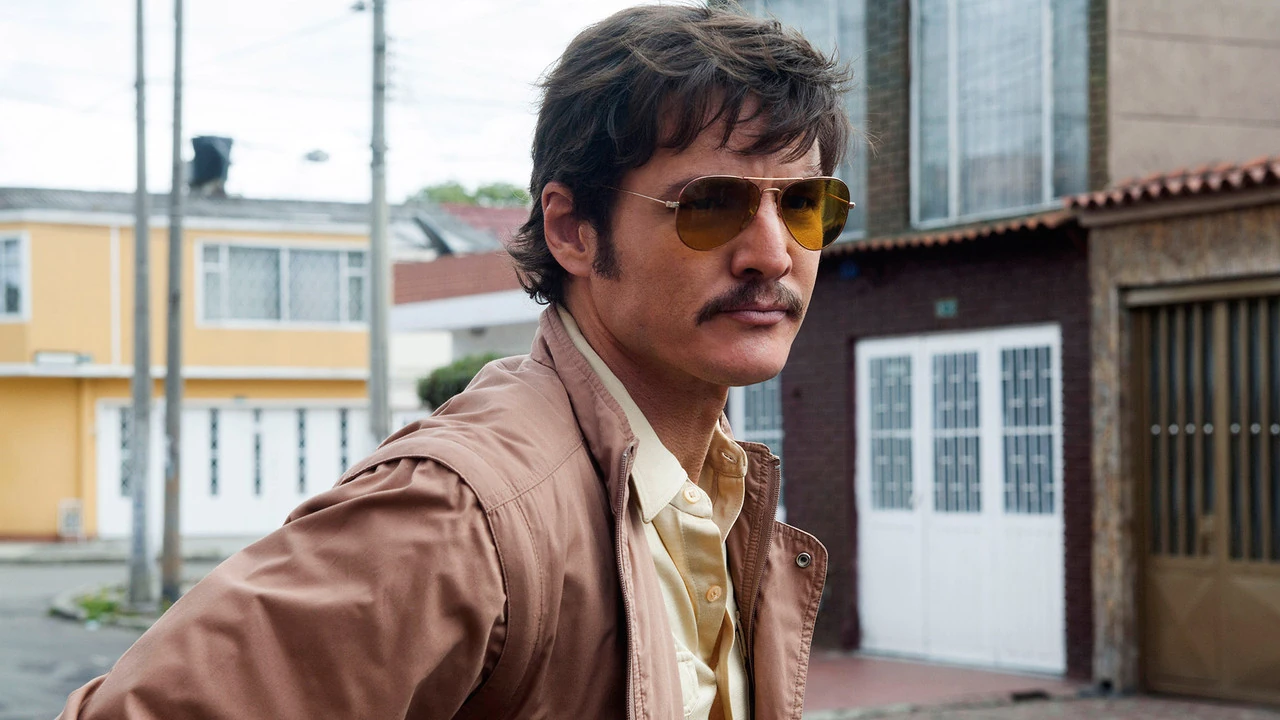 DEA agents Peña and Murphy navigating the dangerous streets, symbols of a fraught justice system.
The Unending Echo: Confronting Systemic Evil
One of Narcos’ most sobering philosophical messages is the seemingly cyclical nature of violence and corruption. As one drug kingpin falls, another rises to take his place. The series progresses beyond Escobar, exploring the Cali Cartel and other factions, demonstrating that the problem isn’t just one man, but a deeply entrenched system. This raises profound questions about the illusion of control and the limits of individual heroism against vast, systemic evil.
The show makes it clear that the drug trade isn’t merely a criminal enterprise; it’s a socio-economic and political phenomenon with global reach. It exposes the complicity of international powers, the desperate poverty that fuels participation, and the insatiable demand from consumers. This moves beyond simple good-vs-evil narratives into a more nihilistic contemplation: can this war ever truly be won? Or are we condemned to an endless, bloody stalemate? The archival footage interspersed throughout the series grounds this philosophical despair in brutal reality, reminding us that these aren’t just characters, but echoes of real lives lost and futures stolen.
- The Hydra Effect: Cut off one head, and two more grow in its place. The persistent challenge of eradicating a demand-driven illicit economy.
- Global Interconnectedness: How the choices made in one part of the world (e.g., drug consumption) have devastating consequences in another (e.g., cartel violence).
- The Weight of History: Narcos subtly argues that history isn’t just a record of events, but a living, breathing force that continues to shape our present and future, often repeating its darkest chapters.
 A visual metaphor for the endless cycle of violence and power struggles in the drug trade.
The true horror isn’t just the violence on screen, but the chilling realization that the war continues, ever-evolving, ever-consuming.
Narcos is far more than a crime procedural or a historical drama. Despite its moments of historical simplification or narrative convenience, which some critics pointed out, it’s a raw, intense, and deeply unsettling exploration of humanity’s capacity for both monumental evil and desperate resilience. It asks us to consider not just who the monsters are, but what conditions create them, and whether our attempts to defeat them inevitably trap us in the same morally compromised landscape. It leaves us with a haunting question: in a world where the lines are constantly blurred, can anyone truly escape the gravitational pull of the cartels, or the deeper, darker forces they represent?
Where to Watch
- Netflix
- Netflix Standard with Ads
What’s Up? explores the philosophical depths of cinema.