The Unsettling Glare of Ambition: Nightcrawler's Nihilistic Mirror
Exploring Nightcrawler's chilling portrayal of ambition, media ethics, and the disturbing reflection of success at any cost in our modern world.
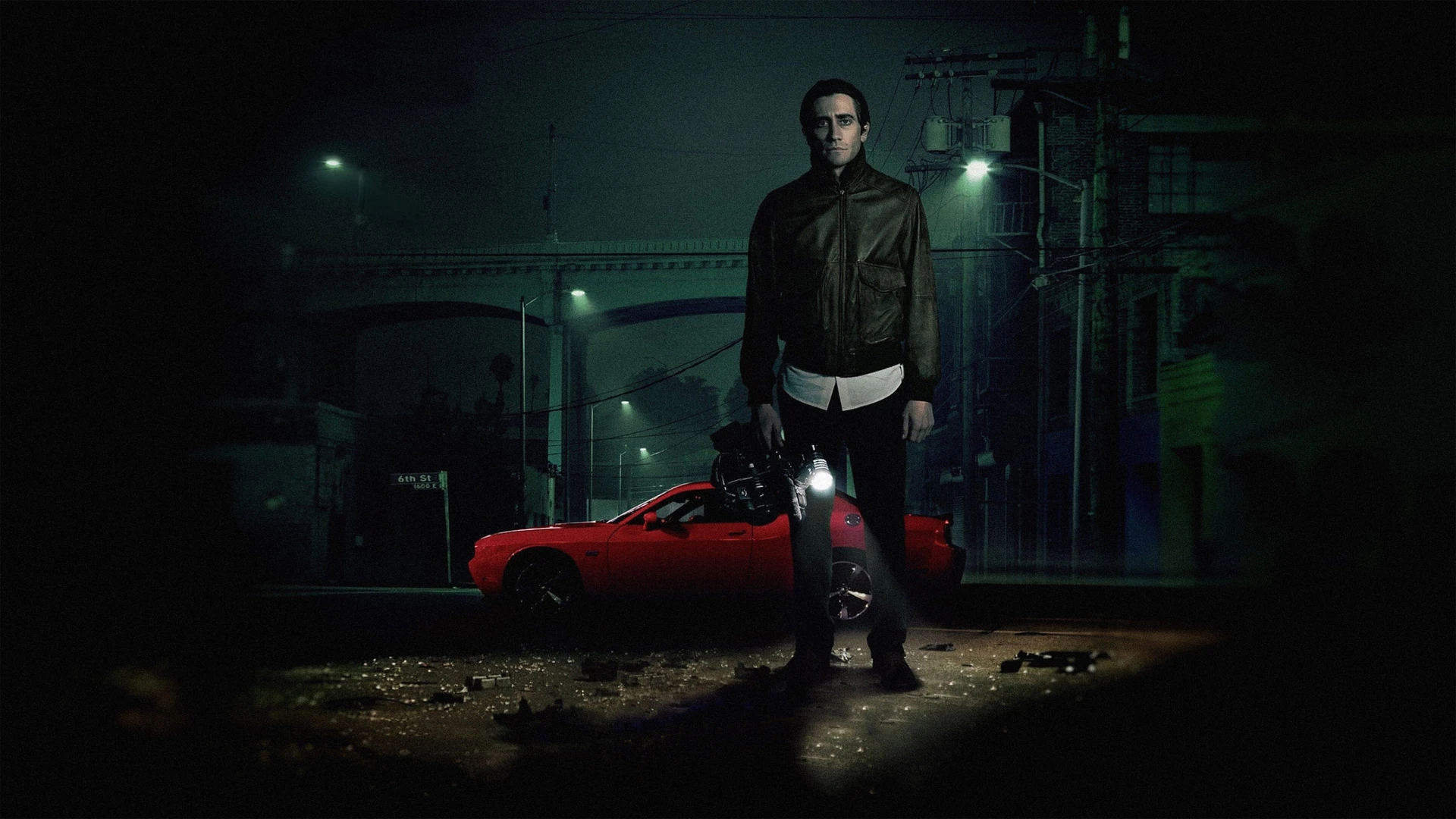
“The world, as it is presented to us, is a spectacle, a drama. And we are its eager, voyeuristic audience, hungry for the next scene.” — Guy Debord, The Society of the Spectacle
It’s rare for a film to elicit a sense of profound unease that lingers long after the credits roll, not just from its graphic content, but from its insidious philosophical implications. Dan Gilroy’s 2014 thriller Nightcrawler doesn’t just scare you; it holds up a truly ghastly mirror to the relentless pursuit of success in a hyper-capitalist, media-saturated world. Critically, the film was an undeniable triumph, boasting a staggering 95% on Rotten Tomatoes and a Metascore of 76, with critics universally praising Jake Gyllenhaal’s chilling, transformative performance and Gilroy’s sharp, unflinching script. Yet, for all its accolades, the film is deeply unsettling, almost divisive in the emotional and ethical questions it forces us to confront, leaving many viewers profoundly disturbed by its stark, amoral vision.
The Alchemist of Ambition in the Digital Wild West
At its core, Nightcrawler presents us with Louis Bloom (Jake Gyllenhaal), a character who epitomizes the dark side of the self-made man archetype. Lou is an unblinking, unfeeling enigma, a creature of pure, calculating ambition. Desperate for work, he stumbles upon the lucrative, morally ambiguous world of L.A. freelance crime journalism, or “nightcrawling,” where he captures raw, often horrific footage of accidents and violence for hungry local news stations. What makes Lou so terrifying isn’t just his lack of empathy, but his chillingly rational and almost nihilistic approach to life. He consumes self-help gurus and business aphorisms like oxygen, internalizing them into a twisted philosophy that justifies any action in the name of professional advancement.
Lou’s journey isn’t a descent into madness; it’s an ascent into a perverse form of self-actualization. He embodies the extreme outcome of a society that prizes individual initiative and ruthless efficiency above all else. His meticulous planning, his manipulation of others, his eloquent yet robotic pronouncements on professionalism – they’re all horrifyingly effective. Some critics, while praising Gyllenhaal’s performance, did point out that Lou’s almost supernatural lack of a moral compass could feel a little too archetypal, almost a caricature of evil. Yet, for many, this very extremity serves to underscore the film’s point: that the system itself, the demand for content, the commodification of suffering, creates the perfect ecosystem for a predator like Lou to not just survive, but to thrive. He is the ultimate entrepreneur, devoid of the ethical baggage that might slow a lesser man down.
 Lou Bloom, a figure of unsettling focus, always watching, always recording, embodying the detached observer.
The Gaze of the Ghoul: Media, Spectacle, and the Consumer
Nightcrawler is, without a doubt, a searing indictment of modern news media. It pulls back the curtain on the adage “if it bleeds, it leads,” showing us the insatiable appetite for sensationalism that drives ratings and, by extension, shapes our perception of reality. Nina Romina (Rene Russo), the veteran TV news director who becomes Lou’s enabler, represents the institutional desperation that fuels this cycle. She articulates the grim truth: “Think of our top story tonight as a screaming woman running down the street with her throat cut.” The film argues that news isn’t just reported; it’s curated, sensationalized, and sometimes, as Lou proves, actively influenced to maximize its shock value.
The film forces us to confront an uncomfortable truth: we, the audience, are complicit. Our hunger for the dramatic, the tragic, the immediate, creates the demand that Lou so expertly fulfills.
The film’s pacing, particularly in its escalating intensity, was largely lauded, though some viewers expecting a more traditional action thriller might have found the character study aspects initially slow before the explosive climax. However, this deliberate build-up is crucial. It slowly immerses us in Lou’s world, making us witnesses to his increasingly unethical acts, blurring the line between observer and participant right alongside him. The film asks us to examine our own role in the spectacle economy. When we tune into the news, are we seeking information or entertainment? How much of the suffering we consume is genuine empathy, and how much is a morbid curiosity, a detached voyeurism? This is where the film’s commentary hits hardest, making us question our own ethical consumption of media.
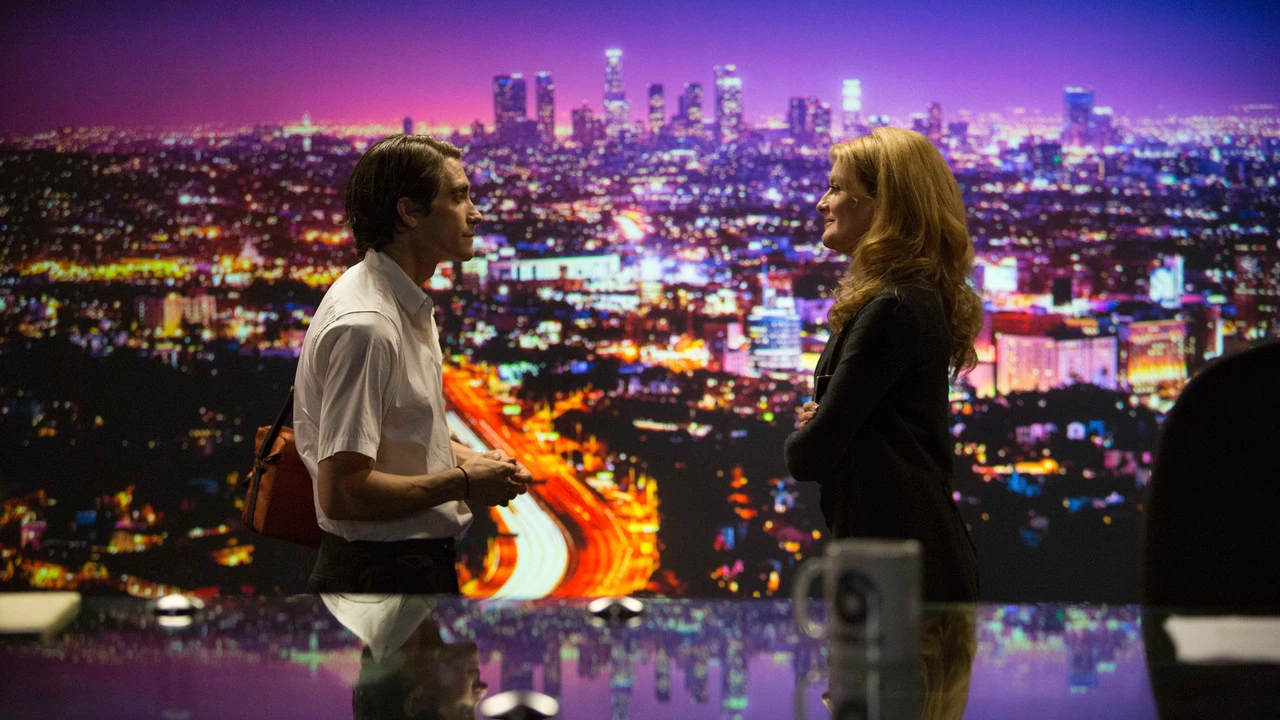
 Nina Romina, caught in the moral quagmire of news ratings, a reflection of institutional compromise.
Beyond the Surface: Existential Questions of Success and Self
Beneath the thrilling chase sequences and the grim social commentary, Nightcrawler delves into profound existential territory. Lou Bloom isn’t just a villain; he’s a frightening embodiment of radical self-reliance taken to its most extreme and disturbing conclusion. He has no past, no family, no apparent emotional attachments – he exists purely as a function of his ambition. This void of empathy is not a character flaw in his eyes; it’s a strategic advantage. He has engineered himself to succeed in a system that rewards calculated ruthlessness.
The film challenges our very definition of success. Lou achieves everything he sets out to do: financial independence, professional recognition, control over his environment. He becomes the “star of his own story,” as the plot overview states, but at what cost to his soul, or indeed, to the souls of those around him? This isn’t just about moral corruption; it’s about the existential loneliness of an individual who has systematically shed every human connection in favor of pure, unadulterated gain.
Nightcrawler ultimately asks: in a world where information is power and image is everything, what does it mean to be truly human, and how easily can that humanity be shed in the relentless pursuit of an increasingly distorted version of the American Dream?
The film’s ending, far from offering any redemption or comeuppance, solidifies Lou’s victory, leaving us with a profoundly unsettling sense of injustice. While some audiences found this lack of a moral resolution unsatisfying, it’s precisely this refusal to offer comfort that elevates Nightcrawler from a mere thriller to a piece of chilling philosophical art. It forces us to grapple with the uncomfortable truth that sometimes, the “bad guy” wins, especially when the system is designed to reward their particular brand of amoral efficiency.
 Lou’s unwavering gaze through the camera lens, symbolizing his detachment and predatory focus.
“The true horror isn’t just the monster on screen, but the uncomfortable realization that he might be a distorted reflection of ourselves, or the society we inhabit.” — Unattributed critic
Nightcrawler is a film that demands to be discussed, debated, and dissected. While its bleakness and the sheer amorality of its protagonist might be a bitter pill for some, its critical acclaim is well-deserved for its masterful execution and its unflinching gaze into the darker corners of human ambition and media ethics. It doesn’t offer easy answers or comforting resolutions, instead leaving us with a lingering sense of disquiet about the values we truly chase and the cost of the spectacle we so eagerly consume. What kind of society are we building when a man like Lou Bloom can not only survive, but thrive, at the expense of our shared humanity?
What’s Up? explores the philosophical depths of cinema.