The Weight of Broken Worlds: Finding Purpose in Rebel Moon's Flawed Canvas
Exploring the philosophical underpinnings of Zack Snyder's Rebel Moon, acknowledging its critical reception while seeking deeper meaning in its themes of rebellion and identity.
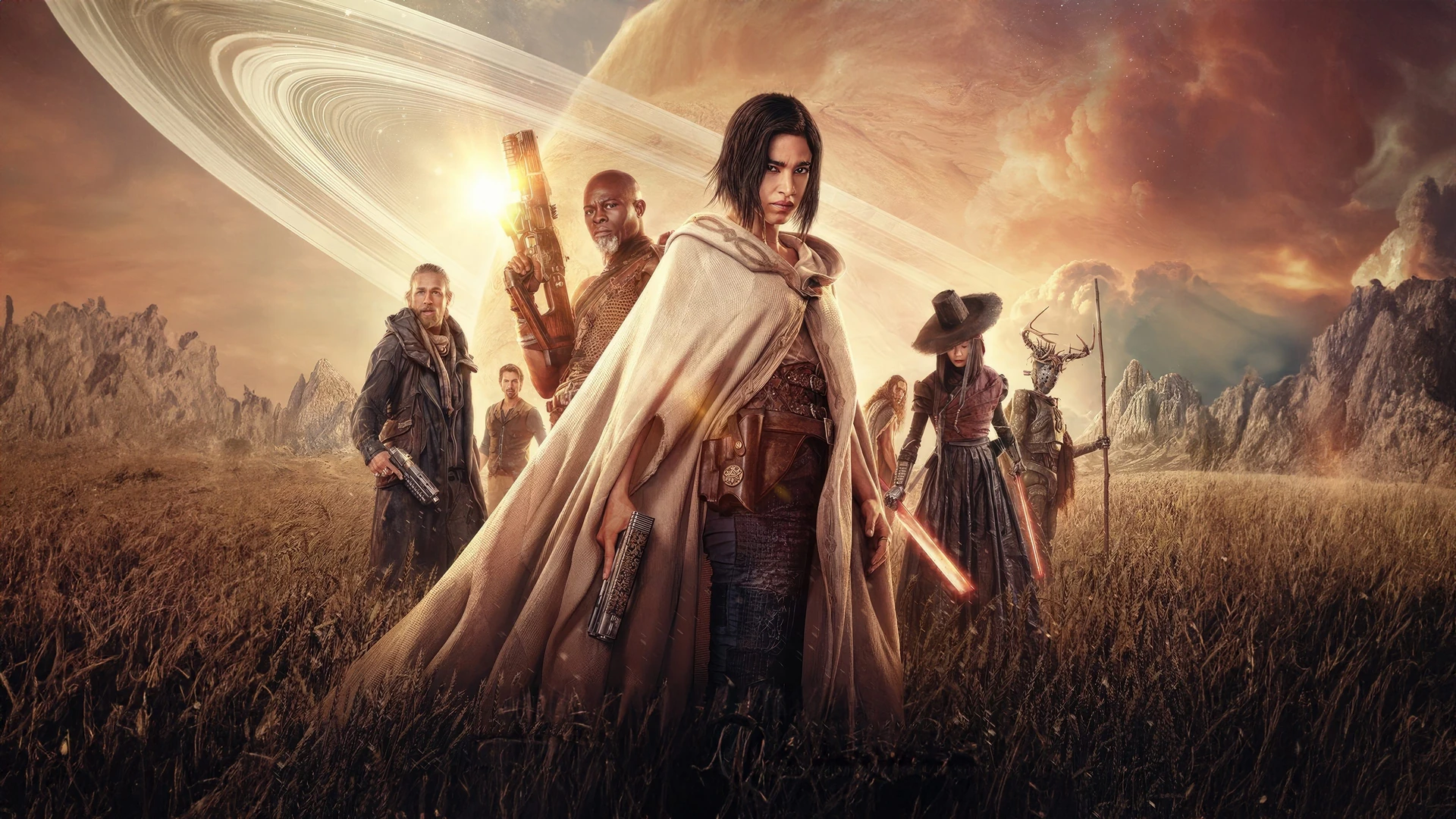
“Even a broken clock is right twice a day. And even a flawed rebellion can illuminate profound truths about the human spirit.”
Let’s be upfront: Rebel Moon - Part One: A Child of Fire isn’t going to be gracing many “best of” lists for 2023. Critics, by and large, panned Zack Snyder’s latest cosmic epic, with its Rotten Tomatoes score hovering dismally in the low twenties, and Metacritic’s aggregate not faring much better. Many viewers found it derivative, narratively disjointed, and emotionally inert. And honestly, it’s tough to argue with a lot of that assessment. The film often feels like a hastily assembled pastiche of beloved sci-fi and fantasy tropes, stitched together with Snyder’s signature slow-motion spectacle. Yet, even in its undeniable imperfections, Rebel Moon dares to grapple with themes that are, at their core, deeply human and existentially resonant. As philosophers of film, our task isn’t just to judge artistic success, but to uncover the questions art, even flawed art, compels us to ask.
The Echoes of Empire and the Call to Rebellion
The premise of Rebel Moon is as old as storytelling itself: a quiet, vulnerable community threatened by an oppressive empire, forcing an outsider to rise and lead a desperate fight. Here, it’s the ‘Motherworld’ and its ruthless military, the Imperium, bearing down on the agrarian moon of Veldt. This setup immediately plunges us into a world defined by power dynamics and the struggle for autonomy. Critics often pointed to the film’s reliance on familiar archetypes and its overt inspirations (think Star Wars meets Seven Samurai). And yes, the narrative journey to assemble a team of disparate warriors can feel rushed and underdeveloped, hindering genuine emotional investment in the characters.
But beneath the surface-level familiarity, there’s a potent philosophical undercurrent. The Motherworld represents an almost absolute, dehumanizing force, demanding fealty and resources without question. It strips away identity, commodifies life, and enforces its will through violence. This is a classic depiction of totalitarianism, prompting us to reflect on:
- The nature of freedom: What does it mean to be truly free when your very existence is dictated by an unseen, distant power?
- The cost of peace: Is a life lived in quiet subjugation truly peaceful, or is it merely a prolonged surrender?
- The spark of resistance: What ignites the will to fight back when the odds are overwhelmingly stacked against you?
Kora (Sofia Boutella), our mysterious protagonist, embodies this last point. Her past, slowly revealed, ties her directly to the Motherworld’s machinery, adding layers to her reluctance and eventual resolve. She’s not just an outsider; she’s an insider who defected, a classic anti-hero arc that explores guilt, redemption, and the burden of past choices. The film, despite its narrative stumbles, effectively sets up this core conflict, reminding us that the fight for freedom often begins with an internal reckoning.
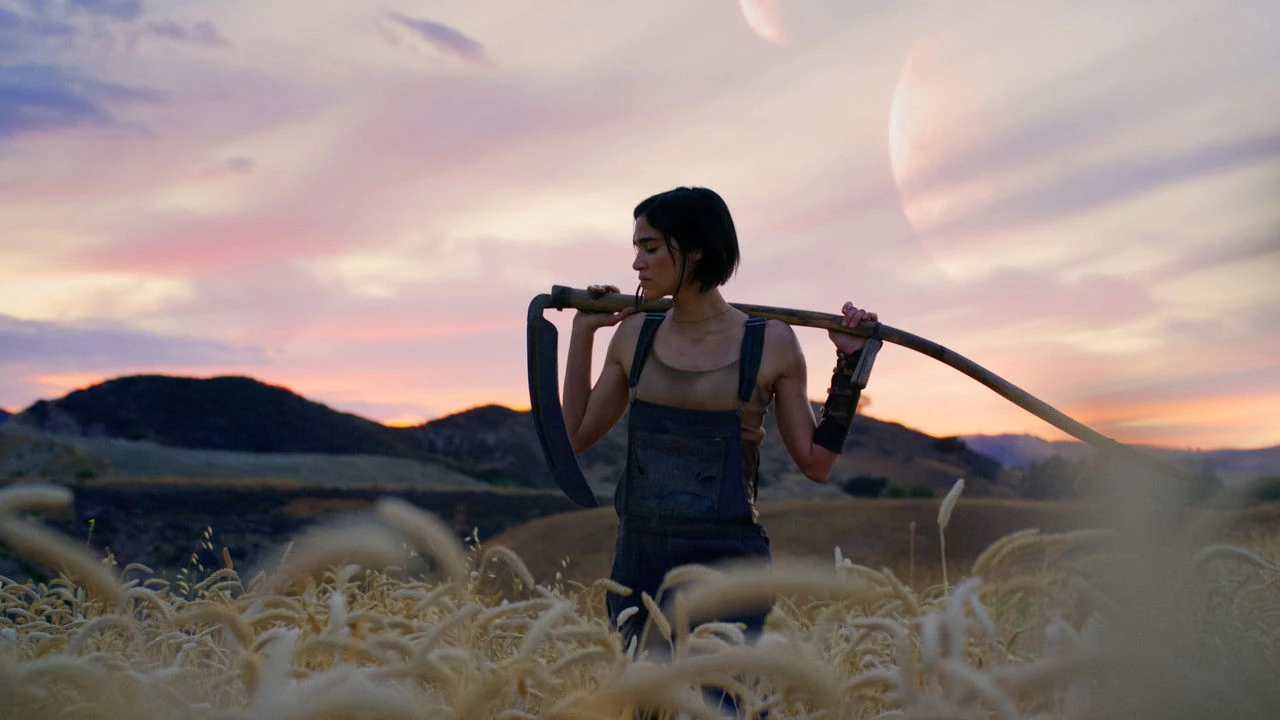 Kora, haunted by her past, begins to embrace her destiny as a rebel leader.
The Scars of Storytelling: Acknowledging the Cracks
Let’s not shy away from the hard truths. The film’s weaknesses are undeniable, particularly its pacing, which many critics found uneven—alternating between rushed character introductions and drawn-out action sequences. The ensemble cast, featuring talents like Djimon Hounsou and Bae Doona, often feels underutilized, serving more as plot devices than fully fleshed-out individuals. Ed Skrein’s villain, Admiral Noble, chews scenery with relish, but his motivations rarely extend beyond generic cruelty. This lack of narrative refinement means that the philosophical questions the film wants to ask often get lost in the noise.
The most profound art isn’t always flawlessly executed; sometimes, its very flaws highlight the struggle inherent in the human attempt to create meaning.
Yet, even amidst these critical legitimate criticisms, Snyder’s visual prowess occasionally offers glimpses of profundity. His ability to craft striking tableaus and kinetic action is still present, even if it sometimes overshadows the story. There are moments of stark beauty and visceral impact, particularly in the quieter character beats or the sheer scale of the world-building, however superficial it might feel. We see the potential for a richly imagined universe, even if Part One only sketches its outlines. The film’s ambitious scope, despite its uneven delivery, is a testament to the enduring human desire for grand narratives, for stories that transcend our mundane existence and explore epic struggles of good versus evil, freedom versus oppression. The philosophical weight isn’t always in the dialogue or explicit themes, but sometimes in the sheer guts to attempt such a sweeping saga, even if it falters.
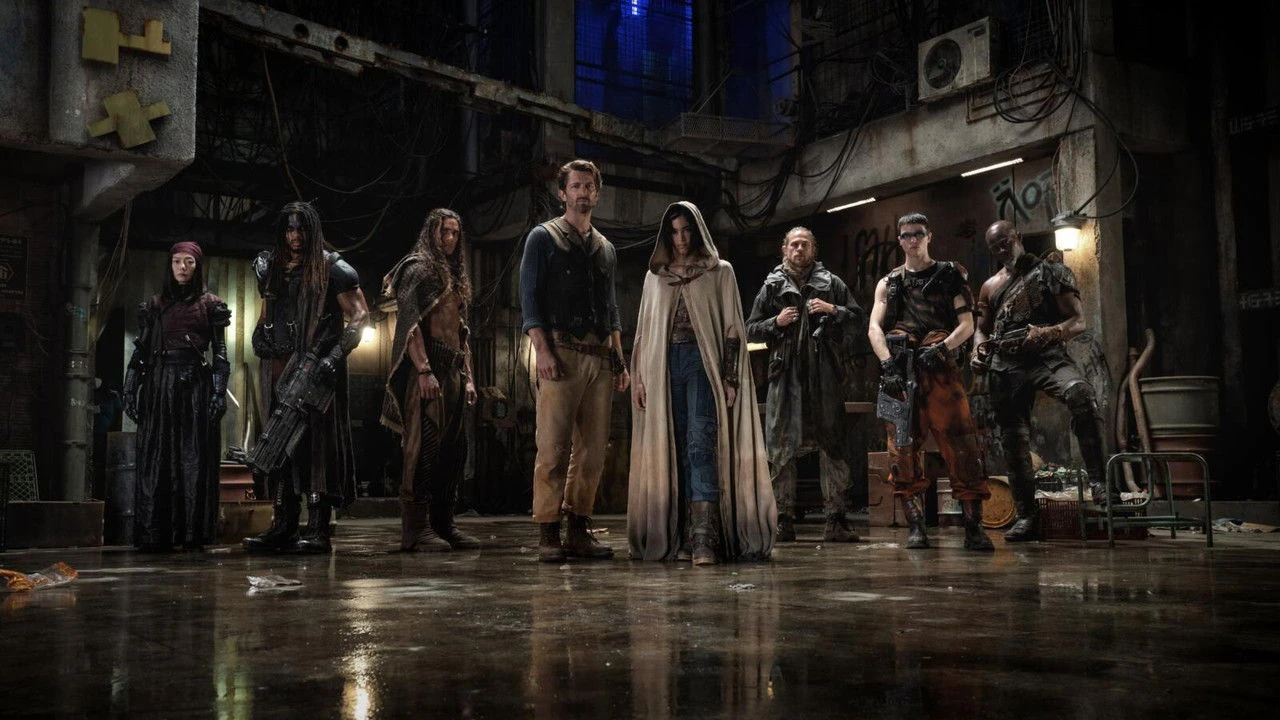
 The diverse band of rebels, united by a common cause against overwhelming odds.
Beyond the Dust and Spectacle: Finding Meaning in the Murk
Despite its narrative shortcomings and the barrage of negative reviews, Rebel Moon does, perhaps inadvertently, poke at some deeper existential concerns. The film asks us to consider what it means to live a life of purpose when the world around you is inherently unjust. For the farmers of Veldt, purpose is simple survival and sustenance. For Kora, it’s a desperate attempt at anonymity, a flight from a past she cannot escape. For the various rebels she recruits, purpose is found in defiance, in the act of standing up, even if it means certain death.
This brings us to the core of existential agency. When confronted with overwhelming power, what choice do we truly have? Rebel Moon suggests that even a small act of rebellion, a refusal to comply, can be a radical affirmation of one’s own being. The film, in its own way, explores:
- The burden of memory: Kora’s past defines her present, trapping her in a cycle of guilt until she chooses to break it.
- The search for belonging: Each character Kora recruits is, in some way, an outcast, seeking a new purpose or a family of choice.
- The nature of sacrifice: The decision to fight against the Imperium is a decision to embrace likely death, highlighting the profound act of self-giving for a greater cause.
These aren’t new questions, certainly, but Rebel Moon couches them in a fantastical, brutal setting that forces us to confront them anew. It’s a reminder that even when the storytelling feels clumsy, the foundational human experiences of fear, hope, loss, and the will to survive can still resonate. The film, for all its visual bombast, at its heart, is about finding a reason to fight when everything tells you to surrender. It’s about the small, quiet acts of courage that eventually coalesce into a revolution, even if its telling is far from perfect.
 The cold, unyielding gaze of Admiral Noble, representing the oppressive force of the Motherworld.
“Sometimes, the most poignant reflections emerge not from perfect narratives, but from those that bravely, if imperfectly, dare to explore the darkness within and the light that struggles against it.”
Rebel Moon - Part One: A Child of Fire is a messy, ambitious beast. It’s a film that demands a generous philosophical gaze to look beyond its often-cited flaws and truly engage with its themes. While critics and audiences largely found it lacking in originality and emotional depth, it undeniably positions itself as a canvas for exploring the enduring human struggle against oppression, the complex journey of redemption, and the existential weight of choosing to fight for freedom. It asks us, in its own way, what we are willing to risk when our very humanity is threatened. And sometimes, asking the right questions, even clumsily, is a philosophical achievement in itself.
Where to Watch
- Netflix
- Netflix Standard with Ads
What’s Up? explores the philosophical depths of cinema.