Rogue One: Echoes of the Absurd, The Genesis of Hope
Rogue One delves into existential sacrifice, the moral complexities of rebellion, and the profound, melancholic birth of hope in the face of absolute despair.
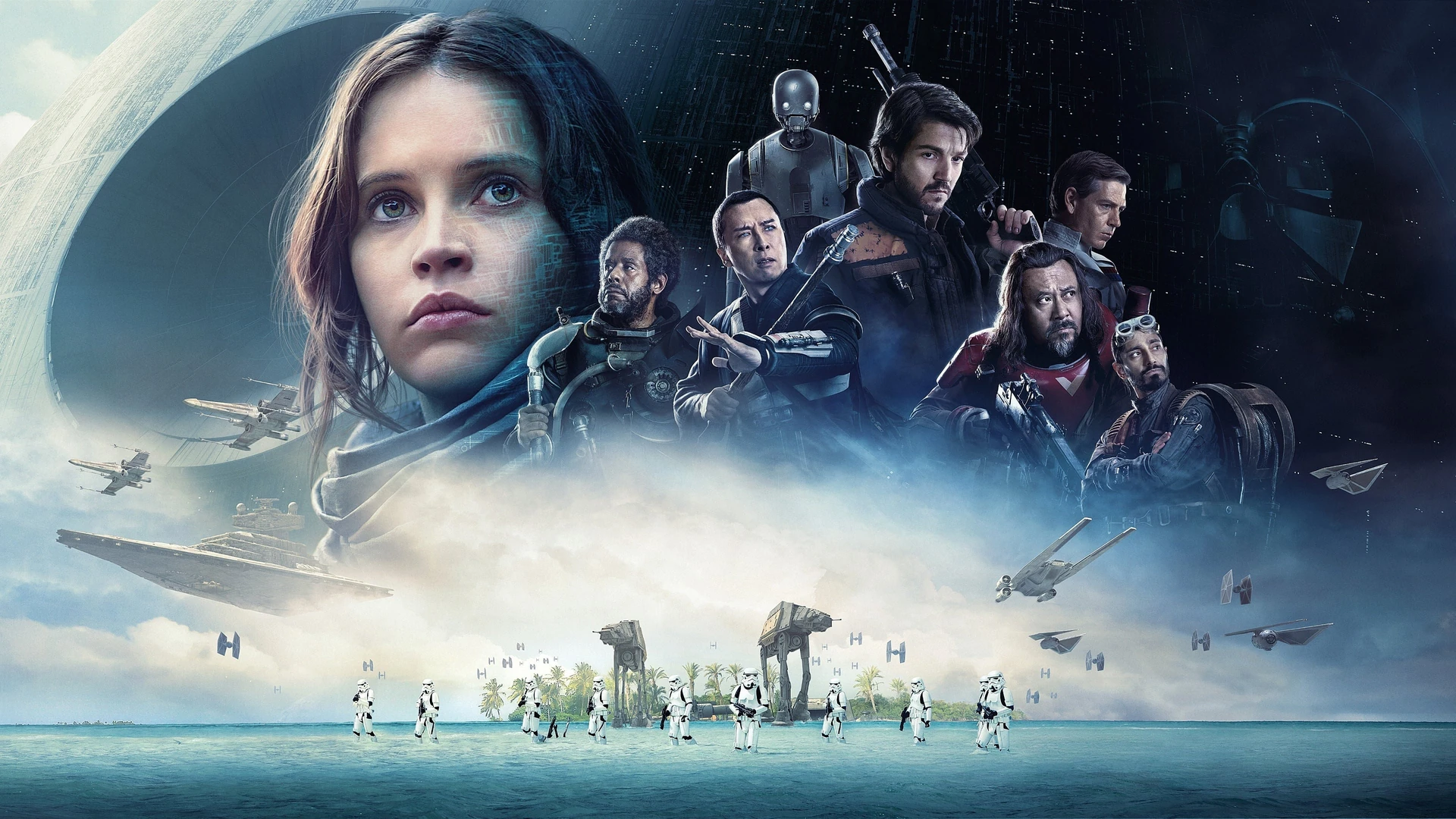
“The only way to deal with an unfree world is to become so absolutely free that your very existence is an act of rebellion.” — Albert Camus
From the distant reaches of a galaxy far, far away, Rogue One: A Star Wars Story (2016) emerges not as a mere prequel or a simple action-adventure, but as a stark, philosophical meditation on the nature of rebellion, the unbearable weight of sacrifice, and the fragile, yet unyielding, genesis of hope. Director Gareth Edwards strips away the mystical grandeur often associated with the Star Wars saga, presenting instead a brutal, terrestrial realism that grounds its cosmic struggle in deeply human terms. This is a narrative unburdened by destiny or prophecy, where heroism is forged in the grimy crucible of desperation and defiance, offering a profoundly melancholic yet ultimately uplifting exploration of what it truly means to fight for a cause greater than oneself.
The Weight of the Unsung: Sacrifice as Praxis
Rogue One is fundamentally a film about sacrifice, not as a grand, heroic gesture to be celebrated, but as a grim, necessary act of praxis. Its characters, from the haunted Jyn Erso (Felicity Jones) to the morally compromised Cassian Andor (Diego Luna), are not chosen ones, but desperate individuals who choose to act. Their mission to steal the Death Star plans isn’t about personal glory or fulfilling a grand destiny; it is a meticulously planned, almost suicidal, undertaking to provide the galaxy with a mere chance at survival.
The philosophical core of Rogue One lies in its portrayal of the existential choice to resist an overwhelming, seemingly invincible power. The Empire, with its planet-destroying superweapon, represents a form of nihilistic oppression, a force that seeks to erase all dissent through absolute terror. Against this backdrop, the actions of the Rogue One crew become a powerful affirmation of meaning in the face of the absurd. Their rebellion is not just political; it is an ontological rebellion – a refusal to accept the imposed meaninglessness of their existence under tyranny.
Key themes to explore:
- Existential Freedom — The choice to act, even unto death, as the ultimate expression of freedom in an unfree world.
- Collective Sacrifice — The film eschews individual hero worship, emphasizing the countless, often anonymous, lives given for a common, uncertain goal.
- The Moral Calculus of War — The uncomfortable truths about what must be done, and who must do it, for a just cause.
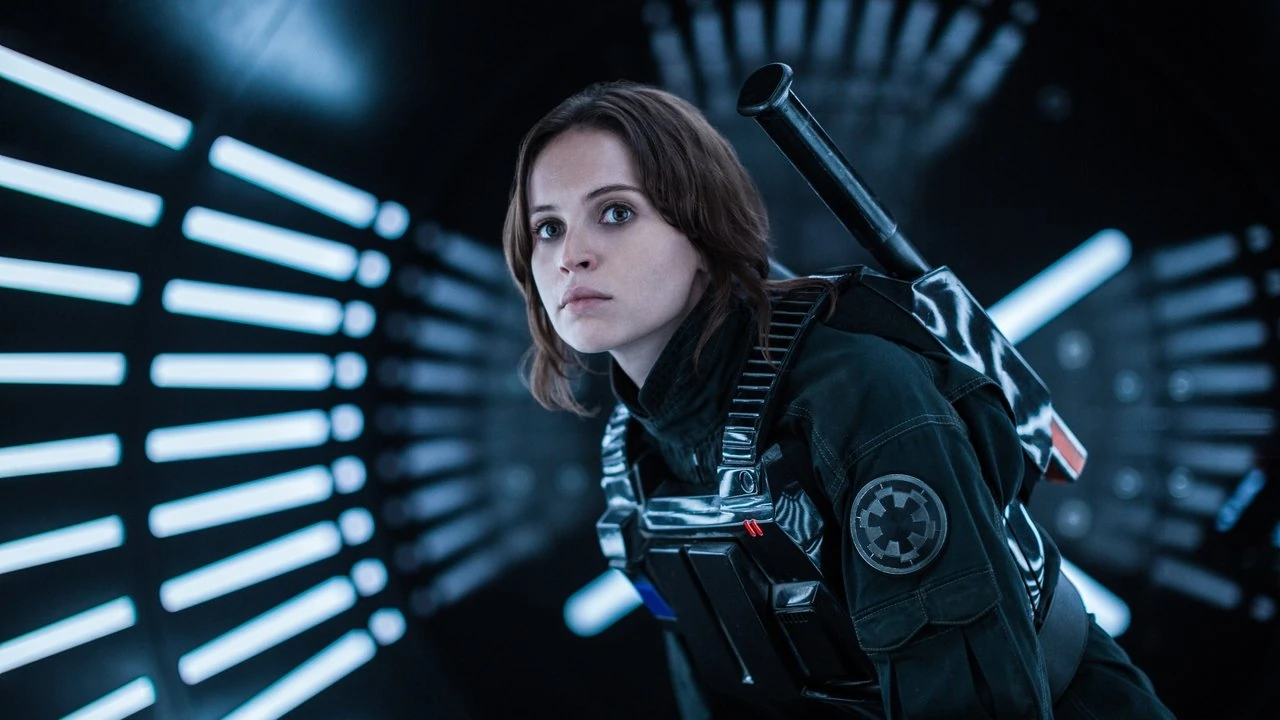 A desperate trio, on the precipice of their ultimate, selfless act.
Shadows of Virtue and Necessity
The characters of Rogue One are not archetypal heroes; they are stained by their pasts and burdened by the ethical dilemmas of their fight. Cassian Andor embodies the moral ambiguity inherent in prolonged resistance. He has “done terrible things for the Rebellion,” a chilling admission that forces us to confront the uncomfortable truth that even noble causes can demand ignoble acts. His journey is one of redemption, not from inherent evil, but from a weariness that threatens to extinguish his spirit.
This is where we discover the true weight of choice — not in the outcome, but in the becoming.
Jyn Erso’s transformation is equally compelling. Initially cynical and detached, a survivor shaped by abandonment and loss, she slowly finds her voice and purpose. Her arc is a testament to the power of personal conviction to ignite collective will. Her final, impassioned plea for rebellion is not just a rallying cry; it is a philosophical declaration that hope, though fragile, must be actively sought and fiercely protected.
Even the ancillary characters contribute profoundly to this ethical tapestry:
- Chirrut Îmwe (Donnie Yen): The blind Guardian of the Whills, whose unwavering faith (“I am one with the Force, the Force is with me”) is not a passive belief but an active philosophy of mindfulness and spiritual resilience. His actions prove that faith can be a weapon against despair.
- Baze Malbus (Jiang Wen): The pragmatic, heavily armed protector, who has lost his faith but not his loyalty. He represents the cynicism born of experience, yet ultimately chooses to stand by his friend, highlighting the strength of human bonds even in the face of existential dread.
- K-2SO (Alan Tudyk): The reprogrammed Imperial droid, whose sardonic wit belies a profound capacity for loyalty and self-sacrifice. His journey challenges our notions of sentience and free will, proving that even a machine can embrace the ultimate act of defiance.
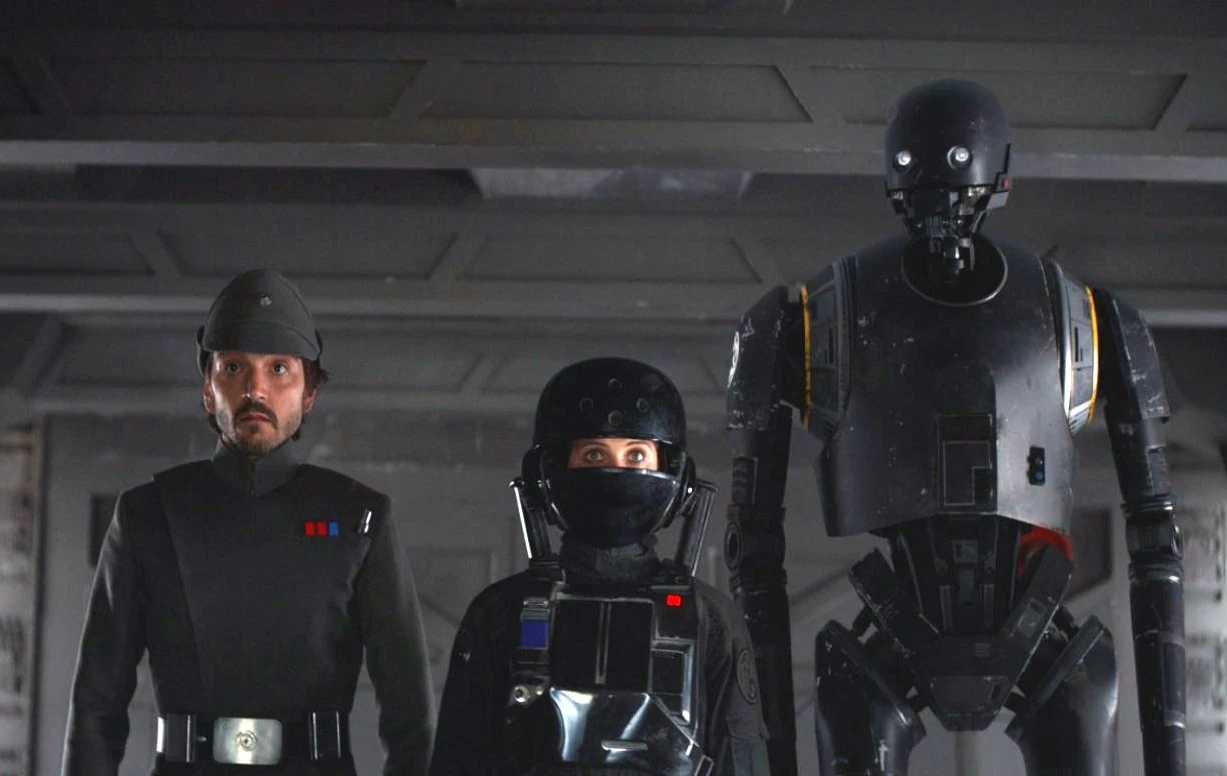 Unseen, yet profoundly seeing: a testament to inner strength and conviction.
Birth of a Cosmos: Hope in the Abyss
Rogue One dares to ask profoundly existential questions about the meaning of individual lives in a vast, uncaring cosmos. What is the value of one life, or even a small band of lives, against the might of an Empire capable of destroying planets? The film’s answer is not simple or comfortable. It suggests that meaning is not inherent but created through action and sacrifice. Their deaths are not tragic ends but the foundational myth for a greater struggle.
The climax on Scarif is a masterclass in cinematic pathos, a relentless depiction of overwhelming odds and inevitable doom. Yet, amidst the carnage, something extraordinary is born. The stolen plans, transmitted just moments before the team’s annihilation, are not just schematics; they are the literal blueprint of hope. This is the film’s ultimate metaphysical statement: that hope is not a given, but a deliberate act of creation, often forged in the fires of despair and bought with the dearest price.
The Death Star itself serves as a terrifying symbol of technological nihilism, a weapon designed not just to destroy, but to crush the very spirit of resistance. Against this absolute power, the Rogue One crew offers a counter-narrative of human agency and defiant solidarity. Their final moments, embracing on the beach as the planet-killer looms, are not about fear, but about the profound peace found in having lived a life of ultimate purpose.
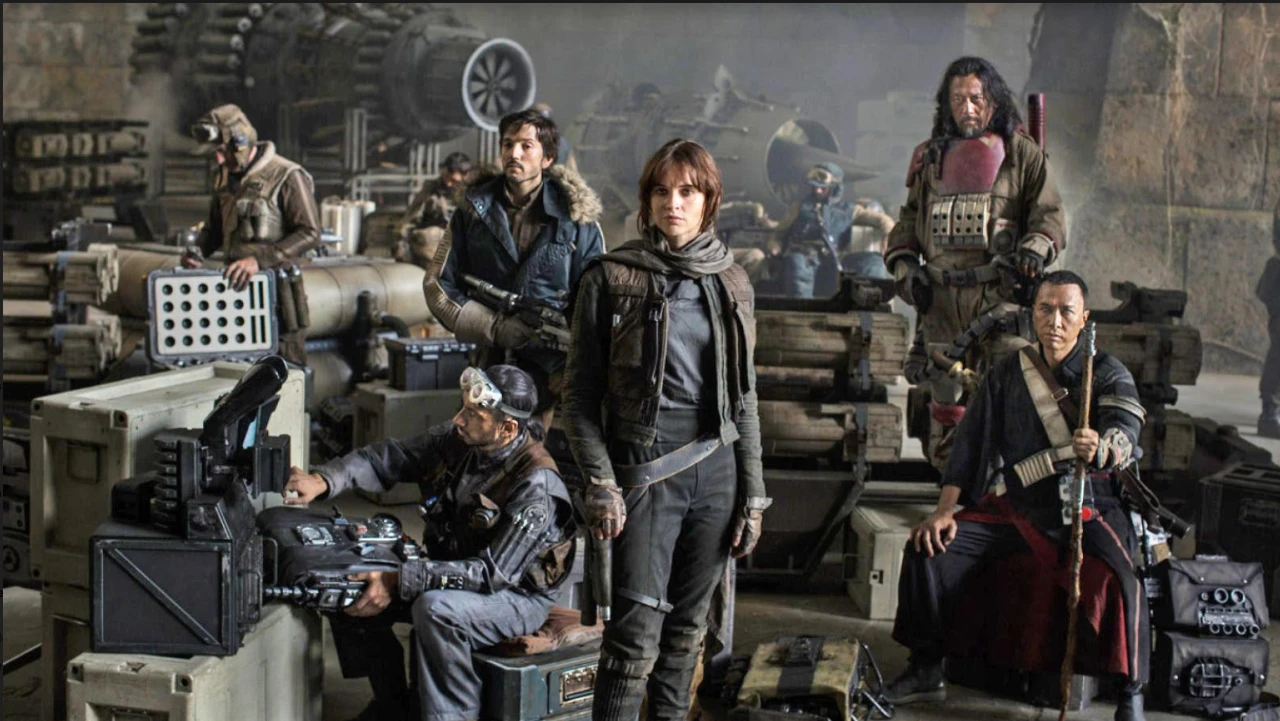 The ultimate embrace on the precipice of oblivion, a final act of defiant love amidst destruction.
“The cost of freedom is always high, but the price of remaining enslaved is higher.” — A grim echo of history
Rogue One stands as a unique and powerful