Severance and the Fractured Self: A Disquieting Look at Identity in the Age of Work
Exploring Severance (2022) as a profound meditation on identity, corporate control, and the disquieting division of the self.
“We are what we pretend to be, so we must be careful what we pretend to be.” — Kurt Vonnegut
Apple TV+’s Severance, released in 2022, isn’t just a television series; it’s a chillingly prescient thought experiment brought to life with meticulous craft and unsettling precision. With a near-perfect 97% score on Rotten Tomatoes and widespread critical acclaim, it immediately carved out its place as a standout in the modern dystopian canon. Yet, despite the nearly universal praise for its ingenious premise, masterful direction by Ben Stiller and Aoife McArdle, and career-defining performances (especially from Adam Scott), the show leaves you with a profound sense of unease. It’s not a flaw in the show, but a testament to its power: the questions it raises about identity, autonomy, and the encroaching demands of corporate life are so potent, they linger like a phantom limb after the credits roll.
The Divided Self: A Philosophical Experiment
At its heart, Severance presents a radical, unsettling solution to the age-old dilemma of work-life balance: a surgical procedure that irrevocably divides an individual’s memories. When at work, the “Innie” remembers nothing of their outside life; once they leave, the “Outie” retains no memory of their workday. This isn’t just a neat sci-fi gimmick; it’s a brilliant, terrifying exploration of what it means to be a self.
The core philosophical question here is stark: if your consciousness is fractured, are you truly one person? Are the Innie and Outie two distinct individuals sharing a body, or two halves of a tragically incomplete whole? Lumon Industries, the enigmatic and sinister corporation at the show’s center, offers its employees this “severance” as a gift of peace, a way to avoid the drudgery of their jobs. But what it truly offers is a profound alienation from one’s own life, a forced amnesia that strips away personal agency within the confines of the office.
Key themes that resonate:
- Existential identity — The very definition of self is challenged when memory and experience are compartmentalized.
- Corporate ethics and control — Lumon’s actions push the boundaries of corporate paternalism into outright psychological manipulation.
- The nature of freedom — Is freedom merely the absence of coercion, or does it require a holistic, integrated sense of self?
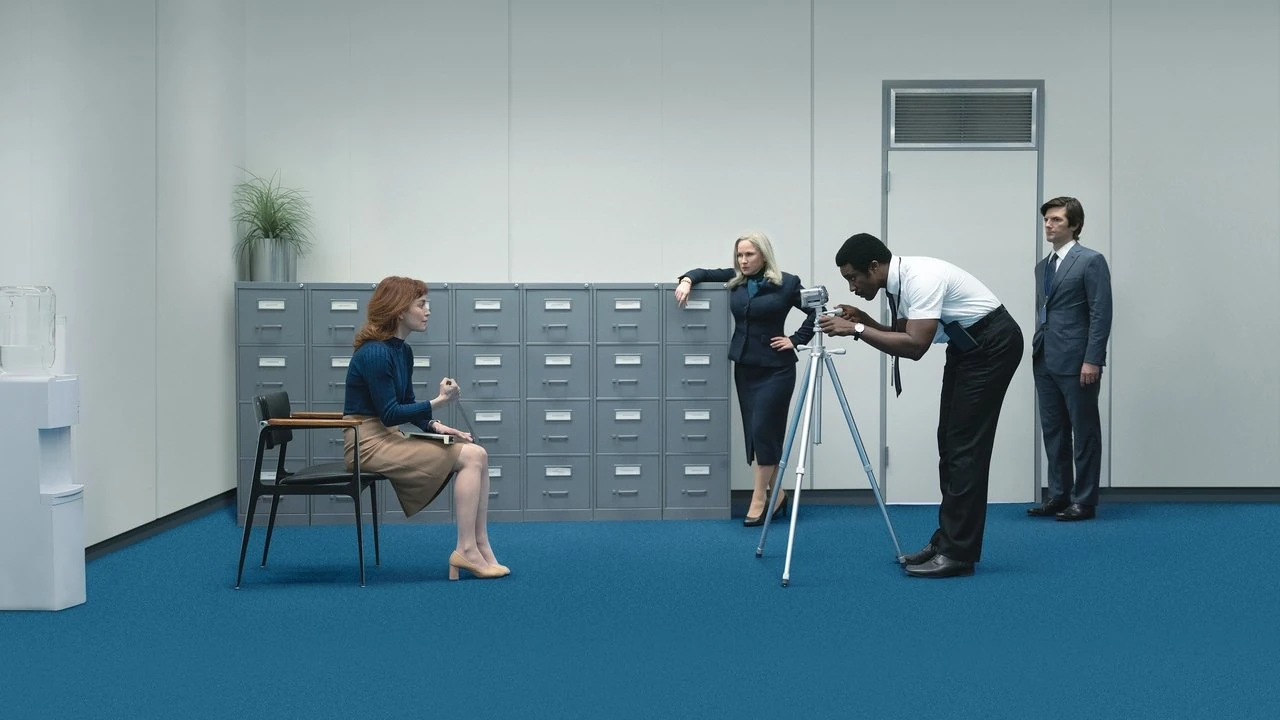
 The stark, sterile corridors of Lumon Industries, a physical manifestation of the characters’ psychological confinement.
Craft and Conflict: Where Art Meets Unease
What makes Severance so compelling, even as it chills, is its exquisite execution. The series doesn’t just present a concept; it embodies it. The visual design, with its sprawling, minimalist, and almost suffocatingly organized office spaces, perfectly mirrors the fragmented minds of its inhabitants. Ben Stiller’s direction is lauded by critics for its slow-burn tension, precise framing, and ability to build an atmosphere of dread that’s both subtle and pervasive. Some viewers, accustomed to faster-paced thrillers, might find the initial episodes a test of patience, as the show meticulously establishes its world and rules. However, this measured approach is precisely what allows its philosophical weight to sink in, letting the full horror of the situation slowly dawn.
The performances are universally praised, particularly Adam Scott’s dual portrayal of Mark Scout. His “Innie” Mark is a man adrift, curious, and increasingly rebellious, while his “Outie” Mark is a grieving widower, numb and detached. Britt Lower’s Helly R. delivers an equally powerful performance, embodying the visceral struggle of an Innie desperate for escape. These human elements are crucial; they ground the abstract philosophical questions in raw, relatable emotion, forcing us to empathize with the Innies’ plight and question the morality of such an existence.
The real terror of Severance isn’t the science fiction premise itself, but how disturbingly close it feels to the psychological divisions we already accept in our own lives, albeit in less literal forms.
The show masterfully balances its speculative elements with a deeply human story of connection, rebellion, and the search for meaning. Even when critics pointed to the deliberate pacing or the deliberate ambiguity of the “mystery box” plot, these were almost always framed as strengths, driving viewer engagement and fostering philosophical debate. The show doesn’t hand you answers; it demands you engage with the questions.
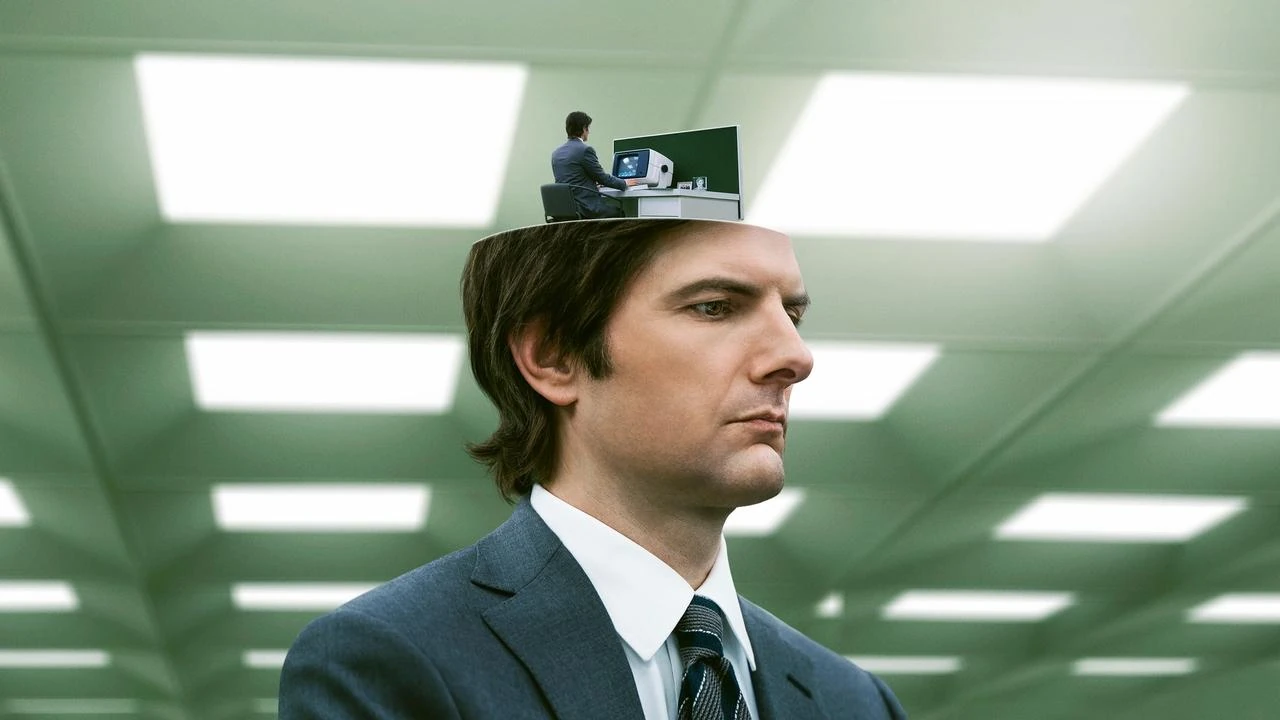
 Adam Scott as Mark, grappling with the disorienting reality of his divided existence.
Beyond the Surface: The Existential Mirror
Severance goes beyond a simple critique of corporate culture; it delves into fundamental existential questions. What constitutes a person? Is it our memories, our experiences, our choices, or some combination thereof? The Innies, despite their lack of an outside life, develop personalities, relationships, and desires. They laugh, they grieve, they yearn for freedom. Are they not as “real” as their Outie counterparts? This forces us to confront the ethical implications of creating and exploiting sentient beings solely for labor, a chilling echo of historical and ongoing human rights abuses.
The series also touches on the concept of free will. The Innies are trapped, their consent for the procedure given by a version of themselves who doesn’t experience the consequences. Their fight for consciousness and integration becomes a profound struggle for self-ownership and liberation. It makes us ponder how much of our own lives we willingly “sever” for the sake of convenience, comfort, or career, and what parts of ourselves we sacrifice in the process. Severance is a meditation on the insidious ways power can be exerted, not just through force, but through the redefinition of reality itself.
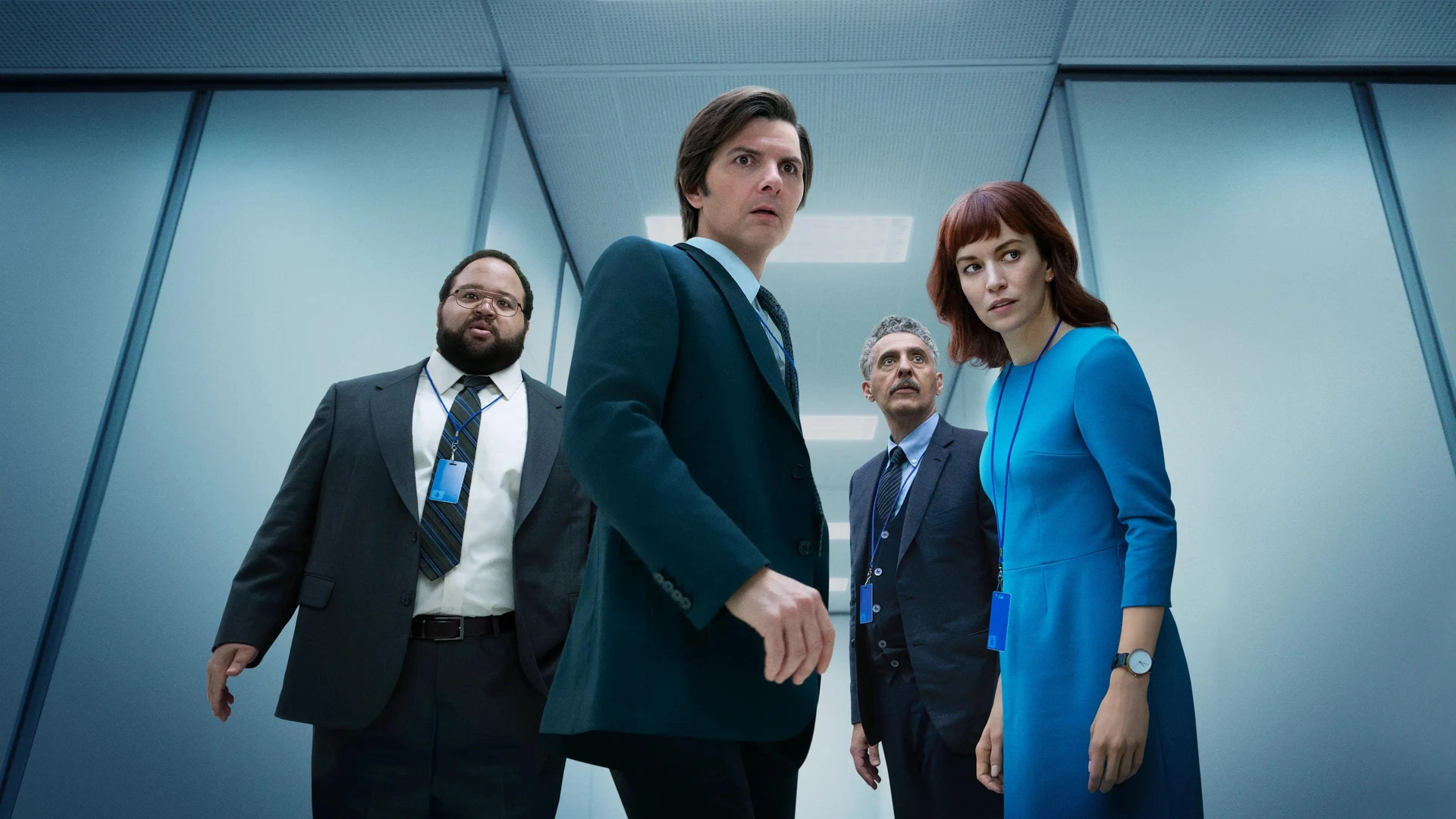
 The severed employees gather, each a fragment of a larger, broken whole, searching for connection in their isolated world.
The unsettling truth Severance illuminates is that the division of self might not be a distant dystopian fantasy, but merely a technological extrapolation of how many of us already live—compartmentalizing our joys, our sorrows, and our very identities for the sake of societal or corporate function.
Severance is an undeniable triumph, a work of art that is as aesthetically brilliant as it is profoundly thought-provoking. While its meticulously slow-burn might not appeal to everyone looking for instant gratification, its deliberate pace is essential to its thematic depth. It challenges us to look inward, to examine the boundaries we draw between our public and private selves, our work and our lives. It asks: in an increasingly demanding world, how much of ourselves are we willing to give away, and at what cost to the unified, authentic self?
Where to Watch
- Apple TV+
- Apple TV Amazon Channel
What’s Up? explores the philosophical depths of cinema.