The Human Equation: Genius, Motherhood, and Identity in Shakuntala Devi
Exploring the philosophical tension between extraordinary genius and ordinary human relationships in the biographical film Shakuntala Devi.
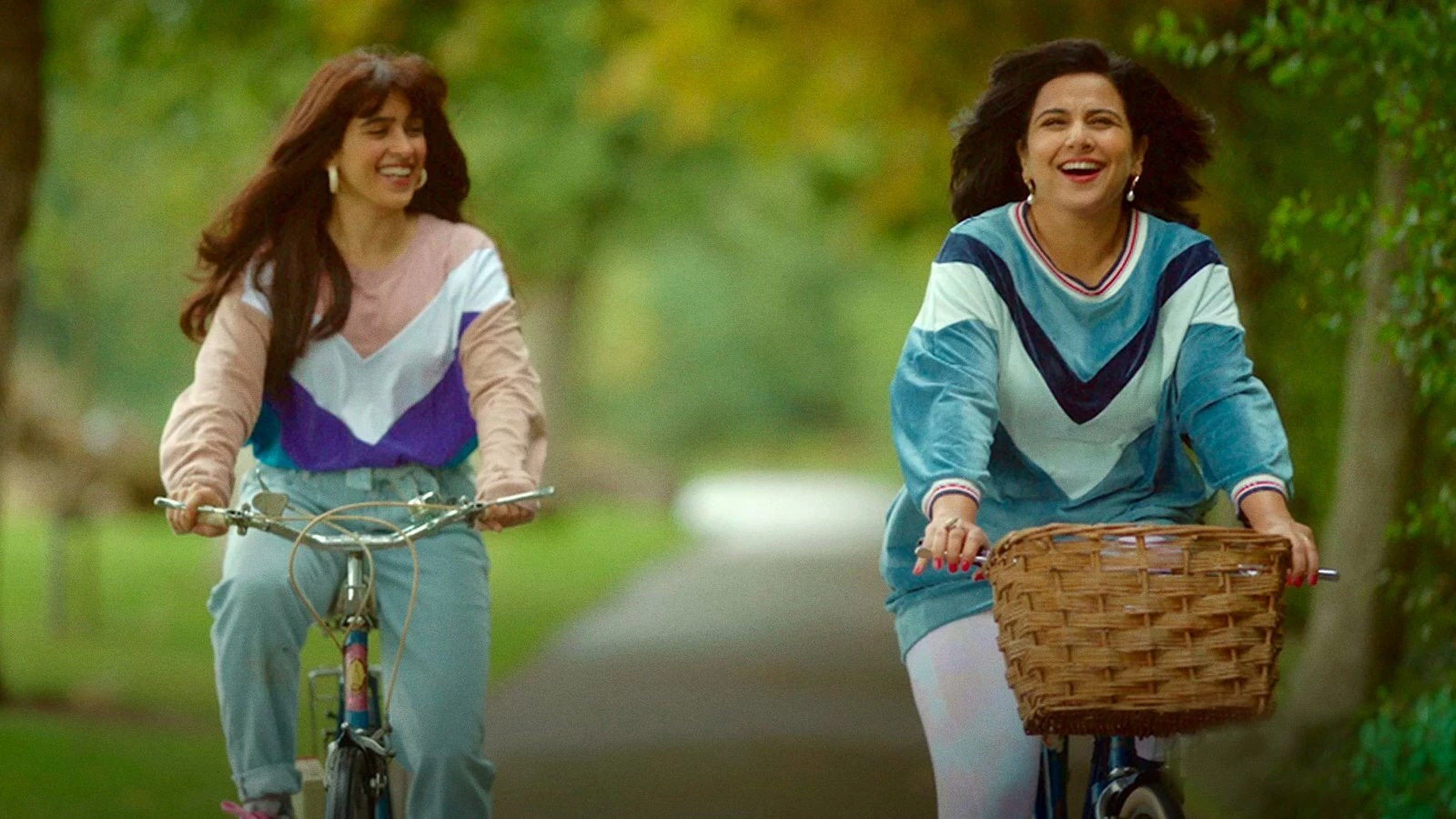
“To be oneself, and oneself only, to accept one’s uniqueness as a destiny – that is the price of genius.” — André Gide
Anu Menon’s 2020 biographical drama, Shakuntala Devi, promised to bring the dazzling life of India’s “human computer” to the silver screen, starring the always captivating Vidya Balan. And in many ways, it delivered a vibrant, energetic portrait of an extraordinary mind. Yet, like a complex equation with a few missing variables, the film’s reception was, shall we say, a mixed bag. Critics, while almost universally praising Balan’s effervescent performance, often pointed to the screenplay’s uneven pacing and a tendency to gloss over the deeper, perhaps darker, complexities of Devi’s life. Some found it a joyous celebration, an inspirational ode to an unconventional woman; others felt it pulled its punches, particularly in its exploration of the fraught mother-daughter dynamic. For us at “What’s Up?”, however, even in its imperfections, Shakuntala Devi offers a compelling set of philosophical questions about identity, legacy, and the untenable calculus of human relationships when squared against the singular pursuit of one’s genius.
The Calculus of Self: Genius and Its Costs
At its core, Shakuntala Devi asks us to consider what it means to be truly exceptional. Shakuntala Devi wasn’t just good at math; she was a phenomenon, a woman whose mind operated on a different plane. The film revels in her mathematical prowess, showcasing her lightning-fast calculations with a theatrical flourish that mirrors her own stage performances. But beneath the dazzling numbers, there’s a deeper philosophical current: Who is Shakuntala Devi beyond the “Human Computer”? The film attempts to peel back this layer, revealing a woman fiercely independent, audacious, and unapologetically herself.
However, this is also where some of the film’s perceived weaknesses emerge. Critics, and indeed some audiences, felt that while Balan embodied Devi’s spirit, the narrative sometimes struggled to delve into the profound why of her motivations, particularly her relentless need for the spotlight. Was it ego, an intrinsic drive for validation, or simply the only way she knew how to exist in the world given her extraordinary gift? The film touches on her impoverished childhood and the exploitation by her father, suggesting a deep-seated desire for control and recognition. This narrative choice, while providing a backstory, occasionally felt a little too neat, perhaps even a bit superficial, to fully capture the existential weight of living with such an unparalleled mind. It’s easy to celebrate the genius, but harder to probe the solitude, the burden, and the potential alienation that can come with it. The film, despite its best efforts, often favors celebration over deep psychoanalysis.
Key themes to explore:
- Identity Formation — how external validation shapes self-perception.
- The Burden of Giftedness — the unique challenges and isolation of extraordinary talent.
- Autonomy vs. Expectation — Devi’s fight for personal freedom against societal norms.
 Vidya Balan as Shakuntala Devi, beaming with numbers in her mind, a testament to the joy and burden of her genius.
The Equation of Love: Motherhood and Ambition
Perhaps the most potent and, frankly, divisive aspect of Shakuntala Devi is its exploration of her relationship with her daughter, Anupama (played by Sanya Malhotra). The film positions this as its emotional anchor, often framing Devi’s life through the lens of her daughter’s perspective and grievances. This narrative choice, while providing a relatable human conflict, was a point of contention for many. Some viewers appreciated the honest portrayal of a mother who prioritized her global career over conventional domesticity, forcing a conversation about women’s choices and the often-unspoken sacrifices demanded of them. Others, however, found Devi’s portrayal as a mother to be unsympathetic, or felt the film didn’t adequately explore Anupama’s pain, making Devi seem almost villainous at times.
The film courageously, if imperfectly, confronts the age-old dilemma: can a woman truly be a global icon and a conventional mother without one identity inevitably eclipsing the other?
The movie highlights the generational clash: Shakuntala, a free spirit who rejected societal norms, and Anupama, who yearns for a “normal” mother. This isn’t just a personal spat; it’s a philosophical inquiry into generational trauma and the subjectivity of love. For Shakuntala, love might have manifested as providing opportunities and refusing to be confined; for Anupama, it was the simple, consistent presence of a mother. The film doesn’t offer easy answers, presenting instead a complicated tapestry of resentment, longing, and eventual understanding. It forces us to question our own expectations of parents, especially mothers, and to acknowledge that love’s arithmetic can be maddeningly complex, often leaving residuals of pain even in the most well-intentioned equations.
 The intense gaze of Shakuntala Devi and her daughter Anupama, reflecting the complex bond at the film’s emotional core.
Beyond the Numbers: A Legacy of Unconvention
Despite the narrative’s occasional stumbles and the unevenness that critics noted, Shakuntala Devi succeeds in posing profound questions about how we define a meaningful life. Shakuntala Devi refused to be boxed in—not by gender, not by geography, and certainly not by conventional expectations. She was a mathematician, an astrologer, a cookbook author, and even a political candidate. Her life was a testament to the power of living authentically, embracing one’s multifaceted nature, even if it meant challenging the very fabric of societal norms.
The film, in its attempt to humanize the legend, inadvertently brings to light the existential courage required to forge one’s own path. Shakuntala Devi wasn’t just solving complex problems; she was solving the problem of how to be herself in a world that often demands conformity, especially from women. While the screenplay might have occasionally opted for a more palatable narrative, the essence of her spirit — her refusal to apologize for her ambition or her unique way of being — shines through, largely thanks to Balan’s magnetic portrayal. The film, in its own way, becomes a celebration of unorthodoxy, reminding us that true genius often lies not just in what one does, but in who one is when stripped of all expectations. It prompts us to consider our own inherited narratives and whether we have the courage to rewrite them.
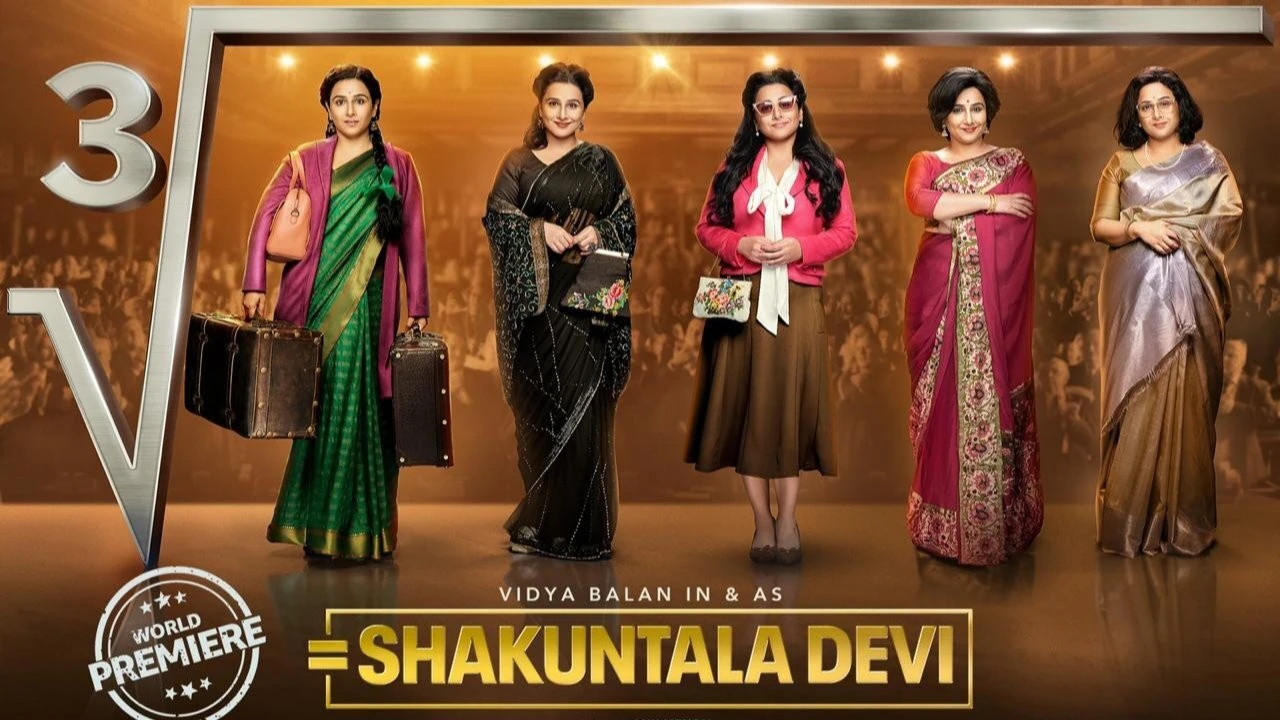
 Shakuntala Devi, dressed vibrantly, commanding attention, a symbol of unapologetic self-expression and intellectual prowess.
“Perhaps the greatest lesson is not to achieve perfection, but to embrace the beautiful, messy imperfection of living a truly authentic life.”
Shakuntala Devi is not a perfect film. Its narrative sometimes feels rushed, and its exploration of certain character nuances could have benefited from more depth. It received a mixed critical reception, with many praising Vidya Balan’s performance while acknowledging the film’s shortcomings in storytelling and pacing. Yet, it’s a film that resonates, not just as a biographical account, but as a philosophical inquiry into the cost of genius, the complexities of love, and the courage of self-definition. It leaves us pondering: when faced with an extraordinary gift, how do we reconcile the demands of the self with the demands of others, and what kind of legacy do we truly leave behind?
Where to Watch
- Amazon Prime Video
- Amazon Prime Video with Ads
What’s Up? explores the philosophical depths of cinema.