The Jurisprudence of Identity: She-Hulk's Existential Case File
Exploring She-Hulk's intricate dance between human identity and superhuman power, probing authenticity and the absurdities of modern existence.
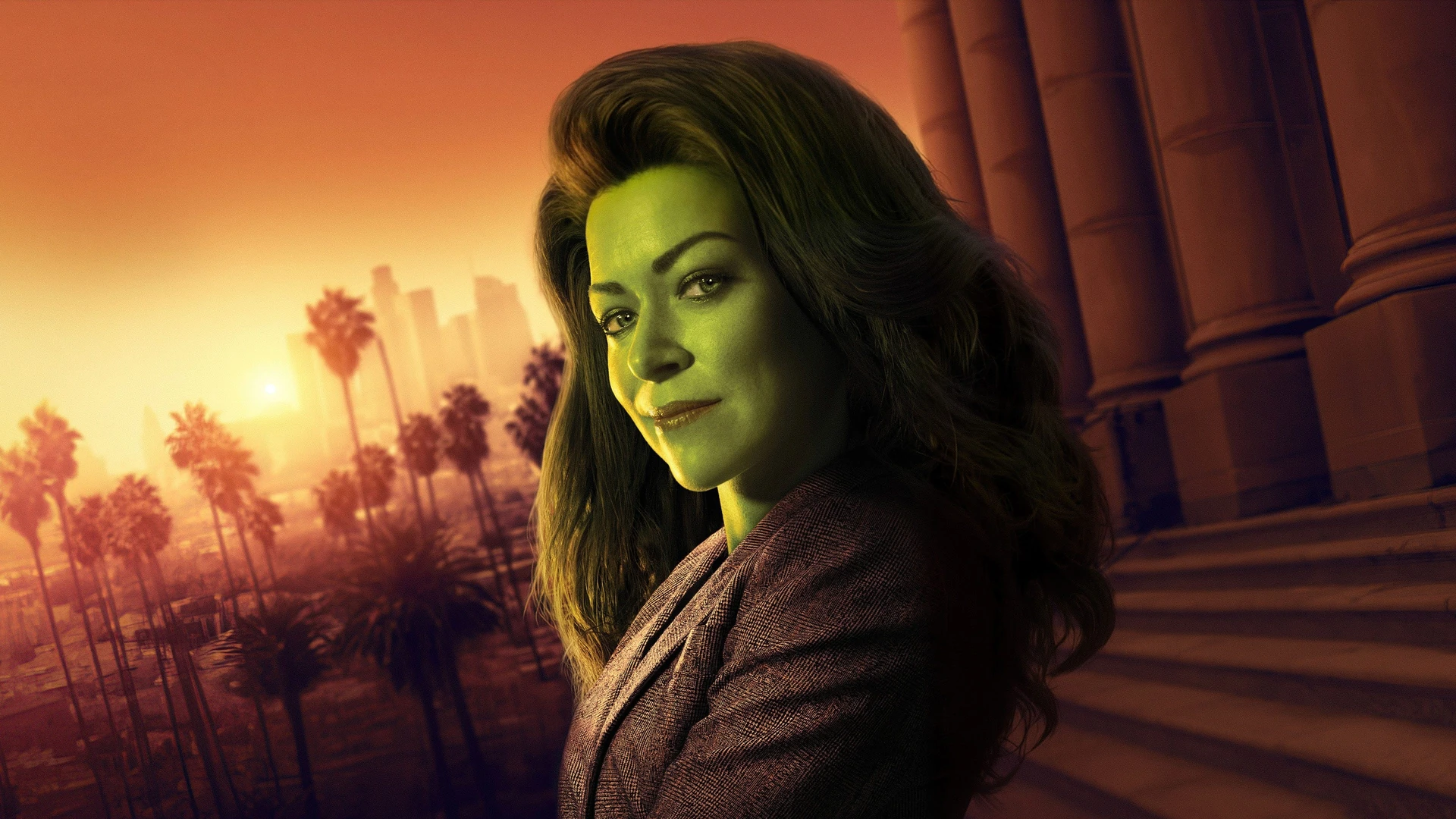
“Every man has three characters: that which he exhibits, that which he has, and that which he thinks he has.” — Alphonse Karr
In the sprawling, often bombastic tapestry of the Marvel Cinematic Universe, She-Hulk: Attorney at Law (2022) emerges not as another exercise in world-saving spectacle, but as a surprisingly nuanced, self-aware meditation on identity, performance, and the crushing weight of expectation. Stripping away the cosmic stakes for the decidedly terrestrial travails of a 30-something lawyer, Jennifer Walters, the series offers a philosophical dissection of the modern self, grappling with the profound absurdity of existing as both an ordinary professional and a 6-foot-7-inch green Goliath. It asks: What does it mean to be ‘you’ when ‘you’ is inherently bifurcated, and one half is literally a public phenomenon?
The Bifurcated Self: Jennifer and Her Hulk
At its core, She-Hulk: Attorney at Law is an exploration of the divided self, a concept central to much of modern philosophy, from Freud’s ego and id to Lacan’s mirror stage and Sartre’s bad faith. Jennifer Walters, portrayed with exquisite vulnerability and wit by Tatiana Maslany, doesn’t merely transform into a superhero; she embodies a schism. Her green alter-ego, She-Hulk, is not an uncontrollable beast like her cousin Bruce Banner’s Hulk, but a heightened, often more confident, version of herself. Yet, the choice to inhabit either form is a constant negotiation of her authenticity.
This duality forces Jennifer to confront several existential questions:
- The Performance of Self: Does she choose Jennifer for her career and personal life, or She-Hulk for her public persona and unique legal challenges? Each choice is a performance, a deliberate enactment of a chosen identity in a specific social context.
- Societal Imposition: The world, particularly the media and the legal system, demands She-Hulk. They see her power, her greenness, before they see Jennifer Walters, the skilled attorney. This mirrors the societal pressures that often define us by our most visible attributes, rather than our intrinsic qualities.
- Reconciliation: The series subtly suggests that true self-acceptance lies not in eradicating one identity for another, but in integrating them. Her struggle is to be both—a woman, a lawyer, and a superpowered being—without losing sight of the essential Jennifer. This is a profound take on self-actualization in a world that often forces singular labels.
 A thoughtful caption describing the scene’s deeper meaning: Jennifer Walters navigating the absurdities of her dual life.
Breaking the Fourth Wall: Meta-Commentary on Expectation
Perhaps the show’s most distinctive philosophical move is its frequent and unapologetic breaking of the fourth wall. Jennifer Walters directly addresses the audience, critiques the plot, and even confronts the show’s writers and producers in a truly audacious finale. This isn’t merely a comedic device; it’s a powerful meta-commentary on narrative control, audience expectation, and the very nature of reality construction.
This is where we discover the true weight of choice — not in the outcome, but in the becoming.
By speaking to us, Jennifer deconstructs the illusion of the superhero narrative. She challenges the traditional tropes that often dictate female superhero arcs—the need for a tragic backstory, a male mentor, or an inevitable romantic subplot. Her refusal to conform to these predefined paths reflects a deeper philosophical resistance:
- Agency and Authorship: Jennifer demands control over her own story, questioning who truly holds the pen—the character, the writer, or the audience? This mirrors our own struggles for agency in lives often shaped by external forces, societal scripts, or even the narratives we tell ourselves.
- Feminist Critique: The show subtly, and sometimes overtly, critiques the male gaze and the patriarchal structures inherent in both the superhero genre and the legal profession. Jennifer’s direct addresses highlight the often-unspoken biases and expectations placed upon women in power.
- The Illusion of Reality: By exposing the scaffolding of the narrative, She-Hulk invites us to question the constructed realities we inhabit daily. How much of what we perceive as ‘real’ is merely a narrative we’ve accepted, and what happens when we dare to challenge its fundamental rules?
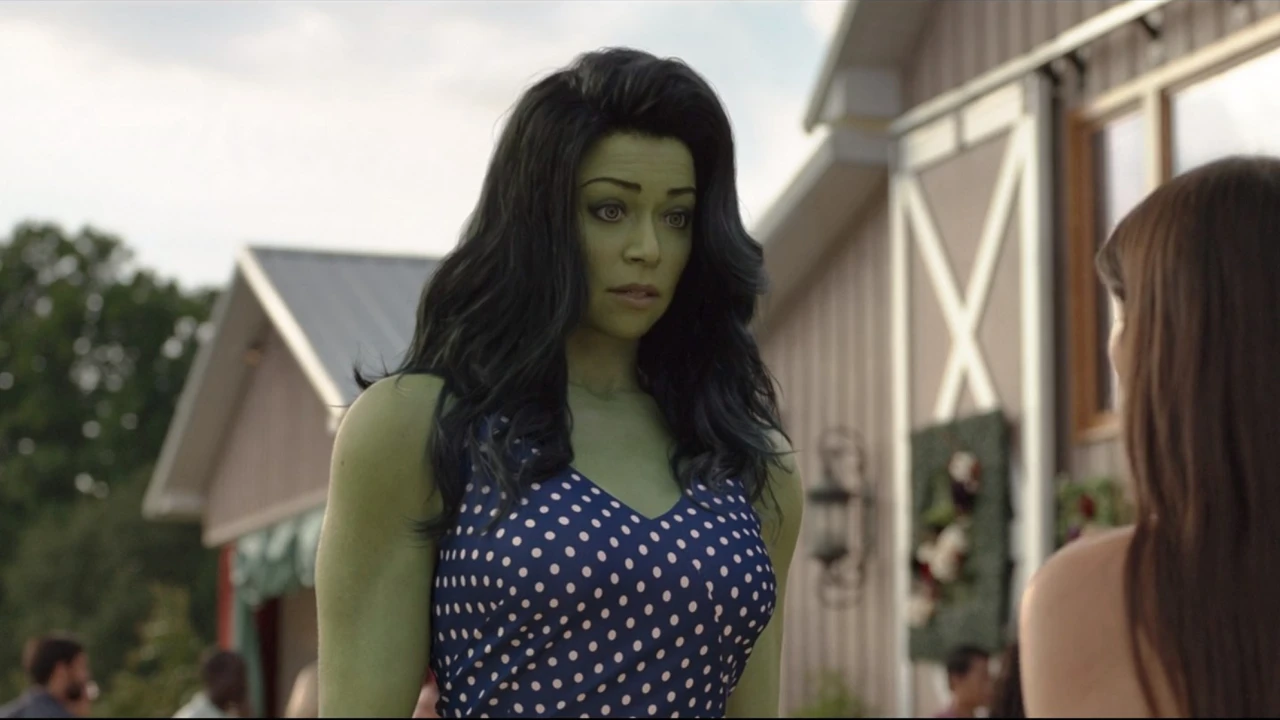 Visual poetry captured in a single frame: A hero’s internal struggle made external through a knowing glance.
The Absurdity of the Super-Mundane
Beyond identity and narrative, She-Hulk: Attorney at Law masterfully employs absurdism. The series juxtaposes the extraordinary (superpowers, villains, secret government agencies) with the utterly mundane (dating apps, office politics, legal paperwork). Jennifer’s greatest challenges often aren’t supervillains, but rather navigating toxic masculinity online, securing fair compensation for her work, or simply finding a decent outfit that fits her green form.
This blend creates a distinctly modern absurdism, where the grand, heroic narratives of old clash with the relentless banality of contemporary life. It echoes Albert Camus’s philosophy of the absurd, where humanity’s inherent search for meaning confronts a universe utterly indifferent to it. Jennifer, in her dual existence, is an emblem of this struggle: she possesses immense power, yet she’s still bogged down by the same indignities and bureaucratic hurdles as anyone else.
The greatest burden of existence is not the weight of our choices, but the relentless, indifferent absurdity of a world that demands we make them anyway.
The show suggests that even with incredible powers, the core challenges of being human—finding purpose, connection, and managing daily frustrations—remain paramount. It’s a comedic reminder that no amount of strength can entirely shield us from the existential dread of a bad date or a demanding boss. Her journey, therefore, isn’t just about saving the world, but about saving her sanity in a world that refuses to make sense, even for its greenest attorneys.
 The imagery speaks what words cannot express: A quiet moment of contemplation amidst a life of chaos and power.
Ultimately, She-Hulk: Attorney at Law transcends its genre, offering a surprisingly robust philosophical inquiry into the nature of self, the power of narrative, and the enduring absurdity of modern existence. It reminds us that heroism isn’t just about punching villains; it’s about showing up, day after day, in all our complicated, contradictory forms, and fighting for a sense of self in a world that constantly tries to define us.
What does it truly mean to be yourself when the very notion of ‘self’ is a constantly shifting legal brief, open to amendment and reinterpretation by forces both internal and external?
This isn’t just Jennifer Walters’s case file; it’s ours.
Where to Watch
- Disney Plus
What’s Up? explores the philosophical depths of cinema.