Sholay: The Enduring Myth of Justice and Friendship in a Land of Dust
Exploring the philosophical depth of Sholay, from its initial mixed reception to its status as a cultural phenomenon, examining themes of revenge, friendship, and the nature of evil.
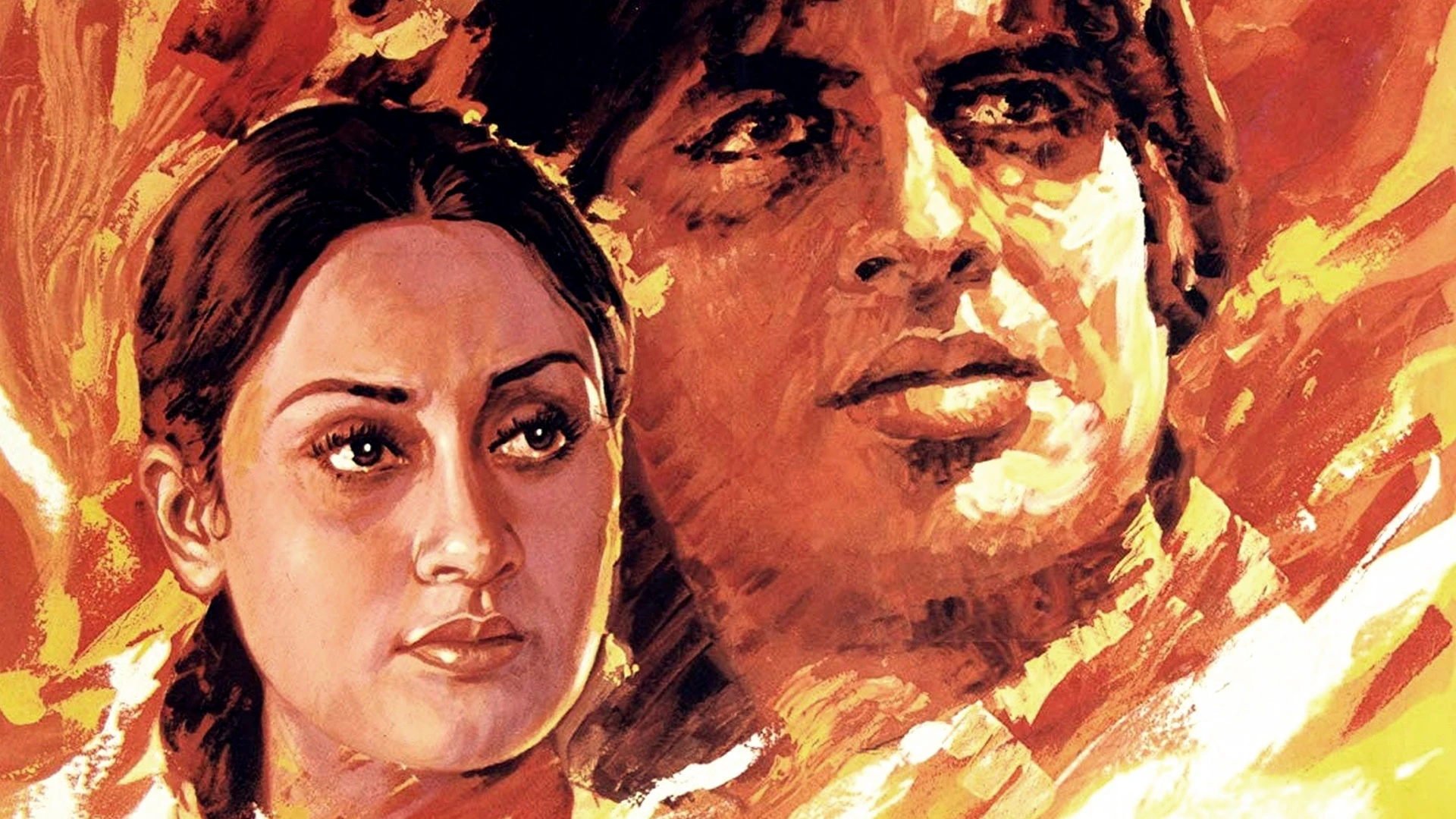
“How many men were there?” “Two.” “When did they leave?” “They haven’t.”
Sholay (1975) isn’t just a movie; it’s a cultural phenomenon, a cornerstone of Indian cinema that has permeated the collective consciousness like few others. Directed by Ramesh Sippy, this epic 162-minute saga is a vibrant, often brutal, blend of action, adventure, comedy, crime, drama, musical, and thriller. It’s the kind of film that, much like a grand, weather-beaten monument, has stories etched into every one of its frames. Yet, for all its legendary status today, its journey to critical acclaim was anything but smooth. Initial reviews were notably mixed, with some critics finding its blend of genres jarring, its pacing sometimes indulgent, and its violence uncomfortably overt for the era. But oh, how wrong they were, or perhaps, how ahead of its time the film truly was. Sholay didn’t just survive; it thrived, evolving from a slow-burn box-office starter into an unparalleled blockbuster, solidifying its place as a philosophical anchor in the sea of popular culture.
The Anatomy of Vengeance and the Shadow of Evil
At its heart, Sholay is a meditation on retribution and the seductive, often destructive, nature of justice. The plot is deceptively simple: ex-Inspector Thakur Baldev Singh, his family brutally massacred by the notorious bandit Gabbar Singh, enlists two small-time outlaws, Jai (Amitabh Bachchan) and Veeru (Dharmendra), to capture Gabbar and exact his revenge. But this isn’t merely a tale of good versus evil; it’s a deep dive into the mechanisms of grievance and the moral ambiguities that arise when personal vendetta masquerades as righteous justice. Gabbar Singh, masterfully portrayed by Amjad Khan, isn’t just a villain; he’s an elemental force, a manifestation of chaotic evil that challenges the very fabric of society. He operates outside all moral codes, his cruelty a horrifying spectacle, making him less a character and more an archetype of primal malevolence.
Some critics, particularly those from a more Western sensibility, initially struggled with Sholay’s unrepentant violence and its almost mythological portrayal of good and evil. They pointed to what they perceived as an uneven tone, where moments of slapstick comedy (like Veeru’s drunken antics atop a water tower) sit uneasily alongside scenes of brutal violence and profound loss. And frankly, they weren’t entirely wrong; the film does demand a certain elasticity from its audience, a willingness to embrace its unique blend. However, it’s precisely this audacious tonal shift that allows Sholay to explore the full spectrum of human experience under duress – from desperate humor to heart-wrenching tragedy, all within the shadow of Gabbar’s tyranny.
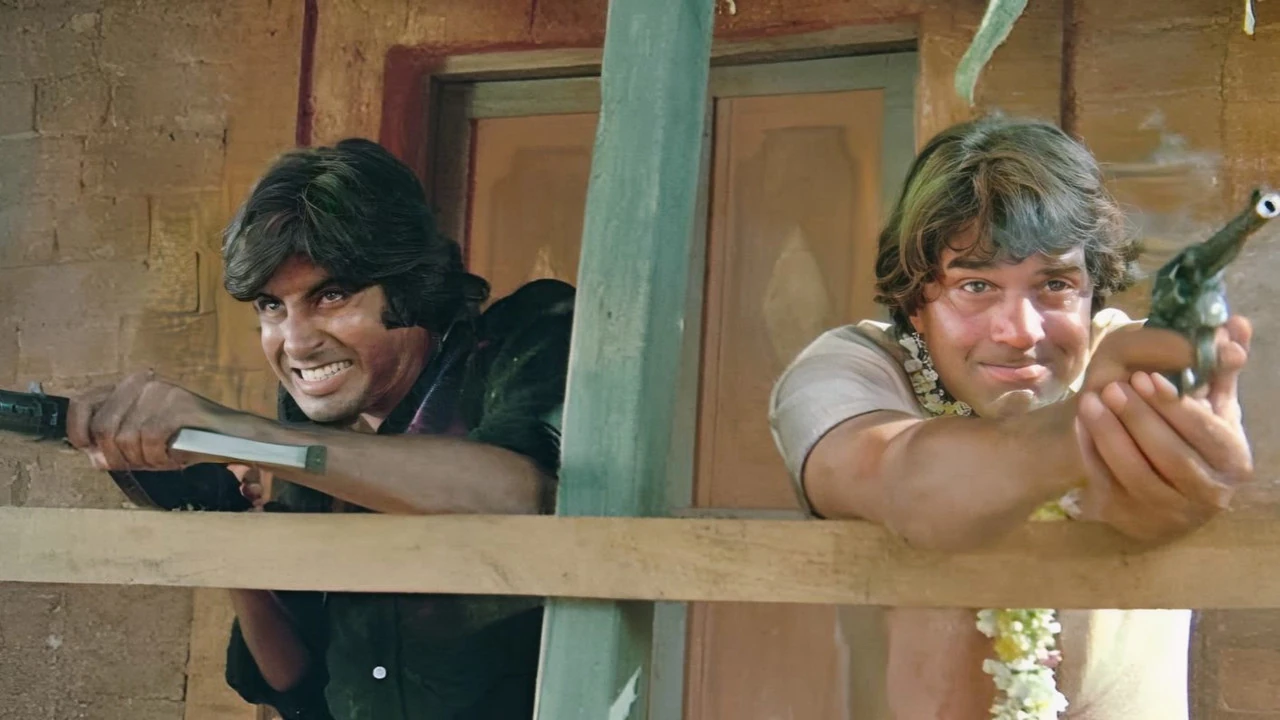 Jai and Veeru share a moment of quiet camaraderie, their bond forged in the crucible of shared danger and unwavering loyalty.
The Unbreakable Bond and the Weight of Choice
While the quest for revenge provides the narrative engine, it’s the unyielding friendship between Jai and Veeru that gives Sholay its profound human core. Their banter, their loyalty, their unspoken understanding – it all paints a vivid picture of interdependence and sacrifice. These aren’t just partners in crime; they are brothers, their lives intertwined by choice and circumstance. Their relationship transcends mere plot device, becoming a philosophical anchor point in a world teetering on the edge of lawlessness. It forces us to ask: What constitutes true companionship? Is it shared laughter, shared danger, or the willingness to lay down one’s life for another? Sholay unequivocally argues for the latter.
This is where we discover the true weight of choice — not in the outcome, but in the becoming. Jai and Veeru’s bond isn’t static; it’s forged in the fires of their decisions, each act of loyalty building upon the last, culminating in an existential reckoning.
The film’s exploration of these themes isn’t without its historical context and, arguably, its limitations. While the male protagonists are deeply complex, the female characters, Basanti (Hema Malini) and Radha (Jaya Bachchan), though iconic and powerful in their own right, sometimes serve more as catalysts for the men’s actions or embodiments of innocence to be protected. Their agency, while present, occasionally feels secondary to the grand narrative of masculine heroism and vengeance. Some modern critiques might point to this imbalance or the occasional slow pacing of the romantic subplots as minor narrative stumbles. Yet, even within these criticisms, one finds depth. Basanti’s spirited defiance and Radha’s stoic grief offer different lenses through which to view resilience and loss, adding layers to the film’s philosophical tapestry.
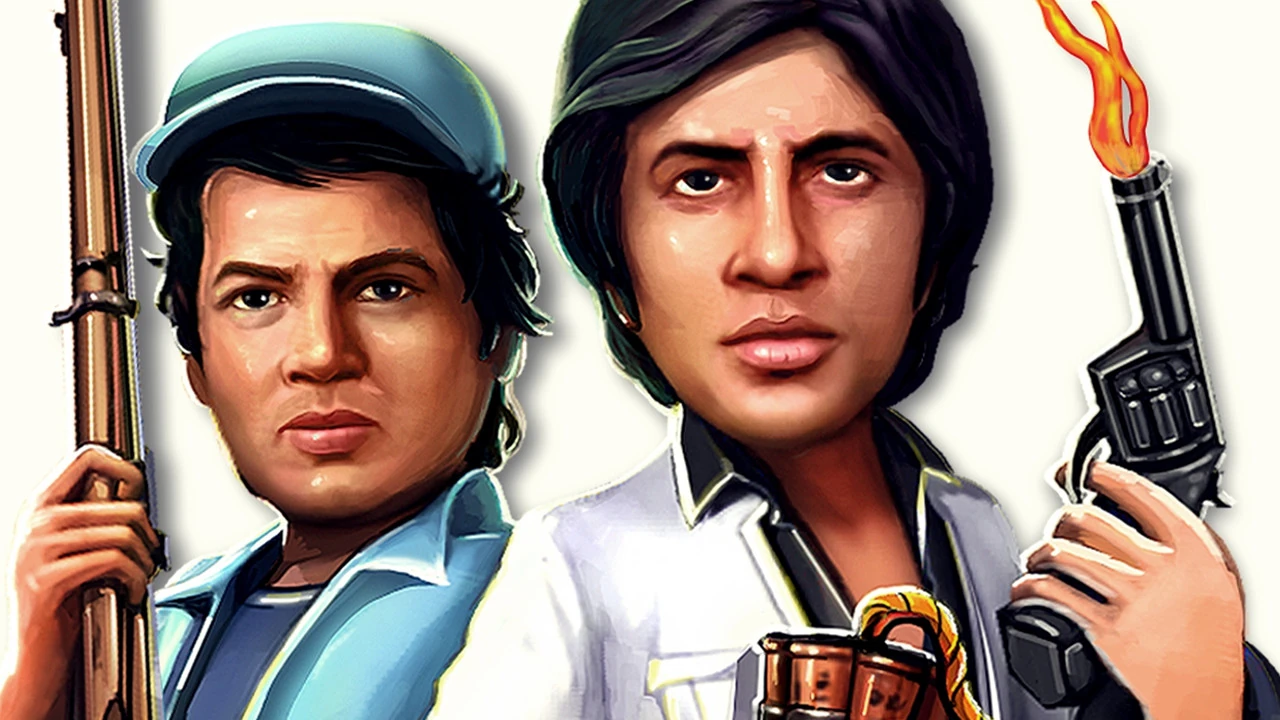 Gabbar Singh, an embodiment of primal malevolence, stares intensely, his gaze piercing through the screen and into the audience’s psyche.
Beyond the Surface: Myth, Memory, and the Existential Echo
Sholay’s enduring power lies in its ability to transcend its genre trappings and delve into something far more profound: the creation of myth and its role in a society’s collective memory. The dialogues, the characters, the very aesthetic of Ramgarh have become indelible parts of Indian popular culture. The film doesn’t just tell a story; it performs a ritual of storytelling, elevating its characters to archetypal status. Gabbar isn’t just a bandit; he’s fear incarnate. Jai and Veeru aren’t just mercenaries; they are the heroes a beleaguered village needs, even if they aren’t the heroes it deserves in a classical sense.
The film’s ultimate philosophical triumph is perhaps its exploration of fate versus free will. Jai’s tragic end, particularly in the uncensored version where Thakur’s revenge is fully realized, forces us to confront the harsh realities of a world where heroism doesn’t guarantee a happy ending, and noble sacrifice often comes with an unbearable cost. This existential weight, combined with its larger-than-life characters, allows Sholay to resonate across generations, continually asking: What stories do we choose to believe? What kind of heroes do we elevate? And what does it mean to fight for a semblance of order in a world perpetually threatened by chaos? The film, despite its narrative quirks or its initial critical divisiveness, became a mirror reflecting a nation’s aspirations for justice and its deep-seated belief in the power of human connection.
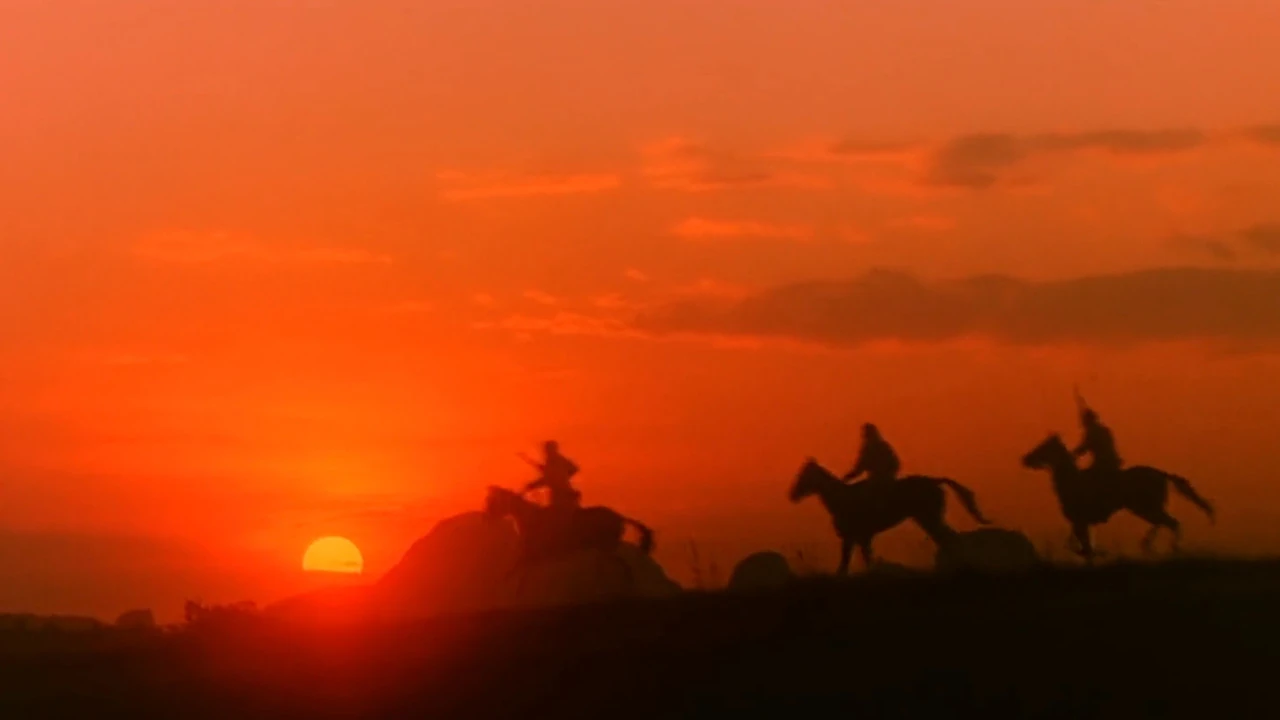 Thakur Baldev Singh, his visage etched with determination and pain, confronts his nemesis, a silent testament to a journey fueled by profound loss.
“How many times have we seen Sholay? And how many times have we looked for Jai and Veeru in our own lives, seeking that unbreakable bond, that defiant spirit, even in the face of inevitable sorrow?”
Sholay is a testament to the idea that even popular cinema, often dismissed for its commercial aspirations, can hold immense philosophical weight. It’s a film that, despite its initial critical hurdles, transcended mere entertainment to become a profound inquiry into the human condition. It asks us about the limits of revenge, the boundless nature of friendship, and the enduring power of narrative to shape our realities. It reminds us that sometimes, the most enduring truths are found not in subtle whispers, but in the grand, explosive narratives that capture a nation’s imagination. What does Sholay ultimately ask of us? Perhaps to look beyond the dust and fury, and find the quiet, universal truths about loyalty, loss, and the eternal human struggle for meaning in an indifferent world.
What’s Up? explores the philosophical depths of cinema.