Solo's Shadow: The Philosophical Burden of Becoming a Legend
Exploring the philosophical weight of prequels, identity, and destiny in Solo A Star Wars Story, acknowledging its critical reception.
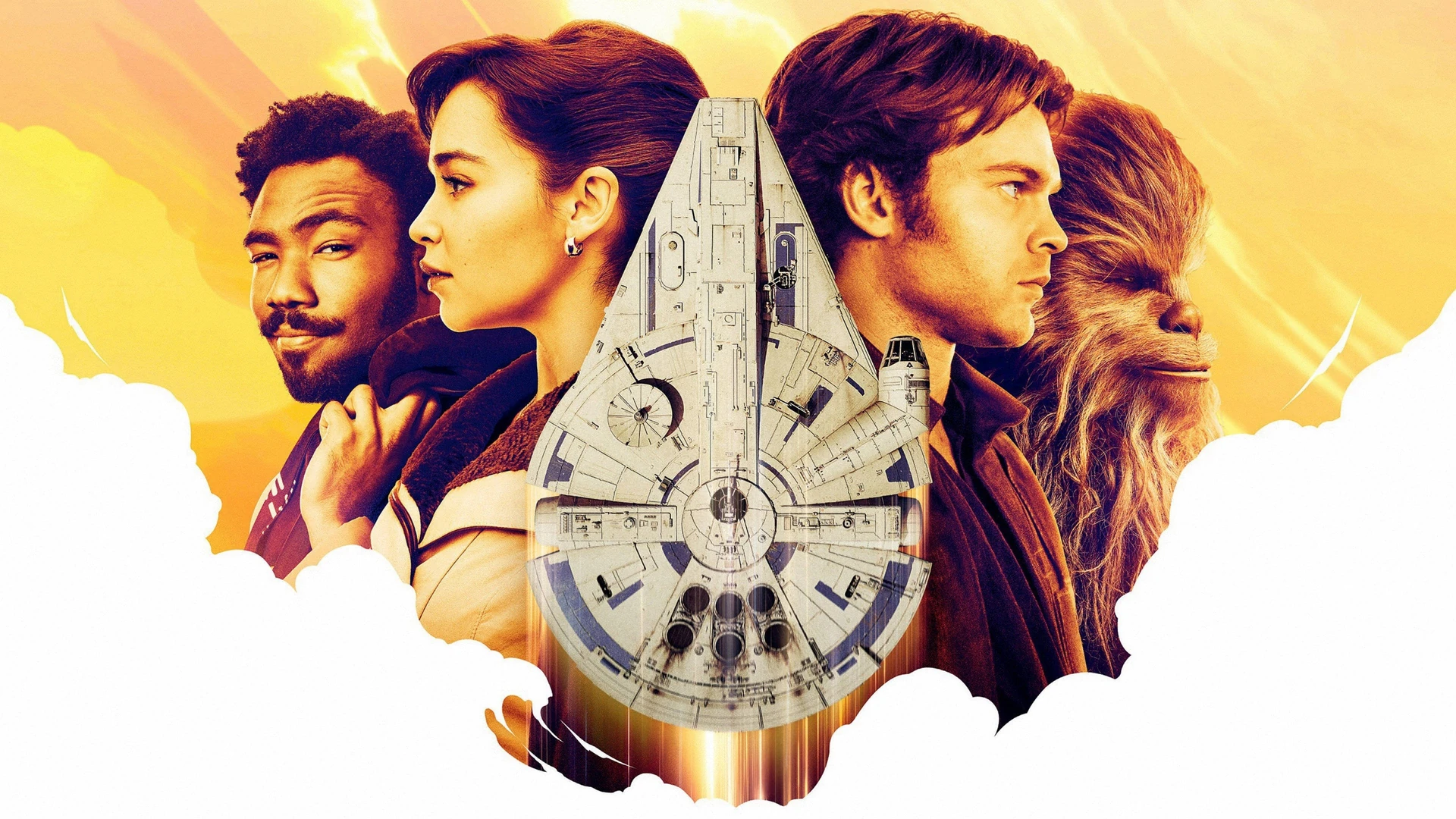
“The hardest thing in life is to know yourself.” — Thales
Solo: A Star Wars Story (2018) arrived in the cinematic galaxy not with a bang, but with a palpable sense of apprehension. A prequel detailing the formative years of one of cinema’s most beloved rogues, the film faced an unenviable task: to explain the unexplainable, to chart the origins of a character whose mystique was always rooted in his enigmatic past. And frankly, it struggled under that weight. While undeniably a fun, rollicking space western in moments, particularly with Donald Glover’s electrifying turn as Lando Calrissian, critics were largely divided. Many, like those on Rotten Tomatoes, found it “entertaining” but “unnecessary,” while Metacritic scores reflected a consensus of “generally favorable” but often lukewarm reviews, citing its formulaic nature and the unenviable challenge of filling Harrison Ford’s boots. Yet, even in its perceived flaws, Solo inadvertently becomes a fascinating text for philosophical inquiry, probing the very nature of identity, destiny, and the burden of expectation.
The Burden of Origin Stories (and the Spectre of Expectation)
The most consistent criticism leveled against Solo wasn’t necessarily that it was bad, but that it felt… redundant. Did we need to know how Han met Chewie? Or acquired the Millennium Falcon? Or even got his last name? This critique, while valid on a narrative level, touches on a deeper philosophical anxiety about myth-making. Legends, by their very nature, thrive on mystery. The gaps in the story allow our imaginations to flourish, giving characters an almost archetypal resonance. To fill those gaps, to meticulously connect every dot, can paradoxically diminish the legend.
Solo attempts to give us the “how” behind the legend, but in doing so, it risks stripping away the “why” and the “what next.” It’s an exploration of:
- The Teleological Trap: The film feels inherently driven by a pre-ordained outcome, a checklist of iconic moments that must occur. This raises questions about narrative determinism versus true character agency.
- The Weight of Legacy: Alden Ehrenreich, while earnest, faced the monumental task of embodying a character indelibly linked to Harrison Ford. This isn’t just an acting challenge; it’s an existential one. How do you “become” someone so iconic without simply imitating them?
- The Paradox of Knowing: Does understanding every step of a hero’s journey enhance or diminish their heroic stature? Is the origin story a gift or a cage?
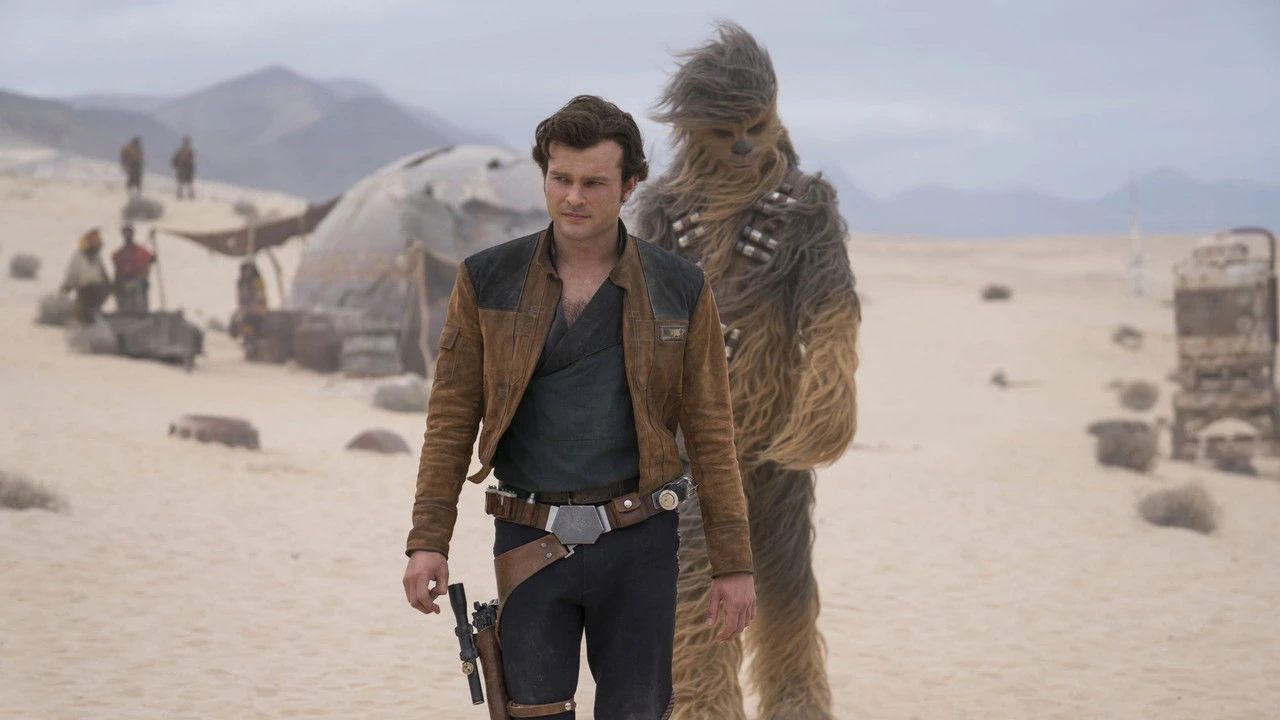 A young Han Solo, gazing at the stars, perhaps unaware of the legend he is destined to become, or the burden that comes with it.
The Performance of Self: Lando, Han, and the Masks We Wear
Where Solo truly sparkles, and where its philosophical undercurrents become most visible, is in its exploration of authenticity and performance. Donald Glover’s Lando Calrissian isn’t just a scene-stealer; he’s a philosophical counterpoint to Han. Lando performs his identity with flair, confidence, and a certain self-awareness. He knows he’s a gambler, a scoundrel, a smooth talker, and he embodies it fully, almost joyfully. His cape collection isn’t just fashion; it’s a testament to his curated persona.
Han, on the other hand, is still figuring it out. Critics often noted Ehrenreich’s struggle to fully inhabit the “Han swagger.” This isn’t necessarily a failing of the actor, but a reflection of the character’s journey within the film. He’s not yet the cynical, world-weary smuggler we know. He’s an idealist, still bruised by life, trying to find his place. The film shows him adopting traits and mannerisms that will eventually define him, but they feel like nascent performances, not fully integrated parts of his being.
Solo inadvertently asks us: How much of who we are is inherent, and how much is a role we learn to play, shaped by circumstance and aspiration? Is identity a discovery or a construction?
This tension between the Han we see and the Han we know is central to the film’s philosophical value. It highlights the idea that identity isn’t static; it’s a fluid process of becoming. Han is trying on different masks, searching for the one that fits, the one that allows him to survive and thrive in a harsh galaxy.
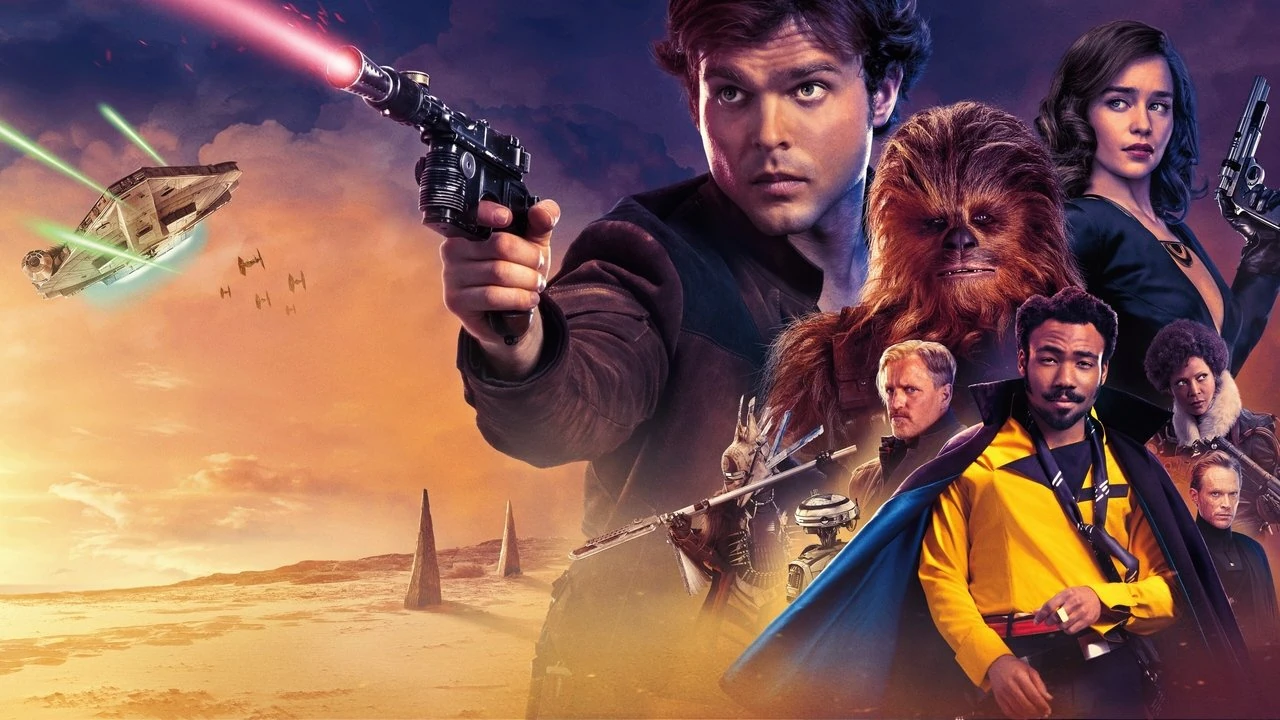 Lando Calrissian, effortlessly charismatic, embodying the art of self-presentation and curated identity.
Freedom, Fate, and the Cosmic Roll of the Dice
Beyond the personal journeys of its characters, Solo is steeped in themes of free will versus determinism within a larger, often chaotic universe. Han Solo’s iconic cynicism about “hokey religions and ancient weapons” is born from a life where luck, quick thinking, and adaptability are paramount. The film underscores this with its portrayal of the criminal underworld, where every deal is a gamble, every alliance fragile.
The notorious Kessel Run, for instance, isn’t just a thrilling action sequence; it’s a microcosm of Han’s philosophy. It’s about pushing boundaries, taking risks, and bending the rules of the universe to your will. Yet, even as Han strives for autonomy, the film is peppered with encounters and events that feel almost fated – meeting Chewbacca, encountering Lando, even the choice of his last name. Is Han truly free, or is he simply fulfilling a pre-written destiny within the Star Wars saga, a cosmic puppet dancing to the tune of established lore?
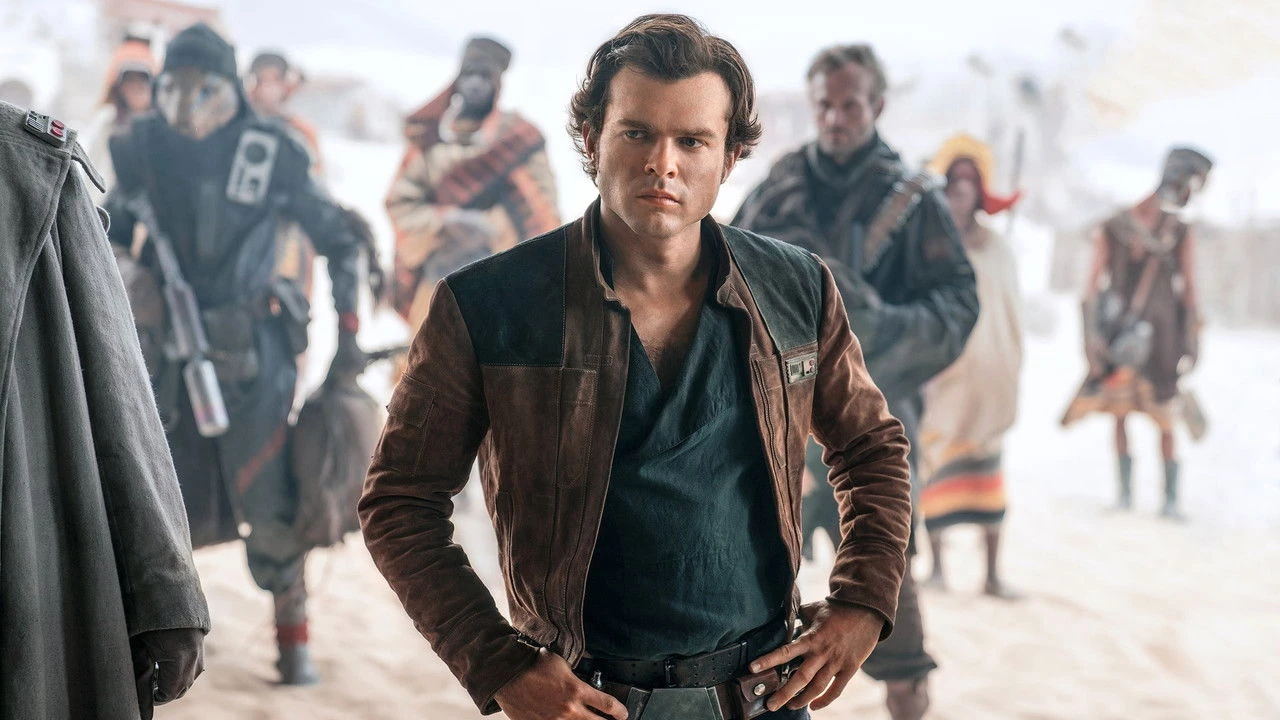 Han Solo and Chewbacca, a partnership forged in fire and shared defiance, navigating the perils of a dangerous galaxy.
Solo: A Star Wars Story ultimately asks us to confront the uncomfortable truth that even our most cherished legends are products of messy, often mundane origins. It’s a reminder that the path to becoming “you” is rarely linear, often forced, and always a roll of the dice in a universe that doesn’t care for your plans.
While Solo may never reach the mythical heights of its predecessors, and its cinematic legacy remains, for many, deeply mixed, its earnest attempt to demystify a legend provides fertile ground for philosophical contemplation. It’s a film about the uneasy genesis of an icon, the awkward, often unglamorous steps one takes on the way to becoming oneself. It reminds us that behind every legend is just a person, trying to make their way in the world, one risky gamble at a time. What does it truly mean to forge your own path, when the path itself feels pre-ordained?
Where to Watch
- Disney Plus
What’s Up? explores the philosophical depths of cinema.