The Web of Becoming: Spider-Man Homecoming and the Quest for Authenticity
Exploring Spider-Man: Homecoming's nuanced take on adolescence, mentorship, and the authentic self, balancing critical acclaim with noted imperfections.

“With great power comes great responsibility.” — Uncle Ben (implied through legacy)
Spider-Man: Homecoming arrived in 2017, swinging into the Marvel Cinematic Universe with a fresh-faced Tom Holland and a promise to finally ground our friendly neighborhood hero in the high school drama he so often juggles. It was largely a critical darling, boasting a strong 92% on Rotten Tomatoes, with reviewers celebrating Holland’s earnest portrayal, Michael Keaton’s nuanced villain, and its vibrant, youthful energy. Yet, for all its acclaim, the film isn’t without its philosophical wrinkles and points of contention that linger beyond the immediate popcorn enjoyment. It’s a film that asks us to consider what it truly means to become a hero, especially when you’re still trying to figure out how to be a person.
The Mentor’s Shadow: Independence and the Burden of the Gift
At its core, Spider-Man: Homecoming grapples with identity and autonomy. Peter Parker (Tom Holland) is thrust into the world of Avengers-level heroism during Captain America: Civil War, then promptly sent back to Queens, albeit with a hyper-advanced suit and the looming presence of Tony Stark (Robert Downey Jr.) as his reluctant mentor. This dynamic, while key to introducing Spidey into the MCU, became one of the film’s most discussed and, for some, problematic aspects.
Critics and audiences alike, while enjoying the banter between Stark and Parker, often pointed to the film’s apparent reluctance to let Peter stand on his own two feet. The advanced Stark-tech suit, with its myriad features and AI assistant, felt to some like it robbed Peter of his signature ingenuity and resourcefulness. He wasn’t making his web-shooters; he was using an app. This raises a fundamental philosophical question: Can true heroism be bestowed, or must it be forged through struggle and self-reliance?
- The Gifted Hero: Is a hero defined by the tools they wield, or the character they embody? The film challenges us to consider if Peter’s journey is undermined by the advanced tech and Stark’s constant oversight.
- The Shadow of Paternalism: Stark’s ‘tough love’ is often interpreted as overbearing, stifling Peter’s growth. This mirrors real-world anxieties about helicopter parenting or the difficulty of emerging from the shadow of a powerful predecessor. It’s a testament to Holland’s performance that Peter still feels like Peter, despite the narrative tether.
 Peter Parker, still very much a high schooler, contemplates his new, high-tech suit, a symbol of both power and dependence.
The Mundane vs. The Marvelous: Finding Purpose in the Everyday
One of Homecoming’s greatest strengths, and a point of praise for many critics, was its commitment to the “friendly neighborhood” aspect of Spider-Man. Jon Watts, as director, wisely chose to keep Peter grounded in his Queens high school, focusing on the awkwardness of adolescence, the crushes, the academic decathlon, and the struggle to balance a double life. This deliberate choice, however, wasn’t universally loved. Some viewers, accustomed to the grander stakes of other MCU entries, found the pacing uneven, particularly during the longer stretches dedicated to high school hijinks. The film felt smaller, more intimate, which was both its charm and, for some, its limitation.
Homecoming posits that heroism isn’t always about stopping intergalactic threats; sometimes, it’s about stopping bicycle thieves, saving cats from trees, or simply being present for your friends. It’s a compelling argument for the banality of good.
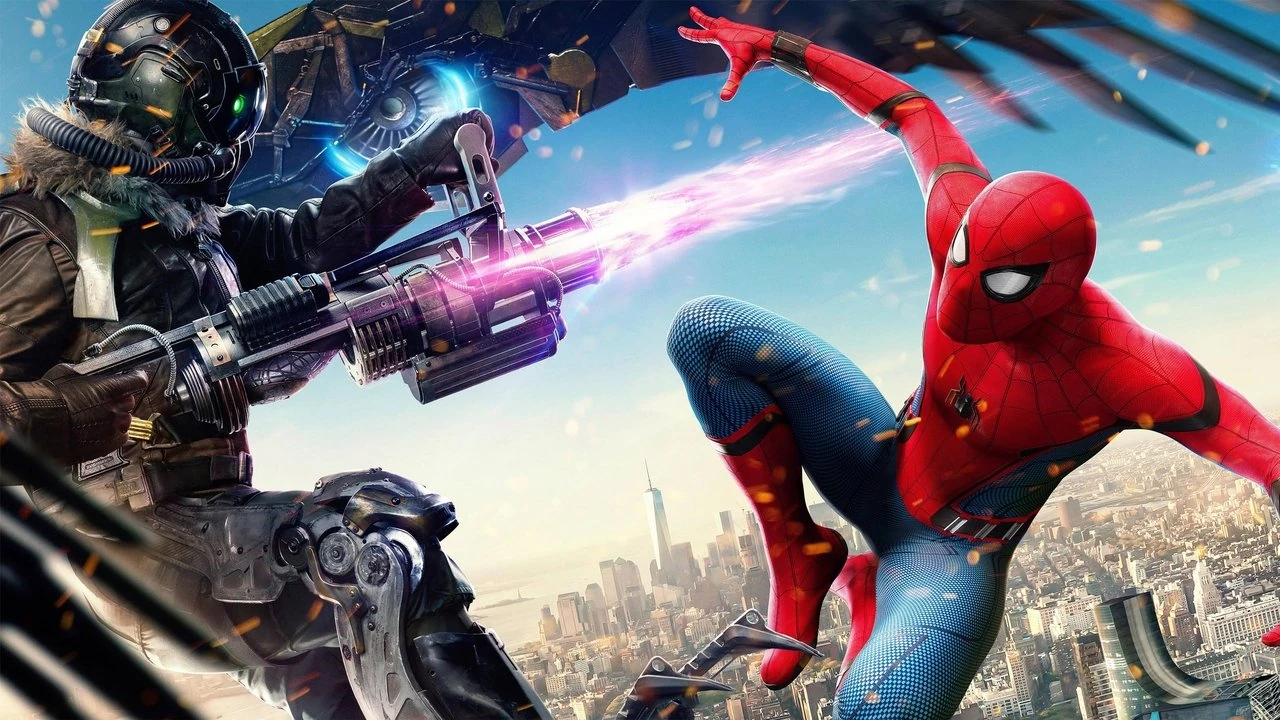
Michael Keaton’s Adrian Toomes, aka Vulture, perfectly complements this grounded approach. He isn’t a megalomaniac seeking world domination; he’s a working-class man driven to crime by corporate greed (specifically, Stark’s clean-up crew taking his livelihood). His motivations are painfully human, almost relatable, which makes his eventual confrontation with Peter feel less like a clash of cosmic forces and more like a moral reckoning between two men from different sides of the tracks, both trying to protect their own. The film smartly plays with the idea of a “villain” who sees himself as the hero, providing for his family in a system that failed him. This makes for a morally complex antagonist, a refreshing change from typical comic book fare.
 The Vulture, played by Michael Keaton, eyes his scavenged technology, a poignant visual of a working-class villain finding power in the margins.
Stripping Away the Suit: The Authentic Self
Perhaps the most profoundly philosophical moment in Spider-Man: Homecoming arrives when Tony Stark, frustrated by Peter’s recklessness, reclaims the high-tech suit. Stripped of his advanced tech, his AI assistant, and his mentor’s approval, Peter is left with only his homemade suit and his innate abilities. This is where the film truly shines philosophically, pushing Peter (and the audience) to confront the core of his heroism.
This enforced vulnerability compels Peter to rely on his own wits, his own spider-sense (even if it’s still developing), and his own moral compass. The climactic battle with the Vulture, fought mostly in a tattered, less capable suit, becomes a testament to self-actualization. Peter doesn’t need the advanced gadgets or the approval of Iron Man; he is Spider-Man because of his inherent sense of responsibility and his drive to protect the innocent, not because of a fancy costume.
This narrative choice directly addresses the earlier criticisms about the Stark-tech suit. By removing it, the film makes a powerful statement:
- True Power Resides Within: It’s not the suit, but the person inside it.
- Growth Through Adversity: Peter’s most significant growth occurs when he’s at his most vulnerable, forced to innovate and overcome challenges without a safety net.
- The Quest for Authenticity: Peter’s journey is about defining his own version of heroism, separate from Stark’s legacy. He chooses to be the “friendly neighborhood Spider-Man” not because Stark told him to, but because it aligns with his values.
 A determined Peter Parker, in his makeshift suit, clings to a bridge, embodying raw resilience and self-reliance without advanced tech.
While Spider-Man: Homecoming might have occasionally leaned too heavily on its mentor figure and his gadgets, it ultimately delivers a potent message about the difficult, often messy, path to independent selfhood. It’s a coming-of-age story that understands the profound weight of navigating expectations while striving to define your own existence.
Spider-Man: Homecoming is a vibrant, often hilarious, and ultimately thoughtful entry into the superhero canon. It successfully reintroduces a beloved character, not just with action and humor, but with a nuanced exploration of what it means to grow up, to take responsibility, and to forge your own identity in a world that constantly tries to define you. It asks us: When everything external is stripped away, who do we truly become?
Where to Watch
- Disney Plus
- fuboTV
- Peacock Premium
- YouTube TV
- Peacock Premium Plus
What’s Up? explores the philosophical depths of cinema.