The Unseen Scars: War, Identity, and the Micro-Narrative of Star Wars: Clone Wars (2003)
Exploring the philosophical depth of the 2003 Star Wars: Clone Wars micro-series, focusing on the human cost of war and fragmented identity.
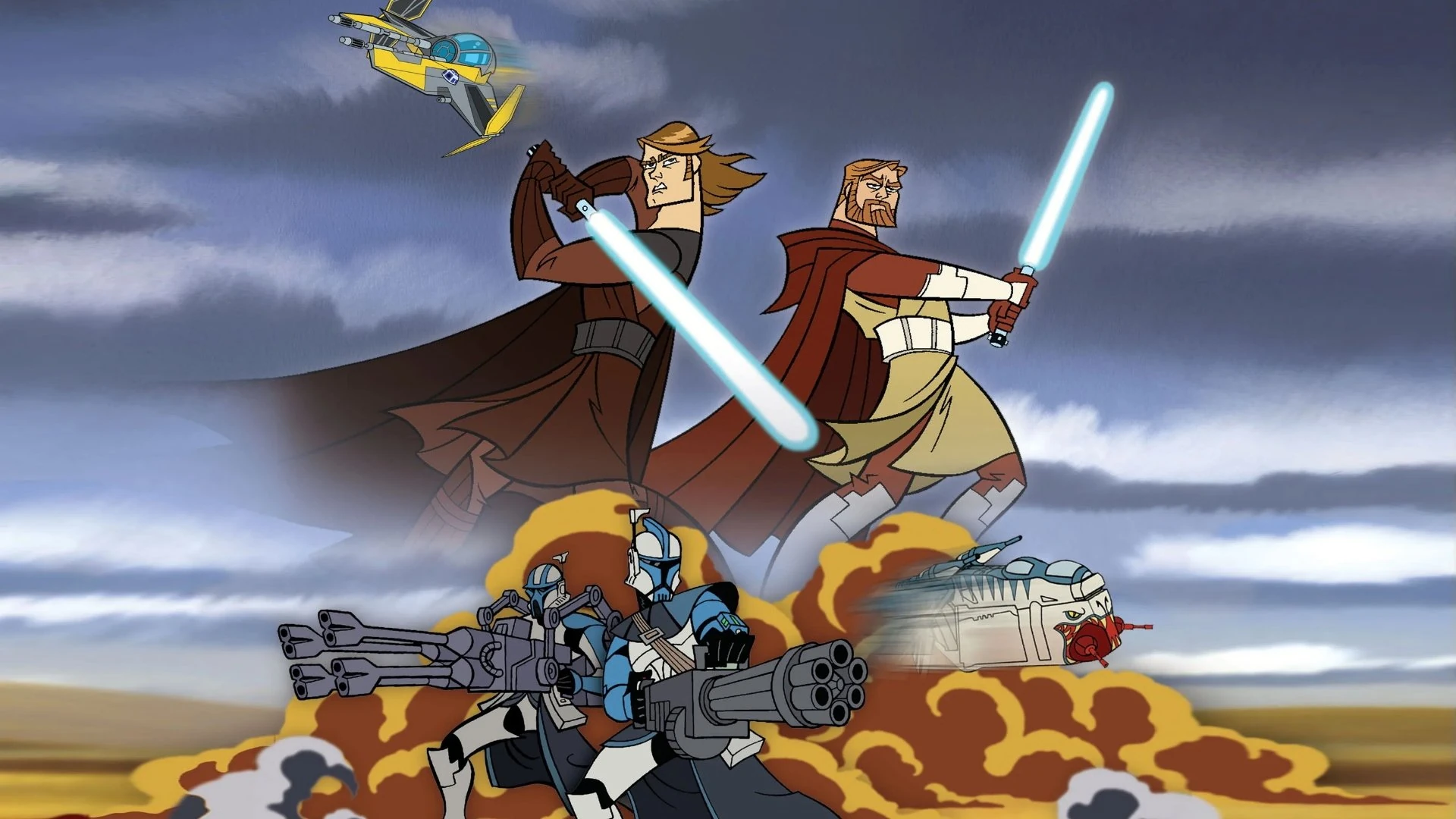
“War does not determine who is right – only who is left.” — Bertrand Russell
The Star Wars saga, at its heart, has always been a grand opera of cosmic conflict, a struggle between light and shadow. But few entries in its vast canon have captured the raw, relentless experience of that struggle quite like Genndy Tartakovsky’s Star Wars: Clone Wars (2003). This isn’t the expansive, CGI-driven narrative we’d later get; this was a series of six-minute animated shorts, a kinetic, almost wordless ballet of laser fire and lightsaber duels that bridged the gap between Attack of the Clones and Revenge of the Sith. And while audiences and critics alike overwhelmingly lauded its groundbreaking animation and visceral action, its true philosophical potency lies precisely in its brevity and brutal efficiency, sketching the unseen scars of war on the galaxy’s most revered heroes.
The Relentless March of Heroism
From its debut, Star Wars: Clone Wars was an aesthetic marvel. Tartakovsky’s signature style – angular, dynamic, and incredibly fluid – transformed the often-sterile Star Wars aesthetic into something electric and primal. Critics were near-unanimous in their praise, hailing it as a masterclass in animated action and visual storytelling. It was a rapid-fire succession of epic battles, showcasing Jedi Masters like Mace Windu, Yoda, and Obi-Wan Kenobi in their absolute prime, performing feats of Force-powered derring-do that felt fresh and exhilarating.
Yet, beyond the dazzling spectacle, the series’ very format raises profound questions about the nature of heroism in an endless conflict. Each 6-minute segment is a snapshot, a vignette of intense combat. We don’t see the strategic planning, the political machinations, or much of the downtime between battles. Instead, we’re plunged directly into the fray, again and again. This deliberate choice, while praised for its pacing, subtly forces us to confront the reality of war as a fragmented, ceaseless ordeal.
Key themes the series implicitly explores:
- The Dehumanization of Conflict: Jedi, typically figures of peace, are reduced to generals, their lightsabers instruments of war. The clones, faceless and numerous, highlight the expendability of life in a large-scale conflict.
- The Burden of Leadership: Obi-Wan, Anakin, and other Jedi are constantly making life-or-death decisions, their faces often etched with grim determination rather than joy or triumph.
- The Erosion of Idealism: The constant fighting, even for a “good” cause, inevitably takes a toll, subtly hinting at the moral compromises that pave the way for the dark side.
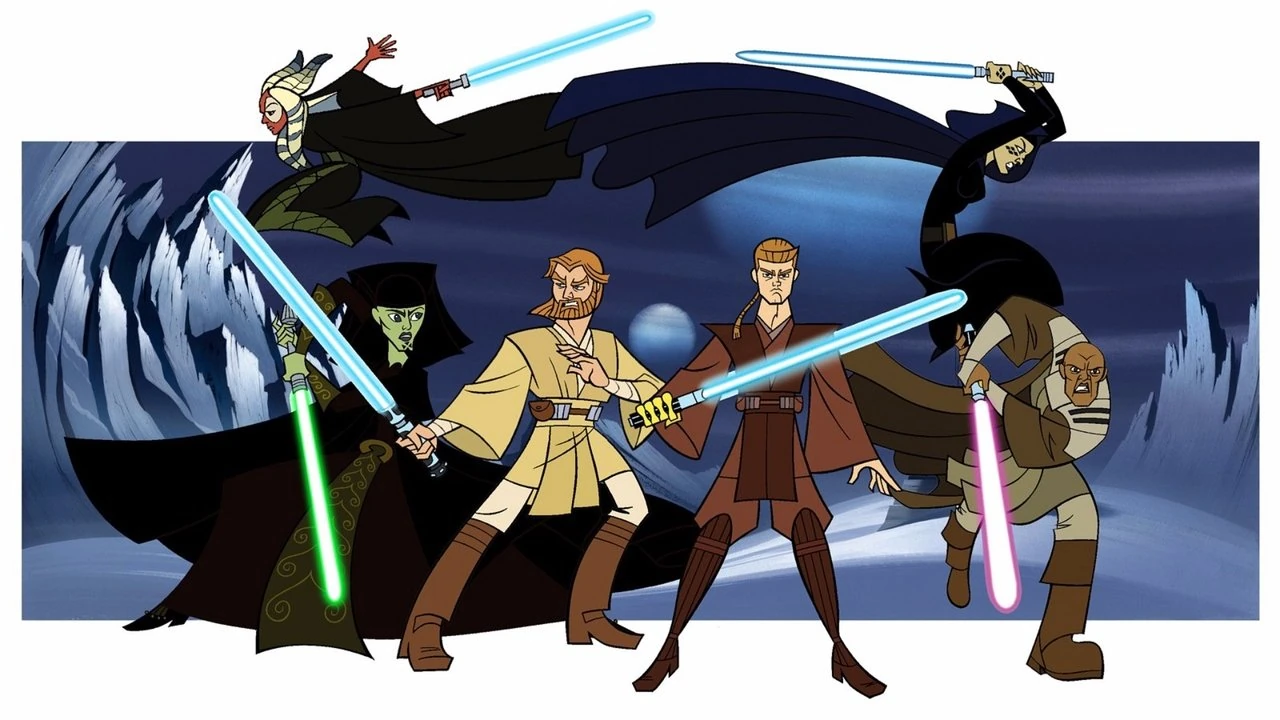 A Jedi Master, a beacon of hope, caught in the relentless tide of battle.
Action as Philosophy: The Art of the Micro-Narrative
One of the common points of discussion, more than outright criticism, around Star Wars: Clone Wars (2003) revolved around its unique structure. Some viewers, accustomed to more traditional narrative arcs, might have found the 6-minute runtime and minimal dialogue in many episodes less conducive to deep character development or intricate plot progression. Indeed, the series prioritizes visual storytelling over expository dialogue, letting the action speak for itself.
This isn’t a show about war; it’s a show that makes you feel the war, stripping away grand narratives to focus on the visceral, moment-to-moment survival of its participants.
However, it’s precisely this stylistic choice that elevates the series from mere entertainment to philosophical inquiry. By presenting these intense, self-contained bursts of combat, Tartakovsky forces us to experience the Clone Wars not as a cohesive story, but as a series of overwhelming, disorienting events. This mirrors the psychological reality of soldiers on the front lines, where moments of clarity are often punctuated by chaos, and the larger strategic picture often recedes in favor of immediate survival.
The series excelled at introducing and developing characters through action and visual cues. We see Anakin Skywalker’s growth from a reckless Padawan to a powerful, albeit still impulsive, Jedi Knight. The introduction of characters like Asajj Ventress and General Grievous was handled with chilling effectiveness, establishing their threat level through sheer presence and combat prowess rather than lengthy exposition. This efficiency isn’t a flaw; it’s a statement. It suggests that in the crucible of war, character is forged and revealed through action and reaction, rather than introspection. The brief glimpses we get are often more powerful precisely because they are so fleeting, leaving us to fill in the emotional blanks, to ponder the unseen toll.
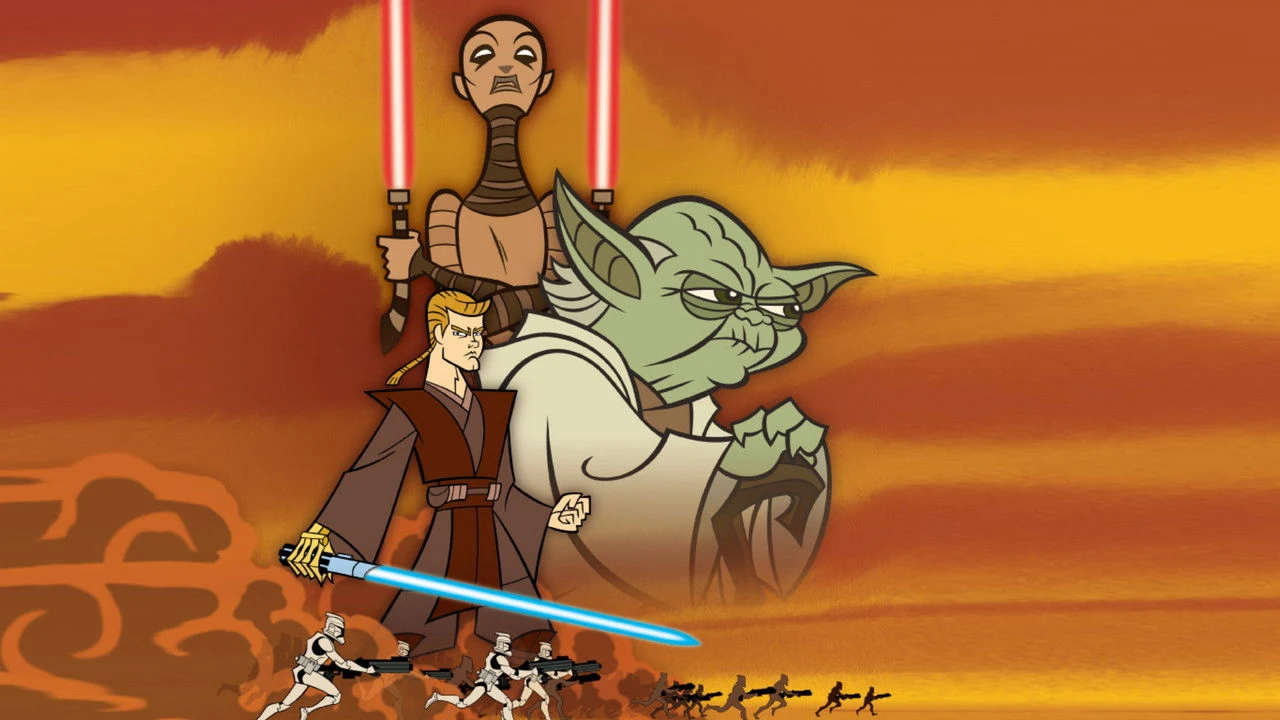 The silhouette of a formidable foe, whose presence speaks volumes without a single word.
Shadows of Becoming: The Pre-Fall Anakin
Beyond the immediate chaos, the 2003 Clone Wars series serves as a crucial, if understated, prologue to Anakin Skywalker’s tragic fall. We witness his relentless pursuit of victory, his burgeoning power, and the subtle hints of the anger and impatience that will ultimately consume him. Supreme Chancellor Palpatine’s manipulation is also subtly woven in, his growing influence over Anakin mirrored by the trust the young Jedi places in him.
The introduction of Asajj Ventress, Count Dooku’s Sith apprentice, serves as a dark mirror to Anakin. Both are powerful Force-users, both are driven by intense emotions, and both walk a perilous path close to the edge. Her relentless pursuit of Anakin is not just an external conflict, but an internal one, challenging his control, pushing his limits, and forcing him to confront the more aggressive aspects of his own nature.
This exploration of Anakin’s pre-Vader psyche is perhaps the series’ most profound philosophical contribution. It asks:
- Is destiny truly inescapable? The Clone Wars serve as a brutal training ground, hardening Anakin, making him more effective but also more susceptible to the dark side.
- How do circumstances shape morality? The constant violence, the need for decisive action, the pressures of war – how much do these factors erode one’s ethical core, even when fighting for “good”?
- What is the true cost of power? Anakin’s increasing power is undeniable, but the series implicitly questions the psychological and moral price he pays for it.
 Anakin Skywalker, a hero in the making, standing on the precipice of his ultimate destiny.
The relentless march of war leaves no one untouched; it carves new identities, often stained with the very darkness they sought to vanquish.
While its eventual narrative successor, The Clone Wars (2008), expanded upon its themes with greater character depth and longer arcs, the 2003 micro-series stands as a unique, powerful, and philosophically resonant entry. It remains a critically acclaimed masterpiece of animation, cherished by fans for its kinetic energy and artistic vision. It wasn’t just a bridge between films; it was a visceral meditation on the fragmented nature of war, the burden of heroism, and the subtle erosion of self that occurs when one is perpetually caught in the maelstrom of conflict. It asks us to look beyond the spectacle and consider the deeper, often unseen, psychological and ethical toll that even a “just” war can exact on its participants.
Where to Watch
- Disney Plus
What’s Up? explores the philosophical depths of cinema.