The Unbearable Lightness of Being: Return of the Jedi and the Philosophy of Redemption
A deep dive into Star Wars: Return of the Jedi, exploring themes of redemption, free will, and the ethical imperative of compassion in the face of ultimate evil.
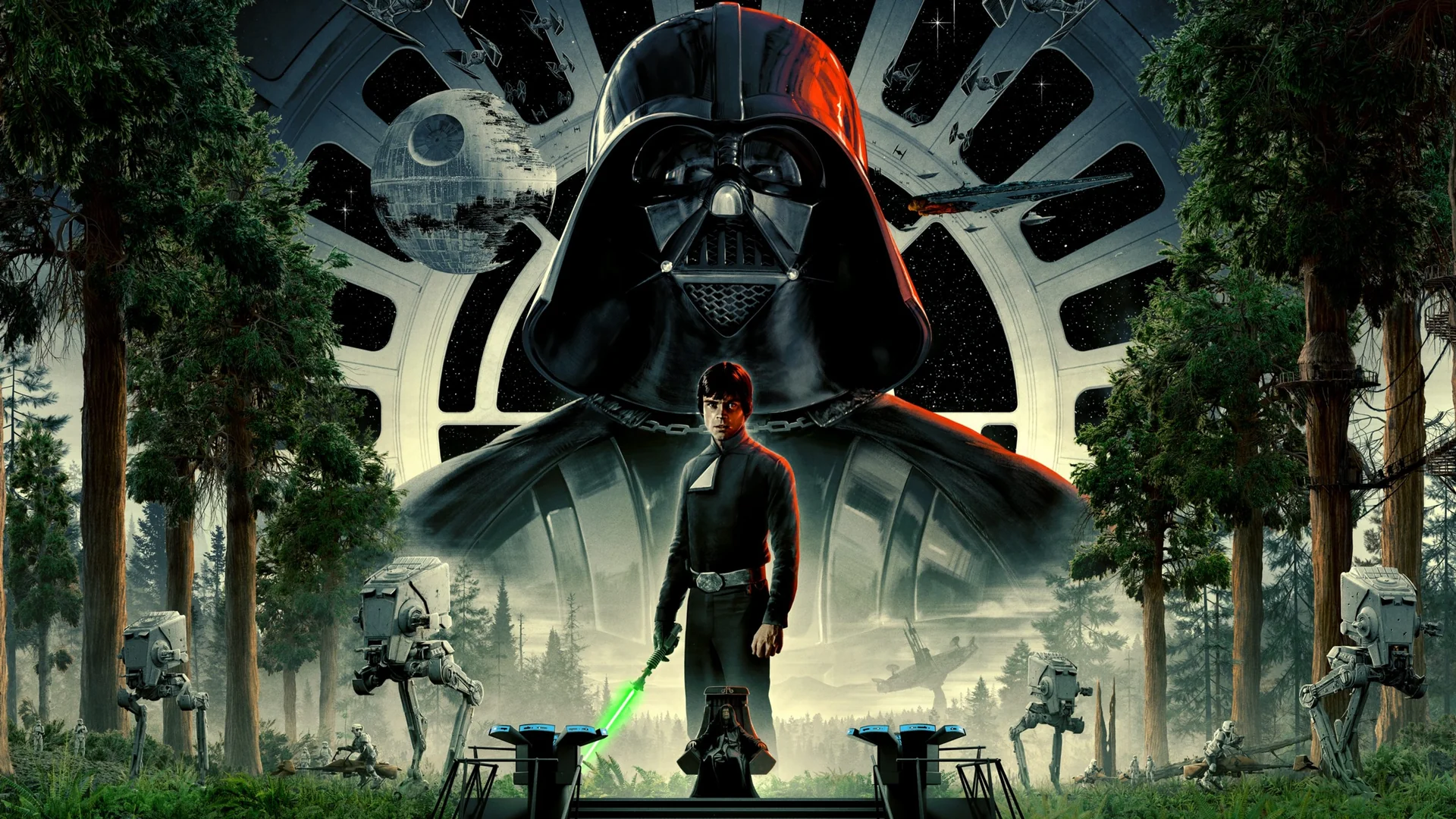
“Man is condemned to be free; because once thrown into the world, he is responsible for everything he does.” — Jean-Paul Sartre
In the vast cosmic ballet that is Star Wars, the concluding chapter of the original trilogy, Return of the Jedi, often gets overshadowed by the foundational mythos of its predecessors. Yet, beneath the Ewok skirmishes and thrilling space battles, lies a profound philosophical meditation on free will, redemption, and the ethical imperative of compassion. This is not merely a tale of good versus evil, but a crucible where the very nature of existence is tested, where one young man’s unwavering faith in the light challenges the seemingly immutable darkness of the galaxy. It posits that true victory is not merely military, but deeply, irrevocably personal — a triumph of the spirit over the deterministic chains of fate and fear.
The Dialectic of Choice and Destiny
Return of the Jedi confronts us immediately with the precariousness of the heroic journey. Luke Skywalker, now a more seasoned, self-assured Jedi-in-training, carries the weight of a galaxy’s hope and the terrifying truth of his lineage. His confrontation with Darth Vader and Emperor Palpatine is not just a physical duel; it is a metaphysical struggle for the soul of the galaxy, and indeed, for his own soul. The Emperor, a master manipulator of fear and ambition, believes in a deterministic universe where individuals are mere pawns, easily swayed by power or despair. He offers Luke the path of his father, tempting him with raw power and the promise of an end to suffering through absolute control.
Key themes resonate throughout this core conflict:
- The Hegelian Dialectic: The tension between the thesis (the Empire’s order) and antithesis (the Rebellion’s chaos) seeks a synthesis not in a new Empire, but in a liberated, balanced Force.
- Existential Freedom: Luke’s refusal to succumb to the Dark Side, despite immense provocation, underscores the radical freedom to choose one’s path, even when external forces push towards a pre-ordained destiny.
- The Power of Empathy: Luke’s unwavering belief that his father can be saved is an active force, a choice to see beyond the mask of the monster to the sliver of humanity that remains. This is not passive hope, but an ethical stance against the dehumanizing logic of war.
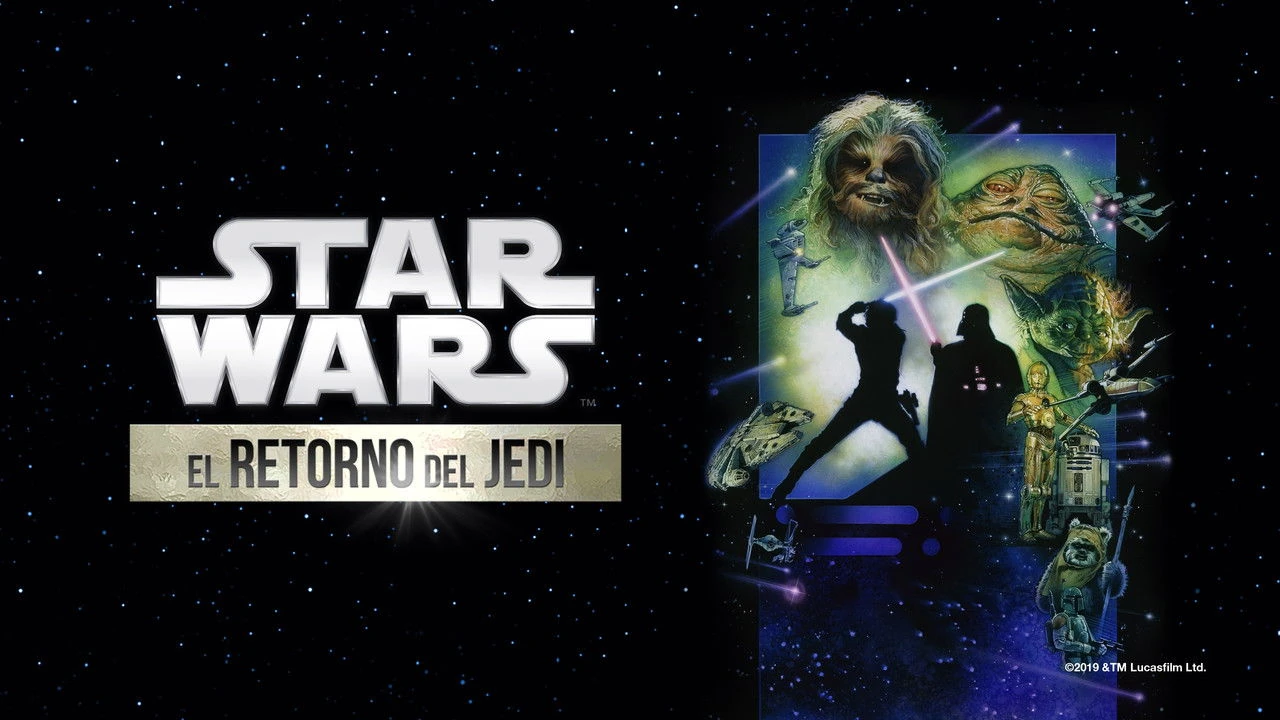 The ultimate test: a son’s compassion against the corrupting force of evil.
Luke Skywalker: The Ethical Hero
Luke’s journey in Return of the Jedi is a profound exploration of ethical heroism. Unlike traditional heroes who might seek to vanquish evil through sheer force, Luke’s ultimate triumph comes not from striking down the Emperor, but from refusing to do so. He understands that true victory over the Dark Side cannot be achieved by becoming a part of it, even for a moment. His disarming of Vader, followed by his defiant declaration, “I’ll never turn to the Dark Side. You’ve failed, Your Highness. I am a Jedi, like my father before me,” is a moment of moral clarity that reshapes the entire narrative.
This is where we discover the true weight of choice — not in the outcome, but in the becoming. Luke’s refusal to kill the Emperor transforms him, solidifying his identity as a beacon of light, not merely a wielded weapon.
This act of non-retaliation is the catalyst for Anakin Skywalker’s redemption. Faced with his son’s imminent death at the hands of the Emperor, Darth Vader, for the first time in decades, makes a choice born not of fear or ambition, but of paternal love and sacrifice. It is a testament to the idea that even the most corrupted soul can find a path back to the light, not through self-will, but through the compassionate intervention of another. The ethical hero, in this sense, is not just a warrior, but a healer of souls, capable of seeing and nurturing the dormant good within.
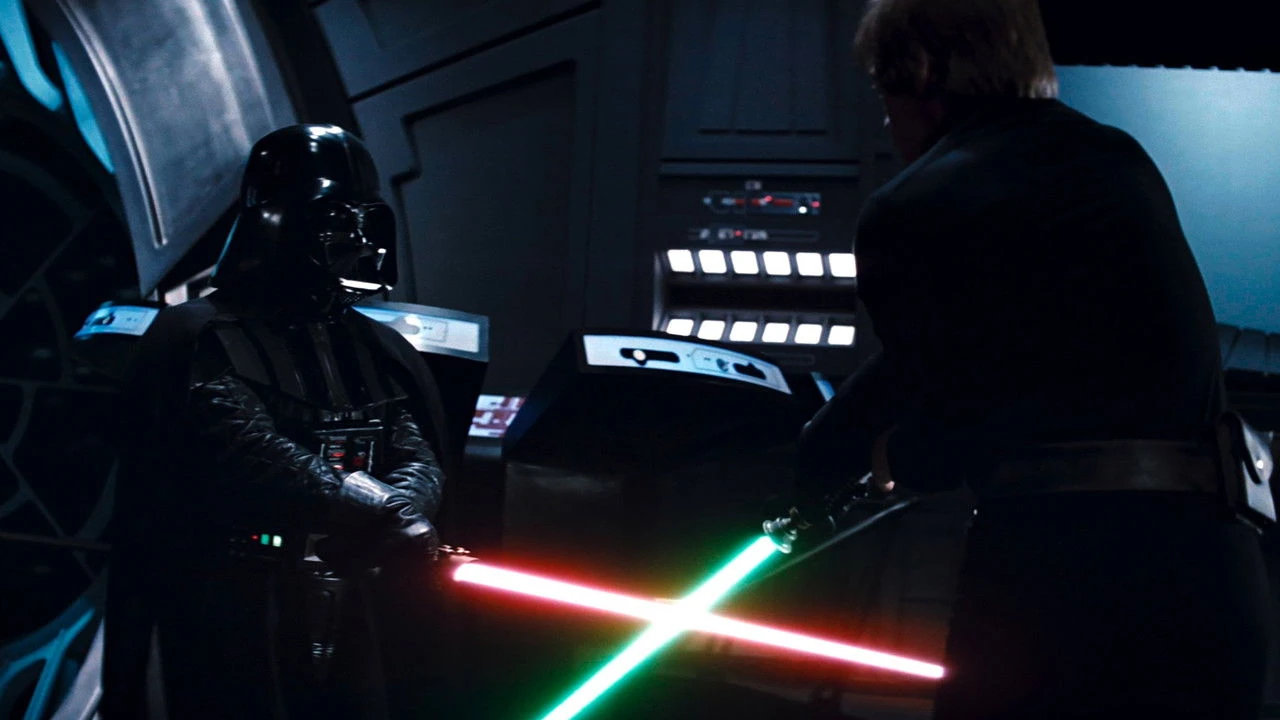 The poignant moment of unmasking and reconciliation, a testament to enduring love.
The Metaphysics of Hope and the End of Cycles
Beyond the personal redemption of Anakin, Return of the Jedi also delves into the metaphysical implications of the Force and the cyclical nature of conflict. The destruction of the second Death Star, mirroring the first, might suggest a repetitive, futile struggle. However, the context is entirely different. This time, the victory is sealed by the personal sacrifice of the galaxy’s darkest figure, facilitated by the unwavering moral stance of its brightest hope. This isn’t just a military triumph; it’s a spiritual cleansing, an act that symbolically breaks the cycle of fear and tyranny that had plagued the galaxy for generations.
The Force, initially presented as a mystical energy field, reveals itself more fully as a cosmic balance that yearns for harmony. Anakin’s return to the light and his subsequent appearance as a Force ghost alongside Obi-Wan and Yoda signify not just his individual salvation, but the restoration of this balance. It speaks to a transcendent reality where actions have profound, lasting consequences, and where the spirit can persist beyond physical death, offering guidance and hope. The celebration at the end, across multiple worlds, is not just about a battle won, but about a paradigm shift—a transition from an era of darkness and oppression to one of liberation and potential.
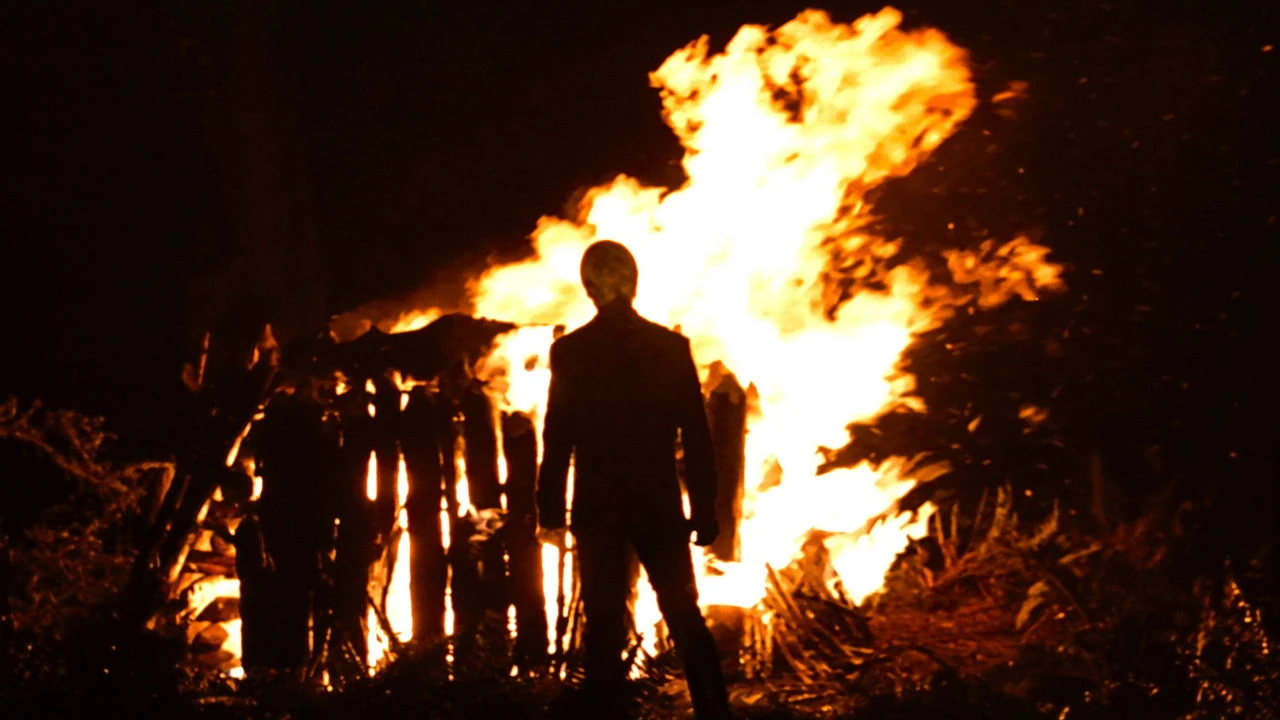 The serene communion of past masters, signaling a new beginning for the galaxy.
The gravest danger is not the external foe, but the internal capitulation to despair, the belief that the past dictates the future, and that redemption is an impossibility.
Return of the Jedi ultimately asks us to consider our own capacity for change, for forgiveness, and for holding onto hope in the face of seemingly insurmountable darkness. It suggests that true heroism lies not in the capacity for destruction, but in the courage to love, to forgive, and to see the potential for good even in the most corrupted of souls. It is a powerful affirmation that while destiny may set the stage, it is personal choice and unconditional compassion that write the final, most enduring acts of our lives. What echoes of the Emperor’s temptations do we face in our own lives, and what choices, however small, can we make to ensure our own ‘return of the Jedi’?
Where to Watch
- Disney Plus
- AMC+ Roku Premium Channel
- AMC+
- AMC
What’s Up? explores the philosophical depths of cinema.