The Shadowland of Childhood: Existential Dread in Stranger Things
Exploring Stranger Things' deep dive into nostalgia, existential dread, and the liminal spaces where childhood innocence confronts cosmic horror.
“The greatest wisdom consists of knowing that we know nothing.” — Socrates
From the very first haunting synth chords, Stranger Things (2016) pulls us into a meticulously crafted tapestry of nostalgia, not merely as a stylistic choice but as a crucial philosophical anchor. It’s a journey back to the analog purity of the 1980s, a seemingly simpler time, only to strip away that veneer with the chilling revelation of a parallel dimension lurking beneath the mundane. This acclaimed TV Series, a masterful blend of Drama, Fantasy, Horror, Mystery, Sci-Fi, and Thriller, doesn’t just entertain; it confronts us with fundamental questions about reality, identity, and the fragility of innocence in the face of the incomprehensible. The disappearance of young Will Byers is not merely a plot device; it is the catalyst for an entire town’s forced awakening to the liminal spaces of existence, where the familiar gives way to the utterly alien, and the boundaries between worlds are terrifyingly permeable.
The Echoes of the Upside Down: Nostalgia, Trauma, and the Veil of Reality
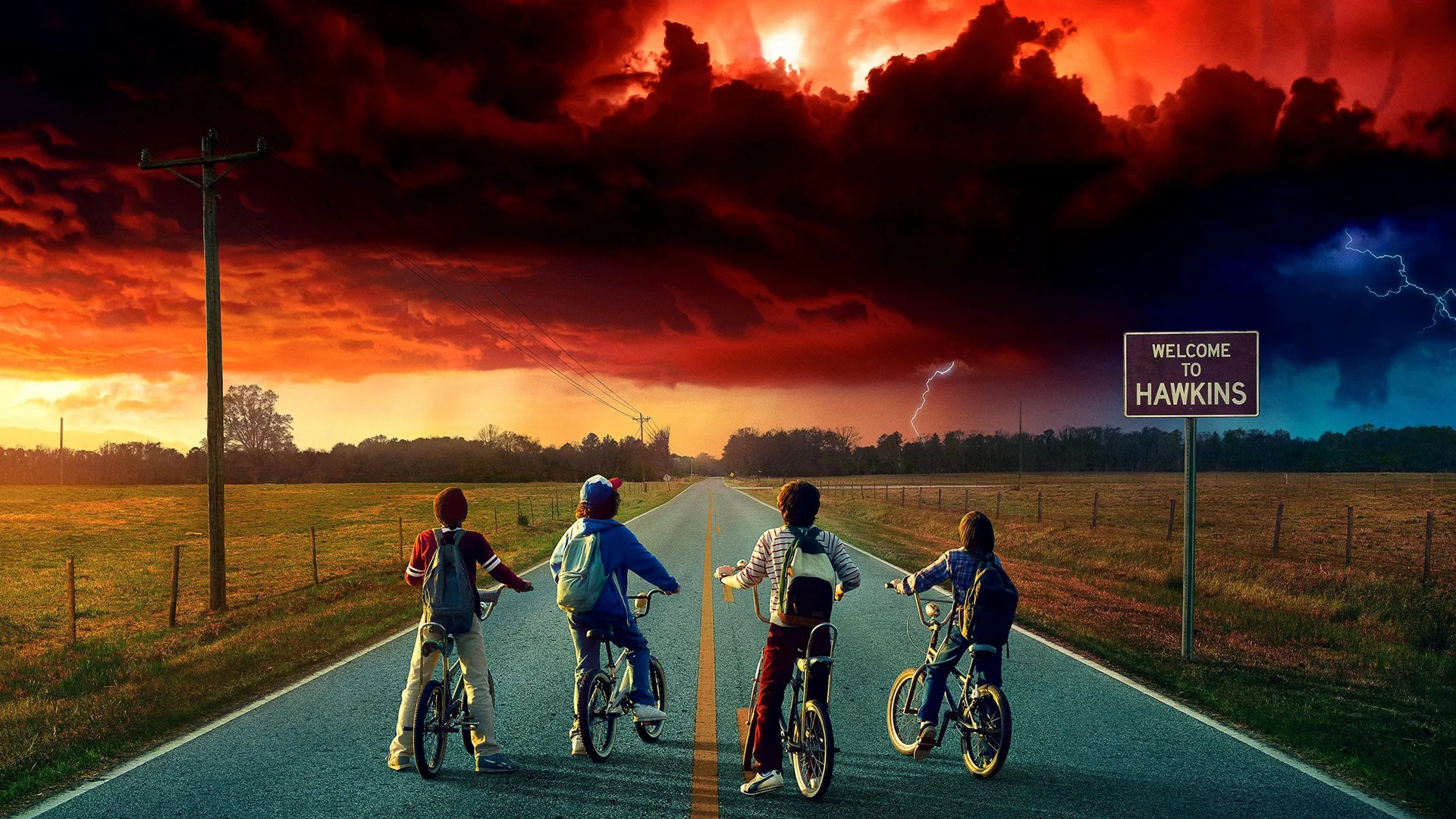
Stranger Things expertly weaponizes nostalgia, not to offer a comforting escape, but to amplify the underlying existential dread. The 1980s setting, with its bicycles, walkie-talkies, and Dungeons & Dragons, initially evokes a warm, familiar embrace. Yet, this very familiarity becomes a stark contrast to the cosmic horror that seeps into Hawkins, Indiana. The show posits that beneath the veneer of suburban normalcy, a darker, more primordial truth always exists, waiting for a breach.
The Upside Down itself serves as a profound metaphor. Is it a physical alternate dimension, or a manifestation of collective trauma, a subconscious landscape mirroring the hidden anxieties and fears of a community? Its desolate, decaying mirroring of Hawkins suggests a world stripped of life, hope, and meaning – a stark visual representation of a philosophical void. This resonates deeply with nihilistic philosophies, where ultimate meaning is absent, and existence is inherently absurd. The struggle of the characters is not just to close a gate, but to reassert meaning and order in a universe suddenly revealed to be indifferent, even hostile.
Key philosophical explorations embedded in the Upside Down:
- The Nature of Reality: Is our perceived reality the only reality, or are there countless hidden layers and dimensions beyond our sensory perception?
- Trauma and Memory: How do collective and individual traumas manifest, and can they create or influence alternate realities, or at least our perception of them?
- The Unknown vs. The Known: The terror doesn’t just come from the monsters, but from the realization that everything we thought we knew about our world was a comfortable illusion. This challenges our epistemological foundations – what can we truly know?
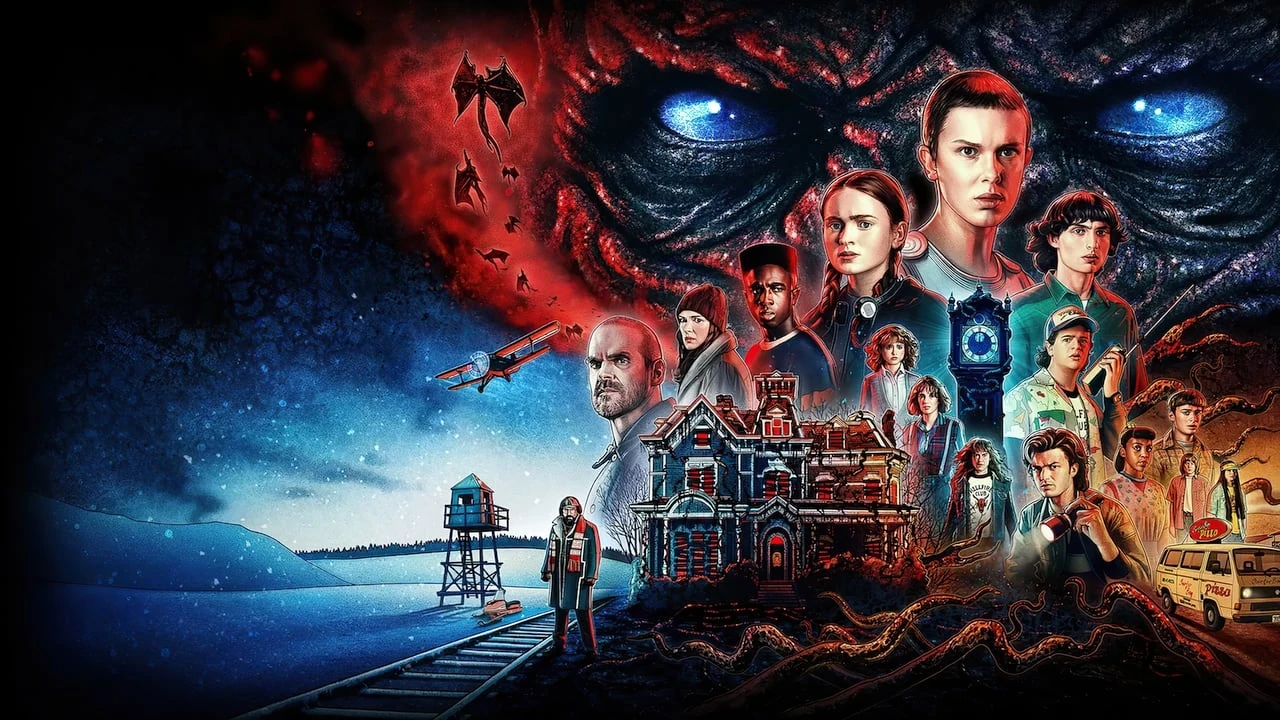 The fragile innocence of childhood confronting the encroaching shadows of the unknown, a visual ode to the series’ core tension.
The Children of Chaos: Moral Courage and the Weight of Otherness
At the heart of Stranger Things’ philosophical depth lies its extraordinary ensemble of characters, particularly the children. They are not merely protagonists; they are archetypes of resilience, loyalty, and moral courage in the face of overwhelming adversity. Their journey is an exploration of ethics in extremis. Mike, Dustin, Lucas, and Will, along with Eleven, confront horrors that would break most adults, yet they find strength in their bond and their unwavering commitment to each other.
Eleven, in particular, embodies the themes of otherness and identity. A child with immense power, exploited and feared, she struggles to find her place in a world that simultaneously needs and rejects her. Her journey is one of self-discovery, of learning empathy, and choosing to use her formidable abilities for good, despite the pain they have caused her. This raises profound ethical questions:
- What is the responsibility of those with extraordinary power?
- How do we integrate those who are fundamentally “different” into society?
- Can a past defined by trauma and exploitation be overcome by acts of altruism and love?
This is where we discover the true weight of choice — not in the outcome, but in the becoming. It is in the crucible of chaos that our authentic selves are forged, stripped of pretense and defined by our actions, not our circumstances.
The adults, too, grapple with their own ethical dilemmas. Joyce Byers’ relentless pursuit of her son, often dismissed as madness, represents the primal force of maternal love against an indifferent system. Jim Hopper’s transformation from a jaded, grieving sheriff to a protective father figure highlights the redemptive power of sacrifice and connection. Their struggles underscore a fundamental truth: in a world where systems fail and reality fractures, it is the strength of human relationships and individual moral compasses that ultimately hold the line against the encroaching darkness. Their choices are not abstract; they are deeply personal, driven by a profound sense of responsibility and love.
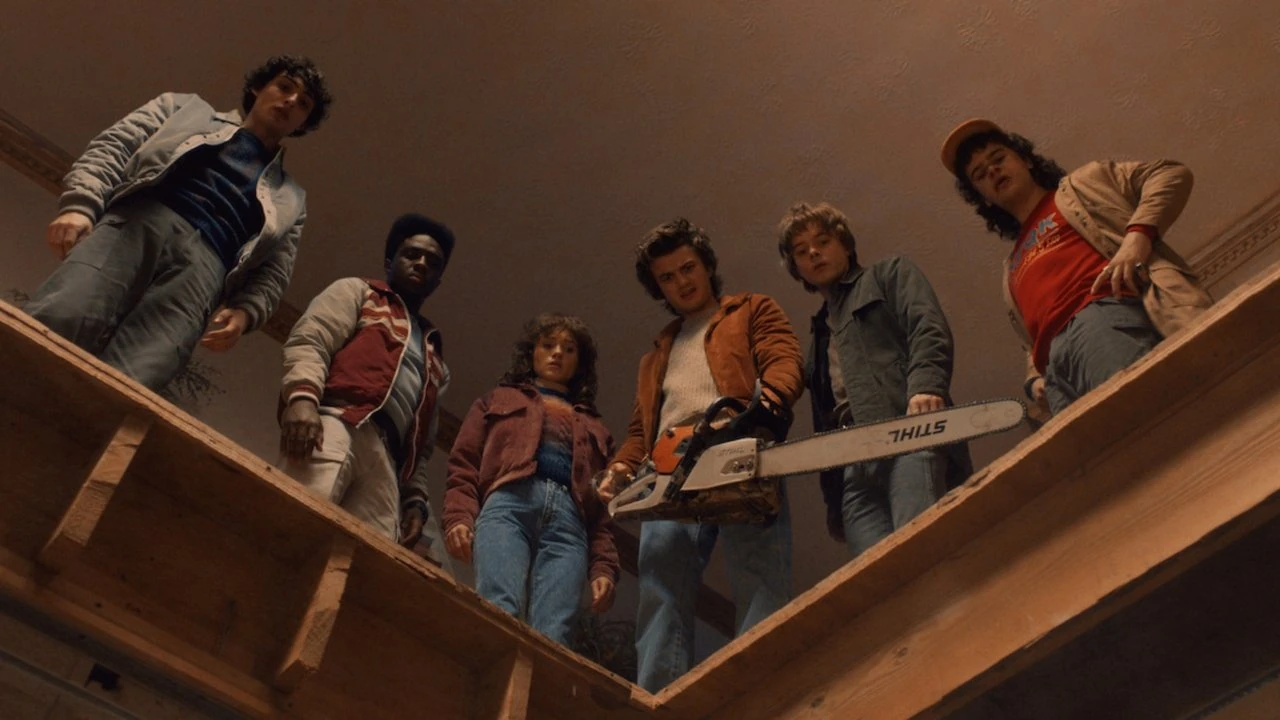 A portrait of quiet defiance and formidable strength, reflecting Eleven’s battle for identity and agency.
Beyond the Gate: Metaphysics, Liminality, and the Fear of the Unknown
The metaphysical implications of Stranger Things extend far beyond simple monster-of-the-week narratives. The series delves into the concept of liminality – the state of being on a threshold, neither here nor there, betwixt and between. The Upside Down is the ultimate liminal space, a mirror world that is simultaneously present and absent, familiar yet terrifyingly alien. This challenges our understanding of spatial and temporal continuity, forcing us to consider the possibility of parallel universes not as science fiction tropes, but as conceptual frameworks for deeper reality.
The constant threat of the Upside Down breaking through the veil of our world taps into a primal human fear: the fear of the unknown. It’s not just the fear of a monster, but the fear of losing control, of having our fundamental understanding of existence shattered. This resonates with the philosophical concept of the sublime – an experience that overwhelms our senses and reason, revealing our insignificance in the face of immense power, often evoking both terror and awe. The Mind Flayer, in particular, embodies this sublime terror; an entity of pure malevolence, beyond human comprehension or even physical form, existing as a psychic force.
The recurring motif of light and darkness, of the physical world (represented by vibrant 80s aesthetics) clashing with the shadowy Upside Down, is a classic dualistic philosophical battle. It asks us to consider:
- Is there a fundamental duality to existence, a constant struggle between order and chaos, light and shadow?
- Can we truly ever eradicate evil, or merely contain it, knowing it always lurks just beyond the periphery?
- What does it mean to confront one’s own inner ‘Upside Down’ – the repressed fears, anxieties, and shadows within the human psyche?
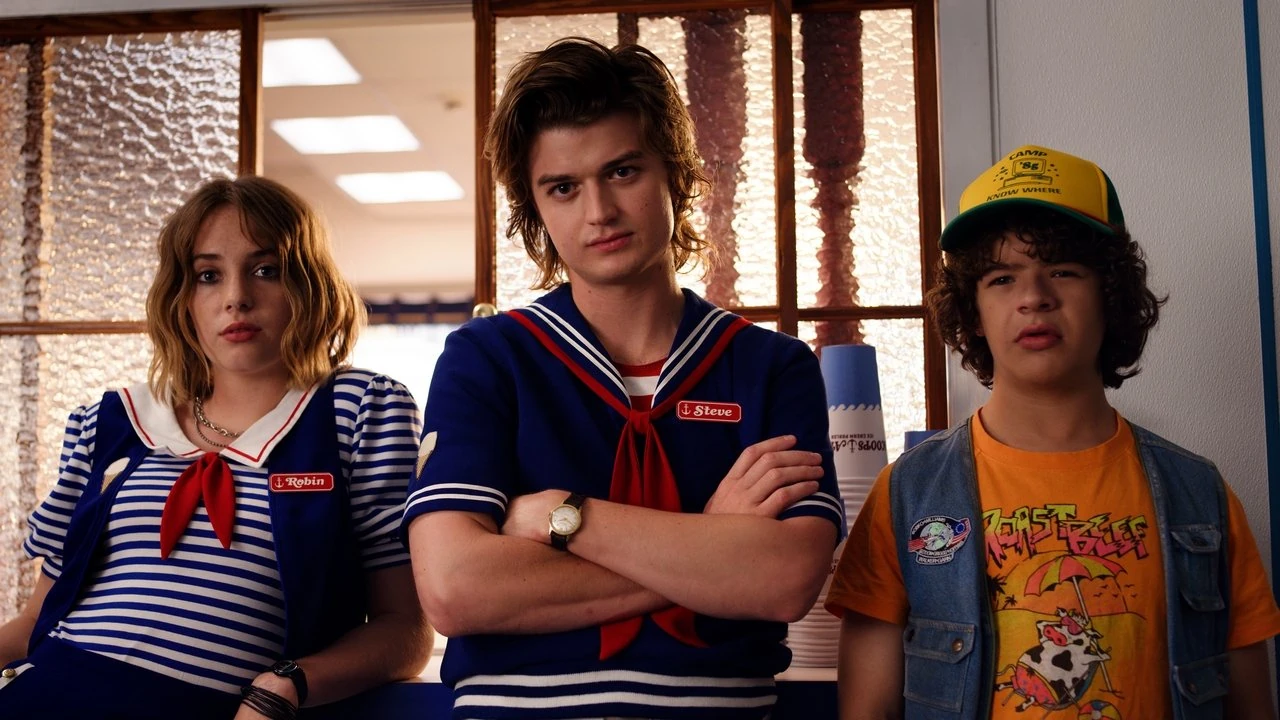 The embodiment of cosmic dread, a creature from another dimension symbolizing the profound fear of the utterly alien.
“The scariest monsters are the ones that lurk within our souls, not under our beds.” — Unknown
Stranger Things is more than just a pop culture phenomenon; it is a profound philosophical meditation disguised as a genre spectacle. It uses the vibrant hues of 1980s nostalgia to lure us into a world where the fabric of reality is thin, where childhood innocence is tested by cosmic horror, and where the most powerful force against the unknown is the indomitable spirit of human connection. It asks us to look beyond the surface, to question what we perceive as real, and to confront the terrifying, yet ultimately empowering, truth that even in the darkest of shadows, the light of human courage and love can still burn bright. What, then, does our own “Upside Down” reveal about us, and are we brave enough to face it?
Where to Watch
- Netflix
- Netflix Standard with Ads
What’s Up? explores the philosophical depths of cinema.