Suicide Squad's Existential Reckoning: When Villains Play Heroes
Despite its critical panning, David Ayer's Suicide Squad (2016) offers a surprisingly dark reflection on redemption, choice, and the nature of manufactured heroism.

“The only way to deal with an unfree world is to become so absolutely free that your very existence is an act of rebellion.” — Albert Camus
It’s rare for a blockbuster to polarize audiences and critics quite like David Ayer’s Suicide Squad did in 2016. Fresh off the heels of Batman v Superman’s contentious reception, Warner Bros. and DC Films seemed to be aiming for something edgier, a bit more irreverent. What we got was a film that, by most critical accounts, missed the mark spectacularly, landing a dismal 32% on Rotten Tomatoes and a 40/100 on Metacritic. Critics lambasted its uneven pacing, convoluted plot, underdeveloped villain, and a narrative that often felt like it was fighting itself. Yet, beneath the neon-soaked chaos and the messy execution, there’s an undeniable, almost accidental, philosophical undercurrent that, for me, makes it a surprisingly compelling case study in the nature of choice, identity, and manufactured heroism.
The Burden of the Label: Villainy as Identity
The core premise of Suicide Squad is, on its face, deliciously cynical: what if the only people capable of saving the world are those we’ve locked away for trying to destroy it? Amanda Waller (a chillingly effective Viola Davis) assembles a team of “the worst of the worst”—Deadshot (Will Smith), Harley Quinn (Margot Robbie), Captain Boomerang (Jai Courtney), Killer Croc (Adewale Akinnuoye-Agbaje), El Diablo (Jay Hernandez)—to act as deniable assets for the U.S. government. Their task: undertake high-risk black ops missions in exchange for commuted prison sentences. But here’s where the philosophical gears start grinding: are these villains truly offered a path to redemption, or are they merely being rebranded as tools for a state that itself operates in morally grey areas?
The film struggles to decide if it wants us to genuinely root for these characters as budding anti-heroes or to revel in their unapologetic villainy. This narrative tension, while often a flaw in the storytelling, inadvertently highlights a profound existential question: can someone shed their past identity, or are they forever defined by their worst acts? The characters are constantly reminded of who they are—”villains,” “psychos,” “monsters.” They wear these labels like a uniform, even as they’re forced into a role typically reserved for heroes. This constant reinforcement of their criminal identity, even in the face of performing heroic deeds, suggests a bleak outlook on the possibility of true change. They’re not becoming heroes; they’re villains playing heroes under duress.
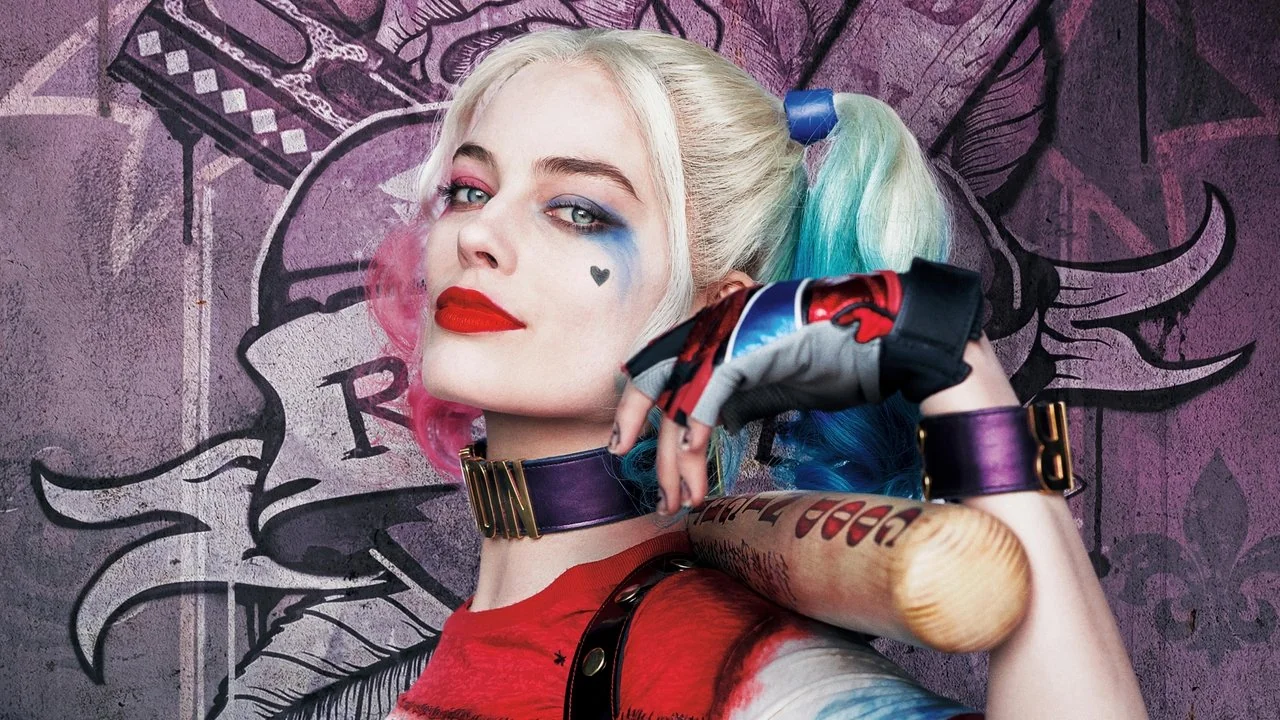
 Harley Quinn, a picture of chaotic freedom amidst forced compliance.
The Illusion of Choice and the Morality of the State
One of the most significant criticisms leveled against Suicide Squad was its often-muddled plot and rushed character introductions. Yet, even in its incoherence, the film presents a stark portrayal of state control and the illusion of choice. These characters aren’t volunteers; they’re coerced. With nanite bombs implanted in their necks, their “choice” to participate is framed less as a moral turning point and more as a desperate bid for survival. This isn’t freedom; it’s a meticulously engineered cage with a slightly wider door.
The real choice isn’t between right and wrong, but between survival and oblivion, forcing a grim utilitarianism upon individuals who are already deemed expendable.
Amanda Waller is the ultimate pragmatist, embodying a ruthless Machiavellianism. She doesn’t care about their souls; she cares about their utility. She sees them as means to an end, a shield against threats too dangerous for conventional forces. This raises uncomfortable ethical questions about the state’s right to manipulate and endanger its “undesirable” citizens for the “greater good.” Is it truly a lesser evil to use villains to fight villains, or does it simply normalize the use of morally compromised methods? The film, for all its flaws, inadvertently holds up a mirror to the ethical compromises made by governments in the name of security, where the “bad guys” are simply another resource to be exploited.
 Amanda Waller, the architect of the squad, embodies ruthless pragmatism.
Beyond the Surface: A Flawed Reflection of Humanity
Despite the film’s many weaknesses—the inconsistent tone, the weak main villain (Enchantress), and a Joker portrayal (Jared Leto) that was largely sidelined and divisive—Suicide Squad still manages to stumble upon some profound existential questions. What does it mean to find purpose when your very existence is seen as a problem? For characters like Deadshot, his motivation isn’t grand heroism, but the simple, deeply human desire to see his daughter. El Diablo, haunted by his past, seeks a form of penance. Harley Quinn, in her manic joy, grapples with a love that is both toxic and defining.
The film often presents these characters at their most vulnerable, exposing glimmers of humanity beneath their monstrous exteriors. This push and pull between their inherent nature and the demands placed upon them speaks to the fluidity of identity and the constant struggle to define oneself, especially when society has already cast its judgment. Are they good people forced to do bad things, or bad people capable of good? The film never fully resolves this, which, ironically, is where its philosophical strength lies. It doesn’t offer easy answers, instead leaving us with the discomfort of observing individuals caught in an impossible bind, forced to confront their own definitions of right and wrong in a world that offers them none.
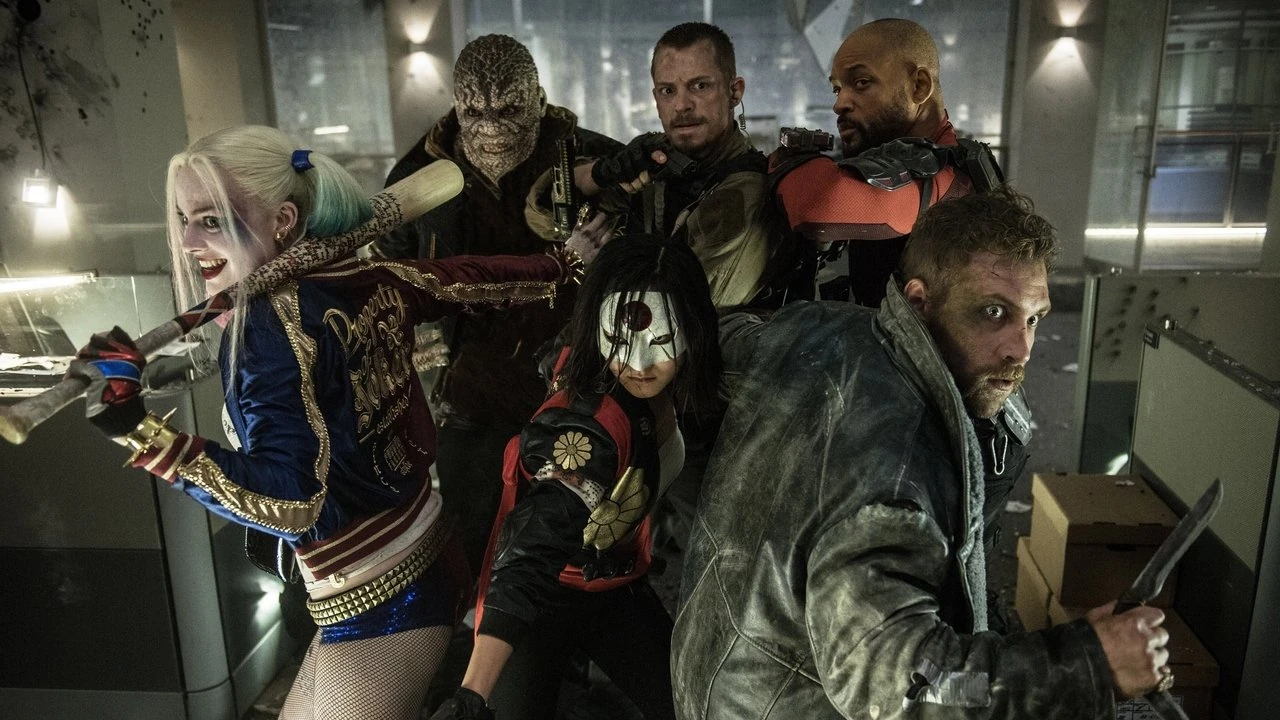
 The squad, a collection of broken individuals, united by circumstance.
“Sometimes, the only way to find yourself is to be lost in someone else’s war, even if you never truly escape the shadow of who you were.”
Suicide Squad (2016) is a difficult film to champion purely for its cinematic merits. Its shortcomings are undeniable and well-documented. Yet, to dismiss it entirely would be to overlook the accidental philosophical depth it achieves through its very messiness. It’s a film about society’s outcasts, given a perverse form of purpose, forced to navigate a moral landscape where the lines between hero, villain, and government operative are not just blurred, but actively weaponized. It asks us to ponder the true cost of redemption, the nature of agency when freedom is conditional, and whether true heroism can ever emerge from a foundation of coercion and manipulation. Perhaps, in its chaotic reflection of flawed characters in a flawed world, Suicide Squad offers a more honest, albeit unpolished, look at the human condition than many more polished superhero sagas dare to attempt.
Where to Watch
- HBO Max
- HBO Max Amazon Channel
- YouTube TV
- Cinemax Amazon Channel
- Cinemax Apple TV Channel
What’s Up? explores the philosophical depths of cinema.