The Unbearable Weight of Solitude: Revisiting Taxi Driver's Existential Abyss
A deep dive into Martin Scorsese's Taxi Driver, exploring its enduring philosophical questions about loneliness, urban decay, and the dark corners of the human psyche. We unpack its complex legacy.
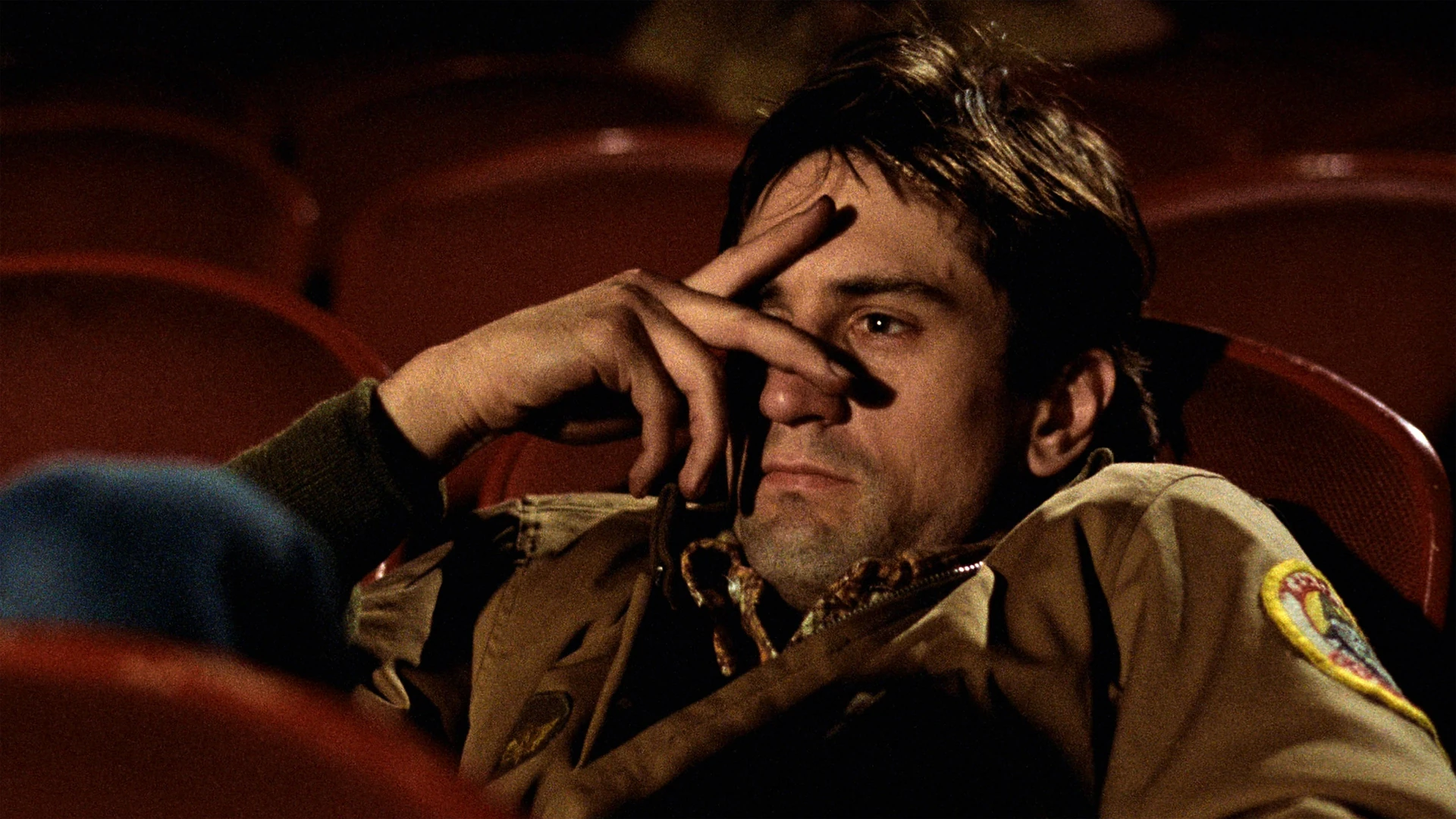
“Loneliness is not a lack of company, it’s a lack of purpose.” — Unknown
Few films have burrowed themselves into the collective consciousness with the same unsettling tenacity as Martin Scorsese’s 1976 masterpiece, Taxi Driver. Forty-eight years on, it feels less like a historical artifact and more like a perpetually relevant, festering wound on the American psyche. It’s a film that critics, almost universally, hailed as a groundbreaking achievement upon its release, earning numerous accolades including the Palme d’Or at Cannes, and securing its place in the pantheon of cinema. Yet, its brilliance is often accompanied by a visceral discomfort, a lingering unease that belies its critical acclaim. It’s not a film you enjoy in the conventional sense; it’s one you endure, and in enduring, are compelled to confront some of the most profound and disturbing questions about urban alienation, mental deterioration, and the perilous search for meaning in a desolate world.
The Unseen Filth and the Seething Psyche
At its core, Taxi Driver is a brutal, unflinching character study of Travis Bickle, magnificently portrayed by Robert De Niro in a performance that redefined cinematic anti-heroes. Suffering from chronic insomnia, Travis takes a job as a New York City cabbie, a nocturnal voyager through the city’s underbelly. He’s a man perpetually on the outside looking in, observing a world he perceives as decaying, festering with “filth” – prostitutes, pimps, drug dealers, and the general moral squalor of a specific era of New York. This isn’t just about New York, though; it’s a canvas for Travis’s internal landscape. His disgust with the external world is a projection of his own rapidly deteriorating mental state, a classic example of projection and cognitive dissonance.
While the film’s pacing has occasionally been cited by some viewers as a slow burn in its initial acts, focusing heavily on Travis’s internal monologue and mundane routine, this deliberate tempo is crucial. It meticulously charts his psychological descent, allowing us to bear witness to the insidious creep of his alienation and delusion. We’re not given a quick montage of madness; we’re forced to sit in the cab with him, hearing his thoughts, feeling his isolation, watching him push away every potential connection. This methodical unraveling is precisely what makes the film so powerful, even if it demands patience. It’s the slow, agonizing realization that we’re watching a man construct his own twisted moral universe, entirely divorced from reality.
- Existential Loneliness — Travis’s profound inability to connect, rendering him an island in a sea of millions.
- Urban Sickness — The city as a character, mirroring Travis’s internal decay and societal anxieties.
- Moral Relativism — Travis’s self-appointed role as judge and executioner, challenging conventional notions of right and wrong.
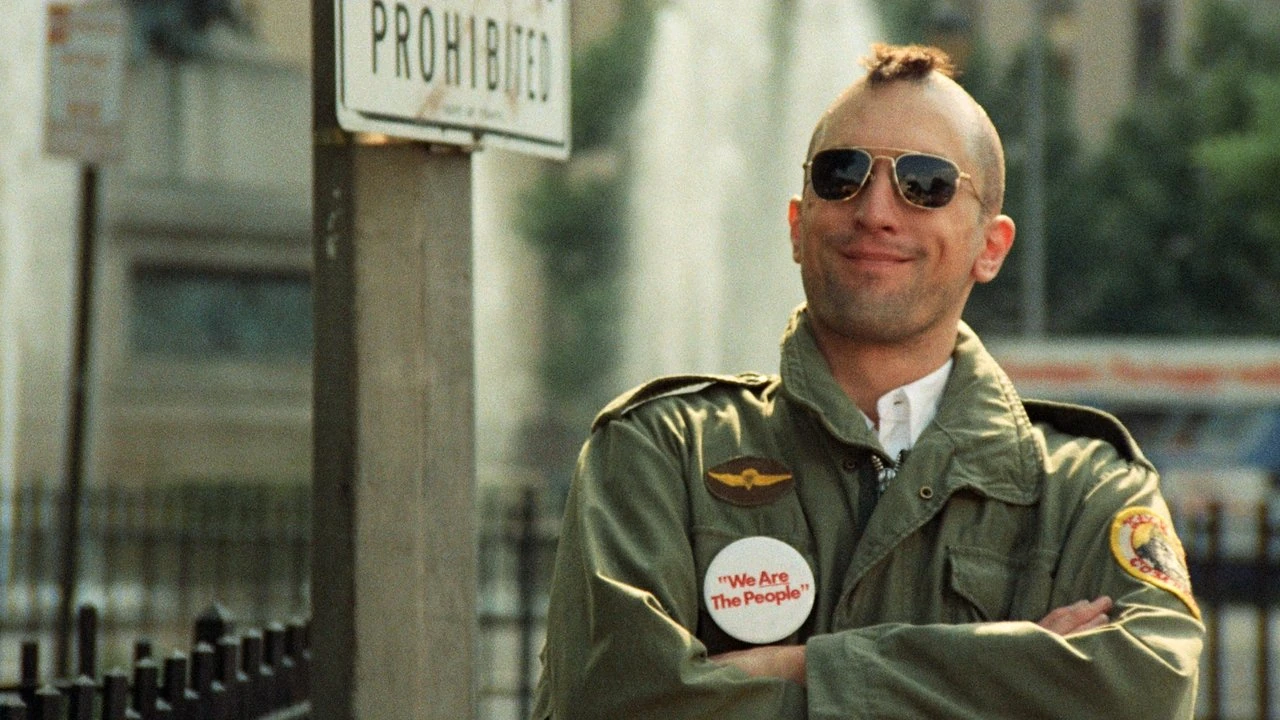 Travis Bickle, a solitary figure navigating the neon-drenched urban labyrinth, utterly alone.
Between Messiah and Madman: The Perilous Search for Redemption
Travis’s journey is one of a man desperately seeking purpose, and finding it in a violent, destructive form of self-appointed redemption. His attempts to “clean up” the streets, initially through an awkward, misguided effort to save underage prostitute Iris (Jodie Foster), then escalating to a murderous rampage, are chilling to behold. The film doesn’t glorify this violence; rather, it presents it as the terrifying culmination of unchecked psychological disintegration, fueled by a toxic mix of social isolation, perceived moral decay, and a warped sense of duty.
Travis’s descent forces us to ask: What happens when the only lens through which one views the world is one of disgust, and the only solution perceived is annihilation?
Critics have often debated the film’s ending, where Travis is hailed as a hero after his violent act. Is it a dream? Is it a transient moment of societal validation that misunderstands his true nature? This ambiguity, far from being a plot hole, is one of Taxi Driver’s most divisive and brilliant elements. It denies us easy closure, leaving us to grapple with the uncomfortable truth that society often mistakes violent action for heroism, especially when framed by sensational media. This makes the film a scathing critique of media sensationalism and superficial morality, suggesting that the “filth” Travis railed against might also reside in the very systems that validate him. His actions are not condoned, but the narrative forces us to confront the terrifying possibility of their misinterpretation, both by characters within the film and potentially by viewers outside it.
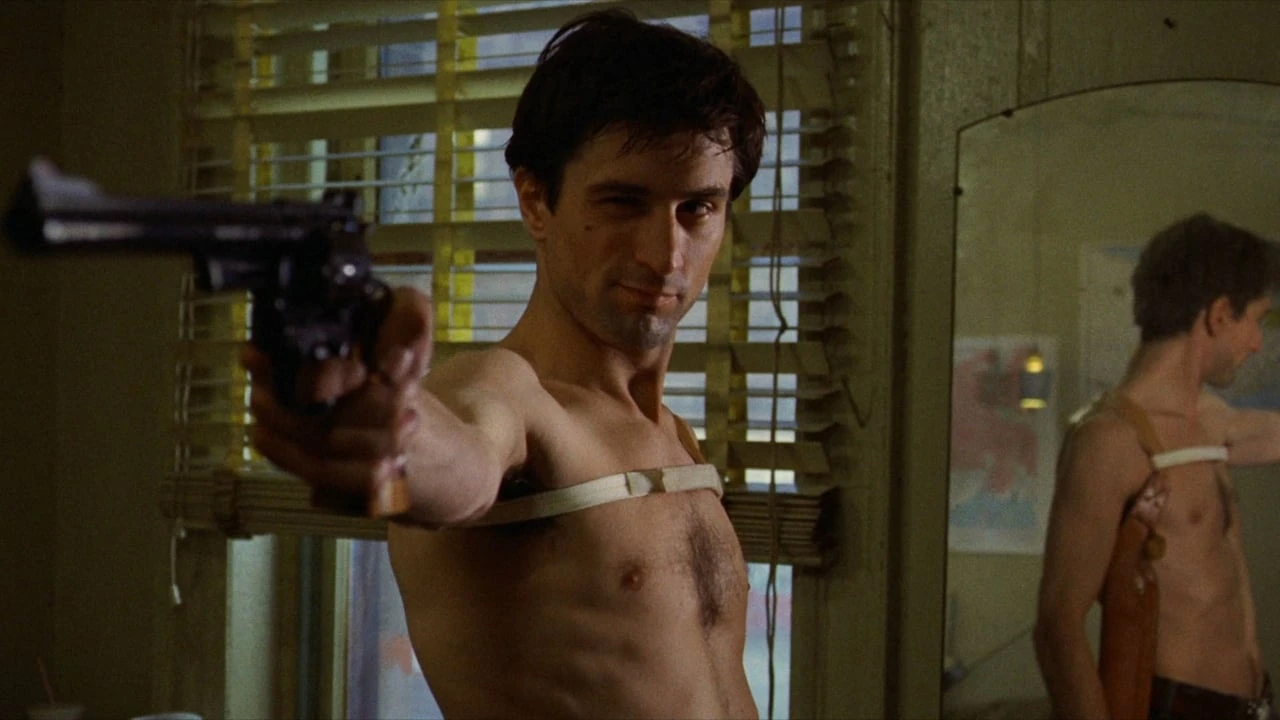 The vacant stare of a man teetering on the precipice of madness, his reflection a distorted vision of self.
The Mirror of Our Own Discomfort
Beyond the plot, Taxi Driver is a profound exploration of the human condition at its most vulnerable and dangerous. It delves into the nature of nihilism – a world perceived as devoid of inherent meaning, where one must create their own, however twisted. Travis’s diary entries, his internal monologues, are a window into a mind struggling with the sheer absurdity of existence, attempting to impose order on a chaotic, indifferent universe. His failure to connect on a human level – with Betsy, with his fellow cabbies, even with Iris – underscores the devastating impact of social atomization.
The film dares to ask: What responsibility does society bear for creating individuals like Travis? Is his violence an inevitable outcome of unchecked urban decay and individual neglect? Or is it merely the eruption of an inherent pathology? Taxi Driver doesn’t provide easy answers, which is precisely why it continues to resonate. It holds up a mirror, not just to the dark corners of a specific city, but to the potential for darkness within any individual pushed to the brink, or within any society that allows its marginalized to fester in isolation. The film’s enduring power lies in its capacity to provoke, disturb, and force introspection, making us question our own perceptions of justice, sanity, and the delicate balance between order and chaos.
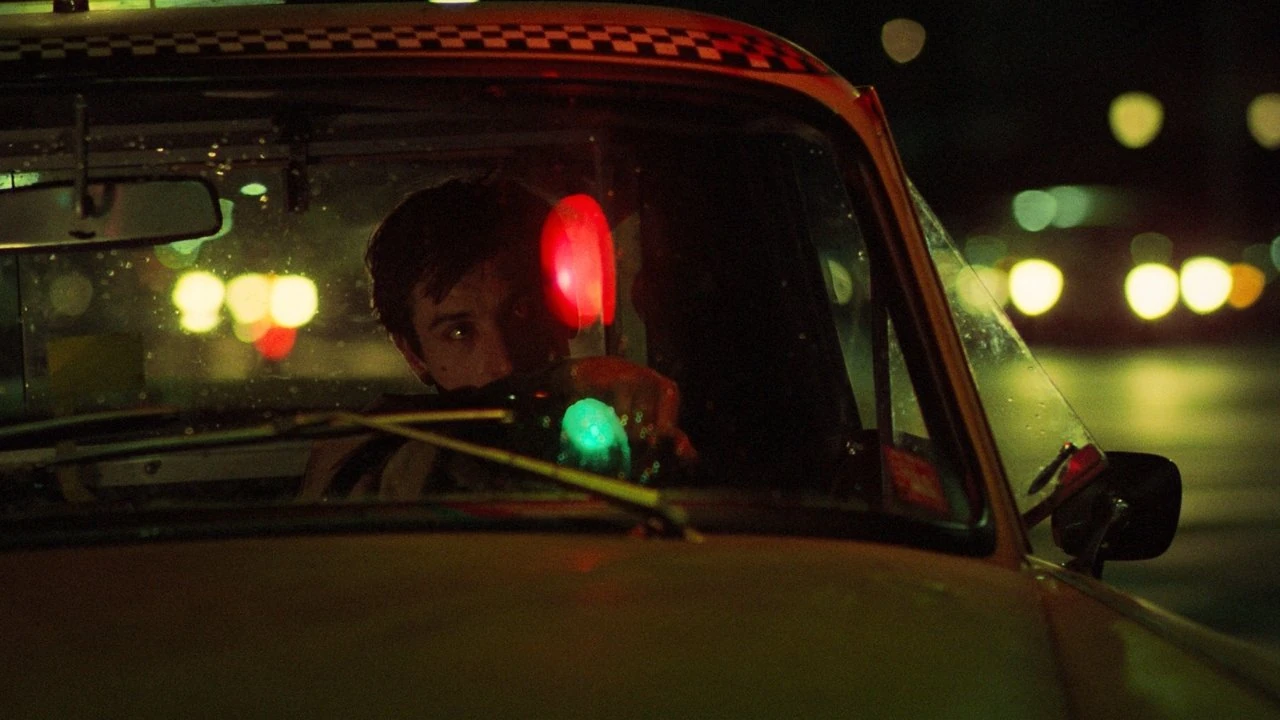 A close-up reveals the stark intensity and quiet desperation etched onto Travis’s face, a portrait of impending breakdown.
“All of us are in the gutter, but some of us are looking at the stars. Travis Bickle looks at the gutter and dreams of setting it on fire.”
Taxi Driver remains an intense, challenging experience. It’s a film that, despite its critical adoration, has always been divisive in its impact, sparking debates about its portrayal of violence, mental illness, and its ambiguous morality. It doesn’t offer catharsis or simple heroes; instead, it offers a chilling, unforgettable glimpse into an existential nightmare. It forces us to confront the uncomfortable reality that sometimes, the monster isn’t under the bed, but behind the wheel, driven by forces both internal and external that we’d rather not acknowledge. What does it say about us when we find ourselves captivated, even horrified, by the journey of a man who just wants to “clean up the filth”? Perhaps, that we too, sometimes, see the same filth.
What’s Up? explores the philosophical depths of cinema.