The Existential Thunder Buddy: Ted (2024) and the Refusal of Adulthood
Exploring the philosophical underpinnings of Seth MacFarlane's Ted (2024) TV series, its mixed reception, and its commentary on arrested development and the nature of friendship.
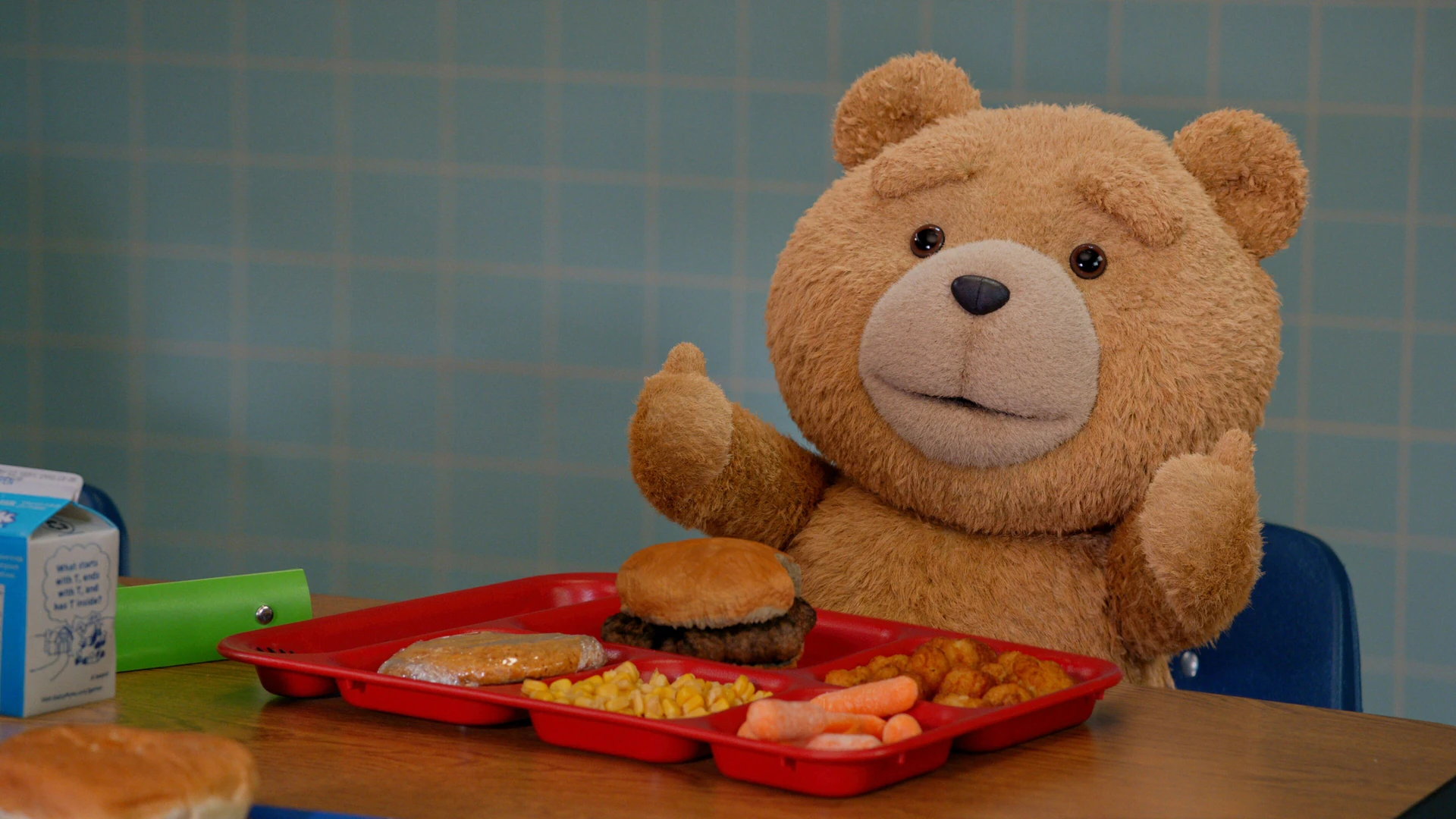
“Maturity is a bitter disappointment for which no remedy exists, unless laughter can be said to remedy anything.” — Kurt Vonnegut
Seth MacFarlane’s Ted (2024) series arrived on Peacock with a familiar growl and a cloud of weed smoke, attempting to bridge the gap between the character’s cinematic origins and a deeper dive into his infamous past. Set in 1993, the show transports us to the suburban Boston home of a 16-year-old John Bennett, where Ted, the once-famous talking teddy bear, now lives as a foul-mouthed, sentient relic. The critical reception, much like Ted himself, has been a bit… messy. While the show garnered a respectable, if not glowing, audience score, critics were notably divided, with Rotten Tomatoes hovering in the mid-50s, highlighting a clear split in its appeal. Many praised MacFarlane’s consistent voice work and the nostalgic 90s aesthetic, but just as many lambasted its reliance on recycled gags and a perceived lack of fresh comedic ground. Yet, beneath the familiar crude humor and the occasionally clunky CGI, Ted unwittingly stumbles into a fascinating philosophical territory: the perpetual adolescence of the American male and the burden of an unconventional mentor.
The Reluctant Rite of Passage
At its core, Ted (2024) is a coming-of-age story twisted into a grotesque, R-rated parody. John Bennett (Max Burkholder) is at that awkward precipice of burgeoning adulthood, grappling with school, girls, and the general anxieties of teenage life. His best friend and literal roommate is a talking teddy bear who is, to put it mildly, an agent of chaos. Critics often pointed to the show’s uneven pacing and its tendency to lean heavily on shock humor, sometimes at the expense of character development. Indeed, the narrative can feel episodic, a series of familiar sitcom setups punctuated by Ted’s profanity-laden antics.
However, this very structural “flaw” can be viewed through a philosophical lens. Life itself, especially adolescence, often feels episodic, a string of seemingly disconnected events that somehow coalesce into experience. Ted, in his refusal to engage with anything resembling responsibility or personal growth, acts as an almost nihilistic counterpoint to John’s slow, painful journey towards maturity. He embodies the allure of arrested development, the seductive comfort of never truly growing up. He is John’s id personified, a constant temptation to avoid the hard work of becoming an adult.
Key themes to explore:
- Nostalgia — not just for the 90s, but for a lost innocence that Ted ironically shatters.
- Toxic Masculinity (comedically exaggerated) — Ted’s worldview is a caricature of unchecked male ego and impulse.
- Identity Formation — John’s struggle to define himself amidst such a powerful, albeit furry, influence.
- Unconventional Mentorship — Ted as the worst possible guide, yet strangely, still a guide.
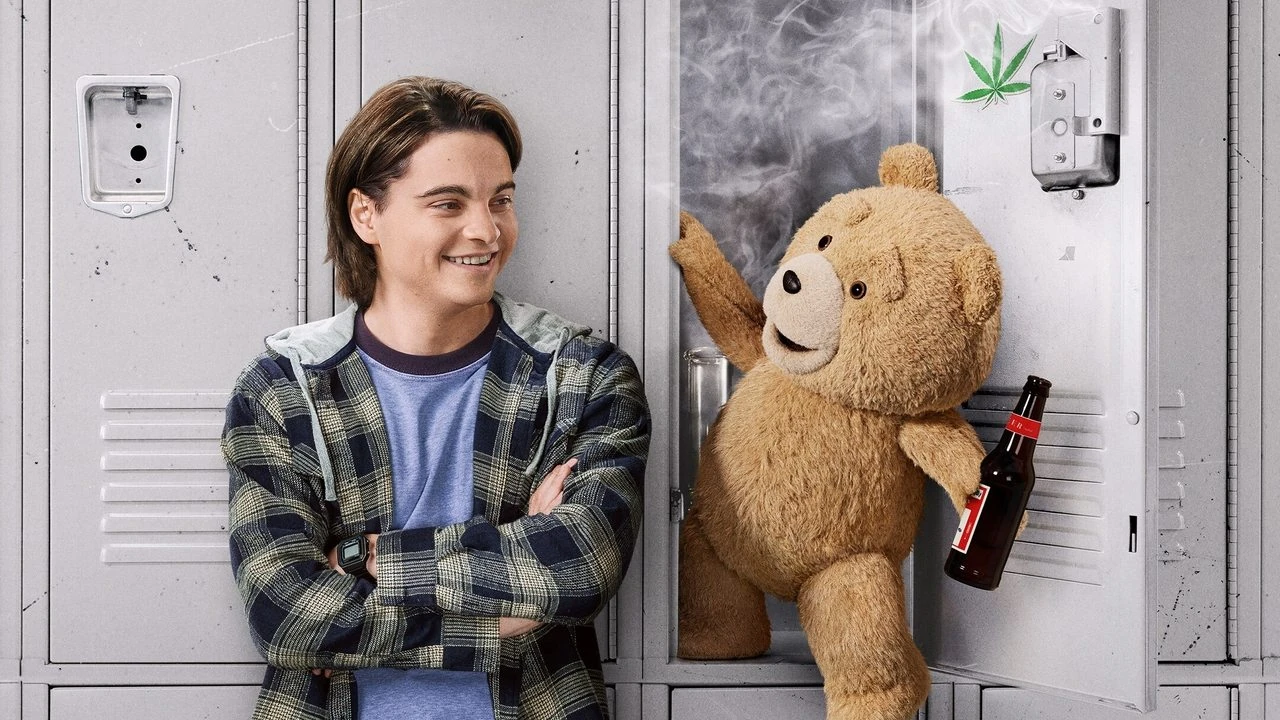 Ted, ever the instigator, leading young John into another questionable adventure, reflecting the show’s chaotic core.
Crude Jokes and Tender Hearts: The Dichotomy of Influence
The show’s biggest challenge, and what truly divided critics and audiences, is its humor. MacFarlane’s brand of comedy is an acquired taste, and Ted leans hard into it: pop culture references, politically incorrect jabs, and an unrelenting stream of profanity. Many critics found the jokes repetitive and, at times, lazy, echoing sentiments from the later Ted films. They questioned whether the premise had enough gas left in the tank to sustain a series.
Yet, amidst the barrage of crude jokes and bathroom humor, there are glimpses of genuine heart. The bond between Ted and John, however dysfunctional, remains the emotional anchor. Ted, for all his flaws, genuinely cares for John, albeit in his own incredibly misguided way. This dichotomy raises interesting questions about the nature of influence and friendship. Can a “bad” influence still be a good friend? What does it mean to be there for someone when your own moral compass is completely broken?
This is where we discover the true weight of choice — not in the outcome, but in the becoming. John, despite Ted’s constant pull towards immaturity, is still faced with daily decisions that shape his future.
The family unit – John’s parents, Susan (Alanna Ubach) and Matty (Scott Grimes), and cousin Blaire (Giorgia Whigham) – provides a grounding force, attempting to inject some semblance of normalcy and ethical guidance into Ted’s anarchic presence. Blaire, in particular, often serves as the voice of reason, challenging Ted’s backward logic, representing a clash of generational values and the evolving understanding of social norms. The show, intentionally or not, highlights how external influences, even absurd ones like a talking teddy bear, force us to confront our own values and choices.
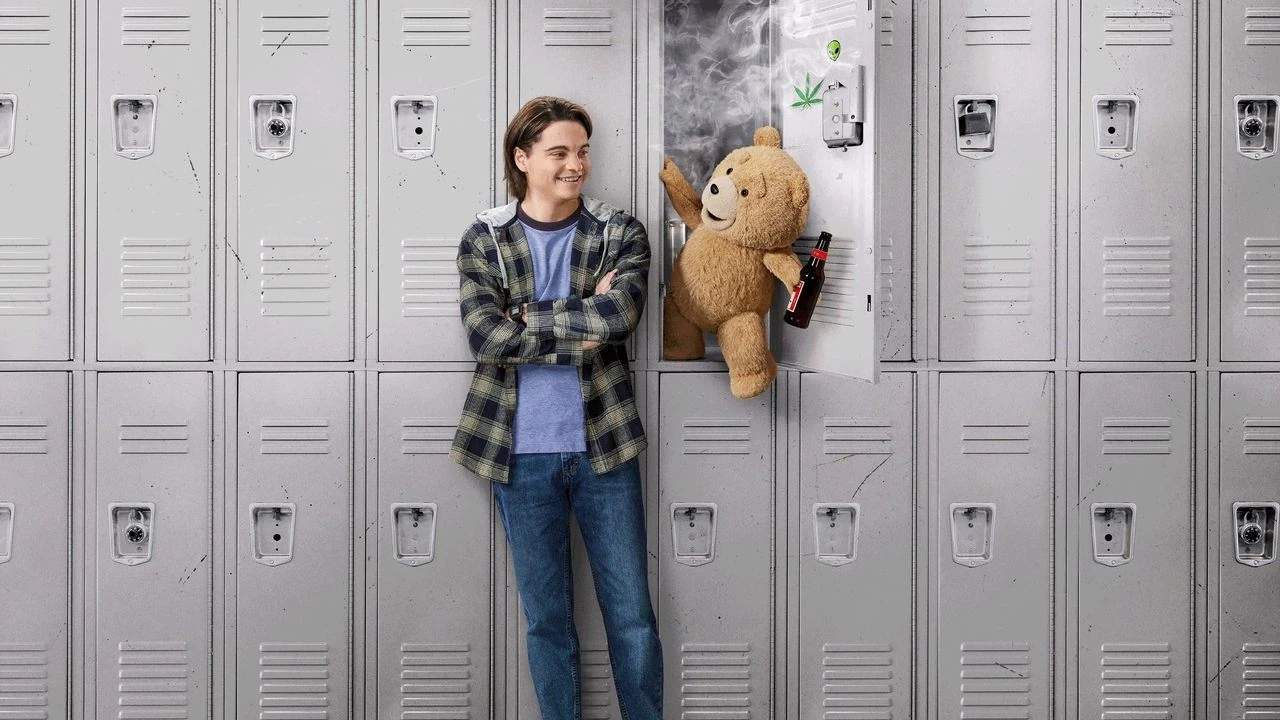 A quiet moment between Ted and John, hinting at the genuine, if flawed, affection beneath the crude humor.
Beyond the Thunder Buddies: An Existential Gaze
Ultimately, Ted asks us to look at our relationship with the past, with nostalgia, and with the parts of ourselves we refuse to let go of. Ted isn’t just a talking bear; he’s a physical manifestation of John’s childhood, a comfort object that never went away, and consequently, a barrier to true adulthood. He represents the comfort of the familiar and the fear of growth.
Existentially, Ted forces us to consider: What does it mean to be truly free? Is it the freedom to indulge every impulse, as Ted does, or the freedom that comes with self-mastery and responsibility? The series, despite its comedic packaging, subtly explores the absurdity of existence when confronted with a creature that defies all logical rules. Ted is a glitch in the matrix of reality, a constant reminder that life is inherently strange and unpredictable. His very presence challenges the ordered world, pushing John, and by extension, the audience, to re-evaluate what constitutes “normal” or “acceptable” behavior. It’s a raunchy, foul-mouthed thought experiment wrapped in a 90s sitcom.
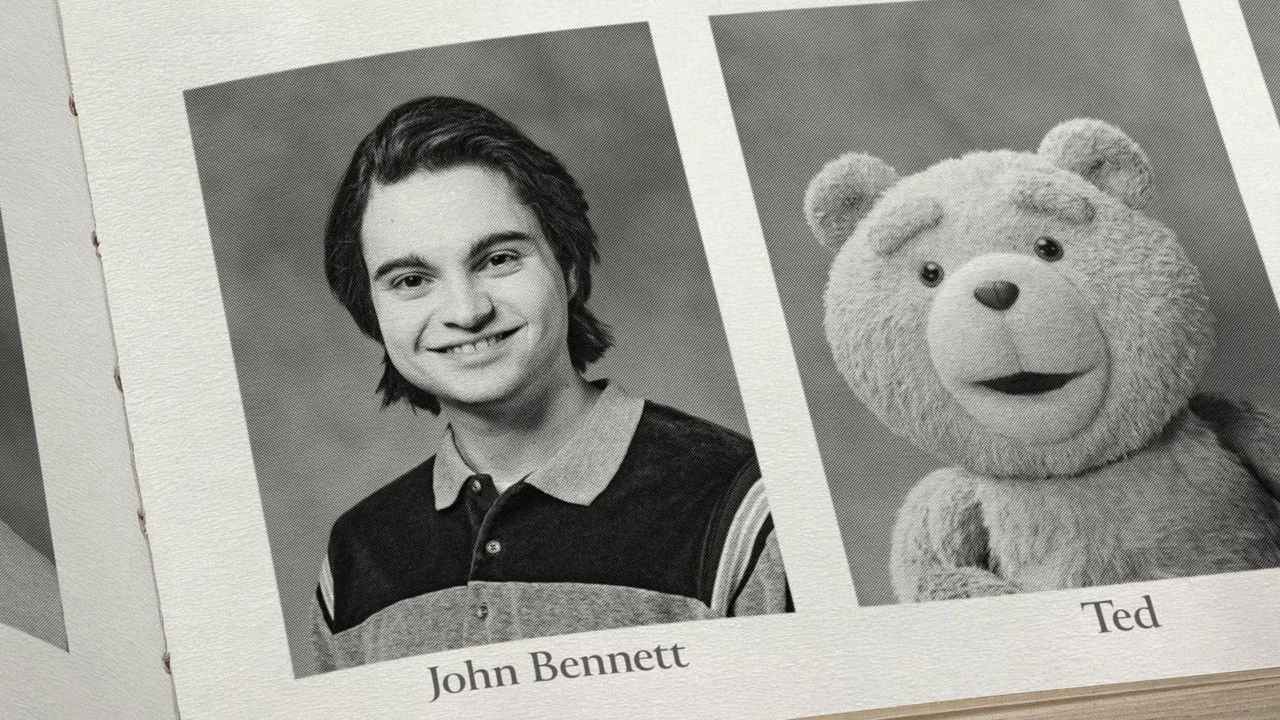 The Bennett family, bewildered by Ted’s latest antics, a microcosm of societal reaction to the absurd.
“Sometimes, the most profound truths are whispered through the mouths of fools, or, in this case, a crude, sentient teddy bear. But the laughter often masks a deeper, uncomfortable reflection on our own arrested developments.” — Cultural Critic
While critics were often right to point out the show’s reliance on familiar gags and its somewhat uneven execution, Ted (2024) still manages to provoke thought. It’s a flawed, divisive piece of entertainment, certainly not for everyone, but its existence compels us to consider the enduring appeal of childish rebellion, the complexities of unconventional friendship, and the ever-present internal struggle between the desire for comfort and the call to maturity. What does it truly mean to grow up when a piece of your childhood refuses to let you go?
Where to Watch
- Peacock Premium
- Peacock Premium Plus
What’s Up? explores the philosophical depths of cinema.