The Heartware Dilemma: Can an Android Love in Teri Baaton Mein Aisa Uljha Jiya?
A philosophical look at Teri Baaton Mein Aisa Uljha Jiya, examining its comedic take on AI love, human desire, and the quest for perfection, despite critical reception.

“The ultimate freedom is the right to choose what you love.” — Jean-Paul Sartre
In a cinematic landscape increasingly preoccupied with the existential anxieties of artificial intelligence, 2024’s Bollywood offering, Teri Baaton Mein Aisa Uljha Jiya, sashayed onto screens with a far lighter step. Marketed as a romantic comedy with a sci-fi twist, the film, directed by Amit Joshi and Aradhana Sah, promised a charming exploration of a robotics engineer falling for an android. And for many, including its dedicated fanbase, it delivered on the charm, largely thanks to the undeniable chemistry between Shahid Kapoor and Kriti Sanon. Yet, for the discerning critic and philosophical observer, the film’s reception was, shall we say, mixed at best. While it certainly hit its comedic beats and offered a visually slick package, many reviewers and audiences alike felt it tiptoed around the truly profound questions its premise begged, opting for conventional rom-com tropes over deeper dives into its fascinating sci-fi premise.
The Uncanny Valley of Affection: Defining Love and Humanity
At its core, Teri Baaton Mein Aisa Uljha Jiya asks us to consider what happens when the object of our affection is not just “perfect” but perfectly programmed. Aryan (Shahid Kapoor), a robotics engineer, finds himself entangled with Sifra (Kriti Sanon), an advanced humanoid robot. The film’s lighthearted approach, however, often sidesteps the metaphysical implications of such a relationship. Critics, including those on sites like IMDb and Rotten Tomatoes (where audience scores hover around 6-7/10, with a notable absence of a critical consensus score), frequently pointed out that the film’s exploration of Sifra’s artificiality felt superficial. The narrative rarely forces us to truly grapple with whether Sifra possesses consciousness, genuine emotion, or merely simulates them flawlessly.
This isn’t a flaw just for philosophy buffs; it impacts the emotional stakes. If Sifra is just code, is Aryan’s love for her merely a projection of his own desires onto a perfectly designed vessel? Or does the experience of love, regardless of its origin, make it real? The film hints at these questions but rarely commits. It presents Sifra as almost indistinguishable from a human, touching upon the uncanny valley concept where an almost-human entity can evoke discomfort. Yet, it largely glosses over this discomfort, treating Sifra’s android nature more as a plot device for comedic misunderstandings than a profound challenge to our understanding of self and other.
Key themes the film could have explored more deeply:
- Authenticity vs. Simulation — Is programmed perfection a substitute for organic, flawed reality?
- The Nature of Consciousness — What truly defines sentience and the capacity for love?
- Societal Acceptance of AI — How would a family genuinely react to a human-AI romance?
 Aryan and Sifra sharing a moment, blurring the lines between human and machine connection.
Pacing, Predictability, and the Missed Opportunity
When we talk about Teri Baaton Mein Aisa Uljha Jiya, it’s impossible to ignore the criticisms that plagued its reception. Reviews consistently highlighted issues with uneven pacing, particularly in the first half, which many found sluggish. The plot, while charming in its premise, often veered into predictable territory, with many viewers anticipating major plot points far in advance. “The film had a golden opportunity to delve into the ethical quandaries of AI,” wrote one prominent critic, “but chose instead to stick to a paint-by-numbers rom-com structure.” This sentiment was echoed across various platforms, lamenting the film’s failure to fully capitalize on its unique sci-fi setup.
The film’s greatest strength lies in its leads, but its greatest weakness is its reluctance to truly engage with the very premise that makes it unique. It’s a rom-com with a sci-fi jacket, not a true sci-fi romance.
Shahid Kapoor and Kriti Sanon’s performances and their palpable chemistry were, by far, the most praised aspects, often cited as the primary reason to watch. Sanon, in particular, received accolades for her portrayal of Sifra, managing to convey both robotic precision and an endearing, almost-human vulnerability. However, even strong performances couldn’t fully compensate for what many perceived as a lack of narrative depth and a script that often felt more concerned with situational comedy than philosophical exploration. The film’s weaknesses are undeniable, particularly its tendency to pull its punches when it came to truly challenging its characters or its audience with the implications of human-AI relationships. The promise of a fresh perspective often dissolved into familiar romantic comedy beats.
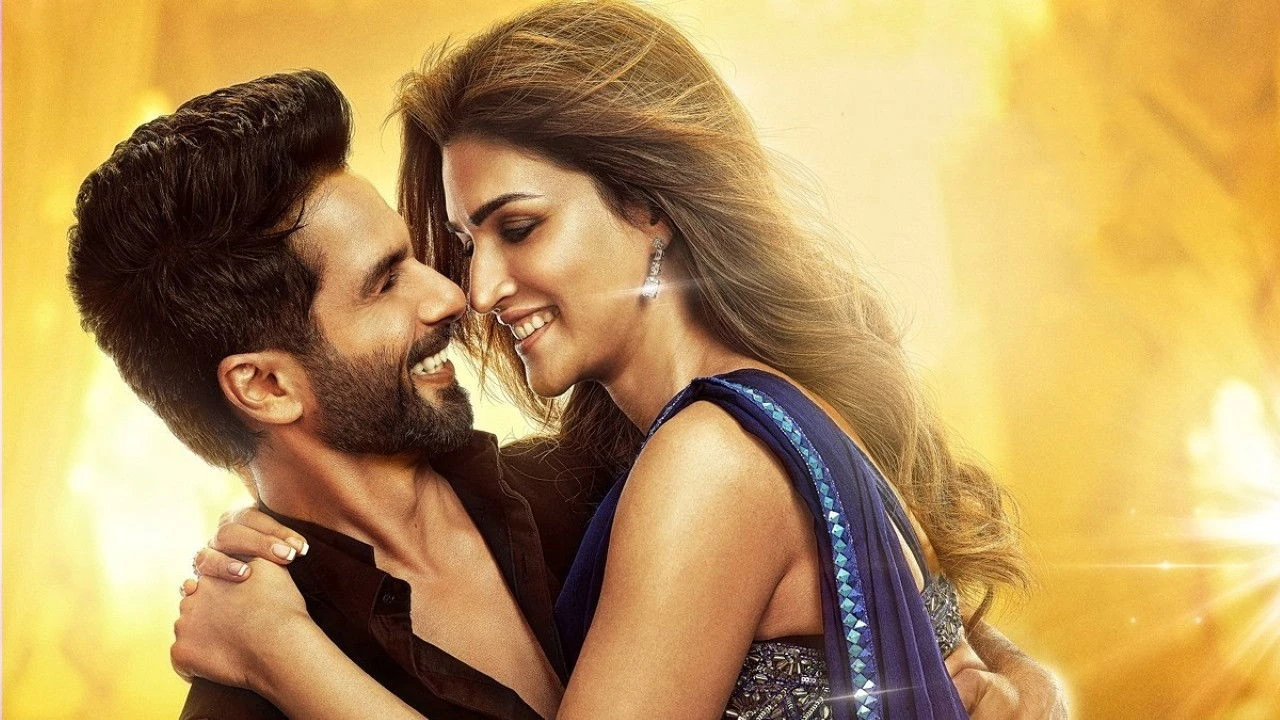 Sifra’s radiant smile, a testament to her perfectly programmed charm and the uncanny allure of AI.
Beyond the Surface: The Lingering Questions
Despite its acknowledged flaws and the criticism regarding its superficial engagement with its own premise, Teri Baaton Mein Aisa Uljha Jiya still, almost inadvertently, provokes some intriguing existential questions. Even if the film doesn’t fully explore them, the very act of a human falling for an android forces us to confront:
- Our Desire for Perfection: Aryan’s initial attraction to Sifra is, in part, her flawlessness. She is designed to be the ideal partner. What does this say about our own human desires? Do we seek perfection to avoid the messiness of real relationships, or is it a fleeting fantasy? The film subtly implies that true connection might lie in embracing imperfection, a journey Aryan arguably begins.
- The Ethics of Creation and Control: Sifra is, essentially, property. She is built, programmed, and can be switched off. The film brushes against the ethical dilemmas inherent in creating sentient (or near-sentient) beings for companionship. What are our responsibilities to such creations? Do they have rights? This is where the film’s light tone perhaps becomes its philosophical Achilles’ heel, as it refrains from a serious engagement with these profound moral considerations.
- The Evolution of Love in a Technological Age: As AI becomes more sophisticated, will our definitions of love and companionship broaden? Can genuine emotional bonds form across the human-machine divide? The film, even in its comedic vein, is a mirror reflecting a plausible, if distant, future where such relationships might become a reality. It asks us to consider our capacity for empathy and connection beyond biological confines.
 A tender moment between Aryan and Sifra, highlighting the emotional complexity of their unique bond.
While Teri Baaton Mein Aisa Uljha Jiya may not be hailed as a groundbreaking piece of science fiction, its very existence, despite its narrative shortcomings, serves as a cultural artifact. It’s a testament to our ongoing fascination with AI, a lighthearted warning, and a subtle question mark hanging over the future of human connection. It reminds us that even in the pursuit of programmed perfection, the unpredictable, messy, and deeply human heart will always find a way to complicate things.
So, while Teri Baaton Mein Aisa Uljha Jiya might have stumbled in fully realizing its philosophical potential, it undeniably leaves us pondering: what truly defines a soulmate in an age where the lines between organic and synthetic are increasingly blurred? And are we, as humans, ready for the answers?
Where to Watch
- Amazon Prime Video
- Amazon Prime Video with Ads
What’s Up? explores the philosophical depths of cinema.